
REVIEW · TULUM
2 dives in Cenote Dos ojos Certified Divers
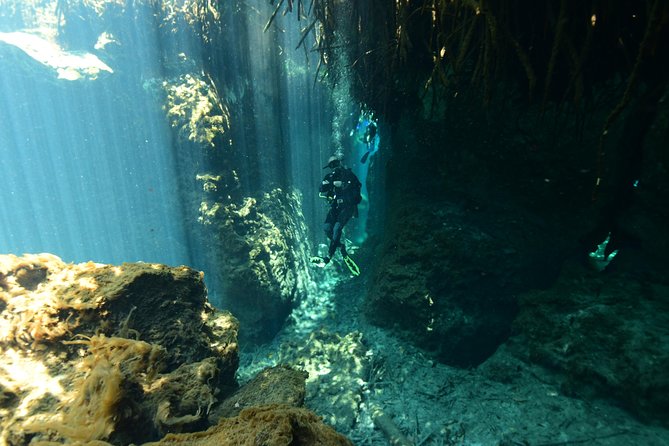
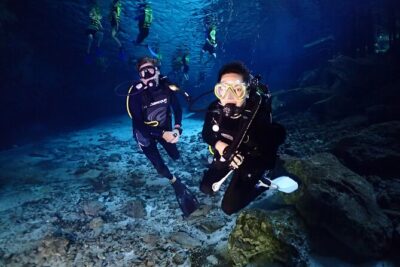
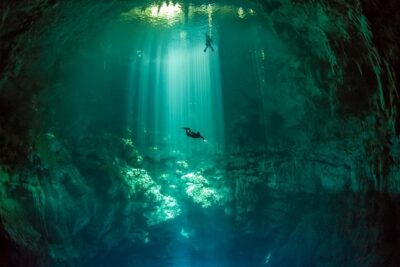
Dos Ojos is the star here: clear freshwater, blue-green light, stalactites, stalagmites, columns, and a striking underground world. You get two underwater sessions, usually 40 to 45 minutes each, with a guide beside you and a maximum of four people in the group. The small size matters, especially when you are new to cenote conditions.
I like the careful equipment fitting and the unhurried refresher before entering the water. I also like the choice of cenote, since the team can match the sites to your comfort and certification level. The main caution is that a standard open-water certificate does not automatically make you ready for every cavern route, so listen closely during the briefing and be honest about your experience.
Key points to know before booking
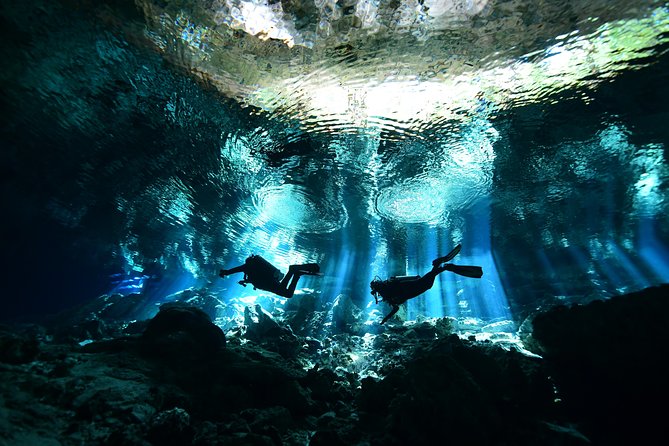
- Dos Ojos brings the dramatic scenery: Expect rock columns, stalactites, stalagmites, clear water, and possible bat-cave views depending on the route.
- You get two freshwater sessions: Each usually lasts about 40 to 45 minutes, with a break between them.
- Groups are capped at four people: That allows the guide to watch your buoyancy, breathing, comfort, and signals more closely.
- The guide helps choose the right sites: Dos Ojos, Casa Cenote, and Gran Cenote may be considered, depending on ability and preference.
- The $200 price covers useful basics: Equipment, central Tulum transport, snacks, drinks, lunch, taxes, and a professional guide are included.
- Budget for extra fees: Cenote entrance charges are not included, and some combinations cost $10 more because entry prices vary.
Why Dos Ojos makes this more than a routine pool session
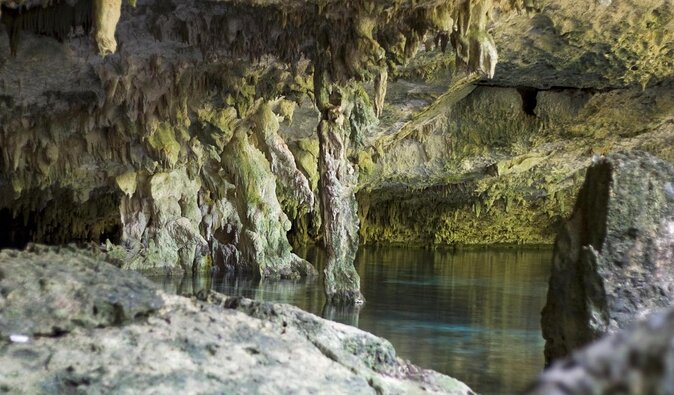
Cenotes are freshwater sinkholes linked to the Yucatán Peninsula’s underground river system. At Dos Ojos, the attraction is not simply swimming through clear water. You are there to see how light, rock, and water work together beneath the surface.
The formations give the experience its character. Stalactites hang from the ceiling, stalagmites rise from the floor, and columns connect the two. In the right chamber, the water can appear blue, turquoise, or green as sunlight filters through openings above.
You may also visit a section known as the bat cave, where the route rises toward an air-filled chamber. One guide-led outing included time to surface and look up at the cave and bats. That sort of moment gives you a better sense of the cenote as a living place, not just an underwater attraction.
Dos Ojos is not a standard open-water setting. The surroundings can feel enclosed, and visibility may make the water seem almost unreal. You need to stay calm, follow the guide’s signals, and avoid treating the clear water as permission to wander off.
That is why the group limit of four is important. In a large group, it is harder for a guide to notice a nervous breath pattern, poor buoyancy, or a loose piece of equipment. Here, the guide has a better chance of staying aware of each person.
More Scuba Diving in Tulum
- 2 cenote divings (including one deep diving) for advanced divers in Tulum
★ 5.0 · 186 reviews - 3 Cenote Dives – Casa & Dos Ojos
★ 5.0 · 118 reviews - Amazing beginner dive in Tulum cenote (or refresher dive)
★ 5.0 · 116 reviews
Getting ready at Agua Clara Diving Tulum
The meeting point is Agua Clara Diving Tulum at Carretera Tulum-Boca Paila km 5, near Mexidivers and Hotel Zamas on Tulum Beach. The scheduled start is 8:30 a.m., and the activity returns to this same meeting point.
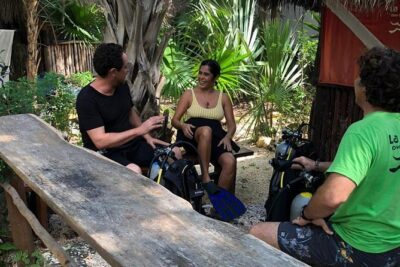
You begin by trying all the equipment. This is not a quick grab-and-go process. The fit matters, especially with a wetsuit, buoyancy compensator, mask, fins, and air tank. If something feels wrong on land, tell the staff before you leave.
A practical tip from one person who used this service is to request a long-sleeved wetsuit. Mosquitoes can be troublesome at some cenotes, particularly while you are getting ready near the water. If you plan to use sunscreen or insect repellent, it must be biodegradable. The shop sells suitable products.
The transport is from the central meeting point rather than from your hotel. That makes the tour less convenient if you are staying far away, but it also keeps the schedule straightforward. Hotel pickup and drop-off are not included, so arrange your own way to Agua Clara before the morning start.
The drive to the cenote is part of the five-hour schedule. Once you arrive, the guide explains the route and conditions before you put on the equipment. The quality of this briefing can shape your entire day, so use it to ask questions about depth, visibility, overhead spaces, and how to signal if you want to stop.
The first underwater session at Dos Ojos
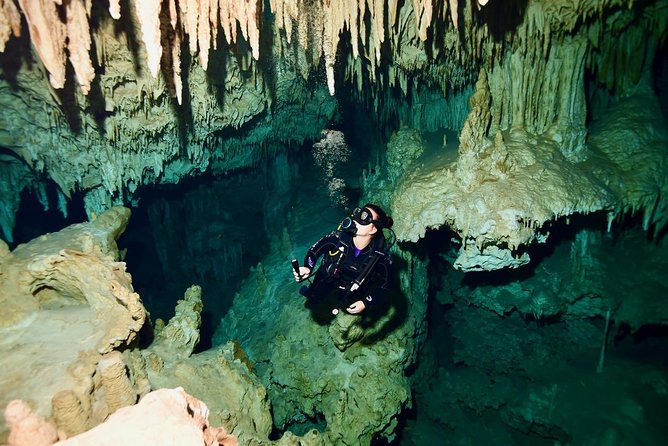
The first stop is listed as Cenotes Dos Ojos. This is usually the most visually striking part of the outing, and it is where you will encounter the classic cenote scenery: rock formations, columns, stalactites, and stalagmites.
Expect roughly 40 to 45 minutes in the water, though the exact length depends on conditions, air use, comfort, and the group. The guide leads rather than leaving you to find your own way. That matters in a cavern setting, where the route may not be obvious and the best formations can be easy to miss.
If you are newly certified, this first session can feel like a major step up from open water. One couple had only recently completed PADI Open Water training before coming to Tulum, and their guide, Alberto, helped them feel comfortable with a refresher and steady support. Another participant began the first cenote session too uneasy to continue, then felt ready by the second site after the guide patiently reviewed equipment, breathing, and hand signals.
That is the best way to approach this activity: treat the first session as a careful introduction, not a test of courage. You do not gain anything by pretending to be more experienced than you are.
A guide named Leo was especially praised for combining safety instruction with information about the cenotes and Mayan culture. Julio was also described as patient and attentive, while Marcelo was appreciated for helping people settle in and improve their buoyancy. Guides can change, so you cannot request a particular person with certainty, but you can tell the booking team about your experience level and concerns.
The break between sessions
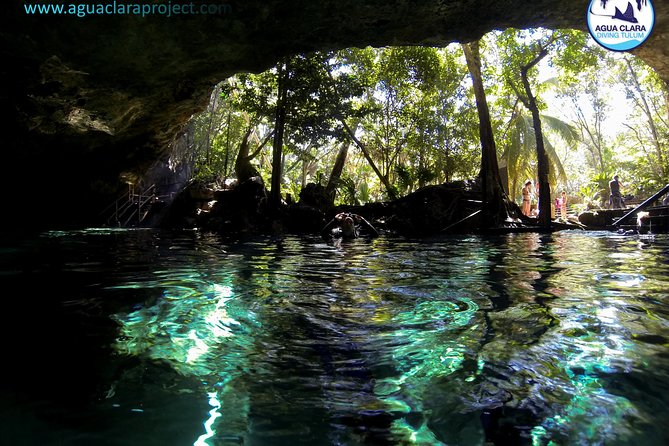
After the first session, you have a short break for snacks, drinks, and lunch. The timing can vary, since the team may serve these items after the first session or at another suitable point in the schedule.
This pause is more useful than it may sound. Freshwater can be cool, equipment work takes effort, and even a relaxed 40-minute underwater session requires concentration. Take the opportunity to drink, eat, adjust clothing, and explain any discomfort before entering the water again.
You may also have time to discuss the first site with the guide. If your mask leaked, your buoyancy felt off, or you became uncomfortable in a confined area, say so clearly. The second location can sometimes be better suited to you, depending on the available combinations and the guide’s assessment.
Snacks, beverages, and lunch are included, which improves the value of the $200 cost. Still, remember that cenote entry charges are separate. Some combinations cost an additional $10 because the entrance prices vary. Ask which sites are planned and what extra fee applies before the day begins.
More cenote dives in Mexico:
- Scuba Diving in Cenote Dos Ojos from Playa del Carmen
★ 5.0 · 453 reviews - Scuba Diving in Cenote Kukulkan from Playa del Carmen
★ 5.0 · 370 reviews - Cancun 2 Cenote Dives: The Pit & Dos Ojos – Certified Divers
★ 5.0 · 3 reviews - Playa del Carmen: Cenote Diving for Certified Divers
★ 5.0 · 2 reviews
Choosing the second cenote
The second stop is shown as Agua Clara Diving, the operator’s name rather than a clearly named cenote in the supplied schedule. The booking team may also help arrange combinations involving Casa Cenote or Gran Cenote, depending on your preference and skill level.
That flexibility is useful because cenotes do not all feel the same. Dos Ojos is known for its cavern formations, while another site may offer a different balance of open water, light, and enclosed passages. You should not assume that the most famous name is automatically the best fit for your ability.
Ask the team to explain the planned combination. Find out which location is more enclosed, which has the easiest entry, and how the two sessions differ. The information provided does not guarantee a particular pair beyond the listed Dos Ojos and Agua Clara itinerary, so confirm the plan when the booking team contacts you.
The second session is also about 40 to 45 minutes when conditions allow. If the first session went well, you may feel more relaxed with the equipment and signals. If it did not, the guide can decide whether a simpler route or a different site makes more sense.
One useful lesson from the experience is that your partner does not have to force the same pace you do. In one case, a nervous participant sat out the first session and joined the second after receiving more instruction. That is a sensible outcome. Comfort and safety are more important than completing every minute.
What the small group changes
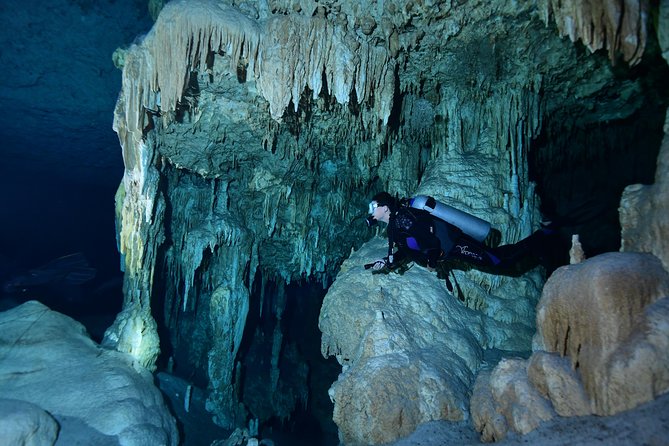
A maximum of four participants is one of the strongest features of this outing. The guide can give more direct attention, and you are less likely to spend the entire session following a distant group through the water.
Small groups also make communication easier. If you need help with your buoyancy compensator, the guide can deal with it quickly. One person specifically needed help finding the right balance with the equipment and appreciated having a guide nearby.
The limitation is that a small group does not remove the demands of the activity. You still need a current certification, moderate physical fitness, and the ability to manage basic scuba equipment. Evidence of certification is required from everyone taking part.
Open-water certification is enough to qualify for the activity, but the guide may decide that a particular route is not appropriate for your current ability. That is not a failure. Cenote conditions can be very different from a sunny coastal session, and a responsible guide should put comfort and control first.
There is also a solo option. If you are the only person going out, the operator can still take you, but a $15 extra charge applies. The normal maximum remains four people, which keeps the outing personal even when the group is full.
Price, inclusions, and what you really receive
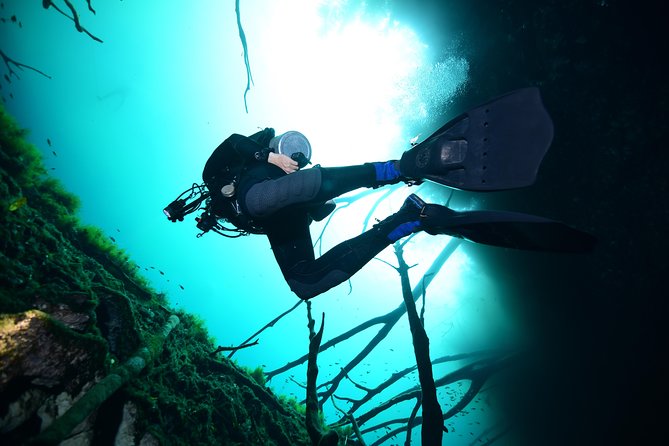
At $200 per person, this is not a budget activity. It becomes easier to justify when you count what is covered: necessary equipment, transport from the central Tulum meeting point, snacks, beverages, lunch, a professional guide, and taxes and handling charges.
The price also buys access to a guided experience rather than a simple cenote swim. You are paying for equipment preparation, site selection, route guidance, safety checks, and transport between the meeting point and the cenote.
The missing cost is the cenote entrance fee. Some pairings may add $10 because the entrance charges differ. The operator can also charge $15 extra when a solo participant requests the trip to go ahead.
For a certified person who wants two carefully managed freshwater sessions in one morning, the package offers fair value. It is less attractive if you already own all your equipment, only want a short swim, or dislike meeting at a central location instead of receiving hotel pickup.
I would also factor in the small group when comparing prices. A cheaper trip with a large group may leave you with less personal instruction, particularly if you are newly certified or still working on buoyancy.
Practical details that can make or break the morning
Bring proof of your certification. Without it, you may not be allowed to participate. The activity is intended for certified participants, not for an introductory session with no certification.
Plan to reach the meeting point with time to spare. The start time is 8:30 a.m., and the day includes equipment fitting before the drive. Rushing in at the last moment makes it harder to address mask, wetsuit, or buoyancy concerns.
Use biodegradable sunscreen and insect repellent only. This protects the cenote water and follows the operator’s rule. A long-sleeved wetsuit can also reduce mosquito trouble while you are above water.
A waterproof camera may be tempting because the rock formations are so photogenic. One practical warning is to save battery for the latter part of the second session, when the scenery may be especially good. A camera was available on one outing, but there was no dedicated photographer, so you are responsible for managing the device and timing.
The activity is offered in English. Service animals are allowed, and the meeting point is near public transportation. The experience ends back at the starting point.
Cancellation is free if you cancel at least 24 hours before the start time. Within 24 hours, the amount paid is not refunded, and changes made inside that window are not accepted.
Who will enjoy this most
This suits certified scuba participants who want something more unusual than a standard coastal outing. It is particularly good for people interested in geology, clear freshwater, cave formations, and careful small-group instruction.
Newly certified participants can also enjoy it, provided they are honest about their experience and willing to follow the guide’s limits. Alberto, Leo, Julio, and Marcelo are among the guides praised for patience, calm support, and clear instruction, though guide assignments can vary.
You may want to reconsider if confined spaces make you anxious, if you have not dived recently, or if you are hoping for a completely independent route. The activity requires moderate physical fitness and comfort with scuba equipment.
Couples and friends can book together, but do not pressure a less confident companion. The schedule allows the guide to adjust support, and one person may choose to skip the first session and join the second.
Should you book the Dos Ojos experience?
I would book this if you are certified, curious about freshwater caverns, and willing to meet at the Tulum shop rather than receive hotel pickup. The combination of Dos Ojos, two sessions, a four-person limit, equipment, food, and close guide attention gives the $200 price a reasonable basis.
Before paying, confirm the second cenote, the entrance fee, and whether the route suits your experience. Request a long-sleeved wetsuit, bring certification proof, and tell the team if you are nervous or recently certified.
Skip it if you want a casual swim, have no certification, or dislike enclosed underwater spaces. For the right person, though, Dos Ojos can turn a Tulum morning into a memorable look at the world beneath the jungle.
FAQ
Where does the activity start?
It starts at Agua Clara Diving Tulum, Carretera Tulum-Boca Paila km 5, near Mexidivers and Hotel Zamas on Tulum Beach, Tulum, Quintana Roo.
What time does the tour begin?
The scheduled start time is 8:30 a.m.
How long does the experience last?
The activity lasts approximately five hours.
How many underwater sessions are included?
Two sessions are included. Each one usually lasts about 40 to 45 minutes, depending on several factors.
Which cenotes will I visit?
The listed itinerary includes Cenotes Dos Ojos and Agua Clara Diving. The team may also discuss Dos Ojos, Casa Cenote, and Gran Cenote combinations based on your preference and skill level.
Is equipment included?
Yes. All necessary equipment is included.
Is transportation included?
Transport from the central meeting point in Tulum to the cenotes is included. Hotel pickup and drop-off are not included.
Are the cenote entrance fees included?
No. Entrance fees are not included. Some cenote combinations cost an additional $10 because entrance prices vary.
Do I need proof of certification?
Yes. All participants must provide evidence of scuba certification. A moderate level of physical fitness is also required.
More Dives for Certified Divers in Mexico
- 2-Tank Scuba Dive in Cabo San Lucas Reserve for Certified Divers
★ 5.0 · 263 reviews - Private Dive Boat for Certified Divers – Cabo San Lucas
★ 5.0 · 210 reviews - 3-Tank Scuba in Marine Reserve and Corridor for Certified Divers
★ 5.0 · 196 reviews - 2 Tank Dive – Certified Divers (Santa Maria Bay & Chileno Bay)
★ 5.0 · 162 reviews
Just added around Mexico
- Puerto Morelos: Scuba Diving for Beginners – 2 Dives★ 5.0 · 5 reviews
- Playa del Carmen: Guided Reef Diving for Certified Divers★ 4.6 · 7 reviews
- Playa del Carmen: Cenote Diving for Certified Divers★ 5.0 · 2 reviews
- Playa del Carmen: Discovery Scuba Diving – Non Certified★ 5.0 · 2 reviews
- Los Cabos 3-Hour Certified Scuba Diving Tour★ 4.8 · 6 reviews
- Isla Mujeres: MUSA and the Manchones Reef: 2 Tank Dive Tour★ 5.0 · 3 reviews
- From Cozumel: Double Tank Scuba Diving for Certified Divers★ 5.0 · 6 reviews
- From Cozumel: Chankanaab Cozumel Scuba Diving★ 4.9 · 20 reviews
Cenote Diving, compared.
2 cenote divings (including one deep diving) for advanced divers in Tulum
Read our review →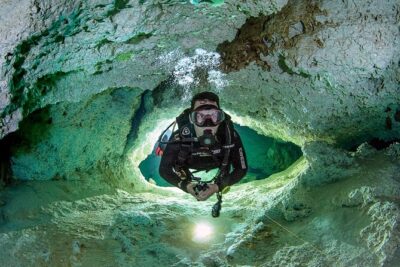
Amazing beginner dive in Tulum cenote (or refresher dive)
Read our review →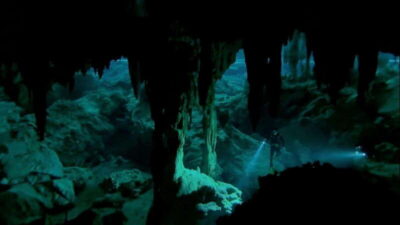
Cancun 2 Cenote Dives: The Pit & Dos Ojos – Certified Divers
Read our review →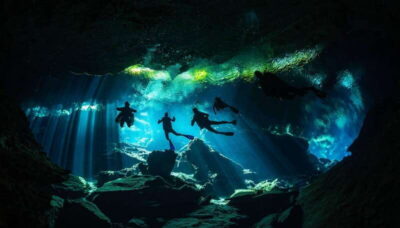
Playa del Carmen: Cenote Diving for Certified Divers
Read our review →Lists this dive appears in