
REVIEW · KAUAI
Try Scuba Diving in Kauai From a Boat: No Experience Necessary
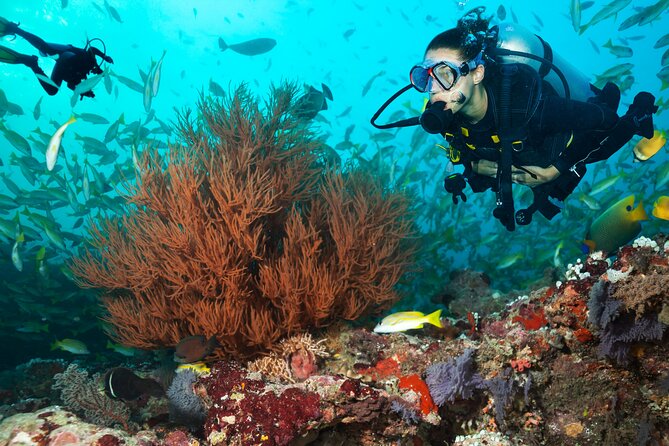
Kauai’s South Shore is a fine place to try scuba for the first time, and this half-day trip gives you two boat sessions rather than one quick underwater introduction. You learn the basics at the harbor, practice with your equipment, then visit reef sites where you might see turtles, eels, schooling fish, lava arches, and manta rays.
I like the generous format and the calm, practical teaching. Instructors such as Shawn, Justine, Thomas, and Debbie have helped beginners work through nerves, and the crew handles the heavy gear, boat details, snacks, and water. The main consideration is simple: scuba feels very different from snorkeling, and not everyone gets comfortable enough to reach the bottom.
Key points to know before booking
- Two ocean sessions: Each lasts about 30 to 45 minutes, with a maximum depth of 40 feet.
- A true beginner program: No certification or previous scuba experience is required.
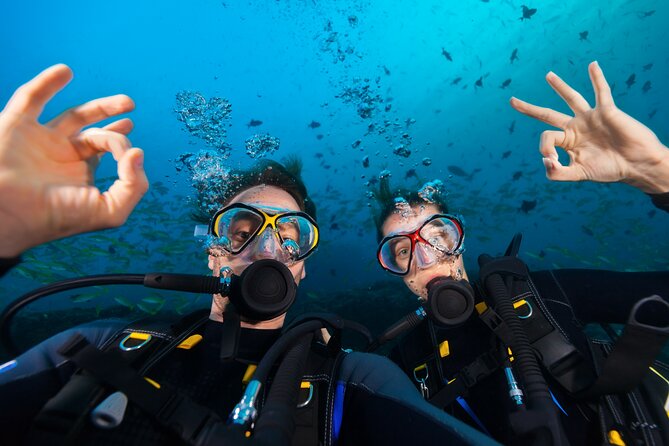
- Patient instruction: Expect lessons in breathing, equipment, safety, hand signals, and underwater communication.
- Comfortable boat setup: The operator uses one of Kauai’s largest dive boats, with snacks, drinks, and purified water aboard.
- Small group size: The maximum is 12 people, though some outings may be smaller.
- Plan around flying and elevation: You must avoid flights, helicopter trips, skydiving, and trips above 1,000 feet for 18 hours afterward.
Learning scuba at Kukuiula Small Boat Harbor
Your morning begins at Seasport Divers, at 2827 Poipu Road in Koloa. Check-in starts at 10:00 a.m., and the staff fits you with the equipment before loading it for the short drive to Kukuiula Small Boat Harbor, about two miles away.
The harbor session matters. You are not simply handed a mask and tank at the dock and sent into the sea. The instructor covers basic theory, equipment use, safety procedures, breathing, and underwater hand signals. You also practice the skills in the water before walking to the boat.
That first practice is where you find out how your body reacts. Breathing through a regulator can feel strange at first, and water pressure makes equalizing your ears more important than it is while snorkeling. One participant described needing to return toward the surface a few times before feeling comfortable. That is not a failure. It is exactly why this course starts slowly.
I especially like that the practice takes place in ocean water rather than only in a pool. You begin adjusting to the real conditions right away, though that also means the experience can feel less controlled than a pool lesson. If you are uneasy in open water, tell the instructor early and move at your own pace.
More Scuba Diving in Kauai
- Kauai’s Ultimate South Shore 2 Tank Dive (Certified Divers Only)
★ 5.0 · 190 reviews - Kauai’s Ultimate Discover Scuba Dive – OCEAN EXPERIENCE (1 Tank Dive)
★ 5.0 · 186 reviews - Kauai’s Ultimate Dive Boat Adventure (for CERTIFIED Divers Only)
★ 5.0 · 84 reviews
A boat built for a half-day on the water
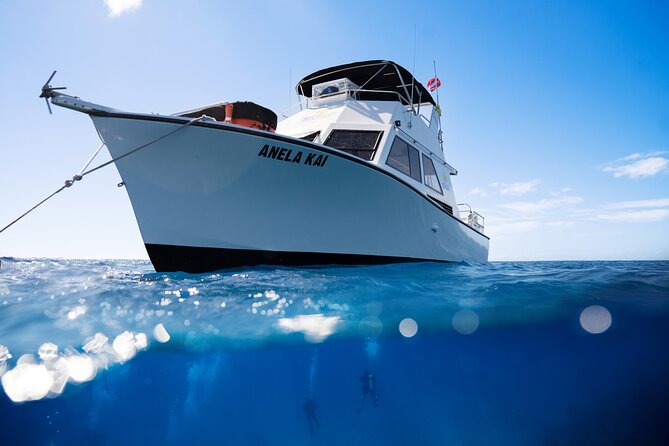
After the skills practice, you walk a short distance to the boat and receive a separate safety briefing from a Coast Guard-certified captain. The boat is described as the largest and most spacious scuba boat on Kauai, a useful feature when you are wearing unfamiliar equipment and sharing space with other beginners.
The maximum group size is 12. That does not guarantee a small group every time, but it keeps the outing from becoming a giant cattle call. A smaller group can make it easier to ask questions, get help with gear, and stay close to your instructor.
The crew provides scuba equipment, a wetsuit, bottled water, coffee or tea, and snacks. You can also bring your own water bottle and refill it from the boat’s purified water dispenser. Bring swimwear and a towel, since those are the practical items the operator specifically leaves to you.
The boat format gives this experience an advantage over a shore-based lesson. You can reach South Shore sites that are not available from the beach, and you spend less time carrying equipment over uneven ground. The tradeoff is that you are committed to a boat outing, so rough weather can change the plan.
Two sessions at Kauai’s South Shore sites
The main attraction is the chance to spend time underwater at two different locations. Each session lasts roughly 30 to 45 minutes, with a maximum depth of 40 feet. For a first attempt, that is plenty of time to settle into the breathing rhythm, look around, and practice the basic skills without going particularly deep.
The exact sites can depend on conditions. The itinerary identifies Spouting Horn, while the broader plan is to visit well-known South Shore sites. You should not treat a named site as a promise of one fixed underwater route. Ocean visibility, swell, wind, and safety all matter.
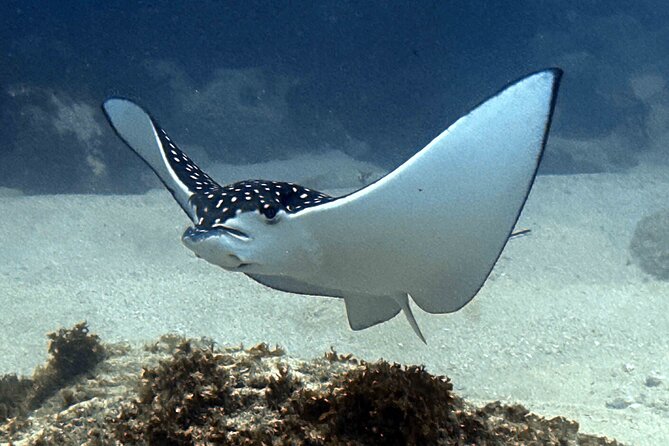
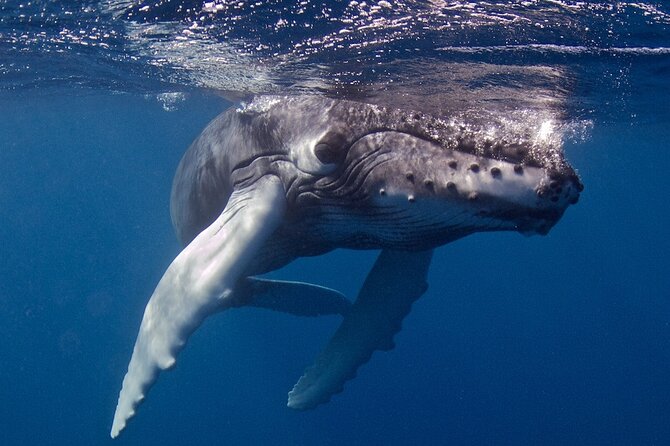
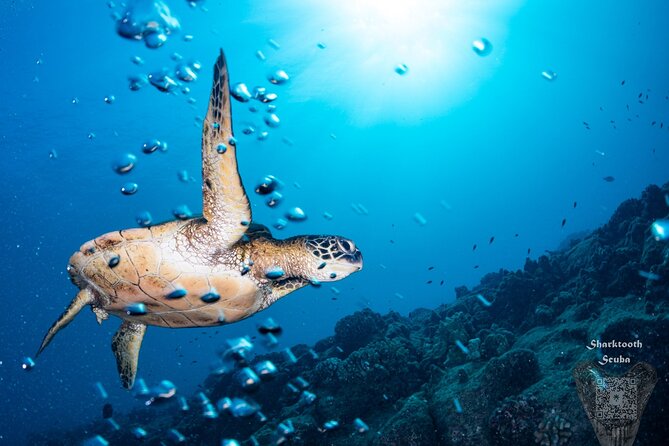
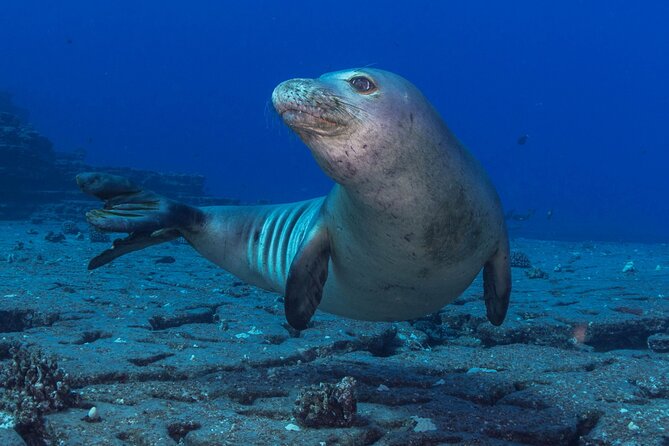
The scenery may include lava arches, reef ecosystems, schooling fish, eels, Hawaiian green sea turtles, and manta rays. No particular animal is guaranteed, but the marine life described for this outing gives you a good sense of what makes scuba worthwhile here. You are not just looking down from the surface. You can move through the reef environment and see the structure of the seafloor from close range.
The first session often works as the confidence builder. You are learning to control your breathing, clear your ears, communicate with hand signals, and manage your position in the water. The second offers more time to enjoy the setting because the equipment feels less foreign.
That second session is a real value point. Many introductory programs offer only a short underwater taste. Here, the cost includes two extended sessions, instruction, gear, boat transport, and the chance to practice again after the first attempt. If the first session feels awkward, the second may be when the experience begins to make sense.
What the underwater learning curve feels like
Snorkeling is not a perfect preview of scuba. You may already feel comfortable in the ocean, but breathing through a regulator and dealing with pressure create new challenges. Equalizing your ears on the way down can take practice, and some people need to rise slightly and try again.
The instructors’ approach is important here. Shawn is praised for making the basics simple and for showing patience with first-timers. Justine is described as kind and careful with safety. Thomas, Debbie, and other crew members have also led beginners through the equipment and underwater skills.
That does not mean every participant will reach the bottom. One person entered the water, became frightened, and chose to come back out. The instructor responded without embarrassment or pressure. This is a valuable feature of an introductory program: you get a fair chance to see how scuba feels, but you are not expected to force yourself past a genuine fear response.
I would book this for someone curious but slightly nervous, as long as that person understands that comfort is not automatic. Tell the instructor what worries you. Ask for a slower pace. Stay close to the guide. The goal is a safe first experience, not proving anything.
More first-time dives in Kauai:
- 1 Tank Discover Scuba at Koloa Landing with No Experience needed
★ 5.0 · 31 reviews - Try Scuba Diving on Kaua’i with Sea Turtles
★ 5.0 · 3 reviews - Discover Scuba Diving
★ 5.0 · 1,676 reviews - Barcelona: PADI Discover Scuba Diving
★ 4.7 · 1,016 reviews
The marine life payoff
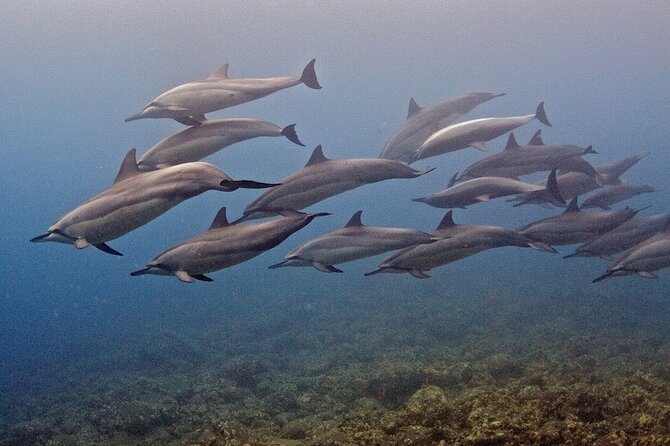
Kauai’s underwater appeal is strongest when you have enough time to stop worrying about the equipment. Once your breathing settles, you can watch fish move over the reef and notice shapes that are easy to miss while bobbing at the surface.
The most frequently praised sightings include green sea turtles, eels, schooling fish, and a wide range of reef fish. A turtle swimming below the group can be a memorable moment, but it is best to keep expectations realistic. Wildlife is not staged, and the ocean does not follow a script.
Lava formations add another layer to the scenery. Arches and reef structures give the seafloor shape, rather than leaving you with a flat view of sand and fish. Manta rays are also listed as a possible sight, though you should regard them as a bonus rather than a guarantee.
The guides help by pointing out marine life and keeping the group organized. That is especially useful when you are new to hand signals and still paying attention to your mask, regulator, ears, and buoyancy. You will get more from the outing if you look around slowly instead of trying to spot everything at once.
Is the $316.59 price fair?
At $316.59 per person, this is not a cheap add-on. I would judge the price against what is included rather than comparing it with the cost of a simple snorkeling trip.
You receive instruction, fitted scuba equipment, a wetsuit, private transportation between the shop and harbor, a boat ride, two underwater sessions, snacks, drinks, water, and all fees and taxes. The boat-based format also gives you access to two South Shore locations, not just one short shoreline lesson.
The two-session structure is the strongest value argument. You pay for more than an equipment demonstration. You get a first attempt, a chance to reset, and another 30 to 45 minutes underwater. If you have been thinking about taking a certification course later, the skills also give you a useful preview of what that training involves.
Still, the price may not make sense if you are unsure you want to enter the water at all. A person who already loves snorkeling but does not want a tank may prefer to spend less on a surface-based activity. This program suits you best if you want to test scuba properly, with professional instruction and enough time to make an informed decision.
Gratuity is not included. Plan for that separately if the crew gives you the level of care you value.
Timing, fitness, and health rules
The full outing takes about five and a half hours and ends back at the shop. It is not a quick morning stop, so leave room in your schedule for check-in, fitting, transport, instruction, practice, the boat trip, and the return process.
You need a moderate level of physical fitness. The program involves handling scuba equipment, walking to the boat, getting into the water, and staying active for two sessions. You do not need to be an athlete, but this is not a passive boat ride.
Before booking, complete the PADI Diver Medical Questionnaire. If your answers require medical clearance, you must obtain a physician’s sign-off stating that it is safe for you to participate. Take this seriously and complete it before the day of the activity.
The most important planning rule comes afterward. You must not travel to more than 1,000 feet in elevation for 18 hours after the activity. That includes commercial and interisland flights, helicopter tours, skydiving, and a visit to Waimea Canyon. Do not schedule this on the last morning of your Kauai trip if you plan to fly out soon after, and do not put a Waimea Canyon excursion immediately afterward.
Weather, cancellation, and practical planning
The activity depends on good weather. If conditions force a cancellation, you can receive a different date or a full refund. The operator also requires a minimum number of participants, so a cancellation for that reason comes with the same general choices.
You can cancel for a full refund up to 24 hours before the 10:00 a.m. start time. Changes or cancellations made inside that 24-hour window are not accepted for a refund.
Wear swim clothing and bring a towel. The operator supplies the major items, including the wetsuit and scuba equipment, so you do not need to pack a personal kit. I would arrive ready to spend most of the day around water and leave valuables behind.
The outing is offered in English and uses a mobile ticket. Confirmation is sent when you book.
Who will get the most from this experience?
This is a strong fit for:
- First-timers who want a serious introduction to scuba
- Couples or friends who want to try the activity together
- Snorkelers curious about seeing the reef from below
- Adults who value patient instruction more than speed
- People considering a future scuba certification course
- Anyone who wants two underwater sessions instead of one brief trial
It may not suit you if you dislike open water, cannot manage moderate physical activity, need to fly or visit Waimea Canyon within 18 hours, or want a guaranteed wildlife encounter. It is also not the right choice if you expect snorkeling to feel exactly the same. The pressure, breathing system, and equipment make it a different activity.
Should you book the Kauai boat scuba experience?
Book it if you want to try scuba in a structured way and can give yourself time to learn. The two sessions, 40-foot maximum depth, full equipment, spacious boat, and patient teaching make this more than a quick photo opportunity.
I would be especially comfortable recommending it to a curious beginner who feels nervous but is willing to communicate with the instructor. The staff have shown they can support someone who needs to slow down, try again, or decide that scuba is not for them.
Skip it if your schedule leaves no room for the post-activity elevation rule or if you are looking only for a relaxed boat ride. At $316.59, the experience earns its price through the two sessions and the level of support, but only if you genuinely want to learn how scuba feels. For the right person, it can turn a Kauai vacation into the start of a new hobby.
FAQ
Do I need scuba certification to join?
No. This experience is designed for people with no previous scuba experience. You receive instruction in basic theory, safety, equipment use, and underwater communication before entering the water.
How many underwater sessions are included?
You receive two boat-based sessions. Each lasts approximately 30 to 45 minutes, and the maximum depth is 40 feet.
Where does the experience begin?
The meeting point is Seasport Divers at 2827 Poipu Road, Koloa, Hawaii. From there, you are driven about two miles to Kukuiula Small Boat Harbor.
What equipment is provided?
The operator provides scuba equipment and a wetsuit. Snacks, coffee or tea, bottled water, and access to purified water are also included.
Can I fly after the activity?
You must not travel to more than 1,000 feet in elevation for 18 hours afterward. That includes commercial and interisland flights, helicopter tours, skydiving, and trips to Waimea Canyon.
What happens if weather cancels the activity?
You can be offered a different date or a full refund if poor weather causes cancellation. The same options apply if the minimum number of participants is not reached.
More Beginner Dives in Kauai
- Kauai Scuba Diving for Beginners
★ 5.0 · 36 reviews - First-Time Scuba Diving in Honolulu + Free Videos
★ 5.0 · 3,123 reviews - Beginner Scuba Diving with Turtles and Videos, San Juan
★ 5.0 · 1,743 reviews - Intro Diving 2 Stops For Beginners with Pick-up and Lunch – Hurghada
★ 5.0 · 1,146 reviews
Just added around Kauai
- Scuba Dive at Ni’ihau (Forbidden island)★ 5.0 · 36 reviews
- 2 Tanks Scuba Dive Kaua’i from a Boat★ 5.0 · 16 reviews
- Kauai Scuba Diving for Beginners★ 5.0 · 36 reviews
- Kauai’s Ultimate Scooter Adventure 2 Tank Dive (Advance Certified Divers Only)★ 5.0 · 26 reviews
- Premium Afternoon Scuba Charter for All Certified Diver Levels★ 5.0 · 24 reviews
- Private Niihau Scuba Charter with 2 or 3 Tank Dive Option★ 5.0 · 3 reviews
- Try Scuba Diving on Kaua’i with Sea Turtles★ 5.0 · 3 reviews
- Shore Dive with Sea Turtles @ Koloa Landing for Certified Divers★ 5.0 · 10 reviews
Discover Scuba Diving, compared.
Half-Day Scuba Diving Tour – Discover Scuba Diving!
Read our review →
2 Days Discover Scuba Diving in Nusa Lembongan – Scuba Initiation
Read our review →