
REVIEW · ITALY
Snorkeling among the Submerged Archaeological Finds of Baia da Napoli
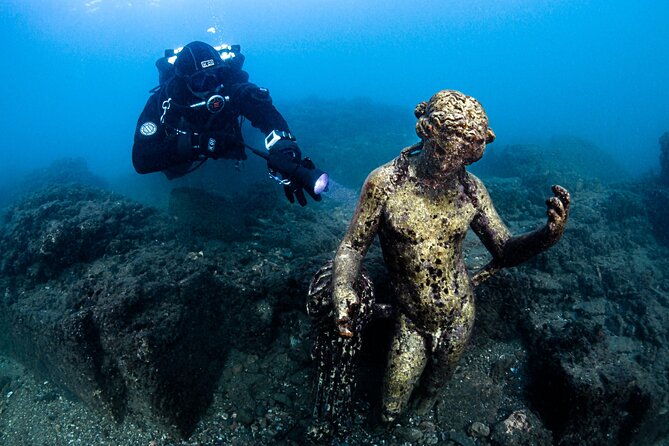
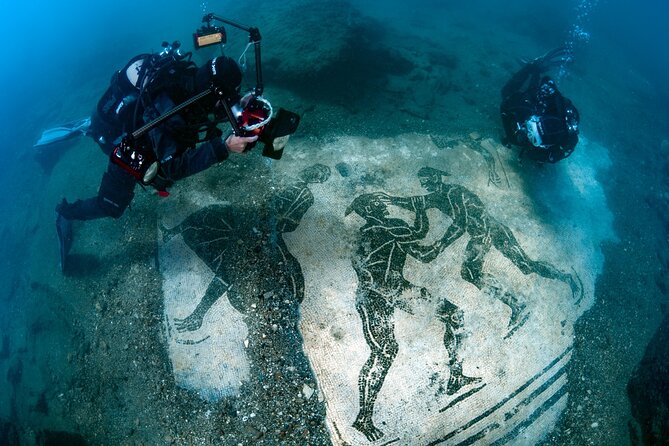
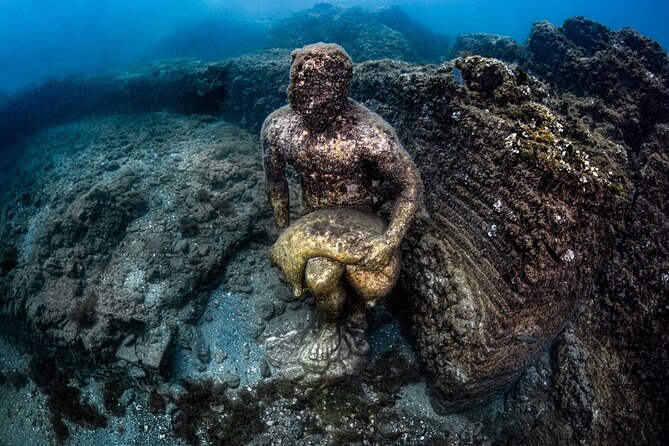
The remarkable part of this outing is that Baia’s Roman remains sit below the sea, where you can see mosaics, statues, columns, wall sections, and even a vase while moving through the water. The sites are shallow, with a maximum depth of about 20 feet, so this is an approachable way to see an archaeological park that cannot be visited from land alone.
I like the small maximum group of four, which gives the instructor room to stay close and help you feel at ease. I also like the careful introduction to the site before you enter the water, since the ruins make much more sense when you know what you are looking at. The main consideration is that the listed price does not include the 65 euro vehicle cost from Naples, paid directly to the driver.
Key points to know
- Roman ruins below the sea: See mosaics, statues, columns, wall sections, and other remains in Baia’s submerged archaeological park.
- Two different underwater sites: The outing includes two sessions in separate locations, giving you more than one view of the ancient city.
- Beginner-friendly depth: The maximum depth is about 20 feet, and instructors can teach first-time participants the basics.
- Very small group: The tour is capped at four people, a useful advantage for nervous beginners and families.
- Strong instructor support: Carlo and Alex are specifically praised for their patience, humor, English, and close guidance.
- Budget for transport: Pickup is offered, but the air-conditioned vehicle costs 65 euros from Naples and is paid directly to the driver.
Baia’s Roman city beneath the water
Baia was once a Roman resort town on the Bay of Naples, known for grand villas and a luxurious seaside life. Over time, volcanic activity and changes in the coastline left parts of the ancient settlement below the water.
That gives this outing its special character. You are not looking at ruins behind a barrier or trying to picture the old city from a museum label. You are floating above pieces of the city itself. Mosaics, marble, columns, statues, and parts of the city wall appear in their original setting, with fish and other sea life moving through the same space.
The underwater setting also changes how you read the archaeology. A column is not just an isolated object. A patterned floor is not merely a decorative fragment. Together, the remains suggest the scale and polish of a Roman coastal community.
You should keep your expectations realistic. The ruins are underwater and the tour lasts about four hours, not an entire day at sea. Visibility can vary with weather and water conditions, and the experience requires good weather. Still, the combination of archaeology and snorkeling or scuba instruction is unusual enough to make this one of Naples’ more distinctive excursions.
More snorkelling trips in Italy:
- Polignano a Mare luxury boat tour, aperitif, diving and snorkeling
★ 5.0 · 51 reviews - Snorkeling and Diving in the Gulf of Tavolara with Fishing
★ 5.0 · 6 reviews - Great Barrier Reef Snorkeling and Diving Cruise from Cairns
★ 4.5 · 3,714 reviews
What happens before you enter the water
The tour begins with preparation and an explanation of the archaeological site. Before you enter, the instructors describe the layout and point out what you will be looking for. That short history briefing matters because submerged ruins can be hard to read at first.
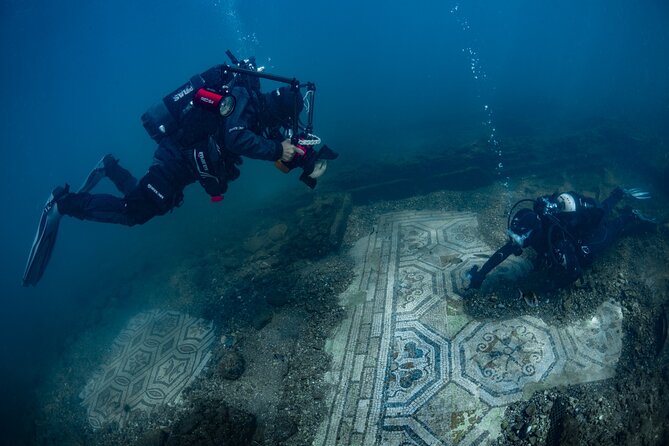
The water can make familiar objects look strange. A wall section may seem like a low stone line. A mosaic may be easy to miss until your guide directs your attention to its pattern. Knowing the layout helps you connect separate pieces and understand that you are seeing part of a former city, not random material scattered on the seabed.
You receive scuba equipment as part of the price, along with bottled water and all fees and taxes. The equipment is included, but the available information does not specify particular brands or whether a wetsuit is supplied. If you need a certain size or have equipment concerns, ask SuBaia Diving Center before booking.
First-time participants are welcome according to the tour details, and the instruction is designed to cover the basics. That makes the experience less intimidating than the word scuba might suggest. You still need to be comfortable following directions in the water, but you do not need to arrive as an experienced underwater explorer.
Carlo is one of the instructors associated with the experience. He is praised for his clear English, easy humor, and calm guidance. Alex is also singled out for making the outing friendly and for staying with the group throughout the underwater sessions. The most useful point here is not personality alone: you have an instructor close by while you learn and look around.
Two sites, two views of the submerged park
The main activity consists of two underwater sessions at different locations. This is a better arrangement than spending the whole outing over one small patch of ruins, since each site offers a different look at Baia’s ancient remains.
At one location, you might see mosaics and marble pieces that hint at the decoration of Roman buildings. At another, you may encounter portions of a wall, columns, statues, or a vase. The exact objects visible can depend on water clarity, conditions, and the route used that day, so you should not treat every listed feature as guaranteed at a precise spot.
The maximum depth is about 20 feet. That is shallow by scuba standards and can make a real difference to a first-time participant. You remain close to the surface compared with a deep-water outing, and the limited depth leaves more time for looking rather than managing a demanding descent.
One reported session lasted 39 minutes. That gives you a useful sense of scale, though the exact time underwater can vary. With two sessions, you should expect a compact archaeological outing rather than several hours of continuous time in the water.
The boat ride from the dock to the site is only a few minutes. That keeps the outing focused. You spend less time crossing open water and more time preparing, listening, and examining the ruins. If you are prone to seasickness, a short boat transfer may also feel easier than a long cruise, though no tour can guarantee perfect comfort at sea.
Why the small group matters
A maximum of four participants is one of the strongest practical features here. Underwater instruction is more personal when the guide is not managing a large cluster of people. You can ask questions before entering, and the instructor has a better chance of noticing if you need help with your equipment or breathing.
The small group also suits couples and families. One 18-year-old participant joined parents who had scuba experience, and the arrangement worked for the family member trying it for the first time. The same setup may appeal to an older couple or anyone who wants a quieter experience than a crowded boat trip.
Do not confuse a small group with a private charter unless the operator confirms that arrangement. The stated maximum is four people, not a guarantee that your party will be the only party booked. The English-language tour is offered in a small format, and the provider is SuBaia Diving Center.
The close guidance is especially valuable if you are nervous. Instructors are reported to stay with the group during the underwater sessions, rather than sending beginners off to manage the site on their own. That support lets you give more attention to the mosaics and statues instead of worrying about navigation.
Same water, a completely different day underwater:
- Polignano a Mare boat tour emotions, caves, diving and appetizers
★ 5.0 · 1,022 reviews - Catania: Gulf Scuba Diving Tour with Marine Biologist
★ 4.9 · 212 reviews - Diving for patented divers
★ 5.0 · 175 reviews - Diving for certified divers with PADI 5* Diving Resort – Taormina
★ 5.0 · 167 reviews
What the ruins look like underwater
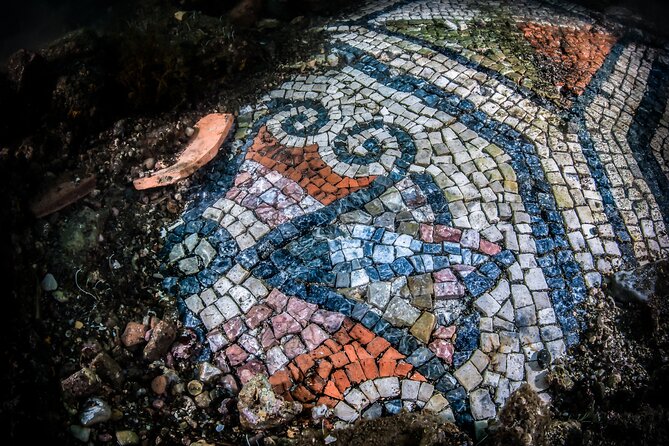
The appeal of Baia is the mix of large structures and small visual surprises. Columns and wall sections give you a sense of the old buildings, while mosaics provide the finer detail. A statue or vase can make the setting feel personal, reminding you that this was once a working Roman town rather than an abstract archaeological site.
You may also see sea life moving around the ruins. That natural setting is part of the charm, but it also means you should not expect a museum display with every object perfectly visible. Water, light, and marine growth affect what you can see on the day.
A waterproof camera is a sensible addition if you own one. Bring it only if you can use it without losing control of your equipment or distracting yourself from the guide. The site is the main event, and a blurry photograph is a poor trade for missing a mosaic in front of you.
The short history briefing helps you avoid that problem. Listen first, then look. When the guide points out a floor pattern or wall fragment, take a moment to compare the object with the surrounding seabed. The experience rewards attention more than frantic picture taking.
Price, transport, and what you receive
The advertised cost is $126.71 per person. That includes scuba equipment, bottled water, and all fees and taxes. For a four-hour outing with two underwater sessions, a trained instructor, a boat transfer, and access to a protected archaeological area, the price can be fair, particularly if you value a small group.
The extra transport cost needs careful attention. An air-conditioned vehicle from Naples costs 65 euros, paid directly to the driver. Pickup is offered, but the available information does not make clear whether that 65 euro amount is per vehicle or per group, so confirm the arrangement before you commit.
That transport charge changes the value calculation for solo participants. Split among several people, it may be reasonable. Paid by one person, it becomes a noticeable addition to the advertised rate. Ask where pickup occurs, how the fee is divided, and whether you can reach the meeting point another way.
The tour is offered in English and comes with a mobile ticket. Confirmation is provided when you book, and the average booking lead time is about 34 days. That is a useful signal to plan ahead, especially if you are visiting Naples on a fixed schedule.
Weather and cancellation details to keep in mind
This activity depends on good weather. Poor conditions can lead to a change of date or a full refund, which is sensible for a water-based outing but still matters when planning a tight Italy itinerary.
You can cancel for a full refund if you do so at least 24 hours before the start time. Cancellations made less than 24 hours ahead are not refunded, and changes inside that window are not accepted. The cut-off follows local time.
I would avoid placing this tour on the final morning of a short Naples stay. Give yourself some flexibility in case weather forces a new date. That is not a criticism of the operator. It is simply the practical cost of booking an activity that relies on sea conditions.
Who will enjoy this most
This outing fits you best if you want archaeology with active participation. You are not simply looking at ancient objects from a path or gallery. You are moving through the site, following an instructor, and learning how to manage the equipment as you go.
It is also a good match for first-time scuba participants who want a shallow setting and close supervision. The reported maximum depth of 20 feet, patient instruction, and small group all work in your favor.
Experienced scuba participants may appreciate the setting more than the technical challenge. This is not a deep or demanding underwater trip. The reward is the Roman site, not difficult conditions, long bottom time, or advanced training.
Families can consider it if everyone is comfortable with the water and able to follow the instructor’s directions. The information says most people can participate, but it does not provide specific age, medical, swimming, or certification rules. Ask the provider directly if any member of your party has a health concern or special requirement.
You may want to skip it if you dislike being in the water, want a long sightseeing day on dry land, or need a fully predictable schedule. You should also think twice if the separate transport cost makes the total price uncomfortable.
Nearby time and the rest of your day
The outing itself lasts approximately four hours. The short boat transfer keeps the water portion efficient, leaving room to plan another activity on the same day, although you should allow extra time around pickup and equipment preparation.
Food is available near the dive site, and there are ruins nearby that you can visit on land. That makes the area useful for a fuller half-day plan. You can see a different side of Baia above the water after exploring what lies below it.
Do not pack the schedule too tightly. The stated duration is approximate, and weather or group preparation can affect timing. If you are connecting this with a train, flight, or timed museum visit, leave a generous margin.
My verdict: is Baia worth booking?
I would book this if the idea of seeing Roman mosaics and structures below the sea excites you, especially if you are new to scuba and want personal instruction. The shallow sites, two different locations, four-person limit, and guides such as Carlo and Alex give the outing a strong practical foundation.
The published rating is 4.8 out of 5 from 72 ratings, with 97 percent recommending it. Those figures fit the experience’s strongest points: friendly instruction, close support, and an unusual archaeological setting.
Before booking, confirm the 65 euro transport charge, check what equipment is supplied, and protect your schedule from weather changes. If you can handle those details, this is a memorable way to meet ancient Baia, one mosaic and column at a time.
FAQ
Where does the tour take place?
The experience takes place in Naples, with the underwater sessions in Baia’s submerged archaeological park.
How long does the activity last?
The tour lasts approximately four hours.
How many underwater sessions are included?
You receive two sessions at two different underwater locations.
How deep are the sites?
The maximum depth is about 20 feet.
Is scuba equipment included?
Yes. Scuba equipment, bottled water, and all fees and taxes are included.
Is transport from Naples included?
Pickup is offered, but an air-conditioned vehicle from Naples costs 65 euros and is paid directly to the driver.
Is the tour suitable for beginners?
Yes. Most people can participate, and the instructors teach beginners the basics. The shallow depth and close guidance also suit first-time participants.
How many people can join the tour?
The activity has a maximum of four participants.
What happens if bad weather cancels the tour?
You can receive a different date or a full refund if poor weather causes the activity to be canceled.
Just added around Italy
- Villasimius: Capo Carbonara First Time Dive with Instructor★ 4.9 · 50 reviews
- Villasimius: Scuba Dive in Capo Carbona without Certificate★ 4.9 · 23 reviews
- Discover Scuba diving in Calabria, Italy★ 4.5 · 3 reviews
- Scuba diving in Calabria, Italy★ 5.0 · 23 reviews
- Double dive in the Punta Campanella Marine Protected Area★ 5.0 · 11 reviews
- Guided diving for beginners without certification from Sorrento★ 5.0 · 22 reviews
- Discover Scuba Diving PADI – Trial dive in Sorrento★ 5.0 · 2 reviews
- Try Scuba Dive (baptism of the sea)★ 5.0 · 5 reviews
Snorkeling, compared.

Great Barrier Reef Snorkeling and Diving Cruise from Cairns
Read our review →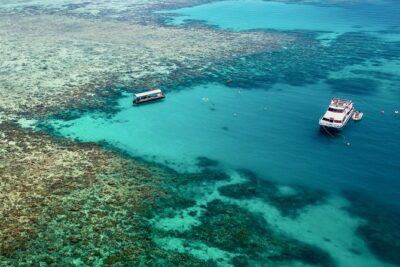
Ocean Freedom Great Barrier Reef Luxury Snorkel and Dive Cruise
Read our review →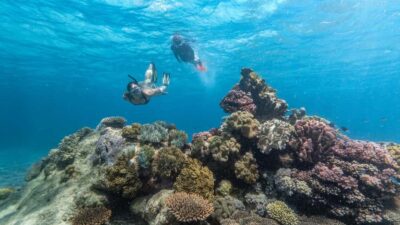
Cairns: Premium Snorkelling and Diving Reef Day Trip
Read our review →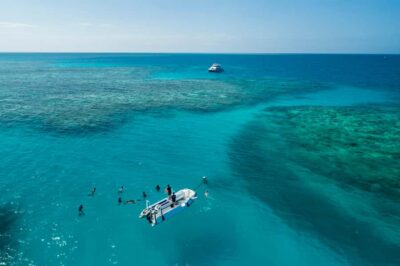
Cairns: Outer and Coral Cay Snorkel and Dive Cruise
Read our review →
Sharm El Sheikh: Ras Mohamed & White Island Dive & Snorkel
Read our review →
Hurghada: Snorkeling 6 x 1 to Orange Bay w Diving & Massage
Read our review →
Snorkel & Dive the Reef: Sustainable, Scientific & Cultural Tour
Read our review →
Port Douglas: Outer Barrier Reef Snorkel and Dive Options
Read our review →Lists this dive appears in