
REVIEW · PUERTO RICO
Discover Scuba Diving
Rincón’s Discover Scuba Diving course gives you a real taste of scuba without committing to a full certification class. You’ll learn basic skills in shallow Caribbean water, then head to a coral reef with a PADI instructor at your side, reaching a maximum of about 40 feet.
I like the small instructor-to-participant setup, which gives nervous beginners more personal attention. I also like that no boat is needed: after a short five-minute drive from the shop, you enter the sea from the beach and explore the same reef area used by certified divers.
The main drawback is practical rather than underwater: you must provide your own transportation from the shop to the beach. The $139 price is fair for a half-day introduction with gear and instruction, though it may feel high if you only want a short swim.
Key points to know before you book
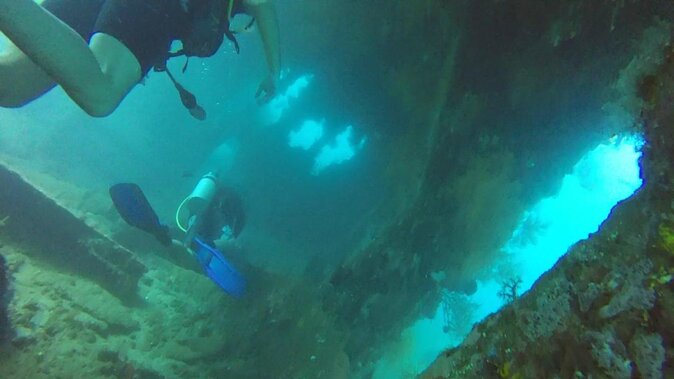
- You reach a coral reef without a boat: The beach is only about five minutes from the shop by car.
- You practice skills before exploring: Mask clearing, regulator recovery, and sharing air are introduced in shallow water.
- You can descend to 40 feet: This is a supervised introductory experience, not a certification.
- Groups stay small: The stated ratio is up to four participants per instructor, while the booking information also lists a maximum of three travelers. Ask the center to confirm the group size for your date.
- The water is warm: Temperatures average in the low to mid-80s Fahrenheit, so extra thermal protection is usually unnecessary.
- You need to plan around flights: Do not take part if you will fly within 18 hours afterward.
A gentle first step into scuba
This experience is made for someone who has watched snorkelers disappear below the surface and wondered what they were seeing. You do not need previous scuba training, but you must be able to swim. Prior snorkeling experience helps, especially when you are learning to breathe through a regulator and stay calm with your face underwater.
The course is not a full certification. You will not leave qualified to rent equipment or scuba on your own. Instead, you get a supervised introduction that can help you decide if the PADI Scuba Diver or Open Water Diver course is worth your time and money.
That distinction matters. A full certification involves more classroom work, skills practice, and logged sessions. Here, the goal is simpler: learn the basic concepts, complete introductory skills, and experience a shallow open-water reef with a professional instructor.
The setting also helps. Rincón is known for its coastal waters, and this tour uses a beach entry rather than a boat. That keeps the day easier for first-timers who might feel uneasy on a rocking vessel, though you should still be comfortable carrying your gear a short distance and entering the sea.
More first-time dives in Puerto Rico:
- Discover Scuba Diving in San Juan: Perfect for First-Time Divers
★ 4.5 · 70 reviews - Discover Scuba Diving in San Juan
★ 5.0 · 33 reviews - Discover Scuba Diving
★ 5.0 · 1,676 reviews
What happens at the 9 a.m. meeting point
You begin at Rincon Diving & Snorkeling, at 2207 Ave Pedro Albizu Campos, Carr 115, Rincón. The listed start time is 9 a.m., and the activity finishes back at the meeting point, although the detailed schedule notes that the actual water portion ends on the beach before you return to the shop.
Your first task is paperwork. You will provide basic personal information and answer questions about your medical history. Take this part seriously. Certain conditions, including some heart problems and asthma-related concerns, may prevent you from taking part, so contact the center before booking if you are unsure.
Next comes a short training video of about 15 minutes. It explains the course and the basic techniques you will use. Your instructor then repeats the main points and answers questions before you handle the equipment.
Allow roughly 45 minutes for check-in, instruction, equipment fitting, and the first briefing. The exact time depends on the size of the group. This may feel slow when you are eager to get into the water, but it is useful preparation. A beginner needs to know how the mask, regulator, air tank, and other equipment fit before trying to manage them at sea.
Meeting the instructor and fitting the equipment
The course is taught by PADI-certified instructors. Instruction is in English, with a Spanish-speaking instructor available by request. If you need Spanish guidance, call the center after booking and confirm the request rather than assuming it will be arranged automatically.
The advertised format limits the group to four participants per instructor. The booking information also states a maximum of three travelers, so there is a small inconsistency in the published capacity. I would ask the shop to confirm the group size when you book, especially if personal attention is a major reason for choosing this course.
Small groups matter here. New scuba participants often need extra time with mask fit, breathing, buoyancy, and hand signals. A patient instructor can make the difference between settling into the experience and spending the whole session feeling rushed. One instructor, Claire, is specifically associated with helping a nervous beginner relax and enjoy the experience, which gives you a useful sense of the calm approach this course aims for.
All scuba equipment and snorkel equipment are supplied. If you own equipment that fits you especially well, you may bring it, but you do not need to purchase or pack a complete set for this activity.
The five-minute drive to the beach
After training, you drive from the shop to the beach in your own vehicle. The trip takes about five minutes, and the group caravans there. Transportation is not provided, and limited taxis are available in the area, so arrange your ride before arrival.
This is one of the details that can catch you off guard. The activity is easy to book as a half-day outing, but you still need a way to move between the meeting point and the water. If you are traveling with a rental car, the transfer should be simple. If you are relying on taxis, call the center ahead of time for practical advice.
No boat is required. That saves both time and possible seasickness, and it puts the focus on learning rather than on a long ride to an offshore site. The tradeoff is that a beach entry can involve walking in shallow water while wearing unfamiliar equipment, so listen closely to your instructor’s instructions.
A few more dives around Puerto Rico worth comparing
- Beginner Scuba Diving with Turtles and Videos, San Juan
★ 5.0 · 1,743 reviews - Fajardo 2-Tank Scuba Dive for Certified Divers Only
★ 5.0 · 191 reviews - Experience Scuba Diving / NO certification Needed
★ 4.5 · 104 reviews - Discover Fajardo: 2-Tank Scuba Diving
★ 4.5 · 91 reviews
Learning the basic skills in shallow water
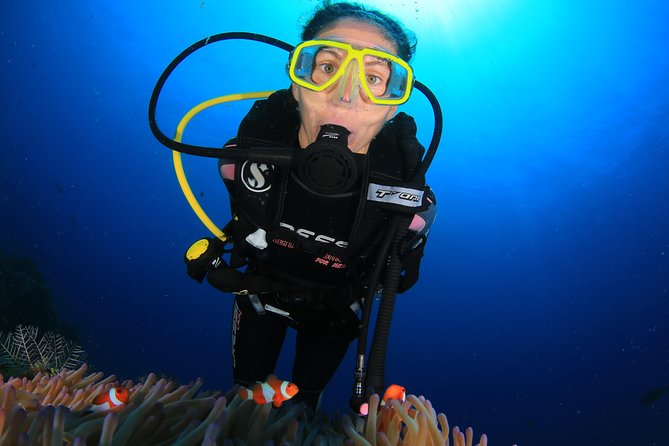
At the start of the first session, you practice in shallow sea water. This is where the course becomes more than a short orientation talk. You will learn the basic skills needed to stay comfortable and respond to common situations underwater.
The listed skills include clearing your mask, recovering your regulator, and sharing air. Mask clearing can feel strange at first, since it asks you to remain calm while water enters the mask. Regulator recovery teaches you how to locate and replace the breathing device if it moves from your mouth. Sharing air introduces a basic response for an out-of-air situation.
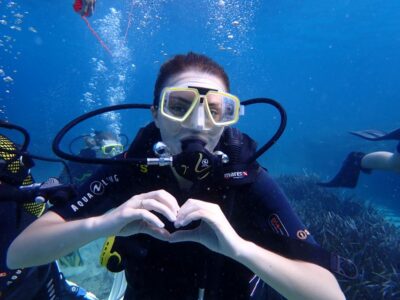
The instructor stays with you throughout the underwater portion. You will use hand signals and follow the pace set by the professional leading the group. If you feel anxious, say so early. The purpose of a small group is to let the instructor give you help before a minor concern becomes a major one.
A short lesson can move quickly. One person found the opening instruction clear but fast, so do not be shy about asking for a point to be repeated. You are not expected to absorb every detail by watching the video once. This is the right time to slow down, check your gear, and make sure you understand the signal for stopping or returning to the surface.
Exploring Rincón’s reef to 40 feet
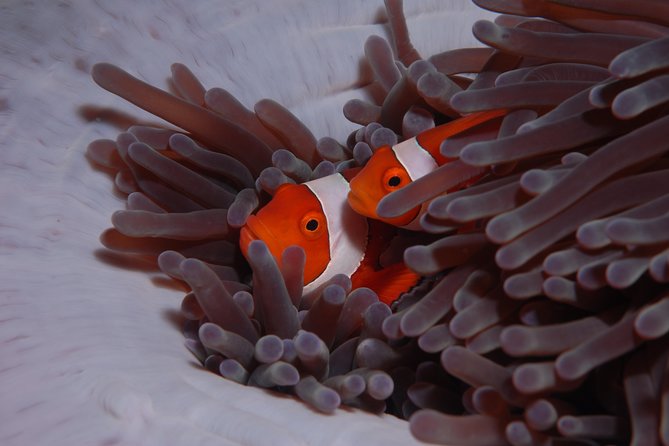
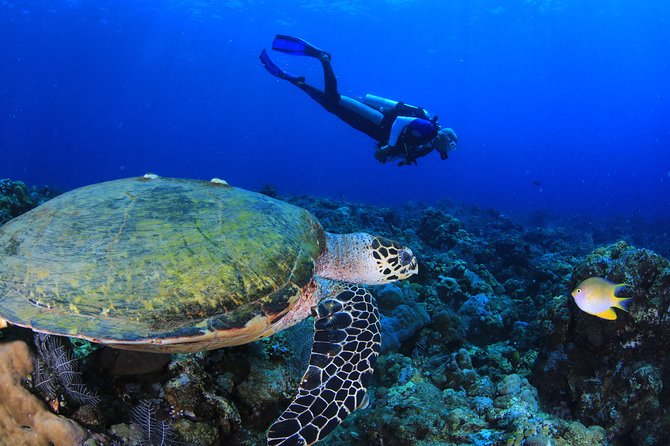
Once you are comfortable with the basic techniques, you head toward the shallow open-water reef. The maximum depth is 12 meters, or about 39 to 40 feet. Your instructor remains with you, and you are not free to wander off or set your own route.
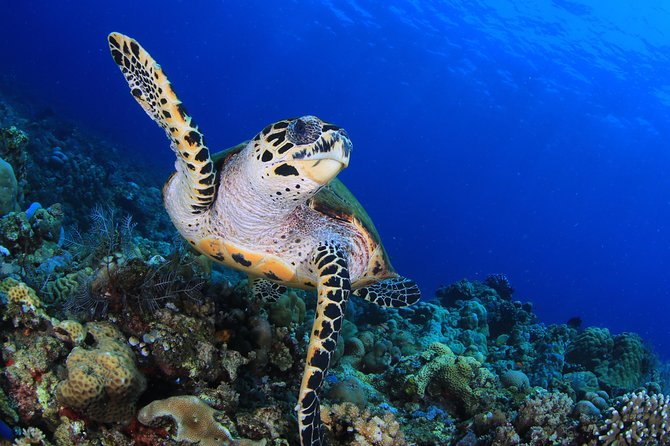
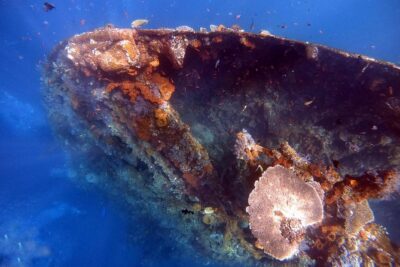
The reef is the main reason to choose this experience instead of practicing in a pool. You get to use the new skills in the Caribbean sea and see the underwater setting that certified scuba participants visit. The exact marine life and visibility can change with weather and water conditions, but the experience includes a genuine open-water session rather than only a classroom demonstration.
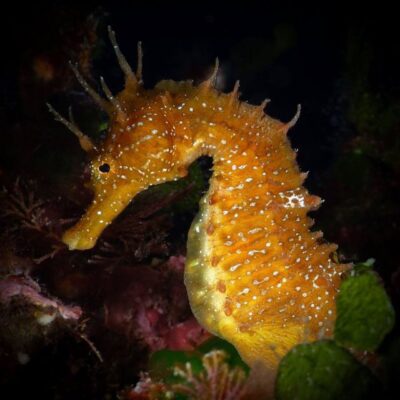
You might see reef fish and other marine life. One particularly fortunate participant saw three sharks, but that should be treated as an unexpected possibility, not a promised feature. The reliable attraction is the chance to explore a coral reef at a modest depth with an instructor close by.
Several people praised the scenery and the instructors’ patience. That combination is important. Beautiful water does not help much if you are too tense to enjoy it, and good instruction matters more than trying to reach the deepest possible point. This course keeps the depth limited and the setting manageable for a first attempt.
If you choose an additional session
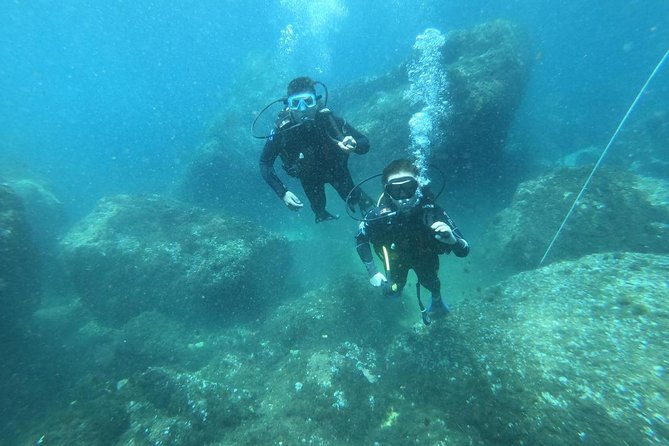
The detailed schedule allows for a second open-water session if you select that option. You take an hour-long break, receive another briefing, and then move to a different coral reef with your instructor.
A second session can be worthwhile if you want more time to get comfortable. During a first attempt, you may spend much of the opening portion thinking about breathing, body position, and clearing your ears. Another session gives you a chance to use those skills with less mental clutter.
Check exactly which version you are booking, since the base price and the second-session option may not be the same. The supplied price is $139 per person, but the details do not state the additional cost for the second session. Ask the center before paying if you want the longer format.
What the $139 price includes
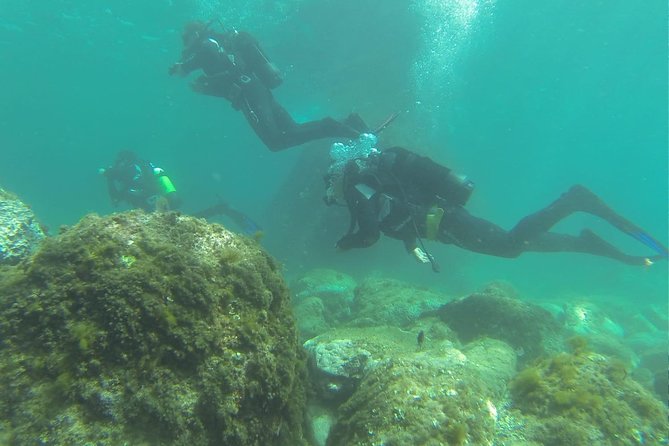
At $139 per person, this is not a bargain-bin beach activity. You are paying for a half-day program, a PADI instructor, scuba and snorkel equipment, taxes, fees, and handling charges. Bottled water is also provided, and the center offers free refills from its filtered rainwater collection, though you are encouraged to bring your own bottle.
I see the value in the instruction and equipment. Buying or renting scuba gear separately would add cost and trouble, while a full certification course would require a much larger time commitment. This session lets you test the sport before making that investment.
The price may feel less appealing if you already have scuba experience or only want to float above the reef. Snorkeling would be simpler and likely less expensive. But if you want to know what it feels like to breathe underwater and manage scuba equipment, the course gives you a practical answer in one morning.
Group discounts are available. Ask about the current terms if you are booking for several people. Since there is no minimum number of participants required to book, you do not need to wait for a large party to fill the session.
What to wear and bring
Wear a swimsuit and bring a towel. The water averages in the low to mid-80s Fahrenheit, so most people will not need a thick thermal layer.
A T-shirt or sun shirt is a smart choice. It can reduce sunburn and rubbing from the equipment, especially during the briefing and shallow-water practice. Apply reef-safe sunscreen before arrival and bring extra for later. The center defines reef-safe sunscreen as products without oxybenzone, with mineral formulas such as zinc oxide generally preferred.
Bring drinking water, even though the center provides water and refill access. You should drink plenty before the activity, since sun, warm weather, and physical effort can leave you dehydrated before you notice it.
Do not schedule this course close to a flight. You cannot participate if you will fly within 18 hours afterward, and scuba activity within 18 hours before flying is not recommended. Build that buffer into your Puerto Rico plans before choosing a date.
Who will enjoy this most
I would choose this for an adventurous snorkeler, a water lover, or anyone curious about scuba but not ready for a certification course. The shallow reef, limited depth, and instructor supervision make it a sensible first try.
You need a moderate level of physical fitness and the ability to swim. The minimum age is 10, but the center warns that the activity may not suit every child from 10 to 14. If a child under 14 is joining, call before booking and discuss the situation with the shop.
This is less suitable if you dislike wearing a mask, feel very uncomfortable in open water, or have a medical condition that may restrict scuba activity. It is also a poor fit for a tight schedule, since the full experience takes about three to five hours and includes paperwork, instruction, a vehicle transfer, equipment fitting, and time in the water.
The course has a strong approval record, with 97 percent recommended and a 4.8 rating from 66 reviews. I would give the most weight to the repeated praise for patient instructors, clear guidance, beautiful reefs, and the confidence boost that comes from overcoming first-timer nerves. I would also keep the complaints in view: the opening lesson can feel quick, and some people may find the price high.
Cancellation and weather planning
You can cancel for a full refund up to 24 hours before the local start time. Changes or cancellations made inside that 24-hour window are not accepted for a refund.
Weather can change the plan. The operator may cancel or reroute the activity for safety, poor conditions, or other uncontrollable reasons. If that happens, you will be offered another date, a different accessible location, or a full refund if a suitable alternative is not possible.
Should you book this Rincón scuba experience?
Book it if you want a real but carefully supervised introduction to scuba, especially if you are already comfortable snorkeling. The small group format, warm water, reef access, and supplied equipment make the $139 reasonable for testing a new sport without signing up for full certification.
Before you commit, confirm the group size, ask for a Spanish-speaking instructor if needed, and arrange your own five-minute transfer to the beach. Check your medical eligibility and leave at least 18 hours before any flight.
I would skip it if you only want a quick swim, cannot swim, have a very tight morning, or feel the price is too high for an introductory session. For the right beginner, though, this is a practical way to find out if the underwater world is something you want to pursue.
FAQ
Do I need prior scuba experience?
No. The course is designed for beginners and includes basic scuba theory, equipment instruction, shallow-water skills, and a supervised open-water session.
Do I need to know how to swim?
Yes. Participants must be able to swim. Prior snorkeling experience is helpful but is not required.
What is the maximum depth?
The maximum depth is 12 meters, or about 39 to 40 feet.
How old must I be to participate?
The minimum age is 10. The activity may not suit every child aged 10 to 14, so contact the dive center before booking for a child under 14.
Is scuba equipment provided?
Yes. All scuba and snorkel equipment needed for the activity is provided. You may bring your own equipment if you prefer its fit.
Do I need a boat to reach the reef?
No. The group drives about five minutes from the dive center to the beach and enters the water from shore.
Is transportation to the beach included?
No. Participants caravan to the beach in their own transportation. Limited taxis are available in the area.
Can I take this course before flying?
No. You cannot participate if you will fly within 18 hours after the course. Scuba activity within 18 hours before flying is not recommended.
What happens if the weather is poor?
The operator may cancel or reroute the activity for weather or safety reasons. You will be offered another date, another accessible location, or a full refund when necessary.
Just added around Puerto Rico
- Discover Scuba Diving in San Juan: Perfect for First-Time Divers★ 4.5 · 70 reviews
- Get SCUBA Certified at San Juan★ 5.0 · 35 reviews
- Scuba Tour for Certified Divers in San Juan★ 5.0 · 31 reviews
- Discover Scuba Diving in San Juan★ 5.0 · 33 reviews
- Beginner Scuba Diving Guided Tour – No Experience Required★ 4.5 · 67 reviews
- OCTOPUS DIVING (hookah diving) NO Experience Needed★ 4.0 · 9 reviews
- Guided Shore Diving Tour★ 5.0 · 53 reviews
- Guided Coral Reef Scuba Tour / 1 tank (Certified Divers Only)★ 4.5 · 51 reviews
Discover Scuba Diving, compared.
Half-Day Scuba Diving Tour – Discover Scuba Diving!
Read our review →
2 Days Discover Scuba Diving in Nusa Lembongan – Scuba Initiation
Read our review →Lists this dive appears in