
REVIEW · TENERIFE
PADI Open Water Diver Course
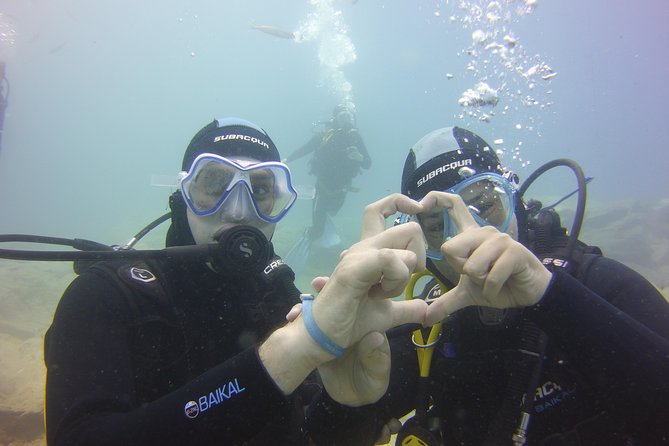
Tenerife’s volcanic coast gives this PADI Open Water course a useful setting: you learn the basics, then practice them in the sea while fish, octopus, rays, turtles, and volcanic rock pass by. Ocean Trek keeps groups small, which matters when you are trying to control your breathing, clear a mask, or manage your buoyancy for the first time.
I like the personal instruction and the practical setup. Instructors including Juan, Gerhard, Manuel, Nelly, and Gema are praised for calm teaching, clear demonstrations, and adjusting the pace to each student. I also like that equipment, course books, logbook, certification fees, water, and hotel transport are bundled into the price.
The main thing to consider is cost. At $792.16 per person, this is not a cheap holiday activity, though it covers a full certification rather than a one-off underwater tryout. You will also need to arrange your own lunch, and the schedule can take much of each day.
Key points to know before booking
- Three days of training: Expect theory plus practical sessions spread across roughly three days.
- Small groups: Ocean Trek commonly keeps instruction groups to about four people, though group size can vary by session.
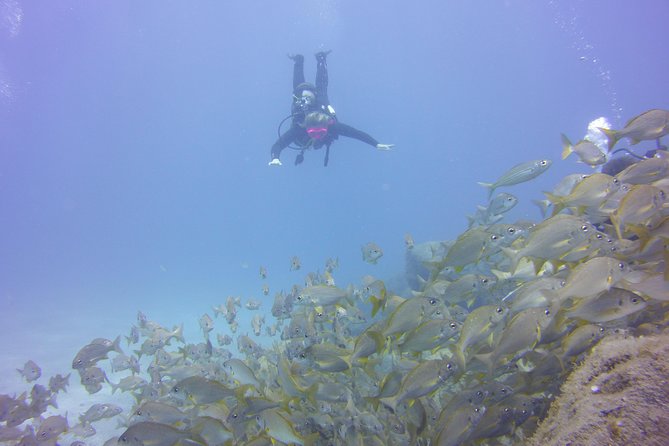
- Tenerife’s volcanic seabed: The course combines required skills with chances to see fish, octopus, cuttlefish, moray eels, barracuda, rays, and turtles.
- Several named instructors: Juan, Gerhard, Manuel, Nelly, Gema, Ryan, Maria, Sean, and Pauli are part of the teaching team mentioned in the supplied information.
- Useful inclusions: Full equipment, learning materials, logbook, PADI fees, bottled water, and local pickup are included.
- Real certification: Once you complete the course, you can independently scuba around the world, rent equipment, and have tanks filled.
Learning to breathe underwater in Costa Adeje
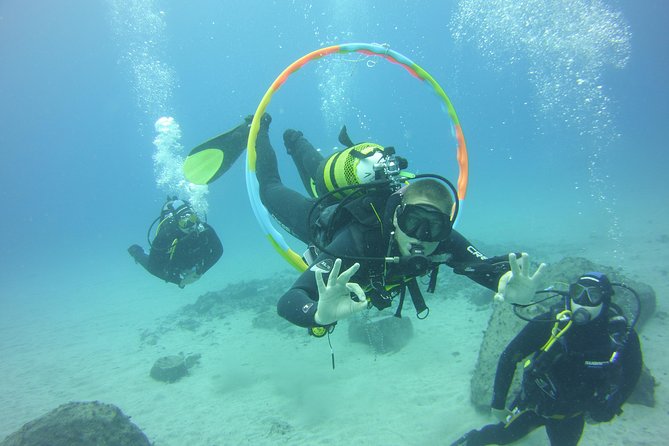
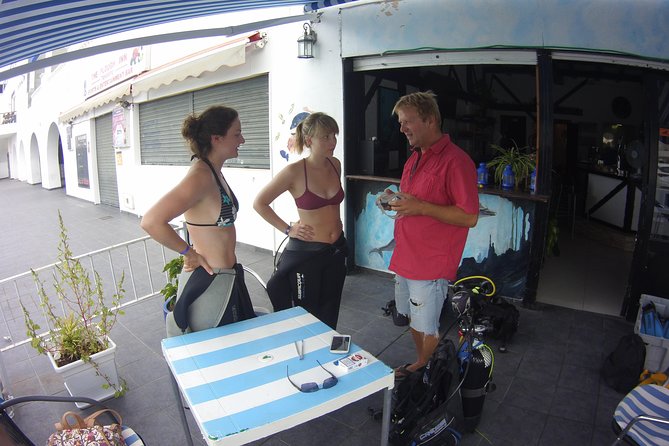
Ocean Trek operates from C. Valencia in Costa Adeje, on Tenerife’s southwest coast. This is the base for the theory, equipment preparation, transport, and practical training.
The course begins with the foundations of scuba. You learn how the equipment works, how to breathe from a regulator, how to equalize pressure, and how to respond to common problems underwater. The theoretical portion can be completed through PADI eLearning before arriving, which may make the three-day schedule easier to manage.
Allow roughly eight to twelve hours for the theory if you complete it ahead of time. The supplied information describes the online questions as manageable, with a 75 percent pass mark, followed by an additional set of questions at the center to confirm that the work was completed properly.
That preparation is worth taking seriously. You do not need to be an academic, but you do need to understand pressure, air use, safety procedures, and what to do if something feels wrong. The practical sessions become much less stressful when the basic ideas are already familiar.
The teaching approach is simple and effective: explanation, demonstration, imitation, and practice. That order matters. You first hear what to do, watch it done, try it yourself, and then repeat it until the movement feels natural.
More Scuba Diving in Tenerife
- Tenerife: Your First Scuba Diving Experience in Turtle Area
★ 4.7 · 1,679 reviews - Tenerife: Beginner’s Dive at a Spot with Turtle Sightings
★ 4.7 · 627 reviews - Tenerife First Time Scuba Dive – Turtle Habitat, Small Groups
★ 4.5 · 456 reviews
What the three-day schedule is really like
The course is advertised as lasting about three days, with underwater sessions twice daily. The practical part is built around the skills required for PADI Open Water certification.
A typical progression includes an introductory session, shallow-water skill work, and later sessions in open water. The supplied information describes four required practical sessions, while one participant completed five sessions over three days. Your exact schedule can depend on progress, group needs, and conditions.
The first session helps you get comfortable with the equipment and the sensation of breathing underwater. This is where you discover that simple actions on land can feel unfamiliar in the sea. Getting your mask, regulator, buoyancy device, and breathing rhythm under control takes attention.
The next sessions focus on required skills in relatively shallow water. You practice procedures such as mask clearing, buoyancy control, and pressure equalization. The goal is not to rush through a checklist. It is to make sure you can repeat the skills calmly.
The final practical session gives you a chance to use those skills in a more complete underwater outing. Depths mentioned in the supplied information are generally around five to ten meters for beginners. That is shallow enough for training, but still deep enough to see the volcanic seabed and marine life.
You should expect each morning session to take time. One account puts the return to the hotel after a morning outing at no earlier than about 2 p.m. That is useful when planning meals, sightseeing, or an afternoon at the beach. Do not schedule a demanding excursion immediately afterward.
Why small groups make a difference
Ocean Trek’s small-group format is one of its strongest features. Groups of about four people are mentioned, although the exact number can vary. That gives an instructor more time to watch your breathing, position, fin movement, and comfort level.
For a beginner, this is not a minor luxury. If you are nervous, you want an instructor who notices before a small problem becomes a big one. If you learn quickly, you want feedback rather than a long wait while another student repeats the same exercise.
The course also uses more than one instructor across its sessions. Juan is specifically praised for calmly taking beginners through the process. Gerhard is described as attentive and encouraging, while Manuel receives strong praise for careful skill practice. Nelly and Pauli are also noted for combining a professional approach with a friendly manner.
This is a private activity, so only your group participates. That gives you a more personal setting than a large class, but you should still confirm the planned group size when booking, especially if you are traveling alone or with one companion.
Tenerife’s volcanic underwater world
The natural setting adds interest to what could otherwise feel like a technical course. Tenerife is a volcanic island, and the underwater scenery reflects that origin. You can expect rock formations and a seabed shaped by old volcanic activity, along with the fish and smaller sea creatures that use it for shelter.
The supplied information points to a broad range of possible sightings: cuttlefish, octopus, sea turtles, stingrays, barracuda, moray eels, and many smaller fish. No wildlife sighting is guaranteed, of course, but the variety gives the training sessions a welcome sense of discovery.
One particularly appealing detail is that the sessions take place at several sites rather than at one location every time. That creates some variety during a short course. It also means the course is not only about repeating exercises in one fixed patch of water.
Keep your priorities in order, though. This is a certification course first and a wildlife outing second. You will spend time practicing procedures. If you hope to spend every minute watching turtles, you may find the instruction more demanding than expected.
More dive courses in Tenerife:
- Try Dive – PADI Discover Scuba Diving in Tenerife
★ 5.0 · 214 reviews - PADI Open Water Diver Course (OWD) – 2.5 days
★ 5.0 · 98 reviews - PADI Discover Scuba Diving Course in Tenerife
★ 4.8 · 64 reviews - Basic Diver course for beginners with 1 dive in the Ocean
★ 5.0 · 41 reviews
Equipment, comfort, and practical preparation
The price includes full scuba equipment. That removes the need to rent a mask, fins, buoyancy device, regulator, tank, or other core items separately for the course. Course literature, a logbook, PADI certification fees, and bottled water are included as well.
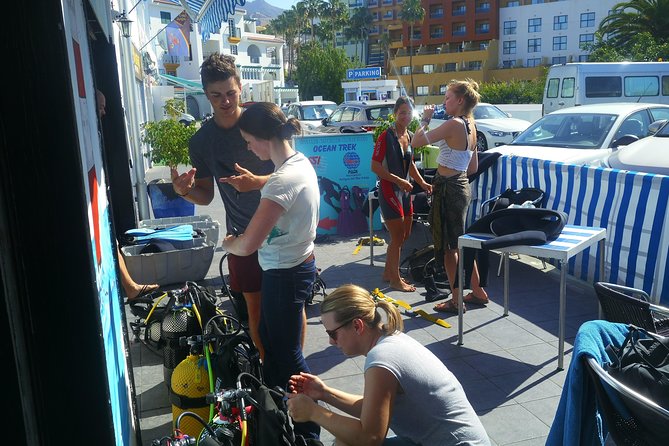
You should still bring practical personal items. A dry change of clothes is important, especially after saltwater sessions. A small extra towel for your feet is useful when changing at an outdoor site, where the ground may be hot or dirty.
A changing poncho can make the transitions easier. This is particularly helpful if you are moving between sessions or changing beside a busy parking area rather than in a full changing room.
One useful physical tip is to avoid overworking your calf muscles. Finning can leave beginners with tight or cramping calves. Slow, controlled movements are better than bicycling your legs.
Pressure equalization deserves special attention. Start early, as soon as you feel pressure building in your ears. If the pressure becomes strong, move slightly upward before trying again rather than forcing it. Your instructor will guide you, but you should never treat ear discomfort as something to push through.
The course requires a reasonable state of health and a moderate level of physical fitness. That does not mean you need to be athletic. It does mean you should be comfortable handling equipment, following instructions, and remaining calm in the water.
Hotel pickup around Costa Adeje
Pickup and return are available in the area around the center. The supplied information gives two different distance limits, one saying up to 20 kilometers and another specifying a maximum pickup distance of 10 kilometers. Confirm your hotel’s eligibility before booking.
Transport is valuable because scuba equipment is bulky and awkward to carry. It also saves you from finding the meeting point before an early session. The center is at C. Valencia, 38660 Costa Adeje, and the activity ends back at the meeting point.
Be ready at the agreed time. One account describes the pickup as punctual but notes that being late caused a problem. A little organization on your part helps the whole group keep its schedule.
Lunch is not included. Bring money or food for the break, and remember that a three-day course can occupy most of the day. Bottled water is provided, but you may want additional snacks if you tend to get hungry after physical activity.
Is $792.16 a fair price?
The listed price is $792.16 per person. That is a substantial outlay, but it includes more than a simple introductory session.
You are paying for instruction over about three days, the required PADI fees, learning material, a logbook, full equipment, bottled water, and local transport. Most important, successful completion gives you a qualification you can use around the world. You can scuba independently within the limits of your certification, rent equipment, and have tanks filled.
That makes the course better value for someone who plans to continue the sport. If you only want to try breathing underwater once, a shorter introductory session may fit your plans and budget better. If you already know you want to scuba on future trips, earning the certificate in Tenerife can be a sensible use of holiday time.
The price also reflects small-group instruction. A cheaper large class may look attractive, but close supervision matters when you are learning buoyancy, emergency skills, and equipment handling. I would compare the total package, not just the headline price.
Who should choose this course?
This course suits a first-time student who wants a real qualification rather than a quick underwater sample. It is also a good fit for couples or friends who want to learn together in a private setting.
You should be comfortable with a three-day commitment and with spending much of each day on training. You should also be ready to study theory, listen closely, and repeat skills until they are reliable.
The minimum age is 10. You need a reasonable state of health and moderate physical fitness. Service animals are allowed, and the center is near public transportation, though pickup may be more convenient if your hotel falls within the service area.
The course may be less suitable if you have limited time in Tenerife, dislike structured instruction, or want a relaxed sightseeing activity with little physical effort. It is a proper training course, not simply a boat outing with a mask and fins.
Booking, weather, and cancellation details
Confirmation is provided at booking. You can cancel for a full refund if you do so at least 24 hours before the local start time. Changes or cancellations made within 24 hours are not accepted for a refund.
Weather can affect the schedule. If conditions cause the activity to be canceled, you are offered another date or a full refund. That policy is useful, but you should still leave flexibility in your Tenerife plans rather than placing the course on your final possible days.
The activity is offered in English. Because several instructors are named in the supplied information, you may be able to discuss your learning needs before the course begins. Confirm the language and instructor arrangements if that matters to you.
Should you book Ocean Trek’s PADI course?
I would book this course if you want a full qualification, value patient one-to-one attention, and can give three days to the process. The small groups, careful skill practice, included equipment, and range of Tenerife marine life make it a strong choice for a serious beginner.
I would hesitate if your budget is tight or if your main aim is simply to see fish for an hour. At $792.16, the course earns its value through certification and instruction, not through a short recreational outing.
Before paying, confirm the pickup radius, the exact number of practical sessions, your start time, and the theory requirements. Bring dry clothes, a towel, lunch, and patience. If you do that, Ocean Trek gives you a structured route from nervous beginner to certified open-water scuba participant.
FAQ
How long does the PADI Open Water course take?
The course lasts approximately three days. It includes theory and practical sessions, with underwater training generally scheduled twice a day.
What is included in the price?
The price includes hotel pickup and drop-off within the stated service area, full scuba equipment, course literature, a logbook, PADI license fees, and bottled water.
Is lunch included?
No. Lunch is not included, so you need to arrange your own food during the course.
What is the minimum age?
The minimum age is 10 years.
Do I need to be physically fit?
You need a reasonable state of health and a moderate level of physical fitness. The activity is not described as requiring an advanced athletic level.
Where does the course begin?
The meeting point is Ocean Trek, C. Valencia, 38660 Costa Adeje, Santa Cruz de Tenerife, Spain. The activity ends back at the meeting point unless pickup arrangements apply.
Can I cancel for a full refund?
Yes. You can cancel at least 24 hours before the local start time for a full refund. If poor weather causes the operator to cancel, you are offered another date or a full refund.
Just added around Tenerife
- Tenerife: 2 Diving Sessions for Certified Divers★ 4.2 · 7 reviews
- Beginner Scuba Dive with Scubapoint Tenerife in Turtle Area★ 4.7 · 8 reviews
- Scuba Experience in Tenerife with Guide★ 5.0 · 30 reviews
- Try Scuba Diving in a turtle area (boat)★ 5.0 · 93 reviews
- Try Scuba Diving Puerto Colon★ 5.0 · 2 reviews
- First Dive Experience in Tenerife★ 4.5 · 69 reviews
- Try Dive in Abades Bay with a private instructor★ 4.0 · 4 reviews
- Scuba Night Dive on Tenerife★ 5.0 · 6 reviews
Scuba Diving Courses, compared.
Open Water Course – Become certified diver in 3 days
Read our review →
Heraklion: Beginner Scuba Diving Lesson with PADI Instructor
Read our review →
Discover Scuba Diving with No Certification in St Thomas
Read our review →
Try Dive – PADI Discover Scuba Diving in Tenerife
Read our review →
Lists this dive appears in