
REVIEW · ITALY
Advanced Open Water Diver course
Sardinia’s Capo Carbonara Marine Protected Area gives this advanced course a clear purpose: you learn skills that let you explore the Mediterranean coralligenous habitat at depths of up to 30 meters. The three-day program includes five focused underwater sessions, with deep work, compass navigation, and orientation at its core.
I like the small maximum of six participants, which should give you useful time with the instructor. I also like the human side of the operation: Luca is praised for clear teaching, Gwena can teach in French, and the wider team includes Alice at reception and Clara as a guide. The main catch is simple but important: equipment rental is not included, so your final cost will be higher if you need a full kit.
Key points to know before booking
- Five specific underwater sessions: One covers deeper work, while another focuses on compass use and orientation.
- A 30-meter certification limit: The course is designed to extend your depth limit beyond basic open-water training.
- Capo Carbonara setting: You may study the Mediterranean coralligenous habitat within a Marine Protected Area.
- Three-day format: The course lasts approximately three days and begins at 8:30 a.m.
- Small group size: SubAquaDive Service accepts a maximum of six participants.
- Bring your equipment budget: Rental gear is not part of the $578.22 course price.
Why the 30-meter limit matters in Sardinia
An advanced certification is most useful when it changes what you can responsibly see underwater. Here, the main gain is a depth limit of 30 meters, opening access to sites and habitats beyond the usual range of an entry-level open-water qualification.
That extra depth is not just a number on a certificate. It calls for better control, calm decision-making, and a clear understanding of how conditions change as you go lower. The course links each underwater session to a review of the relevant skills, so you are expected to show that you can manage the situation rather than simply follow along.
I like that approach. Five separate sessions give you room to work on different abilities instead of trying to squeeze every lesson into one long outing. You will not merely repeat the same underwater routine. Each session has a particular purpose, and the course is meant to build greater independence.
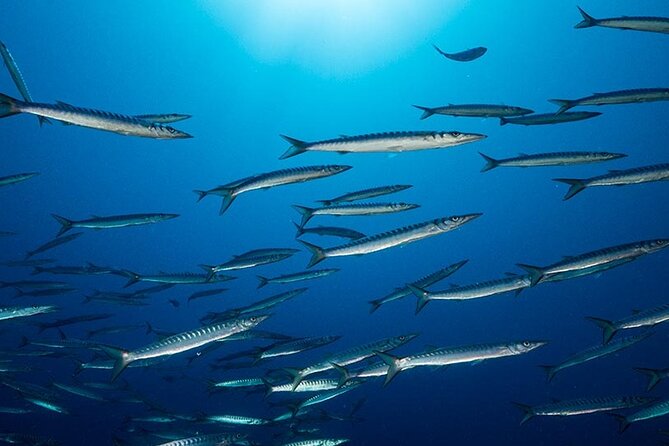
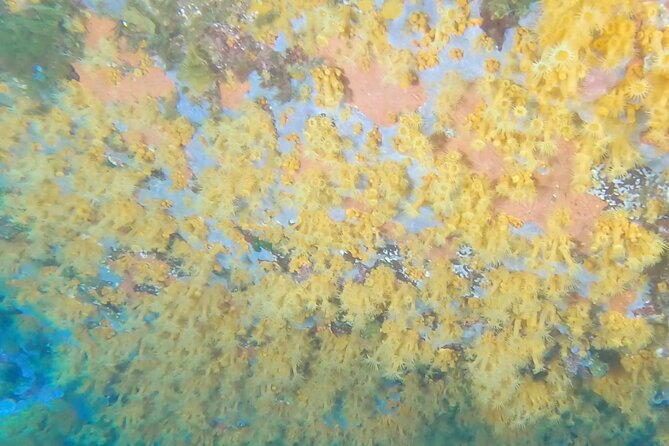
The setting adds real value. The coralligenous habitat is one of the Mediterranean’s important underwater ecosystems, with a structure created by marine organisms over time. The program connects your training to that environment, with qualified marine biologists available to help explain what you are seeing.
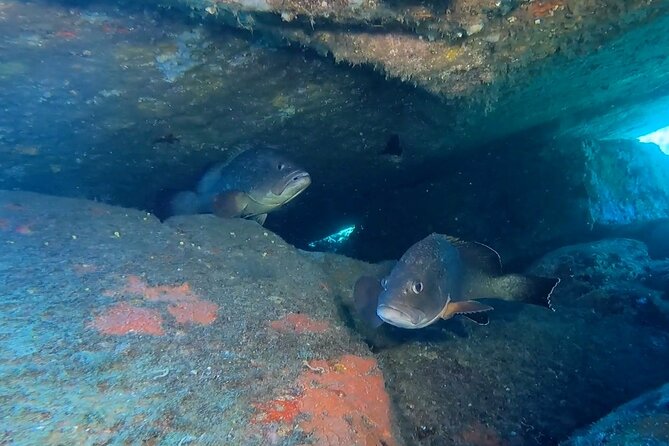
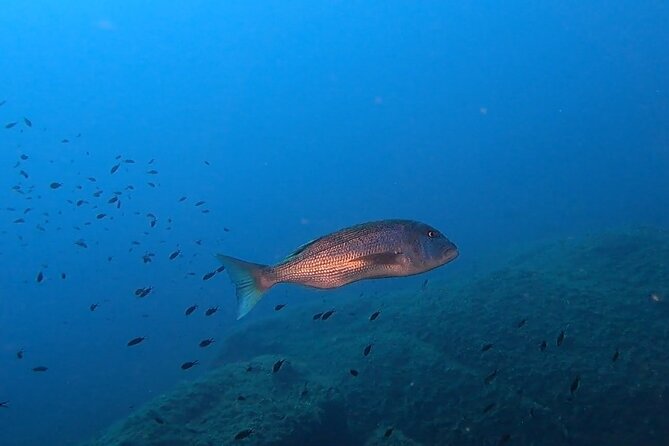
The supplied information does not promise a particular animal sighting or named underwater site. That is worth keeping in mind. Conditions and locations can vary, but the chance to understand the local habitat makes this more than a technical qualification alone.
More dive courses in Italy:
- Diving for certified divers with PADI 5* Diving Resort – Taormina
★ 5.0 · 167 reviews - Exciting PADI Discover Scuba Diving Experience Isola Bella Marine Park Taormina
★ 5.0 · 96 reviews - Guided diving for beginners without certification from Sorrento
★ 5.0 · 22 reviews
Meeting at Porto Turistico in Villasimius
Your starting point is Subaquadive Service Diving Villasimius, at Porto Turistico on Via Degli Oleandri. The start time is 8:30 a.m., and the activity returns to the same meeting point.
That fixed start and finish makes the course easier to plan around than an activity scattered between several locations. You can arrange your day in Villasimius with a clear base, though you should allow enough time to arrive ready for an early morning start.
Pickup is offered, but the available information does not specify the pickup area, timing, or any extra charge. Ask about the pickup arrangement before booking if you are staying away from the port. The center is also near public transportation, which gives you another option.
Confirmation is sent within 48 hours, subject to availability. Since this is a multi-day certification rather than a casual one-off outing, I would avoid locking in complicated travel plans until your place is confirmed.
What happens across the five training sessions
The course includes five specific underwater sessions over about three days. The exact order is not provided, so you should think of the schedule as a progression designed by the instructor rather than a fixed sightseeing itinerary.
One session is dedicated to deeper work. This is the part that connects most directly to the 30-meter limit. You can expect the instructor to review the knowledge needed for greater depth and then assess your ability to apply it underwater. The important point is that the course requires demonstrated control, not just attendance.
Another session covers compass navigation and orientation. This is a useful skill for anyone who wants more autonomy. Good navigation helps you understand where you are, where you have been, and how to return without relying entirely on a guide’s route.
The remaining three sessions are tied to other specific areas of advanced training, though the supplied details do not name them. That lack of a full session-by-session schedule means you should ask the center what the other subjects will be before you commit. The general promise is clear, but the exact training menu is not.
Each session includes a review of the related knowledge. This structure should suit you if you want a qualification built around practice and assessment. It may feel less relaxed than a simple recreational outing, especially if you are hoping to spend all your time looking at scenery. The course has a learning goal first.
The group limit of six matters here. In a larger class, compass practice and skill checks can become rushed. With fewer people, you have a better chance of receiving direct correction and asking questions. The number does not guarantee private instruction, but it is a sensible size for a technical course.
Meeting the SubAquaDive team
The strongest personal detail attached to this course is the praise for the staff’s communication and teaching. Luca is singled out for professional instruction, clear communication, and strong enthusiasm for his work. Those traits matter when you are learning skills that require calm, accurate feedback.
Alice handles reception and is described as especially helpful. That can make a difference before the course even begins, particularly when you are checking dates, equipment, language, or pickup arrangements.
Clara is noted as an energetic guide, while Gwena taught one participant in French. You should not assume that every course is available in French, but the center has demonstrated that language support may be possible. Ask when you book if instruction in a particular language is important to you.
Alberto is identified as the team leader in one account involving several family certifications. That detail suggests an operation with experience working with returning customers and younger participants, though the supplied information does not provide a minimum age or specific youth rules. If you are booking for someone young, confirm eligibility directly.
The general impression is of a center that puts effort into communication. One customer arranged an advanced certification for a son several weeks ahead and received quick, detailed replies. That is useful evidence for anyone who wants help sorting out the practical side before arrival.
A few more dives around Italy worth comparing
- Polignano a Mare boat tour emotions, caves, diving and appetizers
★ 5.0 · 1,022 reviews - Catania: Gulf Scuba Diving Tour with Marine Biologist
★ 4.9 · 212 reviews - Diving for patented divers
★ 5.0 · 175 reviews - TuffAlcantara – dives, slides and lots of fun in the Alcantara river
★ 5.0 · 106 reviews
The coralligenous habitat in Capo Carbonara
The course’s most distinctive environmental feature is its connection to the Marine Protected Area of Capo Carbonara. Rather than treating the sea as a blank backdrop, the program uses qualified marine biologists to help explain the coralligenous ecosystem.
For you, that means the underwater sessions can carry two kinds of value. You build technical ability, and you learn why the habitat matters. The coralligenous zone is a major Mediterranean ecosystem, so the setting gives context to the new depth range you are earning.
Still, keep expectations sensible. The information does not list guaranteed species, named reefs, visibility conditions, or a fixed site for each session. I would book this for the combination of training and local ecological insight, not for a promised checklist of wildlife.
The protected-area setting also makes responsible behavior especially important. Your instructor’s guidance and the marine biologists’ explanations should help you understand how to move through the habitat with care. The course description does not spell out every conservation rule, so listen closely to the briefing before entering the water.
Is $578.22 a fair price?
At $578.22 per person, this is a substantial purchase, but it covers a three-day advanced certification program rather than a single recreational outing. The five training sessions, instructor supervision, and course assessment give the price a clear basis.
The value is strongest if you already hold an open-water qualification and want the 30-meter limit, better navigation, and more autonomy. If you only want one or two scenic underwater outings, this is probably more training than you need.
The cost comparison changes once you add equipment rental. Rental gear is excluded, and no rental rates are provided. If you do not own a complete set, contact the center first and ask for the current equipment price. The advertised course fee should not be treated as your final total until you know what you need to rent.
Small-group instruction also supports the price. A maximum of six participants is more appealing for a certification course than a large class where you might spend much of the session waiting. You are paying for structured training, not only time in the water.
I would also factor in the course’s local setting. A generic classroom certification can teach the basic skills, but this program links your new ability to Capo Carbonara and its coralligenous habitat. That connection makes the price easier to justify if you care about both technique and the place where you are learning.
Who will get the most from this course?
This course is best for a certified open-water diver who wants a clear next step. You should be comfortable with basic underwater practice and ready to study, complete five focused sessions, and demonstrate control in different situations.
It also suits you if you want to become less dependent on a guide. The navigation and orientation work is especially useful for building confidence with route awareness and position. The deeper session is valuable if the 30-meter limit is part of your future plans.
You may appreciate the course if you enjoy learning from instructors with different strengths. Luca’s clear communication, Gwena’s French-language teaching, Alice’s front-desk support, and the marine biologists’ environmental guidance give the program several useful points of contact.
It is less suitable if you want a loose schedule or a purely scenic outing. The course includes reviews and skill checks, and the precise content of three sessions is not stated. You should be ready for instruction rather than expecting every hour to feel like a holiday excursion.
It can also suit a family member progressing through certification, but do not assume that every age group qualifies. The available information mentions a young participant completing related certifications, yet it does not state minimum age rules for this course. Confirm that detail before paying.
Practical details that affect your plans
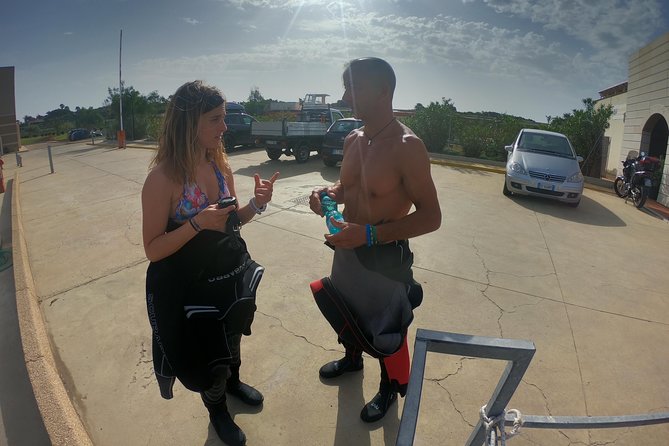
The course begins at 8:30 a.m. and ends back at the Porto Turistico meeting point. Pickup is offered, and the center is near public transportation, but you need to confirm the pickup details and transport arrangements for your own accommodation.
Service animals are allowed, and most people can participate. The activity is capped at six participants, which helps keep the teaching group manageable.
You can cancel free of charge up to 24 hours before the start time for a full refund. Cancellations made less than 24 hours before the start time are not refunded, and changes inside that same period are not accepted. The cut-off follows local time in Sardinia.
Because confirmation can take up to 48 hours and availability applies, I would book early enough to leave room for a reply. That matters even more if you are visiting Villasimius for only a few days.
Should you book the advanced course?
I would book this if you already have open-water certification and want a serious, compact step toward greater depth and independence. The combination of five focused sessions, compass work, a 30-meter limit, and Capo Carbonara’s coralligenous habitat gives the course more substance than a basic sightseeing outing.
I would pause before booking if you need rental equipment, because the $578.22 price does not include it. Ask for the full equipment cost, confirm the course language, and find out what the three unnamed training subjects will be.
For the right participant, this is a practical Sardinian certification course with a small group, a clear training goal, and staff who appear prepared to communicate well. Go in ready to learn, not just to look around, and the program should give you skills you can use beyond Villasimius.
FAQ
Where does the course begin and end?
It begins and ends at Subaquadive Service Diving Villasimius Sardinia, at Porto Turistico, Via Degli Oleandri, 09049 Villasimius CA, Italy.
What time does the course start?
The stated start time is 8:30 a.m.
How long does the course last?
The course lasts approximately three days.
How many underwater sessions are included?
The program includes five specific underwater sessions. One covers deeper work, and another covers compass navigation and orientation.
What depth limit does the certification provide?
The course extends your depth limit to 30 meters.
Is equipment rental included in the price?
No. Rental equipment is not included in the $578.22 per-person price.
How many people can participate?
The activity has a maximum of six participants.
Can I cancel for a full refund?
Yes. You can cancel at least 24 hours before the local start time for a full refund. Cancellations or changes made less than 24 hours before the start time are not accepted for a refund.
Just added around Italy
- Villasimius: Capo Carbonara First Time Dive with Instructor★ 4.9 · 50 reviews
- Villasimius: Scuba Dive in Capo Carbona without Certificate★ 4.9 · 23 reviews
- Scuba diving in Calabria, Italy★ 5.0 · 23 reviews
- Discover Scuba diving in Calabria, Italy★ 4.5 · 3 reviews
- Double dive in the Punta Campanella Marine Protected Area★ 5.0 · 11 reviews
- Guided diving for beginners without certification from Sorrento★ 5.0 · 22 reviews
- Discover Scuba Diving PADI – Trial dive in Sorrento★ 5.0 · 2 reviews
- Try Scuba Dive (baptism of the sea)★ 5.0 · 5 reviews
Scuba Diving Courses, compared.
Open Water Course – Become certified diver in 3 days
Read our review →
Heraklion: Beginner Scuba Diving Lesson with PADI Instructor
Read our review →
Discover Scuba Diving with No Certification in St Thomas
Read our review →
Try Dive – PADI Discover Scuba Diving in Tenerife
Read our review →
Lists this dive appears in