
REVIEW · BALI
Bali Hai – PADI Advance Open Water Course in Menjangan
Menjangan is the setting for a practical step up in scuba training, with five underwater sessions spread over two days. You work on deep-water skills and underwater navigation, then choose three subjects that match your interests, from photography to night work.
I like the small maximum ratio of four students per instructor and the fact that equipment, boat transfers, lunch, water, insurance, and the PADI certification card are included. The main catch is the price, $502.57 per person, plus national park fees and the lack of an included air-conditioned vehicle.
The course is designed for someone fresh from PADI Open Water, not only for an experienced scuba enthusiast. You need reasonable fitness, must complete a health questionnaire, and should leave at least 48 hours between your final session and a flight.
Key points before you book
- Five sessions in two days: Deep-water practice and underwater navigation are compulsory, followed by three choices from a broad list of specialties.
- Small teaching groups: The center keeps a maximum ratio of four students to one instructor, useful when you are still building confidence.
- Menjangan meeting point: Both days begin and end at Menjangan Dynasty Resort in Pejarakan, in Bali’s Buleleng Regency.
- A useful skill menu: Pick photography, computer-based multi-level work, buoyancy, fish identification, boat handling, current work, night training, or search and recovery.
- A fairly complete package: Equipment rental, lunch, drinking water, insurance, boat transfers, course manual, logbook, and certification card are included.
- Plan around flights: The operator advises against scuba activity within 48 hours of flying, and severe weather can change departure times.
Why Menjangan makes sense for the next step
The PADI Advanced Open Water course is less about mastering one narrow specialty and more about trying several types of underwater work. You do not need to arrive as an expert. The course accepts a certified PADI Open Water participant or an equivalent qualification from another agency.
That matters because many new certified scuba users finish their first course able to meet the basic requirements, but still feel cautious in unfamiliar conditions. This two-day program gives you repeated practice with an instructor close by. The goal is greater comfort, better control, and a certification allowing scuba to a maximum depth of 30 meters, or 100 feet, subject to your training and conditions.
Menjangan is also a useful base. The meeting point is Menjangan Dynasty Resort, Pejarakan, Gerokgak, in northern Bali. The stated start time is 9:00 a.m., and the activity finishes back at the same meeting point. That fixed arrangement makes the course easier to plan than a program with several pickup points, but you must organize your own way to the resort unless you arrange transport separately.
The provider is Bali Hai Cruises, operating through a PADI 5 Star Dive Centre. The supplied information does not name the individual instructor, so you should not book expecting a particular guide. Instruction may be offered by a multilingual guide, which can help if your group includes people with different first languages.
More Scuba Diving in Bali
- 2 Days Discover Scuba Diving in Nusa Lembongan – Scuba Initiation
★ 5.0 · 506 reviews - Bali Diving for Beginners: Tulamben Liberty Wreck
★ 5.0 · 367 reviews - Discover Scuba Diving in Tulamben – Diving Initiation in Bali best diving sites
★ 5.0 · 353 reviews
What happens on the first morning
Expect the first morning to involve preparation, paperwork, equipment checks, and the start of your selected training work. You receive the PADI Adventures in Diving manual, and the center supplies full equipment rental. That is useful if you are visiting Bali with light luggage or do not own a full set of gear.
You also complete a health questionnaire before entering the water. Some medical conditions, including asthma and heart problems, may prevent participation. If you have any concern, consult a doctor before booking rather than waiting until the morning of the course.
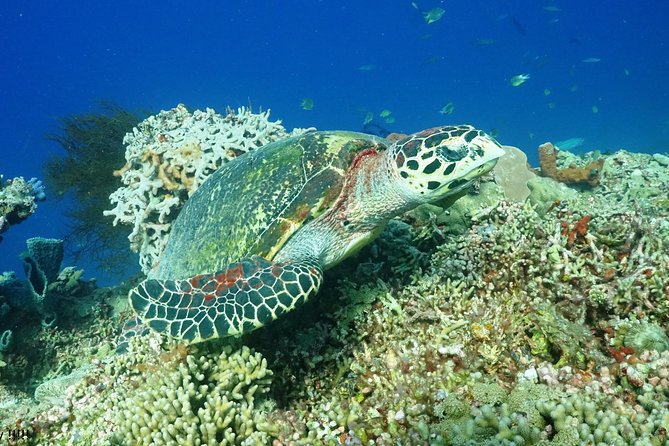
The compulsory deep-water session is one of the main reasons to take the advanced course. It gives you a structured way to become familiar with greater depth while an instructor monitors your skills. The course information does not promise a particular underwater site, depth profile, visibility, or marine species, so you should treat the setting as variable rather than expecting a specific photograph-ready scene.
Underwater navigation is the other required subject. You work on finding your way below the surface rather than relying entirely on an instructor or boat crew. This is one of the most useful skills you can gain because it helps you manage distance, direction, and awareness on future scuba outings.
The small student-to-instructor ratio is important here. A maximum of four students per instructor does not guarantee a private lesson, but it should give the instructor a reasonable chance to watch your technique and address individual problems.
Choosing three specialties for the remaining sessions
After the compulsory work, you choose three subjects from the available list. Your choices shape the feel of the course, so think about what you want to use later rather than selecting at random.
Digital Underwater Photography suits anyone who wants to improve camera handling below the surface. The practical value is not simply taking pictures. You also learn to manage a camera while maintaining awareness and control, although the exact equipment available for photography is not specified.
Multi-level and Computer introduces planning around changing depth and using a dive computer. This may appeal to you if you want a better grasp of how depth and time affect a session. Bring your own computer only if you have one and want to practice with it, since the supplied information does not state which computer models are provided.
Peak Performance Buoyancy is a strong choice for nearly any newly certified scuba user. Better buoyancy can make movement calmer and equipment handling easier. It is also a sensible pick if you still use your hands or fins more than you would like to maintain position.
Underwater Naturalist Fish ID adds an observation element. Instead of focusing only on gauges and procedures, you pay closer attention to the marine life around you. The course does not promise a particular list of fish, so choose this for the learning approach rather than a guaranteed sighting.
Boat Dive lets you work with procedures connected to a boat-based launch or return. Boat transfers are included, but the exact vessel and departure details are not provided. This option can help if you expect to use boat-based scuba on future holidays.
Drift Dive introduces moving with water flow rather than constantly trying to remain in one place. Conditions can change, and the operator notes that severe weather or a harbor closure may alter departure times. This is a choice for you if you want experience with current-related planning, not if you are looking for the most predictable session.
Night Dive is the most schedule-dependent option. It offers a different way to practice awareness, but the supplied information does not confirm the exact timing, lighting equipment, or seasonal availability. Ask about those details before choosing it.
Search and Recovery focuses on locating and retrieving an item underwater. It is a practical specialty for improving search patterns and task management, though the course details do not say what objects or equipment will be used.
Because you select only three, the best combination depends on your next goal. I would favor buoyancy, computer work, and navigation for a first step into broader scuba travel. Photography, fish identification, or night work may be more appealing if you already feel comfortable with basic control.
A two-day pace that rewards preparation
Five sessions in two days is a full schedule, even though the exact daily timetable is not supplied. You should arrive rested and ready to listen, not treat this as a casual beach activity with a little instruction added on.
The benefit of the compressed format is continuity. Skills introduced on the first day remain fresh when you return for the second. The drawback is that you have less time to recover if you are tired, nervous, or slow to master a technique.
Lunch, drinking water, tea, and coffee are listed among the course provisions. Lunch is helpful because you do not need to stop the program to find a meal. Extra food and drinks are not included, so budget for anything beyond the supplied meal and water.
All boat transfers are included, which adds real value in a coastal course. You do not need to arrange a separate marine transfer for the planned sessions. National park fees are not included, however, and the price also excludes an air-conditioned vehicle. If you are staying in Ubud, allow extra thought for getting to northern Bali, since the meeting point is not in central Ubud.
More dive courses in Bali:
- Bali: 3-Days PADI Open Water Diving Course
★ 4.8 · 98 reviews - Padi Discover Scuba Diving In Amed Bali
★ 5.0 · 66 reviews - Certified Scuba Dive with Manta Rays (Open Water Diver minimum)
★ 5.0 · 55 reviews - PADI Open water Course in Lembongan – Get certified & dive anywhere in the world
★ 5.0 · 16 reviews
What the $502.57 price really covers
At $502.57 per person, this is not a cheap add-on to a Bali holiday. It is priced as a full professional certification course, not as a single recreational outing.
The package includes the PADI manual, a Bali Hai Diving Adventures logbook, full equipment rental, lunch, drinking water, full divers insurance, boat transfers, and the PADI Advanced certification card. When you add those pieces together, the price is easier to understand, especially if you would otherwise need to rent gear or pay separate boat costs.
The small teaching ratio also matters. You are paying for structured instruction, not just access to the water. If your main aim is a one-time scenic outing, this course may be more training than you want. If you plan to continue scuba on future trips, the certification and practice can make the cost more worthwhile.
Keep several extras in mind. National park fees are separate. Food and drinks beyond the included provisions are separate. An air-conditioned vehicle is not included, and a single supplement may apply in some circumstances. Ask for the current total before committing, particularly if you are booking alone or need transport from another part of Bali.
Confidence, comfort, and the human side of the course
The strongest reason to choose this program is the chance to finish feeling more prepared. One participant described the Menjangan Open Water experience as professional and said the instruction left them comfortable and ready by the end. That is especially relevant for anyone who feels uncertain after basic certification.
The wording of that feedback relates to Open Water training, while this product is the Advanced course, so you should not treat it as a promise about your exact instructor or outcome. Still, it points to the value of careful preparation at this center.
The course also has an encouraging tone. You are not expected to be advanced before you begin. You need a valid basic certification, moderate fitness, and the ability to follow instruction in the water. The staff’s stated four-to-one maximum is reassuring for learners who want direct supervision without paying for a private course.
The available feedback is limited, and one comment concerns a cruise experience rather than this specific training program. That comment praised Amelia and the crew for making the outing comfortable and enjoyable, but no named instructor is supplied for the Menjangan course. I would regard the positive service signal as useful background, not proof of a particular instructor assignment.
Weather, flights, and practical limits
The operator reserves the right to reschedule departure times if severe weather occurs or the harbor closes because of force majeure. No refund is promised in that situation under the supplied conditions. This is a normal concern for a boat-based activity, but it is worth taking seriously if your Bali schedule is tight.
Do not place the course immediately before a flight. The guidance advises against scuba within 48 hours of flying. You should also complete the health questionnaire honestly and discuss medical concerns with a doctor ahead of time.
A moderate level of physical fitness is expected. The information does not provide an age limit, accessibility details, or a precise transport service from Ubud. You should ask directly if you need those facts before paying.
Free cancellation is available when you cancel at least 24 hours before the local start time. Cancellations or changes inside that window are not refunded or accepted. Confirmation is sent within 48 hours of booking, subject to availability, so do not assume the course is final until that confirmation arrives.
Who should book this Menjangan course
I would recommend it to a certified PADI Open Water participant who wants structured practice, a recognized next-level qualification, and a choice of specialty subjects. It also suits someone who already knows they want to continue scuba and would rather build several skills in one concentrated visit.
The course is less suitable if you want a relaxed half-day outing, dislike fixed training schedules, or need door-to-door transport from Ubud. It may also be a poor fit if you are flying soon after the course, have unresolved medical questions, or want a guaranteed species list and exact underwater sites.
If you are choosing among the specialty options, be honest about your current weak spots. Buoyancy and computer work are practical choices for many newer scuba users. Photography and fish identification are more interest-led, while night work, drift work, and search and recovery need a willingness to handle more specialized conditions.
Should you book it?
Book this course if you want more than a pretty underwater outing. The five-session structure, limited class size, included equipment, boat transfers, lunch, insurance, and certification card make the $502.57 fee defensible for someone serious about continuing scuba.
Before paying, confirm the national park fee, transport plan, single supplement, instructor language, specialty availability, and weather procedure. If those extras fit your budget and you can keep 48 hours clear before flying, Menjangan offers a focused and useful way to build confidence after PADI Open Water.
FAQ
Do I need a PADI Open Water certification?
Yes. You must hold a PADI Open Water Diver certification or an equivalent qualification from another scuba agency.
How many sessions are included?
The course includes five sessions over two days. Deep-water work and underwater navigation are compulsory, and you choose three additional specialty subjects.
What specialty subjects can I choose?
Choices include digital underwater photography, multi-level and computer work, peak performance buoyancy, underwater naturalist fish identification, boat work, drift work, night work, and search and recovery.
Where does the course begin and end?
It begins at Menjangan Dynasty Resort in Pejarakan, Gerokgak, Buleleng Regency, Bali 81155. The activity ends back at the meeting point.
What time does the course start?
The stated start time is 9:00 a.m.
Are equipment and boat transfers included?
Yes. Full equipment rental and all boat transfers are included, along with the course manual, logbook, lunch, drinking water, full divers insurance, and the PADI Advanced certification card.
Are there any extra charges or health requirements?
National park fees, extra food and drinks, and an air-conditioned vehicle are not included. You must complete a health questionnaire, and some medical conditions may prevent participation. The operator also advises leaving 48 hours between scuba activity and flying.
Just added around Bali
- Tulamben Diving Tour Shipwreck USS Bali★ 5.0 · 13 reviews
- Padi Discover Scuba Diving In Amed Bali★ 5.0 · 66 reviews
- Discover Scuba Diving★ 5.0 · 42 reviews
- All Inclusive Bali Scuba Diving at Tulamben with Lunch -Transport★ 5.0 · 4 reviews
- PADI Open water Course in Tulamben – Get certified & dive anywhere in the world★ 5.0 · 5 reviews
- 5 Fun Dives in Tulamben (for certified divers) – Discover famous diving sites★ 5.0 · 93 reviews
- Try Diving at USAT Liberty Wreck Tulamben with 1 or 2 Dives (Stay In Tulamben)★ 5.0 · 5 reviews
- Bali Full Day Experience Scuba Diving Tour at Tulamben★ 5.0 · 4 reviews
Scuba Diving Courses, compared.
Open Water Course – Become certified diver in 3 days
Read our review →
Heraklion: Beginner Scuba Diving Lesson with PADI Instructor
Read our review →
Discover Scuba Diving with No Certification in St Thomas
Read our review →
Try Dive – PADI Discover Scuba Diving in Tenerife
Read our review →
Lists this dive appears in