
REVIEW · PLAYA DEL CARMEN
Discover Scuba Diving Course in Playa del Carmen with Two Coral Reef Dives
Playa del Carmen makes it easy to try scuba without signing up for a full certification course. This eight-hour introduction combines classroom instruction, pool practice, and two 40-minute sessions on different coral reefs. I like the small maximum group of eight and the calm, patient teaching style reported by instructors such as Alma, Jack, Sam, and Geovanni.
I also like that you get two reef locations rather than one short look underwater, plus equipment, an instructor, and water are included. The catch is that this is still a demanding first attempt for some people. Ear pressure, breathing, and buoyancy can feel stressful at first, and the $20 boarding and marine park fee is extra.
Key points
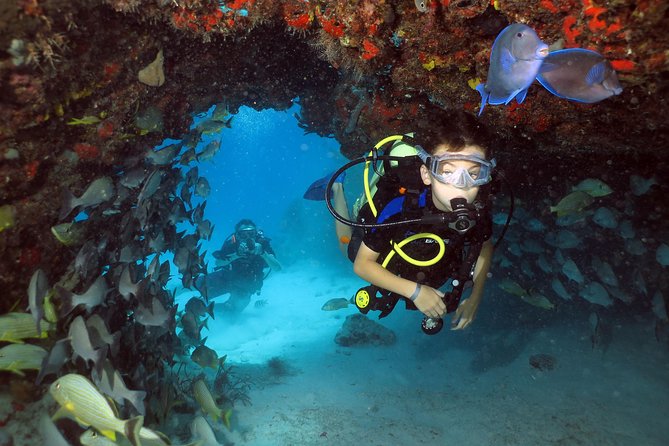
- Two different coral reefs: Spend about 40 minutes at each site, with possible sightings of turtles, moray eels, groupers, barracudas, crabs, shrimp, and schools of fish.
- A real beginner introduction: You learn basic safety, equipment use, breathing, and essential underwater skills before reaching the sea.
- Patient instruction matters: Alma, Jack, Sam, and Geovanni are specifically praised for clear coaching and extra help with nervous beginners.
- Small group size: The experience accepts no more than eight people, which gives the instructor a better chance to watch your progress.
- A full morning of preparation: Classroom and pool work runs from 8:00 to 11:00, followed by afternoon reef sessions from noon to 4:00.
- Budget for the extra fee: The price is $169 per person, but boarding and marine park charges add $20 per person.
What you really get for $169 in Playa del Carmen
The main value here is not simply time in the water. You are paying for a guided first step into scuba, with instruction before the boat leaves and a professional beside you at both reef sites.
At $169 per person, the experience includes the necessary scuba equipment, a professional instructor, and water during training and on the boat. You also get classroom instruction, pool practice, and two open-water sessions. Photos cost extra, and the $20 boarding and marine park fee is not included, so the final cost is higher than the headline price.
I consider that a fair package for someone who wants to test scuba before committing to certification. A full certification course takes much longer and asks for more study and practice. This experience gives you a useful taste of the process in one day, but it does not certify you to scuba independently later.
That distinction matters. You are not simply being handed equipment and sent toward a reef. You first learn how the gear works, how to breathe through the regulator, and how to handle key skills. The course is designed to make the first underwater experience manageable, not to replace formal certification.
More Scuba Diving in Playa del Carmen
- Scuba Diving in Cenote Dos Ojos from Playa del Carmen
★ 5.0 · 453 reviews - Scuba Diving in Cenote Kukulkan from Playa del Carmen
★ 5.0 · 370 reviews - Discover Scuba Diving & Beach Club with Transportation In Riviera Maya
★ 5.0 · 239 reviews
The 8:00 start at Scuba Libre
Your day begins at Scuba Libre, on Calle 4 Nte Manzana 3 between 5a Avenida and the federal maritime zone in central Playa del Carmen. The activity ends back at this meeting point.
The start time is 8:00 a.m., so this is an early morning commitment. I would plan to arrive with enough time to find the location, settle in, and avoid beginning the instructional part of the day in a rush. The meeting point is near public transportation, which helps if you are staying in central Playa del Carmen.
The experience is offered in English and is capped at eight participants. That number is useful for a first attempt. New scuba students often need individual help with equipment, breathing, ear pressure, and buoyancy. A smaller group gives the instructor more room to notice when you need another explanation or a little extra time.
You must be at least 10 years old, and no previous scuba experience is required. You do need reasonable physical health. The course is described as family-friendly, but the age minimum does not mean every child will find the experience easy. A young participant should be comfortable listening carefully, wearing the equipment, and following instructions in the water.
Why the classroom and pool work matters
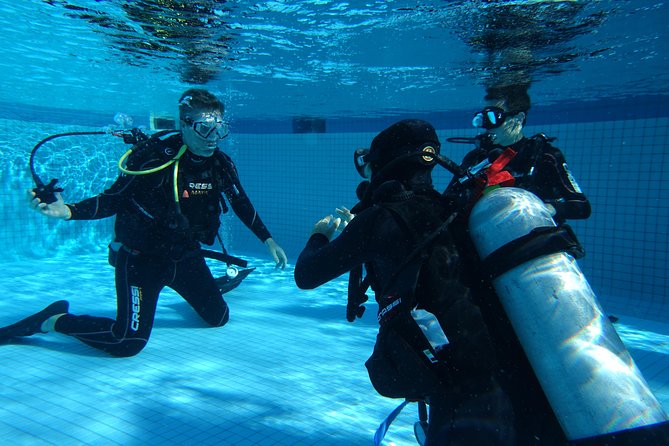
The first part of the day runs from 8:00 to 11:00 and includes theory plus pool training. This may sound less exciting than the reef, but I see it as one of the most useful parts of the experience.
You learn the basic safety rules and go over the equipment before using it in open water. That lets you handle the mask, regulator, tank, and other gear in a controlled setting. You also learn what it feels like to breathe underwater and how to move with equipment on your body.
The pool gives you a place to practice key skills before the sea adds movement, depth, and marine life. You can focus on your breathing and body position instead of trying to take in the whole reef at once. That gradual order, classroom first and pool second, is especially helpful if you are nervous.
The instructors receive strong praise for their manner with beginners. Alma is specifically noted for patiently helping with ear regulation, while Jack is praised for clear instruction and a friendly personality. Geovanni helped one participant improve buoyancy, and Sam is described as giving strong explanations of the equipment and skills.
Those details point to an important practical benefit: the quality of your day may depend as much on communication as on the reef itself. If you have trouble, speak up early. Ask the instructor to slow down, repeat a skill, or explain what your body should be doing. Beginners often try to hide discomfort, but this is the time to ask for help.
A midday pause before the sea
The morning training ends at about 11:00, and the reef portion begins around noon. That creates a one-hour gap before the afternoon sessions.
The supplied schedule does not promise a meal, so you should not assume lunch is included. Treat the interval as a pause between training and the boat portion, and confirm your own food plans if needed. Water is included during training and on board, which is useful in Playa del Carmen’s warm climate.
This break also gives you time to think about the skills you just practiced. If your ears gave you trouble in the pool, or if you felt uncertain about buoyancy, tell the instructor before the afternoon starts. One participant found ear regulation frustrating at first and improved after being shown to slow down and be patient. That is a good reminder not to force the issue.
More reef dives around Playa del Carmen:
- Two reef discovery dives with professional instructor (no experience necessary)
★ 5.0 · 103 reviews - Playa del Carmen: Guided Reef Diving for Certified Divers
★ 4.6 · 7 reviews - Full-Day Playa del Carmen Reef Diving Activity
★ 5.0 · 3 reviews - Great Barrier Reef Snorkeling and Diving Cruise from Cairns
★ 4.5 · 3,714 reviews
Two 40-minute sessions on different reefs
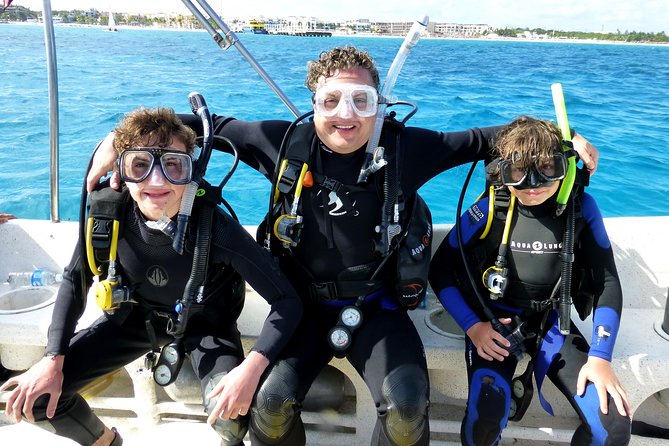
From about noon until 4:00 p.m., you make two shallow reef visits, each lasting around 40 minutes. They take place at two different locations, so you get more than one underwater setting in the same afternoon.
The shallow depth is appropriate for a first experience. It allows you to concentrate on breathing, body position, and communication with your instructor while still seeing coral and marine life. You are accompanied by a PADI professional throughout the reef portion.
The possible wildlife list is appealing: turtles, moray eels, groupers, barracudas, crabs, shrimp, and many kinds of fish. One account also describes schools of fish, large eels, coral, and manta rays. Marine sightings can never be guaranteed, but the range of animals gives you a good reason to keep looking closely rather than rushing from one sight to the next.
I like the decision to use two reef sites. If the first location feels like a learning exercise, the second gives you a chance to settle into the rhythm. You may be more relaxed with your breathing and buoyancy by the second session, which can make it easier to notice the animals around you.
Still, two sessions also mean a long day. The morning begins with instruction, and the afternoon combines boat time, equipment handling, and two periods in the water. If you are not used to physical activity or warm-weather outings, the schedule may feel tiring by the final return.
The hardest parts for a first-time student
Scuba looks simple from the surface, but several small tasks happen at once. You need to breathe steadily, manage your equipment, listen to the instructor, stay aware of your position, and equalize pressure in your ears.
Ear regulation is a common point of frustration for beginners on this experience. The best advice from the available feedback is simple: do not rush. If your ears will not equalize, signal the instructor and follow the instruction you are given. Continuing while uncomfortable will not improve the situation.
Buoyancy is another challenge. One first-time participant found it hard to stop breathing too heavily and struggled to find neutral buoyancy. That is not a reason to avoid the activity, but you should know that the first attempt may feel more like skill practice than effortless sightseeing.
The good news is that the instructors are described as patient and attentive, especially with nervous people. Some participants needed extra coaching, and the staff took time to help them feel safe. That matters more than a polished sales pitch for a beginner course.
You should also understand that the ocean is not a swimming pool. Even shallow reef sessions require you to stay calm and follow directions. If you already know that enclosed equipment or breathing through a regulator makes you anxious, a snorkeling trip may be a gentler choice.
What makes the marine life special
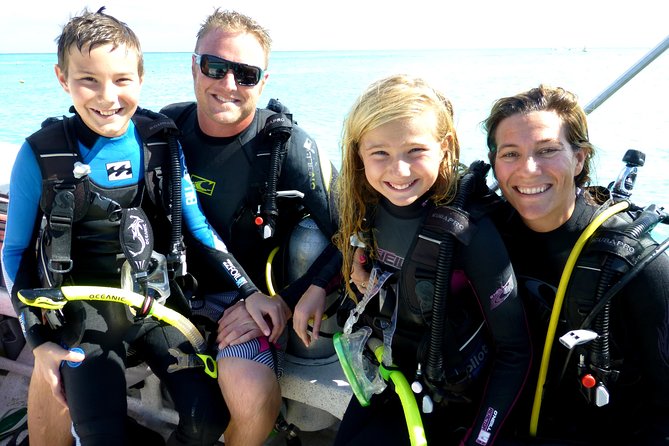
Playa del Carmen’s reef setting gives this experience a clear advantage over pool-only introductions. In the pool, you learn how the equipment works. At the reef, you see why people put in the effort.
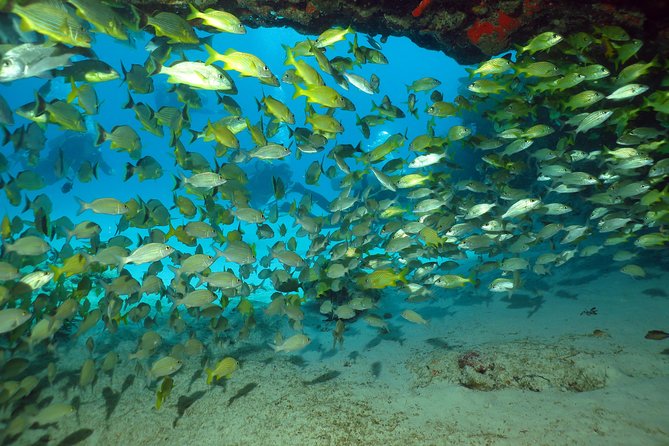
Coral formations provide places for smaller animals to hide, while larger fish and turtles may pass through the area. Moray eels, groupers, barracudas, crabs, shrimp, and schools of tropical fish are all possible sightings listed for the experience. The underwater setting is described as clear, with colorful coral and plenty to watch.
You should keep your expectations sensible. No guide can promise a turtle, manta ray, or barracuda on a particular session. The value is in learning to observe the reef while practicing your new skills. If you are busy fighting your buoyancy, you may miss some of the scenery, which is another reason the pool preparation and instructor support matter.
The two-site format also gives you some variety. You are not spending both sessions in exactly the same area, and the change can make the afternoon feel more like an exploration than a single supervised practice period.
Group size, guides, and the human side of the course
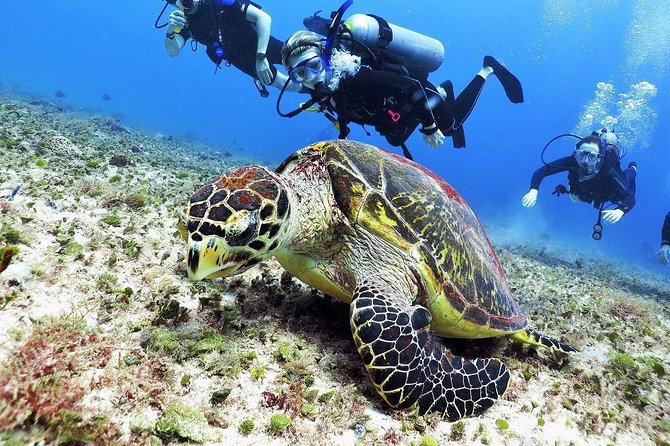
The maximum group size is eight, which is one of the strongest practical features. A small group cannot remove every challenge, but it gives the professional a better view of how each participant is doing.
The named instructors associated with positive experiences include Alma, Jack, Sam, and Geovanni. Alma is singled out for patience with ear problems. Jack is praised for instruction and personality, Geovanni for helping with buoyancy, and Sam for explaining equipment and skills clearly.
You may not be assigned to any particular instructor, so treat those names as examples of the teaching approach rather than a guarantee. The consistent point is that patient guidance is central to the experience. That is exactly what you want when you are trying to breathe underwater for the first time.
The small group also helps the day feel less anonymous. You are learning alongside other beginners, and everyone starts with the same basic questions. That shared learning can make the early classroom and pool work less intimidating.
Practical costs and small details to watch
The listed price is $169 per person. Add the $20 boarding and marine park fee, bringing the known total to $189 per person before any optional photos. If you want photographs of the experience, those are available to purchase separately.
If you choose to take the course from Sandos Hotel, there is an additional $15 boarding fee. The supplied information does not state that hotel pickup is included, so do not assume transportation from your accommodation. The meeting point is Scuba Libre in central Playa del Carmen.
Water is included during the training and on board. All necessary equipment is included as well, so you do not need to arrange a separate tank or basic gear rental for the activity.
The experience is booked an average of 15 days ahead, which suggests that planning early is sensible, especially if you have fixed vacation dates. Confirmation is provided at booking, and the activity returns to its starting point.
The cancellation terms are strict. The booking is non-refundable and cannot be changed for any reason. If poor weather forces the operator to cancel, you are offered a different date or a full refund. That makes travel insurance or a little schedule flexibility worth considering, especially during a short holiday.
Who should book this Playa del Carmen experience
I would choose this for an adult or child aged 10 and above who is curious about scuba but not ready for a full certification course. It is also a good fit if you want an instructor-led day with a clear progression from theory to pool to reef.
It suits people who value support over speed. You get time to learn, practice, and try again, rather than being rushed straight into the sea. The small group and patient instruction are especially useful for people who feel uncertain about breathing, ear pressure, or buoyancy.
I would be more cautious if you dislike long activity days, have limited physical fitness, or already know that underwater equipment makes you uncomfortable. The course requires reasonable physical health, and your ability to stay calm will affect how much you enjoy the reef sessions.
This is also not the right choice if your main goal is certification. You will learn important basics, but the experience is an introduction, not a qualification for independent scuba.
Should you book it?
Book it if you want a structured first taste of scuba in Playa del Carmen, appreciate close instructor support, and like the idea of two coral reef locations rather than a single short session. The combination of pool practice, shallow water, two 40-minute reef visits, and a group capped at eight gives the day real substance for the price.
Skip it if you want a relaxed, no-effort water activity, or if the extra $20 fee and strict cancellation policy bother you. For the right beginner, though, this is a strong way to find out if breathing underwater is something you want to pursue further.
FAQ
Where does the scuba experience begin and end?
It begins at Scuba Libre, located on Calle 4 Nte Manzana 3 between 5a Avenida and the federal maritime zone in central Playa del Carmen. The activity ends back at the same meeting point.
What time does the experience start?
The start time is 8:00 a.m. The full activity lasts about eight hours and ends after the afternoon reef sessions.
How old must participants be?
The minimum age is 10 years old.
Do I need previous scuba experience?
No. The experience is designed for beginners and does not require previous scuba experience.
What happens during the morning?
From about 8:00 to 11:00, you receive theory and pool training. You learn basic safety, equipment use, underwater breathing, and key scuba skills.
How many reef sessions are included?
You receive two shallow open-water sessions at two different reef locations. Each session lasts about 40 minutes.
Is scuba equipment included?
Yes. All necessary equipment and a professional instructor are included.
Is water provided?
Yes. Water is included during the training and on board during the reef sessions.
Are marine park and boarding fees included?
No. A $20 boarding and marine park fee is charged per person. An additional $15 boarding fee applies if you take the course from Sandos Hotel.
More Dive Courses in Playa del Carmen
- PADI Open Water Diver Course in the Riviera Maya
★ 5.0 · 47 reviews - PADI Open Water Diver Course in Playa del Carmen
★ 5.0 · 40 reviews - Open Water Diver course PADI including underwater video
★ 5.0 · 32 reviews - Open Water Diver 2-Day PADI Course in Playa del Carmen
★ 5.0 · 16 reviews
More First-Time Dives in Playa del Carmen
- PADI Discover Scuba Diving Program in the Riviera Maya
★ 5.0 · 67 reviews - PADI Discover Scuba Diving in Playa del Carmen
★ 4.5 · 61 reviews - Basic Diver – Bautismo
★ 5.0 · 22 reviews - Discover Scuba Diving in Playa del Carmen – 2 dives
★ 5.0 · 7 reviews
Just added around Playa del Carmen
- Try dive in beautiful Casa cenote for 2 people★ 5.0 · 6 reviews
- Cozumel Express 2-Tank Dives from Playa del Carmen/ Only for Certified Divers★ 5.0 · 2 reviews
- Full-Day Playa del Carmen Reef Diving Activity★ 5.0 · 3 reviews
- Scuba Diving in Cenotes★ 5.0 · 37 reviews
- Scuba Referral Dives & Beach Club with Transportation In Riviera Maya★ 5.0 · 33 reviews
- Try dive in Cozumel island★ 5.0 · 4 reviews
- 2-Tank Morning or Afternoon Dives in Playa del Carmen certified Divers Only★ 4.5 · 33 reviews
- Private Scuba Diving in Cenote around Playa del Carmen★ 5.0 · 7 reviews
Reef Diving, compared.
Great Barrier Reef Snorkeling and Diving Cruise from Cairns
Read our review →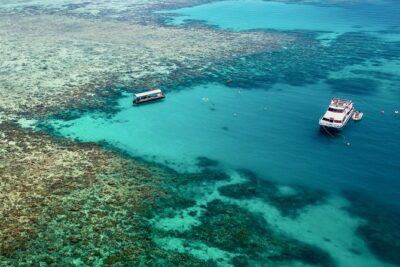
Ocean Freedom Great Barrier Reef Luxury Snorkel and Dive Cruise
Read our review →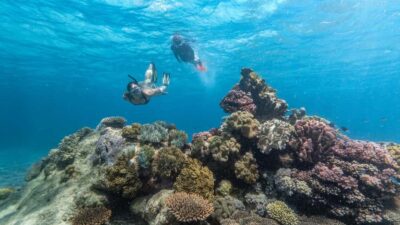
Cairns: Premium Snorkelling and Diving Reef Day Trip
Read our review →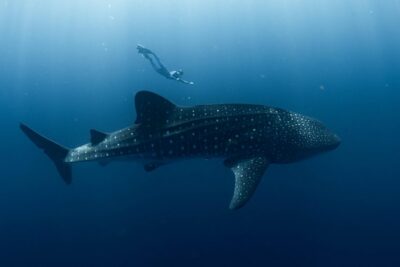
Swim with Whale Sharks in the Ningaloo Reef: 3 Island Shark Dive
Read our review →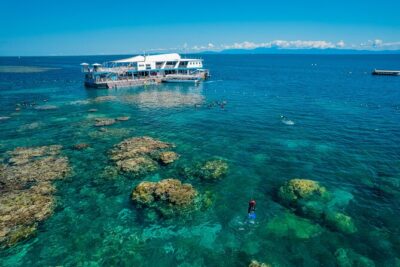
Snorkel & Dive the Reef: Sustainable, Scientific & Cultural Tour
Read our review →
Port Douglas: Outer Barrier Reef Snorkel and Dive Options
Read our review →
Silverswift Dive and Snorkel Great Barrier Reef Cruise
Read our review →Lists this dive appears in