
REVIEW · SRI LANKA
PADI Advanced Open Water Diver Course
The best reason to take this PADI Advanced Open Water course is the choice it gives you underwater. Instead of repeating the same basic lesson, you complete five adventure sessions, including mandatory deep-water work and navigation, then choose three subjects such as wreck exploration, boat work, buoyancy, or fish identification. The setting adds real variety: reefs, rock formations, and wrecks reach from 6 to 30 meters.
I like the small maximum of eight people and the course’s flexible, personal feel. I also like that instructors such as Leon, Tarush, and Supun are praised for calm, patient teaching, with special attention to safety. The main catch is cost: the $225.51 course price does not include the €70 PADI manual and certification fee, and lunch is extra.
Key points to know before booking
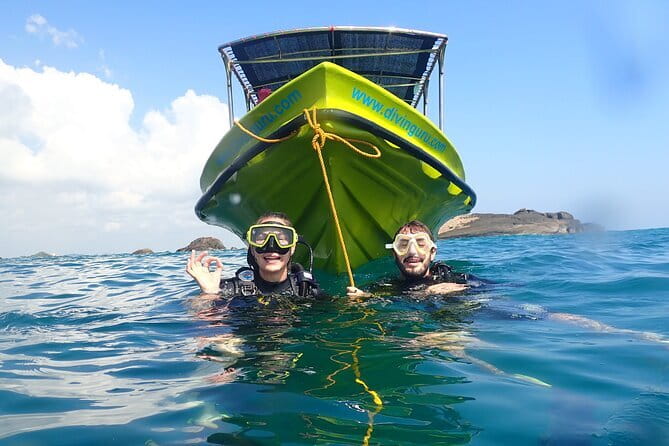
- Five adventure sessions over two to three days: Two subjects are required, and you choose three more.
- Three kinds of underwater sites: Unawatuna offers reefs and rocky areas, while sites near Galle harbor include the Rangoon, SS Oreste, and Galle wrecks.
- Wreck options reach 30 meters: Rangoon is at 30 meters, SS Oreste at 22 meters, and Galle Ship Wreck at 18 meters.
- Experienced named instructors: Leon, Tarush, and Supun receive particular praise for clear explanations, patience, and safety-minded teaching.
- Bring extra money for PADI costs: The €70 manual and certification charge is not included, and lunch is also separate.
- Morning registration starts at 8:30 am: The course ends back at the centre, with pickup offered as a feature.
What the three-day course actually involves
This is not a single sightseeing outing. It is a practical qualification course for someone who already holds an Open Water Diver certificate and wants more experience under an instructor’s supervision.
The course normally takes two to three days. You complete five adventure sessions, with around half a day set aside for the theory linked to each subject. There is no exam, but you still need to understand the purpose and safety points of each session before entering the water.
A typical morning begins at 8:30 am at Divinguru Unawatuna, the PADI 5 Star IDC Dive Resort on Matara Road. Afternoon registration is listed at 1:30 pm. The schedule usually allows two or three sessions per day, though the exact rhythm can depend on weather, site conditions, and the chosen subjects.
The course is capped at eight people. That does not guarantee one-to-one teaching, but it keeps the group from becoming unwieldy. The strongest personal feedback centers on instructors who take time to explain each step. Leon is praised for careful safety briefings and patience, Tarush for adapting the course to personal preferences, and Supun for calm instruction and a good sense of humor.
That matters at this level. You are not simply collecting five signatures. You are learning how to manage yourself in deeper water, read a compass underwater, control your position, and think through new conditions without rushing.
More dive courses in Sri Lanka:
- PADI Scuba Diver Course
★ 5.0 · 30 reviews - PADI Scuba Diver Course
★ 5.0 · 11 reviews - PADI Rescue Diver
★ 5.0 · 2 reviews
The two required sessions: deep water and navigation
Every student must complete deep-water work and underwater navigation. These are the most useful parts of the course for many people because they address skills you will use again and again.
The deep-water session takes you beyond the limits of an entry-level Open Water course. The supplied information does not specify the exact training depth for each session, so you should ask the centre what depth is planned for your dates and selected site. The available locations range from 6 to 30 meters, including the deeper wrecks near Galle harbor.
The value here is not simply reaching a bigger number on your computer. Greater depth affects air use, buoyancy, visibility, and the way you make decisions. You learn to stay organized and calm while an instructor watches your technique.
Navigation is less dramatic but just as important. Underwater, a short swim can feel confusing when the scenery looks similar in every direction. Practicing with a compass and natural references gives you a better chance of returning to a planned point instead of relying on guesswork.
I would pay close attention during both sessions. The course’s theory has no formal exam, but these skills deserve more than a quick box-ticking exercise. If you have not used a compass since your first certification, tell your instructor at the start.
Choosing your three elective adventure sessions
After the required subjects, you select three additional adventure sessions. Options listed include wreck work, boat sessions, peak performance buoyancy, and fish identification. The range lets you shape the course around your next few years of underwater interests.
Wreck work is the obvious choice if you want to visit the sites close to Galle harbor. The Rangoon sits at 30 meters, SS Oreste at 22 meters, and Galle Ship Wreck at 18 meters. These are on sandy ground, and the two deeper wrecks are described as having especially strong fish life and soft coral growth.
Wreck training does not mean penetrating the vessel. The supplied details do not promise interior exploration, so ask your instructor exactly what the session covers. In practical terms, you can expect an introduction to planning around a wreck, maintaining position, and observing the site safely.
Peak performance buoyancy is a smart choice if you want to improve every future underwater session. Better control means less contact with the bottom, more efficient movement, and a clearer view of small creatures. It is also a sensible option for anyone who felt awkward with weight control during their first certification.
Fish identification gives purpose to the reef sessions. You might find Indian Ocean reef fish, nudibranchs, stingrays over sandy areas, and large groups of sweet lips around the deeper wrecks. The course material specifically points to macro life and many different nudibranchs, so this subject suits anyone who enjoys slowing down and looking closely.
Boat work is another option, though no detailed boat schedule is provided. Ask what kind of boat and site will be used before selecting it. The same is true of any subject not fully explained at booking time: the centre can match your preferences with the available conditions.
Reefs, rocky valleys, and small marine life
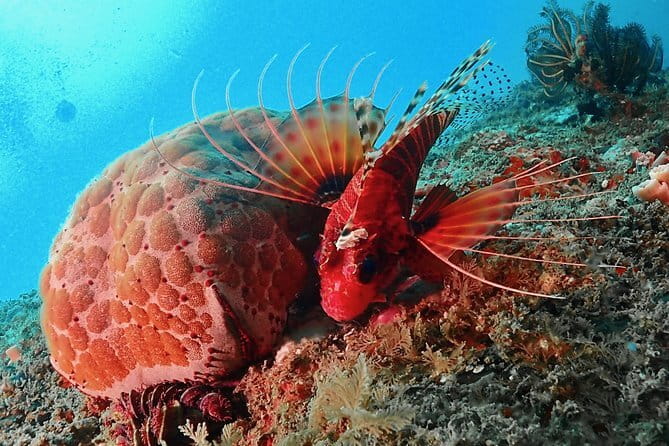
Unawatuna has about 16 listed sites, with depths from 6 to 30 meters. That gives the instructor room to choose a suitable site for your ability, weather, and selected subjects.
The reef sites reach about 18 meters. Hard and soft corals are present, but they are described as limited, so do not book this course expecting vast coral gardens. The appeal is more varied. You might find small reef creatures, nudibranchs, Indian Ocean fish, and stingrays over sandy bottom.
The deeper Unawatuna sites are mainly rocky. Valleys and uneven formations provide structure to the route, though they may feel less colorful than a classic tropical reef. This type of terrain makes navigation practice useful because you have natural shapes to recognize while returning to a planned area.
The course is strongest for someone who values variety and instruction over a single spectacular coral scene. Conditions and marine sightings can change, so the listed animals should be treated as possibilities, not guarantees.
A few more dives around Sri Lanka worth comparing
- Fun Dives For Certified Divers
★ 5.0 · 44 reviews - Fun Dives For Certified Divers
★ 5.0 · 30 reviews - Discover SCUBA Diving in Beautiful Unawatuna Bay
★ 5.0 · 30 reviews - Fun Dives For Certified Divers
★ 5.0 · 22 reviews
The three wreck sites near Galle harbor
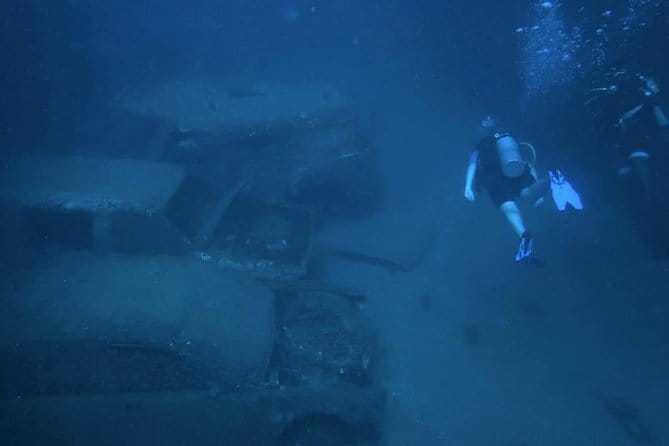
The wreck choices add a sense of progression. Galle Ship Wreck is listed at 18 meters, SS Oreste at 22 meters, and Rangoon at 30 meters.
Galle Ship Wreck is the shallowest of the three. At 18 meters, it may suit a student who wants a wreck setting without immediately choosing the deepest available option. SS Oreste goes deeper, while Rangoon gives the most demanding profile at 30 meters.
The wrecks rest on sandy ground, which can make their outlines easier to understand than a scattered rocky site. The two deeper wrecks are noted for soft corals and large fish groups, including hundreds or thousands of sweet lips and other fish. That sounds impressive, but visibility and animal behavior are never guaranteed. The real benefit is that a wreck session combines practical training with a clear underwater subject to study.
Depth is the key issue. A 30-meter site is not automatically the right choice for every Advanced Open Water student. Ask about the planned profile, your air consumption, and the instructor’s recommendation. A good course should match the site to your comfort and ability, not simply chase the deepest number.
Equipment, daily rhythm, and what is not included
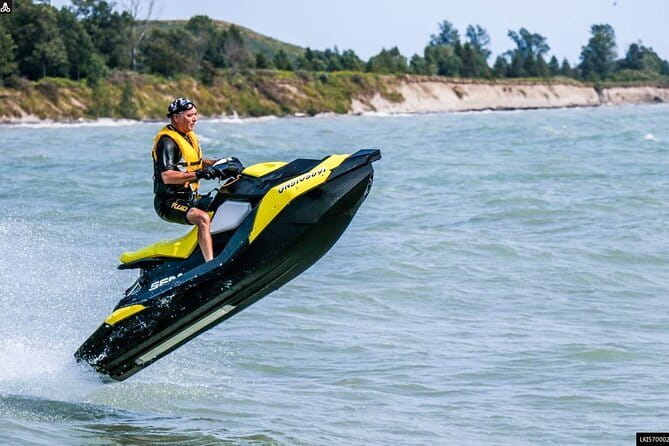
Scuba equipment is included, along with bottled water, snacks, coffee, and tea. That keeps the day simple and means you do not need to arrange your own basic kit for the course.
Lunch is not included. Plan for that expense and ask how much time is available between sessions. The listed schedule allows two or three sessions per day, so lunch may be a quick practical break rather than a long restaurant stop.
The biggest extra cost is the €70 PADI fee. This covers the PADI Advanced Open Water manual and certification costs. It is separate from the advertised $225.51 course price, so the real budget is higher than the headline figure.
If you prefer to study online, you can purchase PADI Advanced Open Water eLearning directly through PADI and register with Divinguru Unawatuna, identified as PADI 5 Star Dive Resort S-36133. The eLearning route is also an extra purchase. Confirm the current payment process before arrival, since the course information presents the online option separately from the centre’s fee.
At the end, the activity returns to the meeting point. Pickup is offered as a feature, but the listed start point is the Divinguru centre, so confirm the exact pickup arrangement rather than assuming door-to-door transport.
The teaching style and why it matters
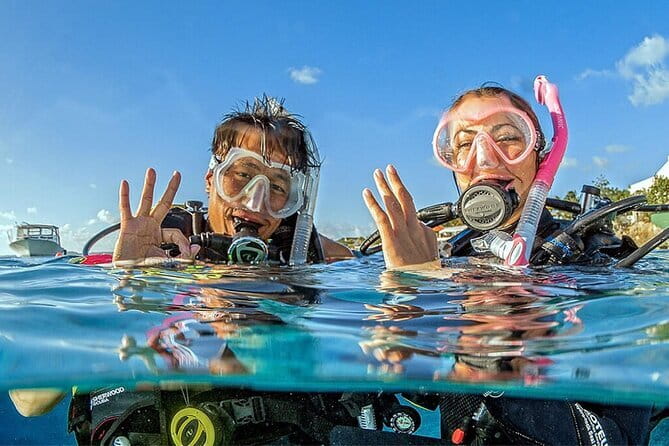
The strongest praise focuses on instruction, equipment, organization, and personal attention. Leon is singled out for explaining each step carefully, treating safety seriously, and remaining patient. Tarush is praised for working around individual preferences. Supun receives particular credit for being calm, patient, and fun without making the student feel rushed.
Those details are more useful than a generic claim about professionalism. Advanced training can be intimidating if the instructor treats every student as equally confident. A calm teacher gives you room to ask basic questions, repeat a skill, or admit that a certain depth or subject does not feel right.
The centre also receives praise for good equipment and one-to-one attention in some course situations. The group limit of eight supports that personal approach, though actual instructor ratios may vary. Ask how many students will be in your group and who will teach you.
The course is only suitable if you meet the prerequisites. You must already be an Open Water Diver, and the minimum certification age is 12. You also need a moderate level of physical fitness. No special medical details are supplied, so ask the centre directly if you have any health concern that could affect underwater activity.
Price and overall value at $225.51
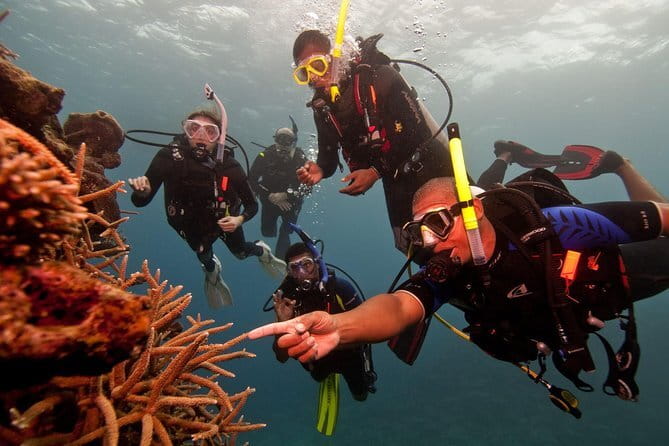
At $225.51 per person, the course is not cheap once you add the €70 PADI fee and lunch. Still, the value is reasonable if you want a recognized qualification, five supervised sessions, equipment use, drinks, and instruction spread across two or three days.
The price makes less sense if you are looking only for casual sightseeing. This is a training course first. You spend time on theory, skill work, and planning, not just observing fish.
The small group limit and flexible choice of subjects add value. So does the range of sites. You can work on navigation over rocky terrain, visit a reef, or choose a wreck session near Galle harbor. That variety helps the course feel like a real step beyond Open Water rather than a repeat of the first certificate.
Remember that certification costs are not hidden in the fine print here, but they are easy to overlook. Budget for the course fee, €70 PADI charge, lunch, and any online study materials you choose.
Who should book this course?
I would choose this course if you already hold Open Water certification and want more confidence before making deeper or more varied underwater trips. It suits you especially well if you are curious about wrecks, navigation, buoyancy, or marine identification.
It is also a good match if you prefer a smaller centre where instructors can adjust the pace. The positive comments about Leon, Tarush, and Supun suggest that the teaching team takes patience and safety seriously.
I would hesitate if you want a relaxed holiday activity with no classroom time. I would also think twice if you dislike early starts, have limited physical fitness, or are not ready for the €70 PADI fee on top of the advertised price.
The cancellation terms are straightforward: cancel at least 24 hours before the local start time for a full refund. Poor weather or failure to reach the minimum number of participants can lead to a new date, another experience, or a full refund.
Should you book it?
Book this PADI Advanced Open Water course if you want structured progress, not just five more underwater outings. The combination of deep-water work, navigation, wreck options, varied reef and rock sites, and patient named instructors gives the course a useful balance.
Before paying, confirm three things: the final total including the €70 PADI fee, the three elective subjects you want, and the planned depth and site for each session. If those details suit your ability and budget, this is a practical way to build confidence on Sri Lanka’s south coast.
FAQ
How long does the PADI Advanced Open Water course take?
The course takes approximately two to three days. It includes theory for each session and two or three underwater sessions per day.
How many adventure sessions are included?
Five adventure sessions are included. Deep-water work and underwater navigation are mandatory, and you choose three additional subjects.
Which elective subjects can I choose?
Available options include wreck work, boat work, peak performance buoyancy, and fish identification. The course information also refers to other adventure subjects, so confirm the current choices with the centre.
Do I need an Open Water certification?
Yes. You must already be an Open Water Diver to take this course.
What is the minimum age?
The minimum certification age is 12 years.
Is the PADI manual and certification fee included?
No. The PADI manual and certification fee cost a total of €70 and are separate from the course price. PADI eLearning is also purchased separately if you choose that option.
What is included in the course price?
The course includes scuba equipment, bottled water, snacks, coffee, and tea.
Is lunch included?
No. Lunch is not included.
Where does the course begin?
The course begins at Divinguru Unawatuna, PADI 5 Star IDC Dive Resort, at 294 Matara Road, Unawatuna 80600, Sri Lanka. Morning registration is at 8:30 am, and afternoon registration is at 1:30 pm.
Can I cancel for a full refund?
Yes. You can receive a full refund if you cancel at least 24 hours before the local start time. Poor weather or insufficient participants may also lead to a new date or full refund.
Just added around Sri Lanka
- Scuba Diving For Beginners★ 5.0 · 18 reviews
- 3 Hour Guided Scuba Diving in Trincomalee★ 5.0 · 2 reviews
- PADI Rescue Diver★ 5.0 · 2 reviews
- PADI Scuba Diver Course★ 5.0 · 11 reviews
- Scuba Diving For Beginners★ 5.0 · 10 reviews
- Scuba Diving in Kalpitiya★ 5.0 · 2 reviews
- Fun Dives For Certified Divers★ 5.0 · 22 reviews
- Scuba Diving at Unawatuna★ 5.0 · 21 reviews
Scuba Diving Courses, compared.
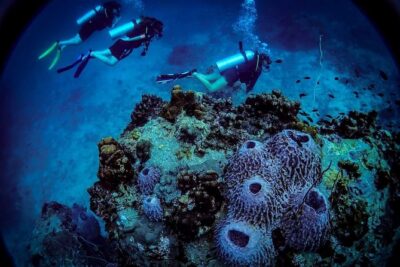
Open Water Course – Become certified diver in 3 days
Read our review →
Heraklion: Beginner Scuba Diving Lesson with PADI Instructor
Read our review →
Discover Scuba Diving with No Certification in St Thomas
Read our review →
Try Dive – PADI Discover Scuba Diving in Tenerife
Read our review →
Lists this dive appears in