
REVIEW · THAILAND
Padi Advanced open Water Diver Courses (Start at Ko Kut)
The best part of this PADI Advanced Open Water course is its useful mix of required skills and personal choice. You complete deep and navigation training, then select three specialties that match your interests, from underwater photography and buoyancy control to night work and search procedures.
I like the small maximum of four participants, the included hotel transfers, and the extra fun descent offered at the start or end. You also get lunch, drinks, snacks, and a professional guide. The main catch is the two-day schedule: it is efficient, but not especially flexible if weather interrupts the program or you want a slower pace.
Key points to know before booking
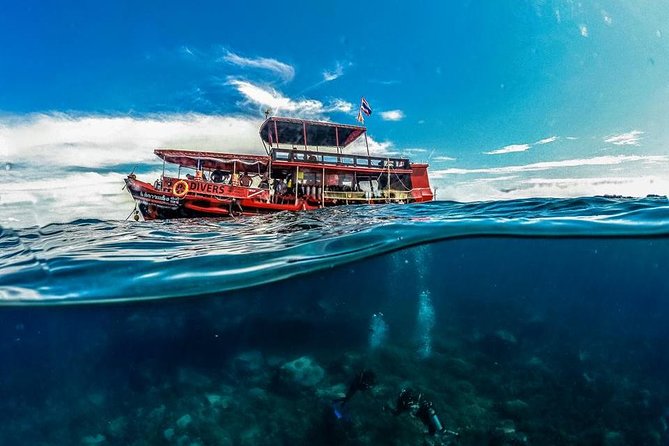
- Five specialty training descents: Deep and navigation work are included, with three additional choices.
- An extra relaxed descent: Use it to regain your comfort in the water or practise your new skills.
- Small group size: The maximum is four participants, which can mean more direct instructor attention.
- Koh Kut departure: Meet at BB Divers Koh Kood in Klong Chao, with hotel pickup and drop-off provided.
- Meals included: Expect buffet lunch, bottled water, coffee or tea, light refreshments, and snacks.
- National park fee extra: Entrance to Koh Rang National Park is not included in the price.
What this two-day course really adds
An entry-level scuba certificate lets you take part in standard underwater excursions. The advanced course is different. It is meant to make you more capable and controlled, not simply to add another card to your wallet.
Over two days, you complete five specialty training descents. Deep and navigation work form the core. The other three are chosen from a menu that can include digital photography, naturalist study, multilevel planning, peak performance buoyancy, search and recovery, and night work.
That choice matters. If you still feel awkward with your buoyancy, peak performance buoyancy is likely more useful than photography. If you want a new challenge, night work or search and recovery may be the better fit. You are not forced into the same package as every other participant.
The course is also a practical way to regain confidence after time away from scuba. The extra fun descent is offered either on the first day, to help you get back into the rhythm, or on the final day, when you can use your new skills in a more relaxed setting.
I like that arrangement. Training can feel demanding when every underwater session has a task attached to it. An extra descent gives you room to enjoy the setting and pay attention to your own progress.
More dive courses in Thailand:
- Open Water Course – Become certified diver in 3 days
★ 5.0 · 1,137 reviews - Full-Day Beginner Scuba Course with Private Tuition, Racha Yai
★ 5.0 · 368 reviews - La Bombona Diving Koh Tao Open Water Course
★ 5.0 · 172 reviews
Starting at BB Divers Koh Kood
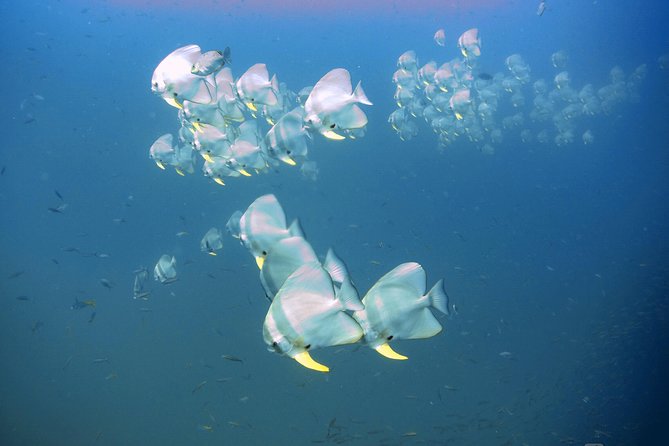
The meeting point is BB Divers Koh Kood, at 141 Moo 2, Klong Chao, Koh Kut, Trat 23000. The stated meeting window is between 8:00 and 9:00 in the morning, Monday through Sunday.
Hotel pickup and drop-off are included, so you do not need to arrange separate transport to the shop if your accommodation is covered by the pickup service. The activity ends back at the meeting point, which makes the return simple.
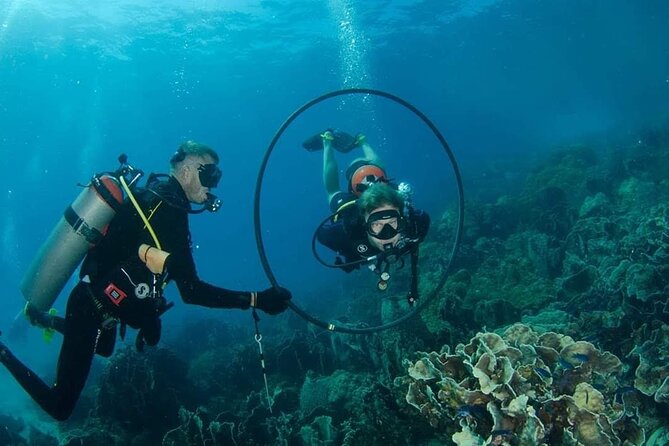
The small group limit is one of the strongest practical features here. With no more than four participants, the instructor can watch your technique more closely than on a crowded boat. That is especially helpful during navigation, buoyancy, and search exercises, where small errors are easier to correct when the group is compact.
The operation has used instructors including Marcus, Manu, and Dany. Marcus is associated with a safety-first teaching style and a relaxed approach. Dany has handled advanced training, while Manu is involved in the overall operation and instruction. Your actual instructor should be confirmed when you book, since the supplied information does not assign a particular teacher to every departure.
The first day: getting comfortable and building control
The first day begins with the practical business of preparing for advanced training. Expect professional guidance, equipment preparation, and a review of what you will do underwater. The exact order of the specialty sessions can change with conditions and the needs of the group.
If you choose the extra fun descent on day one, it serves as a useful warm-up. This is a good choice if your last scuba session was months ago, or if you want to settle your breathing and buoyancy before the assessed work begins.
The core training includes a deep descent. This is not simply about going lower for the sake of it. You practise the habits needed for better control at greater depth, under the direction of your instructor. The course information does not state a maximum depth, so you should ask the operator about the planned profile before booking.
Navigation is the other required specialty. It gives you a chance to work on underwater direction, awareness, and planning instead of relying entirely on a guide. This skill has clear value beyond the course. Good navigation helps you stay with your buddy, understand where you are, and return to the intended route.
Lunch is included during the day, along with bottled water, coffee or tea, soft drinks, snacks, and light refreshments. A buffet lunch is a useful touch on a full day around the water. You can focus on the next session without having to find food between activities.
Choosing your three optional specialties
Your three optional sessions are where you can shape the course around your own interests. Ask about the available choices when you reserve, since the information gives examples rather than a guaranteed menu for every date.
Peak performance buoyancy is a strong choice for almost anyone. Better trim and control can make you more comfortable, help you avoid accidental contact with the bottom, and reduce wasted effort. If you sometimes feel that your fins, hands, or changing air supply send you up and down, this session may provide the most immediate benefit.
Digital photography suits anyone who wants to take better underwater pictures. The useful lesson is not just pressing the shutter. You also learn to control your position and movement while handling a camera, which makes it a skill exercise as much as a photography session.
Naturalist training gives you a closer look at the underwater environment. The supplied information does not promise particular animals or habitats, so you should not book expecting a specific sighting. It is best for people who want to pay more attention to what they are seeing rather than simply completing tasks.
Multilevel training focuses on planning a profile that changes depth during the session. This can help you understand how a longer excursion is managed and why careful planning matters.
Search and recovery adds a practical problem-solving element. You work through a search pattern and recovery task under instruction. This is a good option if you prefer a defined challenge and want to practise methodical underwater work.
Night training offers a different atmosphere and requires you to pay closer attention to communication, equipment, and orientation. It depends on conditions and scheduling, so confirm that it is available for your dates. If you are new to night work, expect the instructor to place safety and control ahead of speed.
A few more dives around Thailand worth comparing
- Ko Tao: Try Scuba Diving 1-Day Experience
★ 4.8 · 452 reviews - Phuket: Scuba Diving Maithon Or Racha Islands For All Levels
★ 4.8 · 245 reviews - Scuba Dive in Koh Lanta, Thailand
★ 5.0 · 212 reviews - Basic Diver ( One Day Experience)
★ 5.0 · 205 reviews
The second day: applying the new skills
The second day continues the specialty work and gives you more opportunities to apply what you learned. The exact sequence is not fixed in the supplied details, and weather can affect the plan.
That flexibility is sensible around Koh Kut. Conditions in the Gulf of Thailand can influence boat schedules and underwater visibility. The operator states that the course is subject to favorable weather, and a cancellation caused by poor weather can be moved to another date.
By the end of the five training descents, you should have practised several different parts of scuba rather than repeating the same basic session. The value is in the variety. Navigation makes you more independent, buoyancy work improves control, and a specialty such as photography or search and recovery gives you a specific skill to keep using.
You can take the extra fun descent on this final day if you prefer to finish without another formal task. That option makes sense if you want to relax, practise your new techniques, or simply enjoy being underwater after the structured training is finished.
Food, equipment, and the feel of the operation
The included food and drinks make this more than a bare training package. You receive buffet lunch, bottled water, coffee or tea, snacks, and other light refreshments. Those details matter because a two-day course involves long periods of preparation, boat time, and concentration.
The operation is described as professional and safety-focused. Instructors and boat crew have been praised for clear communication, patient teaching, and a friendly atmosphere. Names connected with the operation include Marcus, Manu, Dany, Pierre, Raymond, and Louis, though not every person will be present on your date.
You should still ask practical questions before paying: which specialties are available, who will teach you, what equipment sizes are on hand, and whether the planned sessions require a separate national park payment. The course includes a professional guide, but it does not include the Koh Rang National Park entrance fee.
The course is available to most participants, and service animals are allowed. It is also near public transportation, although hotel pickup and drop-off are provided. No special accessibility details are supplied, so anyone with mobility concerns should contact BB Divers directly before booking.
Is $547.79 a fair price?
At $547.79 per person, this is not a bargain-basement training course. The price makes more sense when you count the two-day format, five specialty sessions, the extra fun descent, hotel transportation, meals, refreshments, and professional instruction.
The small group limit also affects the value. A maximum of four participants gives you a better chance of receiving individual correction and asking questions. For a course built around control and navigation, that can be more useful than saving a little money in a larger group.
Still, compare what is included before you commit. The national park entrance fee is extra, and the price does not tell you whether every item of personal equipment is included or which optional specialties will be available on your dates. Ask for those details in advance.
The strongest value is for a certified scuba diver who wants structured progress in a compact holiday schedule. If you only want relaxed recreational sessions, an ordinary fun excursion may cost less and involve fewer commitments.
Who should book this course?
This course suits you if you already hold an entry-level scuba certification and want more confidence, better control, or a wider range of underwater skills. It is especially useful if you prefer learning in a small group and want an instructor close by during practical exercises.
It also fits people who are returning to scuba after a break. The extra fun descent gives you a gentle way to settle in before the formal training, though you should be honest about your experience and comfort level.
Choose carefully if you are short on time. Two days is efficient, but poor weather could force a change, and the schedule may not leave much room for delays. If your holiday plans are fixed, ask about alternative dates before you reserve.
This is less suitable if you expect a sightseeing-only excursion. Several sessions are training-focused, and your attention will be on navigation, depth, buoyancy, or another chosen skill. The reward is improved ability, not just a day on a boat.
Booking details worth knowing
Confirmation is sent within 48 hours of booking, subject to availability. The stated operating hours run from January 10, 2020 through September 6, 2026, with departures listed Monday through Sunday in the 8:00 to 9:00 morning window.
You can cancel for a full refund if you do so at least 24 hours before the local start time. Cancellations or changes made later are not accepted for a refund. If poor weather causes the operator to cancel, you are offered an alternative date.
Before booking, send a short message asking about your preferred three specialties, the instructor, the national park fee, and the expected pickup time. Those answers will tell you more about how well the course fits your plans than the headline price alone.
Should you book the Koh Kut Advanced Open Water course?
I would book this if you want a focused step beyond basic certification and value patient instruction, small groups, meals, transfers, and choice in your specialty sessions. The extra fun descent is a thoughtful addition, especially if you need to get comfortable again.
I would pause if you need a guaranteed schedule, a specific instructor, or a fully inclusive price. Weather can change the plan, the Koh Rang park fee is extra, and the optional specialties should be confirmed before payment.
For a certified scuba diver who wants practical skills rather than a simple sightseeing trip, BB Divers Koh Kood offers a well-supported two-day route to more confident underwater work.
FAQ
How long does the PADI Advanced Open Water course take?
The course lasts approximately two days.
How many training descents are included?
The course includes five specialty training descents. Deep and navigation training are core sessions, and you choose three additional specialties.
Which optional specialties can I choose?
Possible choices include digital photography, naturalist, multilevel, peak performance buoyancy, search and recovery, and night training. Availability should be confirmed when you book.
Is an extra fun descent included?
Yes. One extra fun descent is included. You can take it on the first day to get comfortable again or on the final day to use your new skills in a relaxed session.
Is hotel transportation included?
Yes. Hotel pickup and drop-off are included, and the activity ends back at the BB Divers Koh Kood meeting point.
Is the Koh Rang National Park entrance fee included?
No. The entrance fee for Koh Rang National Park is not included in the course price.
Just added around Thailand
- Discover Scuba Diving in Koh Lanta, Thailand★ 5.0 · 72 reviews
- Phuket: PADI Discover Scuba Diving 1 beach dive★ 5.0 · 2 reviews
- Premium Guided Scuba Diving Day Trip for Certified Divers★ 5.0 · 32 reviews
- Try Scuba Diving★ 5.0 · 11 reviews
- Racha Noi and Racha Yai Dive Trip from Phuket★ 4.5 · 5 reviews
- Scuba Diving Daytrip to Racha Yai★ 4.5 · 43 reviews
- SCUBA Diving tour Racha and Coral islands full day tour★ 4.0 · 4 reviews
- Try Scuba Diving in Racha Yai and Noi for Non-Certified★ 5.0 · 15 reviews
Scuba Diving Courses, compared.
Open Water Course – Become certified diver in 3 days
Read our review →
Heraklion: Beginner Scuba Diving Lesson with PADI Instructor
Read our review →
Discover Scuba Diving with No Certification in St Thomas
Read our review →
Try Dive – PADI Discover Scuba Diving in Tenerife
Read our review →
Lists this dive appears in