
REVIEW · CRETE
Research diving with a Marine Biologist in Crete
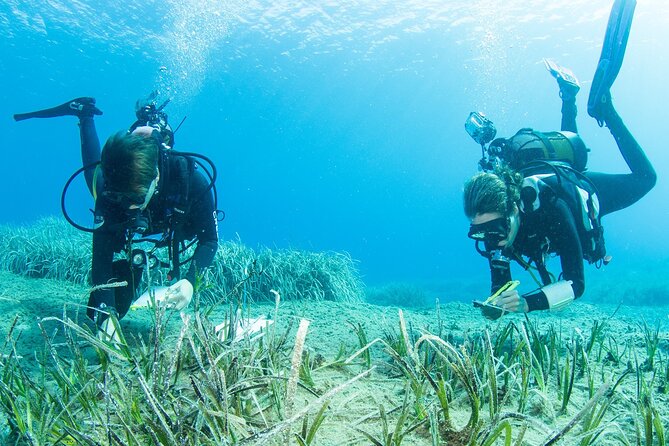
The best part of this Crete experience happens after you leave the water. With a marine biologist beside you, you collect samples, record what you see, and examine Mediterranean life under a microscope at the center’s open-air lab. It turns a standard day of scuba into a small research project.
I like the maximum group size of four, which gives the marine biologist room to adapt the work to your ability and interests. I also like the practical citizen-science angle: you are not only looking at fish and seagrass, you are helping gather information that can support marine education and protection.
The main consideration is simple: this is for certified divers only, and you need to be healthy and fit for scuba. Lunch at a beach taverna and underwater photos cost extra, so the $308.58 price is not the final spend for every participant.
Key points to know before booking
- Two underwater sessions: The day includes two sessions, with the program adjusted to your certification level, experience, and interests.
- Small private group: Only your group participates, with a maximum of four divers.
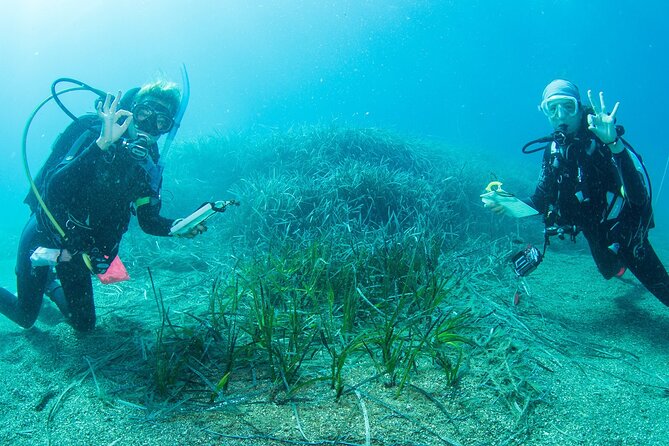
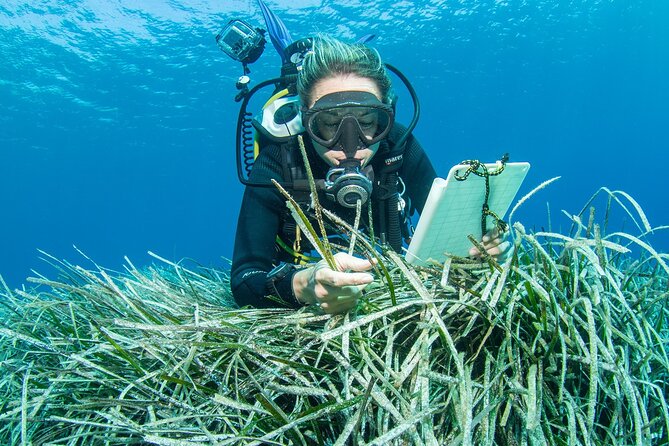
- Real fieldwork: You may collect sediment samples, make underwater notes, and identify species as part of citizen-science work.
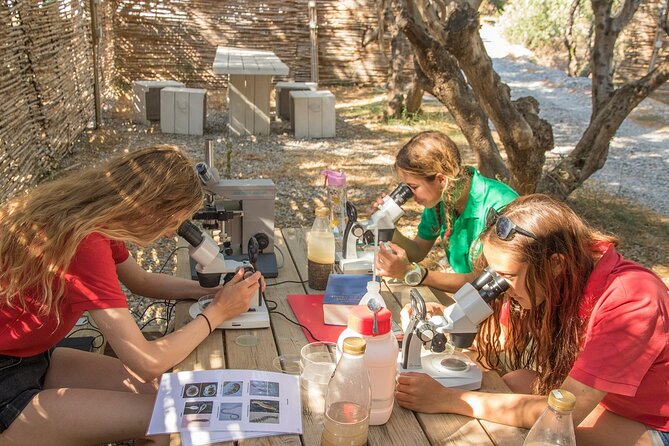
- Microscope session included: Use specialist marine-biology equipment and microscopes at the open-air lab.
- Two Crete settings: The schedule includes Souda Beach and Plakias, with the day beginning and ending at Dive2gether Crete.
- Extra costs to allow for: Lunch is paid separately, and underwater photos cost 19 euros if you choose to buy them.
A working day beneath the surface
This is not simply a recreational scuba outing with a short talk attached. The structure is closer to a field day: briefing, underwater observation, sample collection, a second session, then a lab review.
Your marine biologist guide explains what to look for before you enter the water. The subject can be shaped around your interests and experience, so a confident advanced diver may want more detailed observation work, while someone with less recent experience may need a calmer pace and clearer tasks.
That flexibility matters. Marine biology can sound technical, but the best part of this program is that you learn by doing. You may take underwater notes, play a species-recognition game, or gather sediment for later examination. The work gives purpose to the quiet moments that can otherwise pass quickly underwater.
The staff connected with this program includes trained marine biologists such as Vanessa, Martina, Marie-Clarie, Kirsten, and Katy. The exact guide for your day may vary, but the important point is that the instruction comes from staff with a marine-biology focus, not only standard scuba training.
More Scuba Diving in Crete
- Heraklion: Scuba Diving Experience for Beginners _Beach
★ 4.7 · 549 reviews - Heraklion: Beginner Scuba Diving Lesson with PADI Instructor
★ 4.9 · 355 reviews - Heraklion: Scuba Diving Experience for First-Timers
★ 4.8 · 203 reviews
Souda Beach: starting with the local habitat
Souda Beach is one of the two listed locations for the day. It provides the setting for an underwater look at the nearby marine environment and helps you put the opening briefing into practice.
You can expect the first session to focus on observing the habitat and learning how to recognize the plants and animals living there. The guide can tailor the work to your level, so you should not assume you need a scientific background. Curiosity and careful observation are more important.
Beach-based scuba has practical advantages. You enter the water from shore rather than relying on a boat schedule, and the pace can feel more direct. You also spend less time getting from one site to another and more time focused on the subject of the day.
There is a tradeoff. You should be comfortable with the physical demands of shore access and with a full day of activity. The provider asks for a moderate fitness level and says you must be healthy and fit for scuba, so this is not the right choice if you want a purely passive boat excursion.
Souda Beach also gives you a useful first stage for the citizen-science work. You begin by learning what is present, then use that knowledge to make better observations. The guide can explain what species may be found in the area and how to distinguish them in their natural setting.
Plakias: the base for the second session and lab work
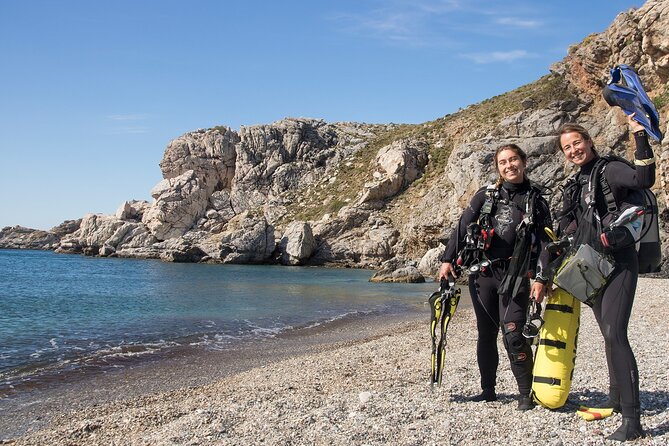
Plakias is both the home of Dive2gether Crete and the other setting named for the day. The meeting point is the 5-star PADI Diving School and Marine Field Station at Eleftheriou Venizelou, Myrthianos, Plakias 740 60.
The day begins at 8:30 am and ends back at this same meeting point. That return is useful because the final part of the program takes place at the center’s open-air marine-biology lab. You do not simply pack your equipment and leave after the second session.
Plakias is where the educational side becomes especially clear. The lab lets you look more closely at samples that are too small or subtle to appreciate underwater. Sediment can contain a miniature ecosystem, and the microscope work gives you a better sense of how much life exists beyond the larger animals you notice first.
The program may include collecting sediment samples and examining them in the field lab. You may also compare your notes with what you see through the microscope. That connection between observation in the water and analysis on land is what gives the day more substance than a regular guided scuba trip.
Because the start and finish are at the center, you should plan your day around returning there after the water work. Lunch is enjoyed at a beach taverna, but it is not included in the price. The supplied details do not specify the exact taverna or lunch menu, so bring room in your budget rather than expecting a prepaid meal.
What the citizen-science work really involves
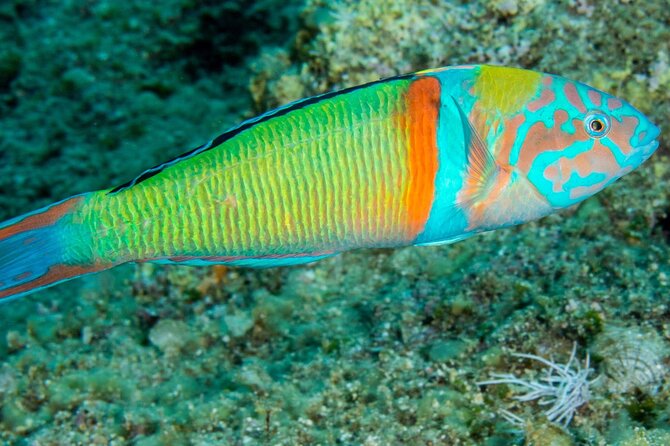
The phrase citizen scientist can sound grand, but here it means taking part in useful, organized observation. You are given a job to do, such as recording what you see, collecting a sample, or helping identify a species.
That approach changes how you look underwater. Instead of trying to spot as many animals as possible, you pay attention to habitat, small organisms, sediment, and the relationship between what you see in the field and what appears under the microscope.
One reported program focused on seagrass research. The work was described as relaxed even though it used beach access, and the later lab session revealed the small ecosystem associated with the seagrass. Seagrass is easy to skim past when you are focused on larger marine life, so this kind of task encourages a closer look.
The research element is also a good fit for families with certified older children or groups of friends who want a shared project. A father and two sons with Advanced Open Water Diver certification used the program to learn about a site, take sediment samples, make underwater notes, and test their species-recognition skills.
Do keep expectations realistic. You are not becoming a professional marine biologist in one day. You are receiving an introduction to field methods, using proper equipment, and contributing observations to projects intended to educate people and support environmental protection.
A few more dives around Crete worth comparing
- Chania: Scuba Diving for Beginners
★ 4.7 · 196 reviews - Chania: Scuba Diving for Beginners
★ 5.0 · 103 reviews - Experience Scuba Diving in Heraklion Crete
★ 5.0 · 80 reviews - Crete-Chania: Snorkeling & Scuba Dive for Beginners by Boat
★ 5.0 · 77 reviews
Why the small group matters
A group limit of four divers is one of the strongest practical features. Marine biology work needs time. If a group is large, the guide must spend more effort keeping everyone together and less time answering questions or adjusting tasks.
With four participants, you should have a better chance to ask about an organism, repeat an observation, or discuss a sample without holding up a large crowd. The program is also private, meaning only your own group takes part.
The small format does not remove the need to follow instructions. Underwater work still depends on safe buoyancy, awareness, and staying within the guide’s plan. It simply gives the guide more room to match the day to the group.
This setting may appeal to certified divers who are tired of standard sightseeing trips. It may be less suitable if your main goal is a fast-moving tour with a long list of dramatic sightings. The emphasis here is on learning, method, and careful attention.
Equipment, photos, and what the price covers
At $308.58 per person, this is a premium day by ordinary recreational scuba standards. The value comes from the combination of two underwater sessions, a trained marine biologist, specialist sampling equipment, scuba gear, and access to microscopes in the open-air lab.
You are not paying only for time in the water. You are paying for preparation, interpretation, equipment, and the chance to take part in structured marine research. If you already own scuba equipment, the included gear may be less important to you, but the marine-biology instruction remains central.
Bottled water is included. Specialized marine-biology equipment is also included, as is use of the microscopes. That keeps the core educational work within the stated price.
Two items are separate. Lunch at the beach taverna must be paid for on the day, and underwater photographs cost 19 euros if you want to purchase them. The guide will take photos underwater, but photo purchase is optional.
I would judge the price by asking what sort of day you want. If you want two ordinary recreational sessions, the cost may feel high. If you want a small-group science experience with equipment and lab work, the price is easier to justify.
Who will enjoy this most
This program is best for certified divers who are curious about the Mediterranean rather than focused only on depth, speed, or dramatic scenery. You should enjoy asking questions, noticing small details, and spending time discussing what you saw.
It also suits people who want a calm, educational day. The work can be adjusted to your level, and the program has been described as relaxed and accommodating. That does not mean effortless, since you still need the fitness required for scuba and shore-based activity.
Families can work well if every participant is certified and comfortable with the physical demands. The example of a father and two sons shows how the format can turn a shared day into a practical learning project.
You may want to choose another outing if you are not certified, if you want a casual introduction to snorkeling, or if you dislike scheduled educational activities. This is not a beginner scuba lesson or a general sightseeing tour.
Timing, meeting point, and cancellation
Plan for a full day, starting at 8:30 am. The meeting point is Dive2gether Crete, Eleftheriou Venizelou, Myrthianos, Plakias 740 60, Greece, and the activity ends there.
Confirmation is provided when you book. The experience is offered in English and uses a mobile ticket, which is convenient when you are moving between the center, the beach, and the lab.
You can cancel for a full refund up to 24 hours before the local start time. Cancellations or changes made less than 24 hours before the start are not accepted for a refund.
Should you book this Crete marine-biology day?
Book it if you are a certified diver who wants to understand what you are seeing, not simply pass through it. The small group, trained marine-biology staff, sample work, and microscope session give the day a clear purpose.
I would especially recommend it to repeat visitors to Crete, science-minded families, and divers who enjoyed seagrass, sediment, or species-identification work. Allow extra money for lunch and photos, and be ready for a physically active day that starts early.
Skip it if you are not certified or if your ideal outing is a relaxed boat trip with no classroom or lab element. For the right diver, though, this is a thoughtful way to spend a day in Crete and leave with a better understanding of the Mediterranean Sea.
FAQ
Is this experience suitable for beginners?
No. You must be a certified diver, healthy, and fit for scuba.
How many underwater sessions are included?
The program includes two underwater sessions in one day.
How large is the group?
The private activity is limited to a maximum of four divers, and only your group participates.
What is included in the price?
The price includes bottled water, scuba equipment, specialized marine-biology equipment, and use of microscopes in the open-air marine-biology lab.
Is lunch included?
No. The group eats lunch at a beach taverna, but lunch must be paid for separately.
Where does the activity start and end?
It starts at 8:30 am at Dive2gether Crete, Eleftheriou Venizelou, Myrthianos, Plakias 740 60, Greece, and ends back at the same meeting point.
Just added around Crete
- Crete: Scuba Diving for Certified Divers in Chania★ 5.0 · 12 reviews
- Crete Introductory Scuba Diving Experience★ 4.5 · 9 reviews
- Crete-Chania: Snorkeling & Scuba Dive for Beginners by Boat★ 5.0 · 77 reviews
- Chania Scuba Diving 2 Shore Dives(Receive Certification)★ 5.0 · 11 reviews
- Try Scuba in Crete – Free Certification & Photos (Beginners)★ 5.0 · 51 reviews
- Experience Scuba Diving in Heraklion Crete★ 5.0 · 80 reviews
- Plakias: Try Scuba Diving first time – Private, from 8 yrs.★ 5.0 · 21 reviews
- Scuba Diving for Beginners with a PADI Instructor near Heraklion★ 4.5 · 8 reviews
Scuba Diving in Crete, compared.
Heraklion: Scuba Diving Experience for Beginners _Beach
Read our review →
Heraklion: Beginner Scuba Diving Lesson with PADI Instructor
Read our review →
Heraklion: Scuba Diving Experience for First-Timers
Read our review →
Crete-Chania: Snorkeling & Scuba Dive for Beginners by Boat
Read our review →
Try Scuba in Crete – Free Certification & Photos (Beginners)
Read our review →Lists this dive appears in