
REVIEW · MEXICO
2 Tank Dive (for certified divers)
Costa Maya’s reef is the star here: finger-shaped coral formations create canyons and swim-throughs, with a real chance of seeing turtles, eels, rays, lobsters, and large schools of reef fish. I like the small maximum group of 12 and the personal help from instructors such as Cesar, Lucas, Luca, Antonio, and Charlie. I also like the convenient oceanfront base near Mahahual.
The two things I like most are the strong cruise-port timing and the relaxed care shown to newer certified scuba users. Staff have adjusted plans for families, helped children and nervous participants, and stayed with late-arriving cruise passengers. The main catch is simple: scuba equipment costs an extra $25, and local taxi costs can vary.
Key points to know before booking
- Two reef descents: You receive two tanks and explore separate sites around Costa Maya.
- Finger-shaped coral formations: Canyons and swim-throughs give the reef more shape than a flat coral garden.
- Good marine-life odds: Turtles, stingrays, eagle rays, eels, lobsters, barracuda, lionfish, and tropical fish are all possible sightings.
- Cruise-friendly setup: The outing lasts about four hours and returns to the Doctor Dive Costa Maya meeting point.
- Equipment is extra: Full scuba equipment is available at the shop for $25.
- Small-group attention: The maximum is 12 people, with instructors guiding the group.
The Meso-American Barrier Reef off Costa Maya
You are not heading to a pool or a tame training site. This outing reaches the Meso-American Barrier Reef, the largest barrier reef in the Northern Hemisphere. The Costa Maya section is known for finger formations, where coral ridges leave channels, walls, and swim-throughs between them.
That shape matters. A flat reef can feel like a long, open plain. These formations give you places to look around and create changing views as you move between coral fingers. You might find plate coral, cactus coral, hard coral, and soft coral along the route.
The reef is described as healthy, though underwater conditions can change with weather. One family reported that the sea was not at its clearest on the day of its outing, yet still found plenty of coral and marine life. That is a useful reminder: you are booking access to a living reef, not a guaranteed wildlife show.
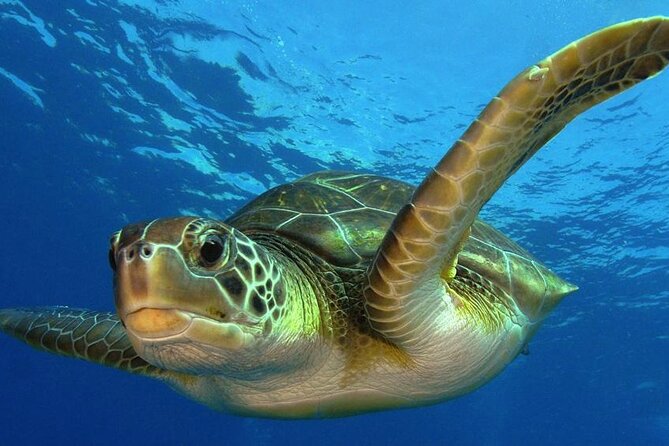
The possible sightings are impressive. Keep an eye out for butterfly fish, damsels, parrotfish, and wrasse among the coral. Larger animals can include barracuda, eels, lionfish, lobsters, manta rays, stingrays, turtles, and eagle rays. One participant had an especially close look at an eagle ray, while another group saw two turtles at a site they nicknamed Manatee.
More two-tank boat dives from Mexico:
- 2-Tank Scuba Dive in Cabo San Lucas Reserve for Certified Divers
★ 5.0 · 263 reviews - Two Tanks Scuba Diving for Beginners in Cancun
★ 5.0 · 233 reviews - 3-Tank Scuba in Marine Reserve and Corridor for Certified Divers
★ 5.0 · 196 reviews
Starting at Doctor Dive Costa Maya
The meeting point is Doctor Dive Costa Maya at Coronado y Martillo, Carr. a Mahahual, Manzana 12, Lote 2, Local 1, 77976 Mahahual, Quintana Roo. The activity begins and ends there.
If you arrive by cruise ship, allow time for the trip from the port. The shop is near the ocean, but not inside the cruise terminal. A taxi is the practical choice. Costs reported for the short ride vary: one account paid about $5 per person, while another paid $10 for a solo ride. Sharing the taxi can help control the cost.
That transport detail is important for cruise passengers. You need time to get off the ship, find a taxi, reach the shop, complete the check-in, and return after the boat comes back. One group returned to the ship around 2 p.m. and still had time for lunch onboard. Another group arrived after the first boat had departed, but the staff arranged a later outing so the party could complete both descents.
I would still avoid cutting the schedule close. The tour is built to suit cruise calls, but port traffic, taxi waits, and ship procedures are outside the operator’s control.
What happens during the four-hour outing
The full experience takes about four hours, though the exact rhythm depends on the boat, sea conditions, and group. At the shop, you check in, confirm your certification, and sort out equipment if you need to rent it.
The advertised price is $95 per person. That covers the two-tank scuba outing, but not the use of full scuba equipment. If you need a complete set, add $25 at the shop. Ask about your equipment needs before departure so the check-in does not become a last-minute scramble.
The instructors then take you by boat to the reef. Water and soft drinks are provided onboard, a small but welcome touch in the Caribbean heat. Between the two descents, you return to the boat or the shop area depending on the day’s plan. One account describes a short rest at the shop after the first outing, followed by pineapple and lime water. The supplied tour details specifically confirm water and soft drinks, so consider any food or fruit an occasional extra rather than a guaranteed part of the package.
The first reef stop gives you a feel for the local conditions and the group’s pace. One reported site reached about 60 feet, which is moderate rather than extreme. Depths can vary by site, so your certification and comfort level still matter.
After the surface interval, the second stop gives you another chance to see animals and coral from a different angle. The two-tank format is valuable because one short underwater visit can be affected by visibility, current, or luck. A second attempt gives you more time in the water and a better chance of finding turtles, rays, or larger reef creatures.
How the instructors handle different skill levels
You need to be a certified scuba user for this experience, but you do not need to be an old hand. Several accounts point to attentive instruction, especially for newer certified people.
Cesar helped a 13-year-old who was still getting comfortable underwater. Charlie arranged a special plan for a family that had only recently earned PADI certifications. Antonio patiently helped a solo participant work out proper weighting in salt water. Luca also slowed the pace for an older person who needed more time.
These details tell you something useful about the operation. The guides appear willing to adapt the pace instead of forcing every person into a fast-moving group. That does not remove the need for basic fitness or comfort in open water, but it can make a big difference if your certification is recent or your confidence is still growing.
The staff have also shown flexibility with cruise schedules. When a ship arrived after an earlier group had left, Lucas stayed with a smaller group so they could still complete the second underwater visit. That kind of adjustment is not something you should assume is always possible, but it shows why contacting the shop promptly after a delay can help.
More dives for certified divers in Mexico:
- 2 dives in Cenote Dos ojos Certified Divers
★ 5.0 · 227 reviews - Private Dive Boat for Certified Divers – Cabo San Lucas
★ 5.0 · 210 reviews - 2 Tank Dive – Certified Divers (Santa Maria Bay & Chileno Bay)
★ 5.0 · 162 reviews - 2 dives in Cozumel (for certified divers only)
★ 4.5 · 141 reviews
Coral, canyons, and likely wildlife
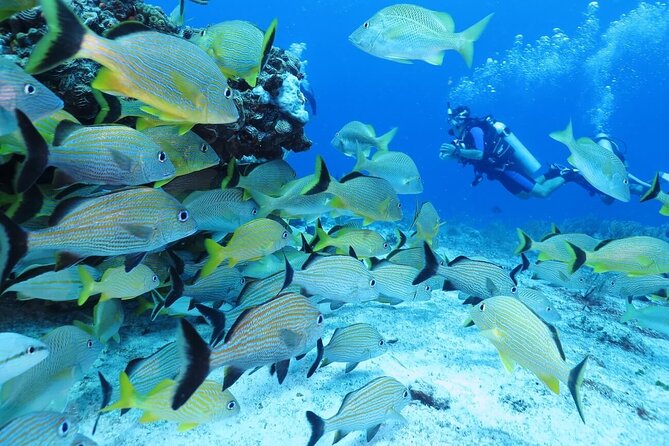
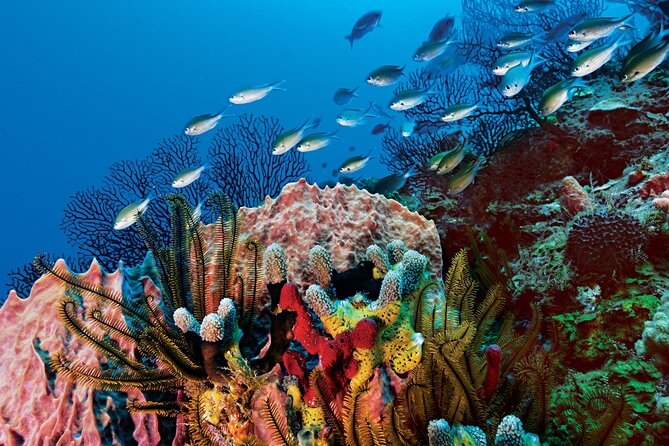
The coral formations are the most distinctive part of the local setting. Finger-like ridges form narrow spaces, open channels, and swim-throughs. You may move from a broad coral view into a canyon-like passage, then back into open blue water.
Plate coral can spread across the reef like broad shelves. Cactus coral adds a rougher shape, while soft corals move with the water. Look closely rather than only scanning for large animals. Small reef fish often make the coral seem busy, with parrotfish, butterfly fish, damsels, and wrasse moving through the formations.
The larger sightings are never guaranteed, but the range is strong. Turtles and stingrays are among the most appealing possibilities. Eels may appear tucked into coral crevices, while lobsters and crabs can hide low in the reef. Lionfish, barracuda, manta rays, and eagle rays add a chance of something more dramatic.
Your guide’s spotting ability matters here. You may be focused on swimming through a coral passage while an instructor notices an animal resting nearby. Stay close enough to follow signals, and keep your attention on the reef rather than only looking into the distance.
Is $95 a fair price?
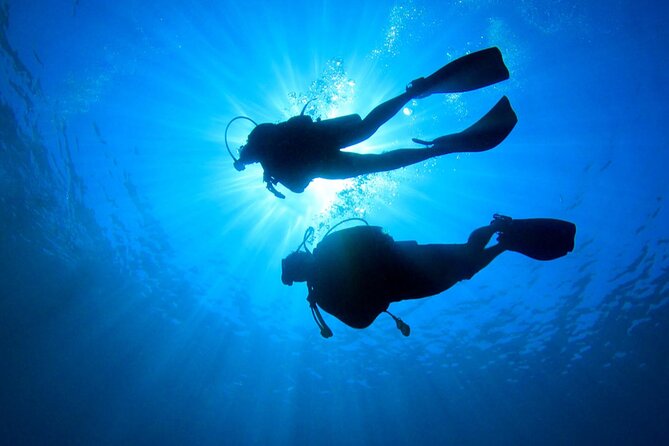
At $95, the price is reasonable for a four-hour, two-tank reef outing, especially if you already own or bring your own scuba equipment. You receive the boat trip, two tanks, instructor guidance, water, and soft drinks. You also get access to a reef that is far more interesting than a basic near-shore swim.
The value changes if you need rental gear. Add $25 for full equipment, then include taxi costs from the cruise terminal if you are not staying in Mahahual. A shared taxi can keep the added transport cost modest, while a solo ride may cost more.
I would compare this outing with cruise-ship scuba packages carefully. The local shop offers a smaller maximum group and direct access to the Mahahual reef. The tradeoff is that you arrange your own taxi and must manage the schedule yourself. For people who prefer a ship-organized transfer with no independent transport planning, a cruise excursion may feel simpler, even if it costs more.
Timing, fitness, and weather
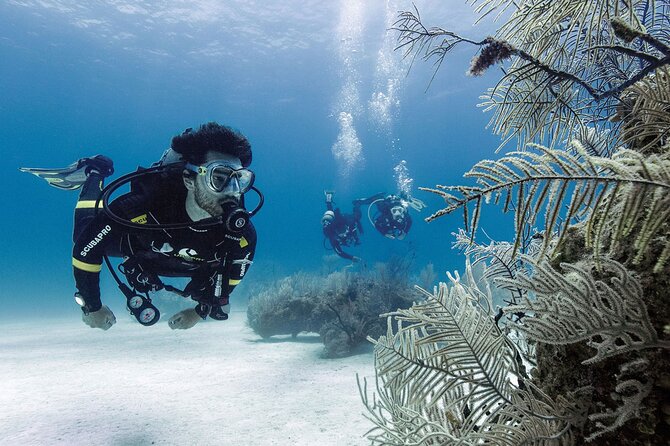
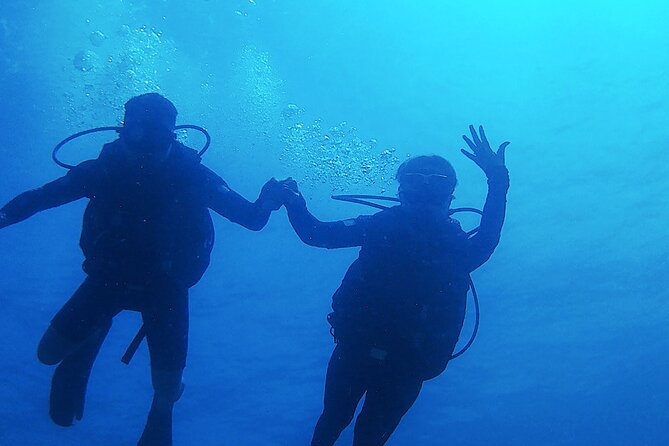
The tour requires a moderate fitness level. You should be comfortable with boat travel, handling scuba equipment, and making two open-water descents. The instructors can help with pace and practical issues, but this is not an introductory lesson for someone without certification.
Weather can cancel the outing. If poor conditions force a cancellation, you can choose another date or receive a full refund. For your own planning, keep the final day of a cruise call in mind. If the sea is rough and no replacement time exists, a refund is useful, but you will not get the reef experience that day.
Visibility is also variable. The reef can still be worthwhile when the water is not perfectly clear, but you should set your expectations around nature rather than an aquarium. Good weather improves the odds of a comfortable boat ride and clearer views, yet no operator can control what appears underwater.
Cancellation is free up to 24 hours before the start time. Within 24 hours, changes and refunds are not accepted unless the operator cancels because of weather.
Who will enjoy this most?
I would recommend this outing to certified scuba users who want a local reef experience rather than a large, anonymous boat operation. It suits cruise passengers who can leave a reasonable time buffer and do not mind taking a taxi to Mahahual.
It is also a good fit for newer certified people who want calm, direct support. The examples involving a young participant, a recent family certification, an older person, and a first-time saltwater weighting issue suggest that the staff are used to helping people settle in.
Solo participants may also find the small group appealing. One solo scuba user was greeted by name and received patient help. Still, group composition can change, so do not book expecting a private outing.
You should think twice if you need guaranteed calm seas, perfect visibility, included equipment, or a fully managed transfer from the ship. Those are the main areas where this experience asks you to accept some uncertainty or pay extra.
Practical booking advice for cruise passengers
Confirm the meeting instructions and ship arrival time before booking. Keep the confirmation available on your phone, since the ticket is mobile and confirmation is sent within 48 hours, subject to availability.
Budget for the equipment rental if you do not have your own gear. Also set aside taxi money in both directions. Since taxi prices can vary by group size, sharing with other people heading to the shop may help.
Bring your certification information and allow time to get comfortable with the equipment. Tell the instructor if you are newly certified, nervous, older, or need a slower pace. The staff have shown they can adapt, but they need that information before the boat leaves.
The maximum group size is 12. That is small enough for more personal attention than a large cruise excursion, though it is not a private charter. The activity ends back at the Doctor Dive Costa Maya meeting point, so you must arrange your return to the port.
Should you book this Costa Maya reef outing?
I would book it if you are certified, want two proper reef descents, and value personal guidance over a package with every transfer included. The coral fingers, canyons, and possible turtles or rays give the outing real appeal, while the four-hour length leaves a useful cushion for many cruise schedules.
The strongest reasons to choose it are the small group limit, flexible instructors, and convenient return to the shop. The main reasons to pass are the extra equipment fee, taxi planning, moderate fitness requirement, and weather-dependent conditions.
For a recently certified person, family group, or cruise passenger who wants more than a quick splash near the port, this is a sensible choice. Just protect your schedule, confirm your gear needs, and leave room for the sea to set the pace.
FAQ
Is this activity for certified scuba users only?
Yes. It is a two-tank scuba activity for certified divers.
How long does the experience last?
The outing lasts approximately four hours.
What is included in the price?
The price includes the two-tank scuba outing, guidance from experienced instructors, water, and soft drinks.
Is scuba equipment included?
No. Full scuba equipment is available to rent at the shop for $25 USD.
Where does the activity meet?
You meet at Doctor Dive Costa Maya, Coronado y Martillo, Carr. a Mahahual, Manzana 12, Lote 2, Local 1, 77976 Mahahual, Quintana Roo, Mexico.
Where does the activity finish?
It ends back at the same meeting point.
How many people can join the group?
The maximum group size is 12 people.
Can cruise passengers take this activity?
Yes. The meeting point is near the cruise port, and the activity is designed to work with cruise schedules. You need to arrange the short taxi ride between the port and the shop.
What marine life might I see?
Possible sightings include turtles, stingrays, manta rays, eagle rays, eels, lobsters, crabs, barracuda, lionfish, butterfly fish, damsels, parrotfish, and wrasse. Wildlife sightings are not guaranteed.
What happens if bad weather cancels the activity?
You can choose another date or receive a full refund if the operator cancels because of poor weather.
What is the cancellation policy?
You can cancel at least 24 hours before the start time for a full refund. Cancellations or changes made within 24 hours are not refunded or accepted.
Just added around Mexico
- Puerto Morelos: Scuba Diving for Beginners – 2 Dives★ 5.0 · 5 reviews
- Playa del Carmen: Guided Reef Diving for Certified Divers★ 4.6 · 7 reviews
- Playa del Carmen: Cenote Diving for Certified Divers★ 5.0 · 2 reviews
- Playa del Carmen: Discovery Scuba Diving – Non Certified★ 5.0 · 2 reviews
- Los Cabos 3-Hour Certified Scuba Diving Tour★ 4.8 · 6 reviews
- Isla Mujeres: MUSA and the Manchones Reef: 2 Tank Dive Tour★ 5.0 · 3 reviews
- From Cozumel: Double Tank Scuba Diving for Certified Divers★ 5.0 · 6 reviews
- From Cozumel: Chankanaab Cozumel Scuba Diving★ 4.9 · 20 reviews
Two-Tank Dives, compared.
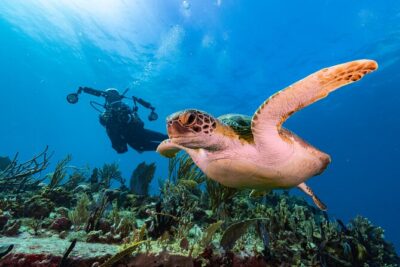
Two-Tank Morning Dive Trip for Certified Divers
Read our review →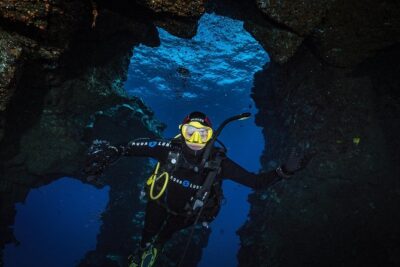
2 Tank Lanai Cathedral Scuba Dive Via Boat for Certified Divers
Read our review →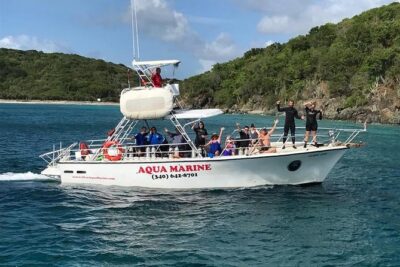
Two-Tank Dive for Certified Diving in St Thomas
Read our review →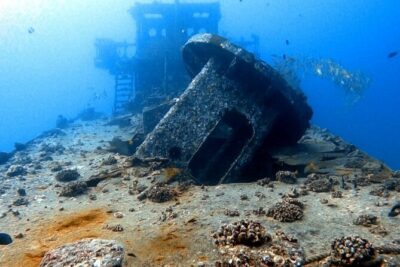
Certified Diver: 2-Tank Deep Wreck and Shallow Reef Dive Off Oahu
Read our review →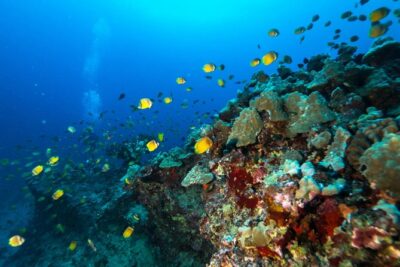
Certified Diver: 2-Tank Shallow Reef Dives off Oahu
Read our review →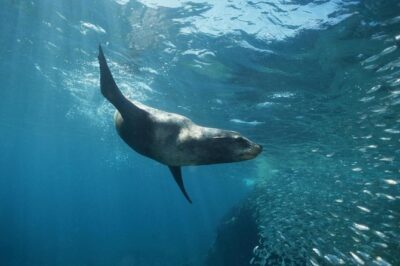
2-Tank Scuba Dive in Cabo San Lucas Reserve for Certified Divers
Read our review →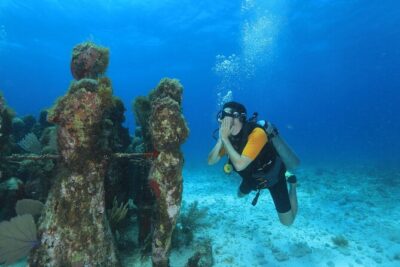
Two Tanks Scuba Diving for Beginners in Cancun
Read our review →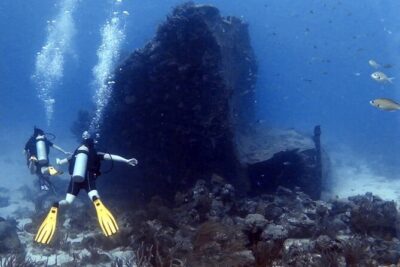
Aruba 2-Tank Dive Excursion for Certified Divers
Read our review →Lists this dive appears in