
REVIEW · THE USA
Introductory Beach Scuba Dive
Hilo’s beginner scuba experience gets the important part right: you learn in a heated indoor pool before entering the Pacific. That short practice session lets you test the mask, regulator, and breathing rhythm without waves or reef traffic competing for your attention.
I like the small maximum group of four and the patient, safety-first instruction. I also like that the ocean portion lasts 30 to 50 minutes, long enough to see coral and tropical fish without turning a first underwater outing into an endurance test.
The catch is that this is not a casual snorkel with a tank. You must swim unassisted in the open ocean, carry 50 pounds of gear, understand detailed English instructions, and complete the pool portion before proceeding. Hotel and cruise-port pickup are not included, so plan your ride to the shop.
Key Points at a Glance
- Start at 9 a.m. at Hilo Ocean Adventures: You check in at 1717 Kamehameha Avenue, then return there when the activity ends.
- Begin with dry-land instruction: The classroom lesson covers underwater breathing, basic scuba skills, and emergency procedures.
- Practice in a heated indoor pool: You get a controlled first session before moving into the ocean.
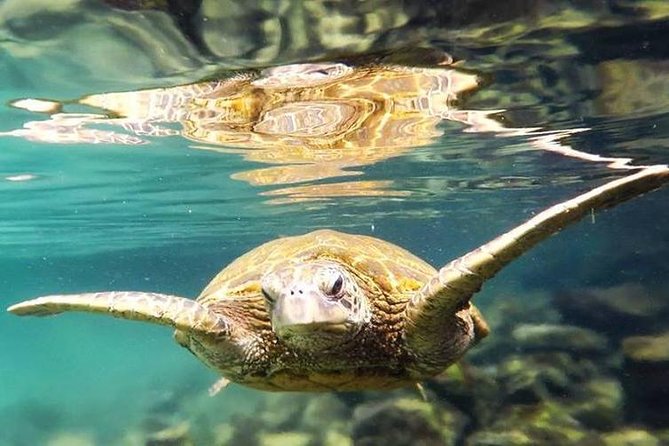
- Spend 30 to 50 minutes in open water: The guided session takes place near a Hilo reef and may include tropical fish, coral, and Hawaiian green sea turtles.
- Learn with PADI-certified instructors: The small group size allows close supervision, with instructors such as Akara and Mark working directly with beginners.
- Meet strict health and fitness rules: You need a completed PADI or NAUI medical questionnaire, good physical fitness, and no air travel to altitudes of 2,500 feet or higher for 18 hours afterward.
Why the Heated Pool Matters for a First Scuba Experience
The best feature here is the order of events. Instead of putting a beginner straight into the Pacific, the instructors first explain the equipment and basic procedures on dry land, then move you into a heated pool.
That progression matters. Underwater breathing feels unusual at first, even for a confident swimmer. A pool gives you time to get used to the regulator, clear your head, and follow instructions without having to deal with ocean conditions at the same time.
The classroom portion lasts about 30 to 45 minutes, depending on how the session is described. You learn breathing techniques and emergency safety procedures, then demonstrate the essential skills in confined water. You must pass both the classroom and pool portions before heading to the reef.
I see this as a proper introduction, not a quick photo opportunity. You are expected to understand the basics and show that you can manage the equipment. That makes the experience more demanding than snorkeling, but also gives you a better foundation for the ocean session.
The heated pool is especially useful if you are nervous about cold water or unsure about wearing scuba gear. One participant had a wife who was not a swimmer and was normally afraid of water. The pool practice and steady help from Mark’s team made the transition easier. That does not mean the activity is suitable for a non-swimmer, since you still must swim unassisted in the open ocean, but it shows why the controlled first step has value.
A few more dives around the USA worth comparing
- First-Time Scuba Diving in Honolulu + Free Videos
★ 5.0 · 3,123 reviews - Oahu Shark Dive
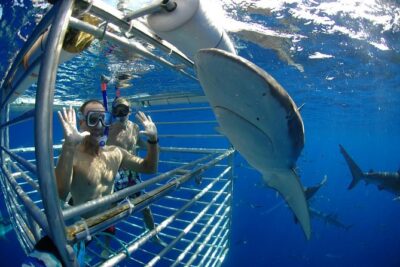
★ 5.0 · 2,903 reviews - Oahu: Shark Cage Dive on the North Shore
★ 4.8 · 1,485 reviews
Meeting the Instructors at Hilo Ocean Adventures
You begin at Hilo Ocean Adventures, 1717 Kamehameha Avenue, at 9 a.m. The meeting point is important because the tour information is not fully consistent about transport. Transportation from the check-in location to the ocean site is included, but hotel and port pickup are not.
If you are arriving from a Hilo hotel or a cruise ship, arrange a taxi or another ride to the shop. The activity ends back at the same meeting point, so you will need to plan your return trip as well.
The operator keeps the group to a maximum of four people. That is a major advantage for a first scuba session. The instructor can watch how you handle the equipment, answer questions, and give corrections without managing a large class.
Akara is one of the instructors identified with the experience. Her approach is to check your comfort throughout the session. Mark and his team are also associated with the pool and ocean instruction. You should still expect the exact instructor lineup to depend on the day.
The teaching is in English, and you need to understand detailed instructions. This is not just a language preference. Safety directions underwater must be clear, quick, and familiar before you enter the ocean.
What You Learn Before Entering the Water
The classroom lesson covers the basic skills needed for a beginner session. You learn how to breathe underwater, how the equipment works, and what to do in an emergency.
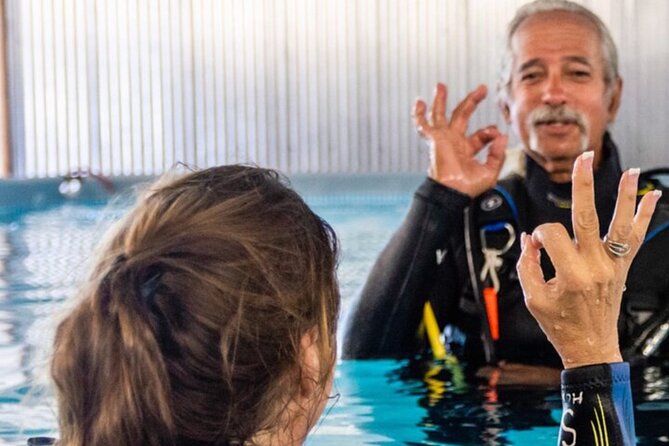
The instructor also explains the signals and procedures needed to communicate underwater. You will not be left to figure out the regulator or mask on your own. The point of the first lesson is to build a reliable routine before conditions become less predictable.
You should arrive ready to listen closely. The activity requires you to complete and submit a PADI or NAUI medical questionnaire at least 72 hours before the excursion. If you send it late, or if you cannot complete the required stages, a refund is not provided.
That rule may feel strict, but it is tied to the structure of the session. The ocean portion is not available simply because you have booked it. You need to show that you can complete the classroom and confined-water work first.
The Indoor Pool Practice Session
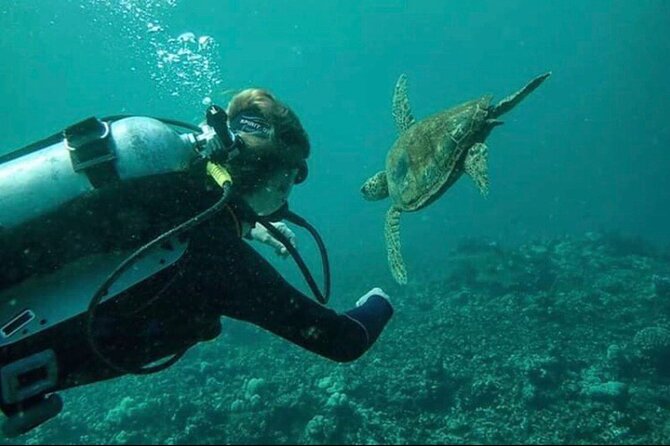
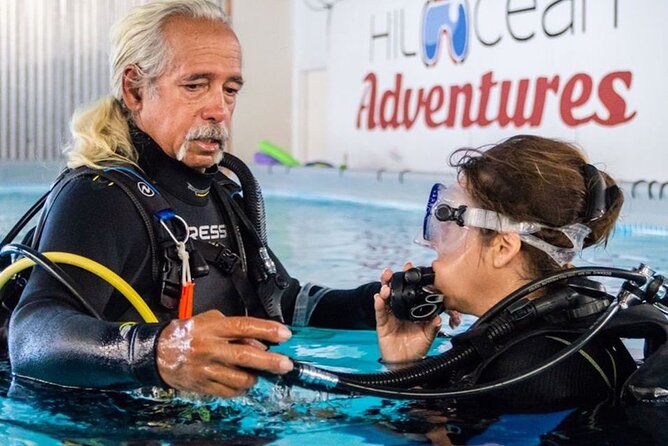
After the lesson, you spend about 45 minutes in a heated indoor pool. This is where the theory becomes practical.
You put on the scuba equipment, practice breathing, and work through the required skills under close supervision. The pool gives the instructor a clear view of how you respond to the gear and lets you pause if something feels unfamiliar.
For a first-time participant, this may be the most valuable part of the morning. The ocean is appealing, but confidence comes from small, controlled steps. You can focus on breathing and basic movement without dealing with swell, currents, or a busy shoreline.
The pool also serves as a safety checkpoint. You must successfully complete this confined-water portion before moving on. If you cannot manage the skills in the pool, the session stops there. That can be disappointing, but it is better than finding out your equipment or breathing technique is not under control in open water.
You should think of the pool session as part of the main experience, not as waiting time before the real activity. It is what makes the ocean portion appropriate for a beginner who meets the physical requirements.
Same water, a completely different day underwater:
- Shark Cage Diving on Oahu’s North Shore
★ 5.0 · 1,391 reviews - Beginner Scuba Diving Experience with Video Package in Honolulu
★ 5.0 · 877 reviews - Safe and Educational Shark Dive from Haleiwa: Sharks Guaranteed
★ 5.0 · 553 reviews - 2 Tank Lanai Cathedral Scuba Dive Via Boat for Certified Divers
★ 5.0 · 548 reviews
Reaching Hilo’s Reef Coast
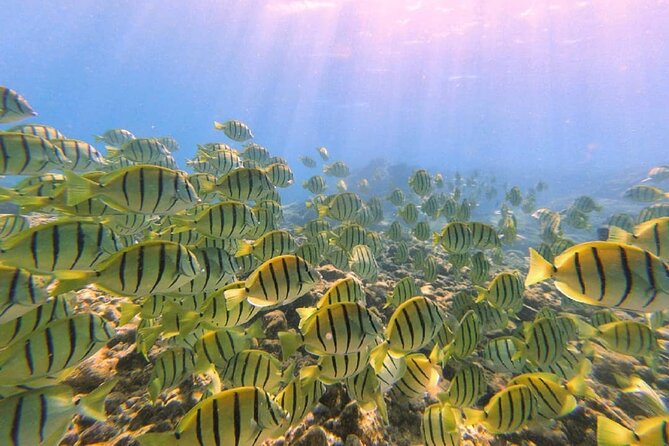
Once the instructor confirms that you are ready, you are transported from the shop to a Hilo-area dive and snorkel location. The specific site is described as being near a reef along the Big Island’s coast, close to Hilo Bay.
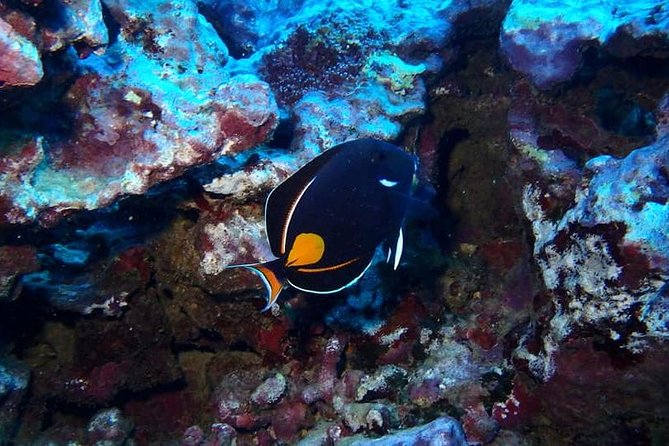
The Big Island is known for its coral reefs, which account for about 60 percent of the reef ecosystems in the United States. That context helps explain the appeal of a shore-based beginner session here. You are not simply practicing in open ocean with nothing to see. The setting may include coral, tropical fish, and Hawaiian green sea turtles.
Conditions can affect what you see. The experience requires good weather, and the ocean portion depends on safe conditions. A reef outing is not a guarantee of a turtle sighting, but the location gives you a reasonable chance to see the kinds of marine life associated with Hawaii’s coast.
One practical point: this is a shore-based experience rather than a boat departure. That keeps the plan simple and avoids a separate boat ride, but you may prefer a boat start if you want to reach a different reef or avoid entering from shore. The choice is a matter of style as much as convenience.
The 30 to 50-Minute Ocean Session
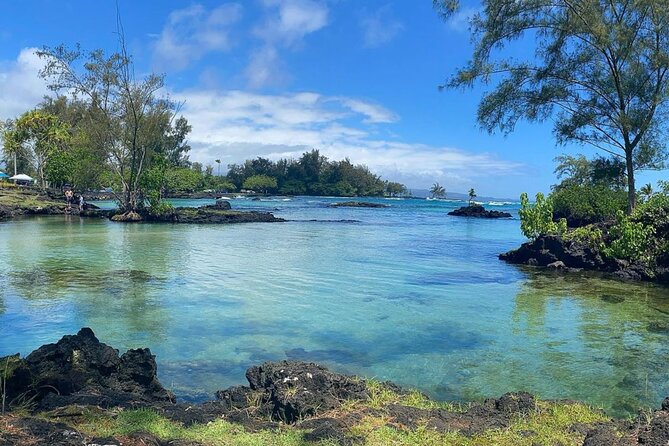
The open-water portion lasts about 30 to 50 minutes. Your PADI-certified instructor remains with you as you use the skills learned in the classroom and pool.
The pace should feel measured. You are not expected to cover a large area or perform advanced tasks. The value is in experiencing calm underwater breathing while looking at coral and marine life in their natural setting.
A first ocean session can feel serene once the equipment becomes familiar. You may see an array of fish and coral, and you might spot a Hawaiian green sea turtle. The underwater world is quieter than the shore, and that change in pace is one of the strongest reasons to choose this activity over a standard beach outing.
Still, you need to be honest about your comfort in the ocean. You must swim without assistance and carry up to 50 pounds of equipment on your back. Strong physical fitness is required, and the activity is not suitable for people with heart conditions, neck or back problems, or those who are pregnant.
The staff’s job is to supervise and guide you, not to replace basic swimming ability. If you are comfortable in the water but nervous about scuba equipment, the pool and small group may help. If you cannot swim independently in the ocean, choose a different Hilo activity.
What Is Included, and What You Need to Arrange
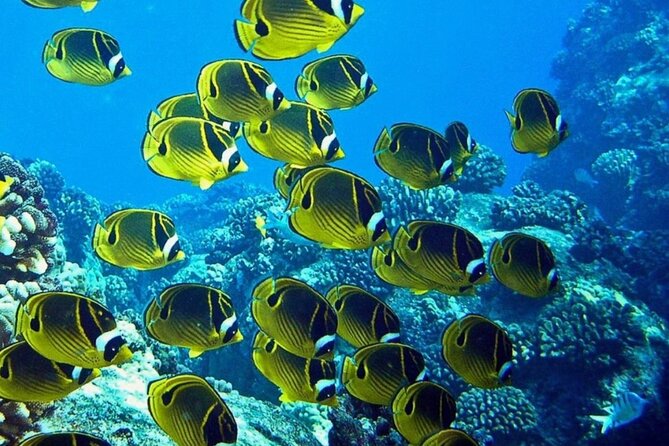
The package includes a fully guided introductory scuba session, all scuba equipment, local juice and snacks, and transport from the shop to the ocean site.
You do not need scuba certification. This is an introductory experience, so the instruction and equipment are built around first-time participants who pass the required health and skill checks.
You do need to arrange transportation to and from Hilo Ocean Adventures. The meeting point is central to the plan, and the activity finishes there. If you are visiting Hilo from a cruise ship, allow enough time to get to the shop for the 9 a.m. start and to return to the port afterward.
The included snacks and juice are useful after the water session, but do not treat them as a full meal. Have a sensible breakfast before you arrive, while leaving enough time to follow the operator’s instructions.
The activity lasts about four hours in total. That includes the classroom lesson, pool practice, transport, equipment preparation, and open-water portion. The schedule takes up a good part of the morning, so avoid booking another close-timed excursion afterward.
Value for Beginners
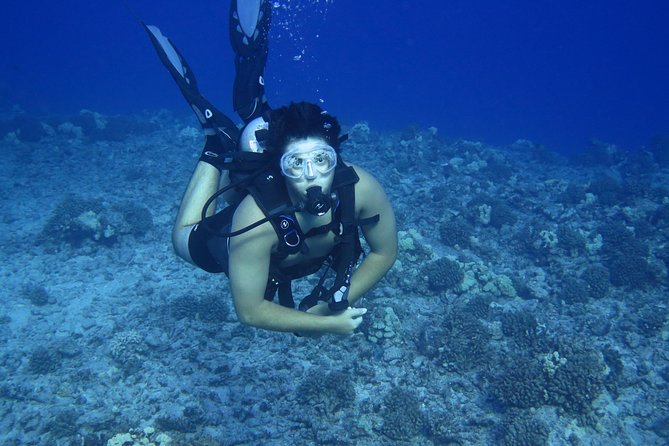
No price is provided here, so I cannot judge the exact cost against competing Hilo activities. I can still explain where the value lies.
You are paying for more than time in the water. The package includes instruction, equipment, a heated pool, a small group, an instructor-led reef session, transport to the site, and snacks. Buying or renting equipment separately and arranging a qualified instructor would be far less simple.
The small group is especially meaningful. With no more than four participants, you are less likely to feel lost in a crowd, and the instructor has more opportunity to notice problems with your breathing or equipment.
The trade-off is that this is a tightly controlled introduction. You do not receive scuba certification, and the ocean portion is designed for beginners. If you already have substantial scuba experience, you may find the classroom and pool stages too basic.
For someone who wants to try scuba without committing to a certification course, the structure makes sense. For someone who wants a long reef excursion or a boat trip to a more distant site, it may feel limited.
Timing, Health Rules, and Aftercare
The medical questionnaire must be completed at least 72 hours before the activity. Do not leave this until the morning of your session. You should also read the health restrictions carefully before booking.
The experience is for ages 15 and up. Anyone under 18 must be accompanied by an adult. It is not suitable for pregnant people or those with heart, neck, or back conditions.
The altitude rule is easy to miss. You must not travel to an altitude of 2,500 feet or higher for 18 hours after the underwater session. Keep this in mind if you plan to visit a high mountain area on the Big Island immediately afterward.
The weather policy is fair but firm. If poor weather forces cancellation, you are offered another date or a full refund. You can cancel for a full refund up to 24 hours before the 9 a.m. start. Inside that 24-hour window, cancellations and changes are not accepted and the payment is not refunded.
Who Should Book This Hilo Activity
I would recommend this experience to a confident swimmer who wants a first taste of scuba without enrolling in a full certification course. It suits you if you value patient instruction, a small group, and a gradual move from classroom to pool to ocean.
It is also a good match if you are nervous about scuba but physically able to meet the requirements. The heated pool and careful supervision give you a sensible way to test your comfort before reaching the reef.
I would look elsewhere if you cannot swim unassisted, dislike carrying heavy equipment, or want a relaxed snorkeling trip with no classroom or skills check. I would also skip it if your schedule includes high-altitude travel within 18 hours afterward.
Should You Book It?
Book this if you want a structured and closely supervised first scuba experience in Hilo. The strongest reasons are the heated pool, the maximum group of four, and the instructors’ focus on comfort and safety.
Before booking, confirm that you can meet the swimming, fitness, medical, and altitude requirements. Also arrange your own transportation to 1717 Kamehameha Avenue and allow a full morning for the activity.
For a beginner who wants real ocean time but appreciates a careful introduction, this is a sensible choice. For a casual water outing, it asks too much preparation and physical effort.
FAQ
Do I need scuba certification to join?
No. This is a fully guided introductory scuba activity, and no certification is required.
Where does the activity begin?
You meet at Hilo Ocean Adventures, 1717 Kamehameha Avenue, Hilo, Hawaii 96720, at 9 a.m.
Where does the activity end?
The activity ends back at the Hilo Ocean Adventures meeting point.
Is transportation included?
Transportation from the check-in location to the ocean site is included. Hotel and cruise-port pickup and drop-off are not included.
How long does the activity last?
The experience lasts approximately four hours. The ocean portion lasts about 30 to 50 minutes.
What age do I need to be?
The minimum age is 15. Anyone under 18 must be accompanied by an adult.
Do I need to be able to swim?
Yes. You must be able to swim unassisted in the open ocean and carry 50 pounds of equipment on your back without help.
What medical form is required?
You must complete and submit the mandatory PADI or NAUI medical questionnaire at least 72 hours before the excursion.
Can I fly or visit a high altitude after the activity?
You must not travel to an altitude of 2,500 feet or higher within 18 hours after the underwater session.
Just added around the USA
- West Palm Beach: Beginner Scuba Diving Adventure with Videos★ 4.8 · 99 reviews
- Oahu: Waikiki Discovery Scuba Diving for Beginners★ 4.8 · 99 reviews
- Private Scuba Diving Expert-Led Excursion Training with Tour★ 4.5 · 9 reviews
- Scuba Certification★ 5.0 · 77 reviews
- No Experience Required to Discover Scuba in Florida★ 5.0 · 51 reviews
- Two Tank Wreck and Drift Dive in Oahu★ 4.5 · 7 reviews
- 2 Tank Private SCUBA Party Diving Charter from Waikiki Hawaii★ 4.5 · 34 reviews
- Certified Divers: Best 2-Tank Wrecks & Reef Boat Dive All Inclusive From Waikiki★ 5.0 · 41 reviews
Scuba Diving in the USA, compared.
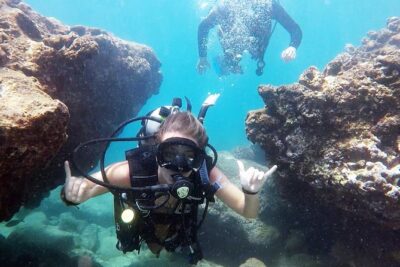
First-Time Scuba Diving in Honolulu + Free Videos
Read our review →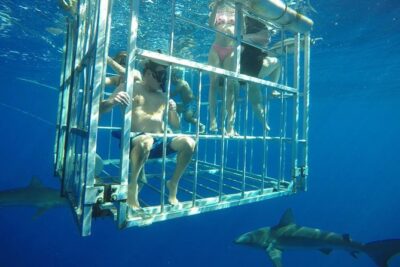
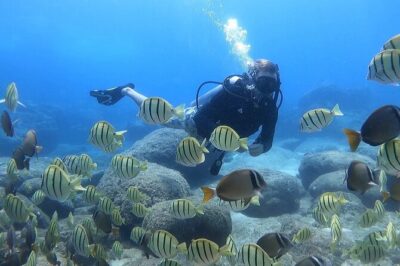
Beginner Scuba Diving Experience with Video Package in Honolulu
Read our review →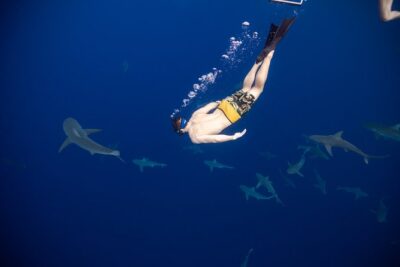
Safe and Educational Shark Dive from Haleiwa: Sharks Guaranteed
Read our review →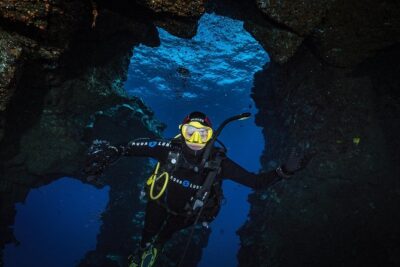
2 Tank Lanai Cathedral Scuba Dive Via Boat for Certified Divers
Read our review →
Wreck and Bridge Span Dive for Certified Divers
Read our review →Lists this dive appears in