
REVIEW · THE USA
Scuba Certification
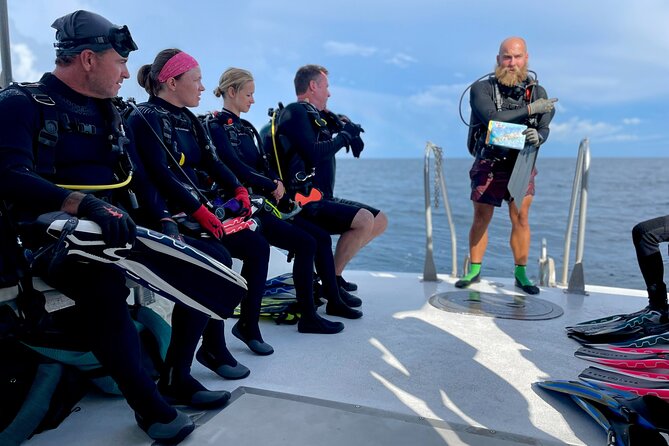
Reaching 60 feet underwater in only three days is the big draw here. Panama City Diving combines classroom-style instruction, pool practice, shore work at St. Andrews State Park, and boat training into one clear path to entry-level certification.
I like the small maximum of six people, and I like that Damon adjusts the pace when a skill causes trouble. The included equipment and lifetime certification also make the $567.75 price easier to justify. The catch is simple: this is a serious course, not a lazy beach activity. You need moderate fitness, must complete a medical questionnaire, and may need a doctor’s approval.
Key points to know before booking
- Three training settings: You practice in a pool, from shore, and offshore from a boat.
- Small class size: The maximum is six people, allowing more personal attention.
- Damon’s patient instruction: He spends extra time on tricky skills such as mask clearing and staying calm underwater.
- St. Andrews State Park: The final training area includes the protected waters near the jetty and access to Gulf sites.
- Lifetime certification: The entry-level credential is recognized by scuba operators around the world.
- All equipment included: You do not need to assemble a full set of gear before class.
What the three-day certification really involves
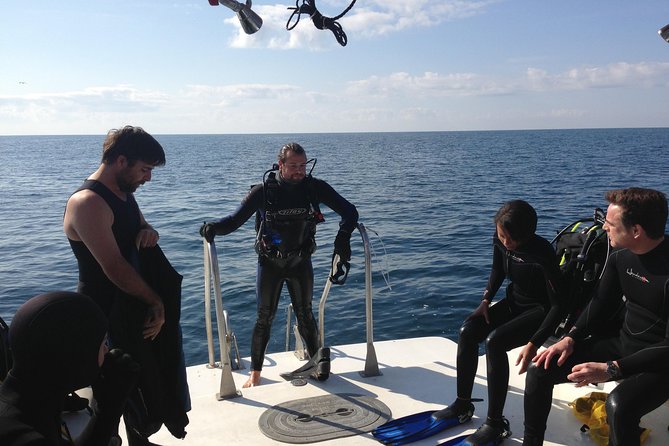
This course is built for a first-time scuba student. You learn to use the equipment, manage basic problems, and move safely with a buddy to a maximum depth of 60 feet.
That last point matters. Certification is not just a souvenir card handed over after a quick swim. You are being taught procedures that must become automatic, including mask clearing, equipment use, and responding calmly when something feels wrong. The course is designed to make you capable of joining future recreational outings with a buddy.
The training follows a useful progression. You start in a pool, where the water is controlled and the focus stays on basic skills. From there, you work from shore before moving offshore by boat. Each setting adds a little more reality without asking you to handle everything at once.
The pace may feel demanding if you arrive with no water experience. One student had never even snorkeled before class and found mask clearing especially frustrating. Damon practiced the skill repeatedly until it could be completed correctly. That is the kind of patient correction you want when a small problem is standing between you and confidence.
More dive courses in the USA:
- Open Water Shark Dive
★ 5.0 · 185 reviews - Oahu Open Water Shark Diving Experience
★ 5.0 · 128 reviews - Open Water Scuba Certification
★ 5.0 · 81 reviews
Starting at 106 Thomas Drive at 8 a.m.
The meeting point is at 106 Thomas Dr. in Panama City Beach, and the stated start time is 8 a.m. Plan to be ready for a full training day rather than treating that time as a loose suggestion.
The activity returns to the same meeting point at the end. That makes the arrangement fairly simple for anyone staying in Panama City Beach, though you will want to allow enough time for the three-day schedule and the physical effort involved.
The class is offered in English and uses a mobile ticket. Confirmation arrives when you book. Since the course requires coordination among students, instructors, and boat operations, read the booking details closely before committing to dates.
Learning the basics in the pool
The pool session gives you room to focus on the fundamentals without waves, current, or open-water distractions. This is where you get comfortable breathing through the regulator and learn how the equipment feels in the water.
Mask clearing is one skill that can surprise new students. Water in the mask, or even the fear of water reaching your nose, can make a basic exercise feel much harder than expected. The useful part of this training is the chance to repeat the exercise until you can handle it instead of merely hearing an explanation.
You also learn to work with a buddy. That system is central to entry-level scuba, and the course teaches you to pay attention to your partner while managing your own equipment and body position.
Expect instruction to be practical and serious. The staff keeps the mood friendly, but safety procedures are not treated as optional. That balance is important for beginners who need encouragement without being allowed to skip steps.
Moving from shore into St. Andrews State Park
St. Andrews State Park is the key outdoor training area. Near the jetty, the water can serve as a gentler bridge between pool practice and offshore conditions.
One useful feature is the chance to begin in a shallow, protected area sometimes described as the kiddie pool. You can refresh essential skills there before moving outside the jetty for more open-water practice. That sequence helps you get your bearings before the setting becomes more demanding.
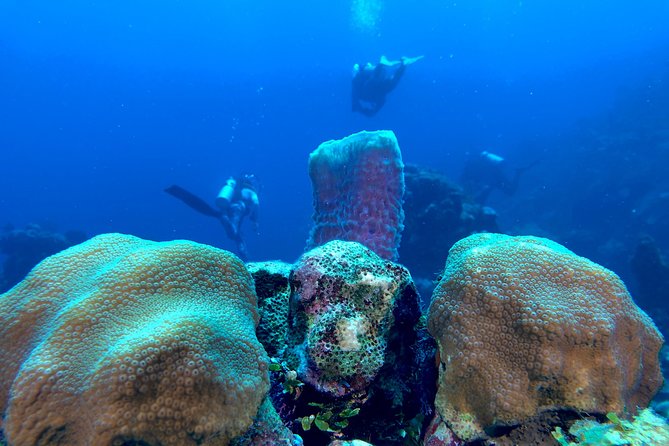
The park also gives the course a sense of place. You are not learning in an anonymous training tank alone. You are practicing in the waters around Panama City Beach, with the possibility of seeing local marine life and getting a feel for the area’s underwater conditions.
Do not expect the park portion to be a sightseeing stop with no work attached. You will still be practicing procedures and following instruction. The fun comes from realizing that skills learned in the pool now work in an actual coastal setting.
A few more dives around the USA worth comparing
- First-Time Scuba Diving in Honolulu + Free Videos
★ 5.0 · 3,123 reviews - Oahu Shark Dive
★ 5.0 · 2,903 reviews - Oahu: Shark Cage Dive on the North Shore
★ 4.8 · 1,485 reviews - Shark Cage Diving on Oahu’s North Shore
★ 5.0 · 1,391 reviews
The offshore boat portion and the Red Sea wreck
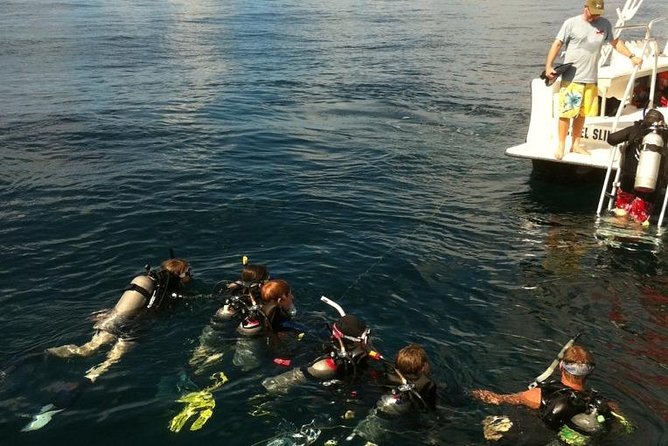
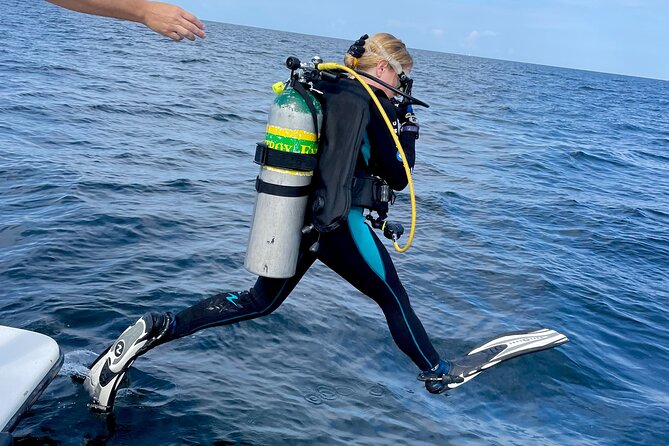
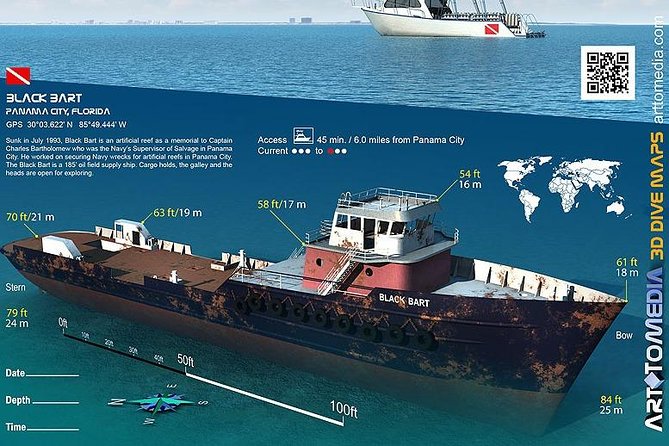
The boat portion is the part many students remember most. After pool and shore training, you head offshore for two final underwater sessions. One reported final-day itinerary included two visits to the Red Sea shipwreck off St. Andrews Bay.
That wreck gives the certification a memorable finish, but the purpose remains training. You are not being sent into an advanced wreck program. The course is for entry-level certification, with a maximum depth of 60 feet and buddy-based recreational procedures.
Boat operations are handled by Captain Mayday, with John assisting as part of the underwater team. The staff’s role is especially important here because students are dealing with equipment, entries, exits, depth, and a less controlled environment all at once.
Conditions can make this part feel more intense than the pool. One student became frightened during a Gulf session and was able to continue after Damon calmly worked through the problem. That is a useful reminder to judge the instructor as much by composure as by technical skill. If you feel uneasy, speak up early. A good course should help you manage the moment, not pressure you to hide it.
Why Damon’s teaching style matters
Damon receives the strongest praise in the available feedback, and the specific examples explain why. He is described as patient, professional, encouraging, and willing to repeat a skill until the student can perform it.
That matters more than a cheerful personality alone. A beginner may struggle with equalizing, mask clearing, buoyancy, or simply the unfamiliar feeling of breathing underwater. Damon’s approach appears to be to identify the exact obstacle, break it into smaller actions, and give the student another attempt.
He also gives practical equipment advice. One student found a better-fitting mask with his help and noticed an immediate difference. Damon also explained ways to prevent mask fogging besides using commercial defog solution. Those small lessons can save you frustration later, especially if you plan to continue with scuba after certification.
The instruction also includes local knowledge and marine-life context. You are learning more than how to assemble equipment and follow a checklist. You are being shown how to behave safely in real situations and how to pay attention to the underwater world around you.
What is included, and what you still need to prepare for
All equipment is included, which is a major convenience for a first course. You do not need to buy a mask, regulator, buoyancy equipment, or other core items before you know what fits and what you like.
Still, included gear does not remove the need for preparation. You should arrive ready for physical activity and several consecutive days of instruction. A moderate fitness level is required, and the course uses a medical questionnaire before training begins.
Some answers on that questionnaire may require a doctor’s approval. Do not leave this until the morning of class. If you have a health condition that could affect your ability to exercise or use scuba equipment, arrange any necessary approval before your scheduled start.
The course is offered in English, so you should be comfortable understanding safety instructions in English. The small group limit of six is helpful, but it does not turn the class into private instruction. You will still share time and attention with the rest of the group.
Is $567.75 a fair price?
At $567.75 per person, this is a serious purchase, but it covers more than a single scenic boat outing. You receive a three-day certification program, equipment, pool and shore training, offshore sessions, and a credential that remains valid for life and is recognized by scuba operators worldwide.
The value is strongest if you already know you want to continue scuba. Paying for a full certification makes more sense than booking a brief introductory session if your goal is to join future recreational outings. You leave with a qualification rather than only a one-time memory.
The price is less attractive if you are unsure about being underwater or only want a casual look at marine life. A certification course requires study, repeated skills, and a real commitment to safety. It is not the cheapest way to spend a morning at the beach.
The small class size improves the value. With no more than six students, an instructor can notice when your mask does not fit, when you are rushing a procedure, or when you need another attempt. That level of attention can prevent a beginner from feeling lost in a large class.
Who should book this course?
This course suits adults, families, and first-time students who want a recognized qualification and are prepared to work for it. It is also useful for someone who has been away from scuba for years and needs structured practice before getting back into the water.
The family example is worth noting. A parent and daughter completed the three-day SDI Open Water course together, with the instructor adjusting the pace so both could learn comfortably. That does not mean every family member will progress at the same speed, but the small class allows some flexibility.
You should also consider it if you are nervous. Nervousness is not automatically a reason to avoid the course. It becomes a problem only if you are unwilling to communicate and practice. The instruction appears particularly suited to students who need calm guidance when a skill does not work on the first try.
This may not suit you if you want a relaxed sightseeing trip, dislike structured training, or cannot meet the medical and fitness requirements. The course expects you to take procedures seriously.
Cancellation and weather considerations
You can cancel for a full refund if you do so at least 24 hours before the local start time. Cancellations made within 24 hours are not refunded, and changes inside that window are not accepted.
Weather also matters. If poor conditions force cancellation, you will be offered another date or a full refund. That policy is sensible for an activity that includes offshore boat work, but it means you should avoid building an inflexible travel plan around the final boat session.
The practical verdict
I would book this course if you want a real entry-level qualification and prefer learning in a small group with plenty of hands-on practice. The progression from pool to shore to boat is logical, the equipment is included, and the lifetime certification gives the fee lasting value.
The best reason to choose it is the personal instruction. Damon’s patience with mask clearing, his help with equipment fit, and his calm response when a student became frightened all point to the kind of teaching a beginner needs.
I would skip it if you only want a quick underwater activity or cannot set aside three days. This course asks for attention, physical effort, and respect for safety. For the right student, that work ends with more than a beach memory: you gain the foundation to explore underwater sites around the world with a buddy.
FAQ
How long does the scuba certification take?
The course lasts approximately three days.
Where does the course begin?
It begins at 106 Thomas Dr., Panama City Beach, Florida 32408.
What time does the course start?
The stated start time is 8 a.m.
Where does the activity end?
The activity ends back at the meeting point.
How deep can I go after certification?
The entry-level certification allows you to scuba with a buddy to a depth of 60 feet.
Is the certification valid outside Panama City Beach?
Yes. The certification is recognized by scuba operators worldwide and is valid for life.
Is equipment included?
Yes. All equipment is included in the course price.
How many people can be in the class?
The maximum group size is six people.
Do I need medical approval?
You must complete a medical questionnaire. Depending on your answers, a doctor’s approval may be required before class.
What happens if bad weather cancels the course?
You will be offered another date or a full refund.
Can I cancel for a refund?
Yes. Cancel at least 24 hours before the local start time for a full refund. Cancellations within 24 hours are not refunded.
Just added around the USA
- West Palm Beach: Beginner Scuba Diving Adventure with Videos★ 4.8 · 99 reviews
- Oahu: Waikiki Discovery Scuba Diving for Beginners★ 4.8 · 99 reviews
- Private Scuba Diving Expert-Led Excursion Training with Tour★ 4.5 · 9 reviews
- No Experience Required to Discover Scuba in Florida★ 5.0 · 51 reviews
- Two Tank Wreck and Drift Dive in Oahu★ 4.5 · 7 reviews
- 2 Tank Private SCUBA Party Diving Charter from Waikiki Hawaii★ 4.5 · 34 reviews
- Certified Divers: Best 2-Tank Wrecks & Reef Boat Dive All Inclusive From Waikiki★ 5.0 · 41 reviews
- SCUBA Dive at Electric Beach with Photos -No Certification Needed★ 5.0 · 28 reviews
Scuba Diving Courses, compared.
Open Water Course – Become certified diver in 3 days
Read our review →
Heraklion: Beginner Scuba Diving Lesson with PADI Instructor
Read our review →
Discover Scuba Diving with No Certification in St Thomas
Read our review →
Try Dive – PADI Discover Scuba Diving in Tenerife
Read our review →
Lists this dive appears in