
REVIEW · GRAN CANARIA
PADI Open Water Course in Gran Canaria
The most useful feature of this three-day PADI course is its gentle progression. You begin in confined water, learn how the equipment works, and only then move to local beaches for open-water practice. That gives you time to build calm, steady habits before heading farther from shore.
I like the small maximum group of six, which should leave room for questions and individual help. I also like that equipment, insurance, certification, and selected-hotel transfers are included, so the $549.09 price covers much more than instruction alone.
The main consideration is the schedule: each day runs from about 8:30am to 2pm, and food and drinks are not included. You also need to complete a health questionnaire, and some medical conditions may prevent you from taking part.
Key points to know before you book
- Three mornings of step-by-step training: Start with confined-water skills, then move to local beaches for open-water practice.
- Small groups of up to six: You get a more personal learning setup than in a large class.
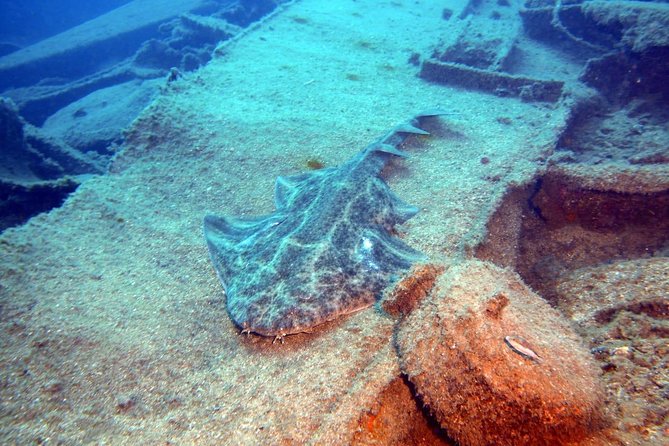
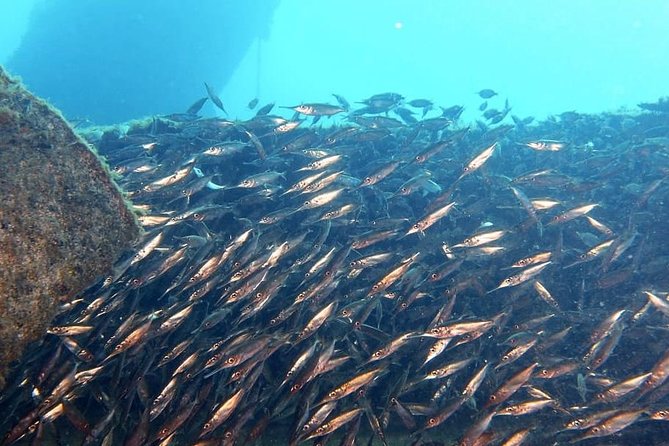
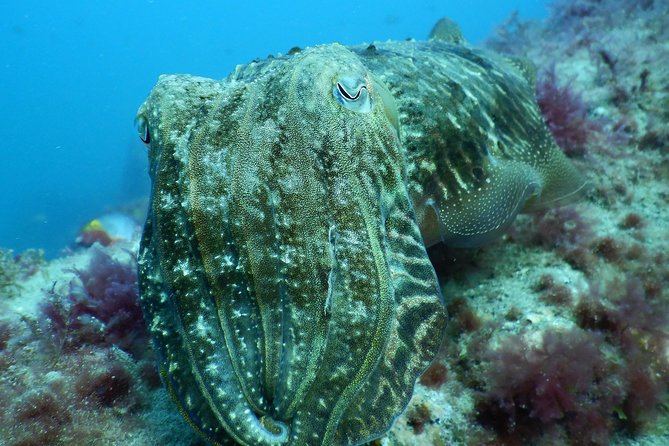
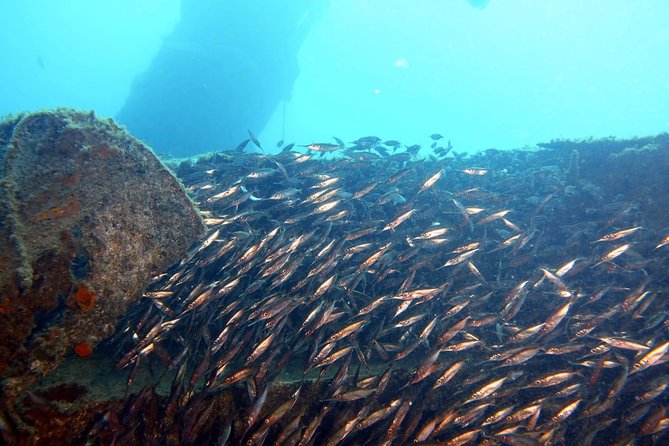
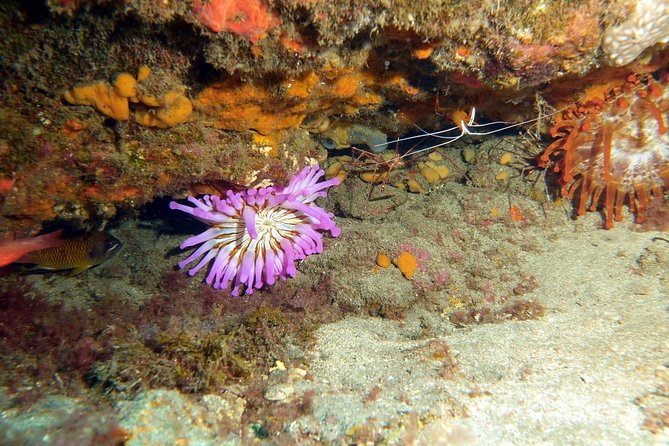
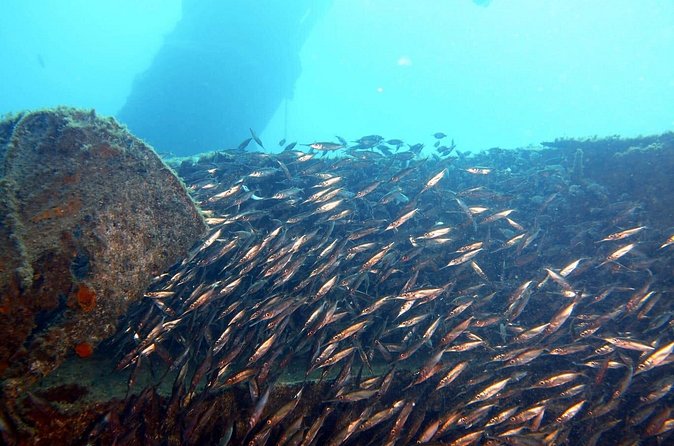
- Underwater practice reaches about 12 metres: One course participant described gradually working down to this depth while seeing fish, colorful sea life, and rock formations.
- Transfers may simplify your holiday plans: Free pickup and return are included from selected hotels.
- The price covers the important basics: Equipment, insurance, certification, and PADI materials when the chosen option includes them.
- You must be at least 10 and medically cleared: A moderate fitness level is expected, and flying within 48 hours afterward is not recommended.
Your first morning in Gran Canaria: equipment, theory, and confined water
The course begins at Blue Water Diving on Calle Olímpicos, C. Doreste y Molina, s/n, in Gran Canaria. If your hotel qualifies for pickup, the included transfer can save you the trouble of arranging a taxi or finding the center on your own. If not, you will need to make your own way to the meeting point.
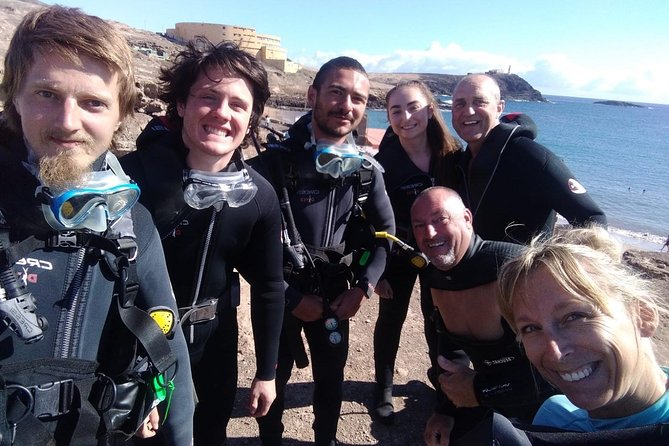
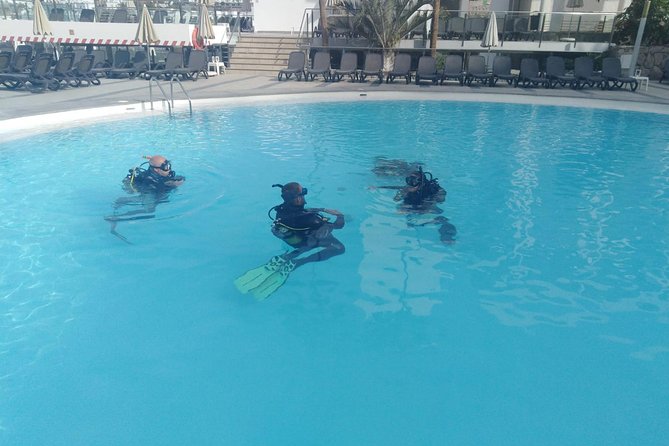
The first day is built around the basics. You put on the wetsuit and equipment, learn how to handle the aqualung and goggles, and work through the first underwater skills in confined water. This is the right place to learn because you can focus on breathing, movement, and equipment without the added pressure of a full open-water setting.
You also begin the theory needed for the PADI certification. That part matters more than it may sound. Safe underwater activity depends on knowing how to respond when something feels unfamiliar, not simply on being comfortable in the water.
The course runs in English, and the instruction is described as friendly, informative, and patient. One participant who initially felt nervous about taking the course with a teenage son found that the instructor spent time explaining the equipment and working through the skills carefully. That is encouraging if you are a first-timer or are bringing a young person who needs a little time to settle in.
Expect the first day to be active rather than purely academic. You will be wearing a wetsuit and full gear in the water, then switching between practice and explanation. The day finishes around 2pm, giving you time to rest afterward, although the schedule still takes up most of your morning.
More Scuba Diving in Gran Canaria
- Scuba Diving Experience for Beginners in Gran Canaria
★ 5.0 · 561 reviews - Gran Canaria: Try Scuba Diving for Beginners
★ 4.9 · 403 reviews - Beginners Scuba Diving Experience in Gran Canaria
★ 5.0 · 254 reviews
The move to a local beach on day two
After the initial confined-water work, the course shifts to one of the local beaches. This change is important. You are no longer only rehearsing skills in a controlled setting, but you are also not being thrown straight into a demanding offshore session.
The beach sessions begin gradually. You wade into the water, repeat the skills from the first day, and build confidence at a measured pace. The instructor checks that you are comfortable before moving on. That repeated practice is one of the strongest parts of the course because it turns classroom instructions into actions you can perform while wearing the full kit.
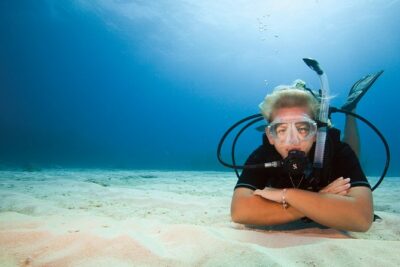
A particularly useful detail is that the training can progress to about 12 metres. At that depth, you may see fish, colorful sea life, and rock formations, as one participant did during the course. The exact sights depend on the beach and conditions on the day, so you should not book this expecting a guaranteed wildlife show. The real value is gaining enough control to notice what is around you rather than concentrating only on the equipment.
The beach setting also gives you a practical sense of how entry and exit work. You are not simply lowered into the water from a boat and brought back up later. You learn to enter from shore, manage the early part of the session, and keep working through the required skills in a real setting.
This is still a course, not a sightseeing trip. You will spend time repeating procedures, listening to instructions, and demonstrating skills. If you want a long uninterrupted swim, this may feel structured. If you want a recognized qualification and a safe introduction, that structure is exactly what you are paying for.
Day three: repetition, confidence, and certification
The third day continues from the beach and gives you more time to use what you have learned. The course includes skills from earlier sessions, so you are not expected to remember everything perfectly after one attempt.
That repetition should be reassuring. New equipment can feel awkward, and breathing through an aqualung is not automatically natural for everyone. Returning to familiar tasks helps you spot what still needs work and lets the instructor correct small problems before they become habits.
By the final session, the goal is not simply to reach a certain depth. You should also feel more comfortable managing the equipment, following instructions, and handling the basic skills expected for the PADI Open Water certification. The course includes the certification, along with insurance.
The training leads to PADI certification exams and the required practical work. The available information does not spell out every exam format or the exact certification timeline, so you should ask Blue Water for those details if they matter to your travel schedule. What is clear is that this is a qualification course, not a short introductory swim that ends without a recognized result.
Each day ends at about 2pm and returns to the meeting point. If hotel pickup and drop-off apply to your booking, that same transfer setup makes the daily routine easier. The activity has a maximum of six people, which should help the instructor keep track of individual progress during repeated skills.
What the $549.09 price really covers
At $549.09 per person, this is not a budget add-on to a beach holiday. It is a three-day training program with equipment, instruction, insurance, and certification included. That changes how I would compare the cost. You are not paying only for a few hours underwater. You are paying for the path from first lesson to qualification.
The included equipment is important for beginners. Buying or renting each item separately would add complexity, and you would still need an instructor and a certification process. The course removes that guesswork.
The price also includes hotel pickup and drop-off from selected hotels. Check that point before booking, since the transfer is not described as available from every property. If your hotel is covered, the transport has real value, especially over three early starts.
PADI manuals are included in printed or digital form if that option is selected. Pay attention to the option you choose when booking. A printed manual may suit you if you prefer to study away from a screen, while a digital copy is easier to carry.
Food and drinks are not included. Since you will be active from roughly 8:30am until 2pm, plan your own water and meals around the day. Do not assume that the course price covers lunch.
More dive courses in Gran Canaria:
- 2 Dive Package for PADI Qualified Divers in Gran Canaria
★ 5.0 · 64 reviews - Open Water Diver Scuba Diving Course in Puerto de Mogan
★ 5.0 · 27 reviews - PADI Advanced Diving Course in Gran Canaria
★ 5.0 · 25 reviews - Gran Canaria: 3-Day Open Water Diver Course
★ 4.9 · 12 reviews
The teaching style and small-group advantage
The strongest part of this course is the personal support built into the format. With no more than six participants, the instructor has a better chance of seeing who is relaxed, who is struggling, and who needs a skill explained again.
That matters most on the first day. Two people may understand the same instruction at different speeds, particularly when they are learning to clear goggles, manage an aqualung, or stay calm underwater. The course is designed to repeat skills until you are comfortable, rather than racing through a fixed list.
The experience described by one family is useful here. A parent arrived apprehensive after a wife booked the course, but later called it the best part of the holiday. The 16-year-old son also enjoyed it. That suggests the course can work well for families with older children, provided everyone meets the age, health, and fitness requirements.
Still, small group size does not mean private tuition. Six people is a compact class, but you will share the instructor’s attention. If you have a serious fear of water or need one-to-one support, tell the provider before booking and ask what help is possible.
Age, health, fitness, and flight timing
The minimum age is 10. That makes the course suitable for families, but a child still needs to be comfortable following instructions and wearing the equipment. The information does not give a separate child-specific schedule or teaching format, so parents should ask Blue Water about arrangements for younger participants.
Every participant must complete a health questionnaire before taking part. Conditions such as asthma and heart problems may prevent you from participating, and you should consult a doctor if you are unsure. This is not a formality to rush through. Underwater pressure and equipment place different demands on your body than an ordinary swim.
You should also have a moderate level of physical fitness. The course involves several mornings in wetsuits and equipment, repeated practice, beach entry, and time in the water. You do not need to be an athlete, but you should be ready for sustained activity.
Plan the course carefully around your flight. Diving within 48 hours of flying is not recommended. Since the course lasts three days, avoid placing your departure immediately after the final session unless Blue Water confirms that your timing is safe and suitable.
Who will get the most from this course?
This course suits you if you want a full beginner qualification rather than a one-off underwater tryout. The three-day format gives you time to learn, practice, repeat, and gain confidence.
It is also a good match for:
- Families with children aged 10 or older who meet the health and fitness requirements
- Beginners who prefer beach-based training after an initial confined-water session
- English-speaking participants
- Visitors staying at a hotel covered by the pickup service
- People who value a small class and patient instruction
- Anyone who wants equipment, insurance, and certification bundled into one price
It may be less suitable if you have only one free morning, dislike structured lessons, or want a relaxed sightseeing session with little instruction. The course is built around learning and assessment, so you need to give it three mornings and take the practical work seriously.
Practical details that make the difference
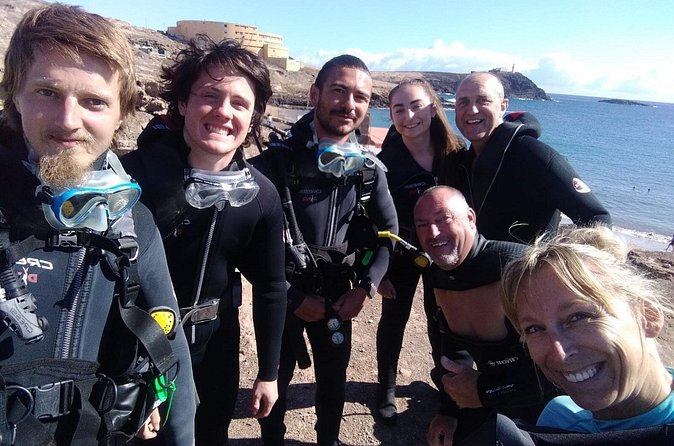
Confirmation is provided at booking, and the activity ends back at the meeting point. The mobile ticket makes it easier to keep your booking details on your phone, but you still need to check the pickup arrangements and exact meeting instructions before the first morning.
The standard hours are approximate, beginning around 8:30am and finishing around 2pm. Allow enough time before the start, particularly if you are meeting the group at the center rather than using a hotel transfer.
Wear practical swim clothing beneath the wetsuit and bring anything you normally need for a morning near the water. Food and drinks are your responsibility. The supplied information does not specify a restaurant stop, so plan on handling refreshments yourself.
Free cancellation is available if you cancel at least 24 hours before the local start time. Cancellations or changes made inside that window are not refunded or accepted. That is useful flexibility, but the health questionnaire and flight timing are still reasons to plan before committing.
Should you book the PADI Open Water Course in Gran Canaria?
Book it if you want a proper introduction that leads to PADI certification, not simply a quick underwater activity. The gradual path from confined water to beach sessions, the maximum group size of six, and the included equipment and insurance make the package practical for a first course.
I would be especially inclined to book this for a family or couple who want to learn together and can set aside three mornings. The main cautions are the price, the physical commitment, the medical screening, and the need to keep 48 hours between the final session and flying.
If those conditions fit your plans, this course offers a sensible way to learn in a supportive setting while still seeing Gran Canaria’s underwater world. If you want an unstructured holiday morning, choose something shorter instead.
FAQ
How long does the PADI Open Water Course take?
The course takes approximately three days. Each day starts around 8:30am and finishes about 2pm.
Where does the course start and finish?
It starts at Blue Water Diving, Calle Olímpicos, C. Doreste y Molina, s/n, 35130 Gran Canaria, Las Palmas, Spain. The activity ends back at the meeting point.
Is hotel pickup included?
Free hotel pickup and drop-off are included from selected hotels only. Check that your hotel is covered before booking.
What is included in the price?
The course includes the PADI Open Water Course, necessary equipment, certification, and insurance. A printed or digital PADI Open Water Manual is included if the selected option provides it.
Is food included?
No. Food and drinks are not included, so you need to arrange your own refreshments.
What is the minimum age?
The minimum age is 10 years.
Can I fly soon after the course?
Diving within 48 hours of flying is not recommended. Plan your flight with that timing in mind.
Just added around Gran Canaria
- PADI Rescue Diver Course in Gran Canaria★ 5.0 · 9 reviews
- PADI Advanced Diving Course in Gran Canaria★ 5.0 · 25 reviews
- Children’s PADI Diving Experience in Gran Canaria★ 5.0 · 2 reviews
- Discover Scuba diving in Gran Canaria with Hotel Pick-up★ 5.0 · 69 reviews
- Open Water Diver Scuba Diving Course in Puerto de Mogan★ 5.0 · 27 reviews
- 6 Diving Sites Scuba Diving Package in Gran Canaria★ 5.0 · 6 reviews
- Scuba Diving Experience at Arguineguin and Puerto Rico★ 5.0 · 9 reviews
- Discover Scuba Diving in Puerto de Mogan★ 4.5 · 87 reviews
Scuba Diving Courses, compared.
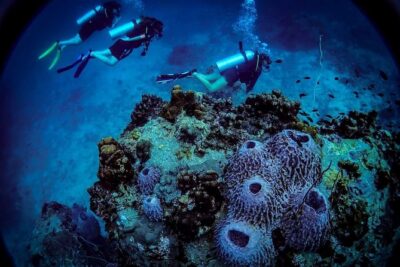
Open Water Course – Become certified diver in 3 days
Read our review →
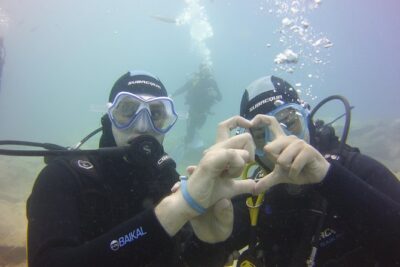
Heraklion: Beginner Scuba Diving Lesson with PADI Instructor
Read our review →
Discover Scuba Diving with No Certification in St Thomas
Read our review →
Try Dive – PADI Discover Scuba Diving in Tenerife
Read our review →
Lists this dive appears in