
REVIEW · GRAN CANARIA
Scuba Diving Experience for Beginners in Gran Canaria
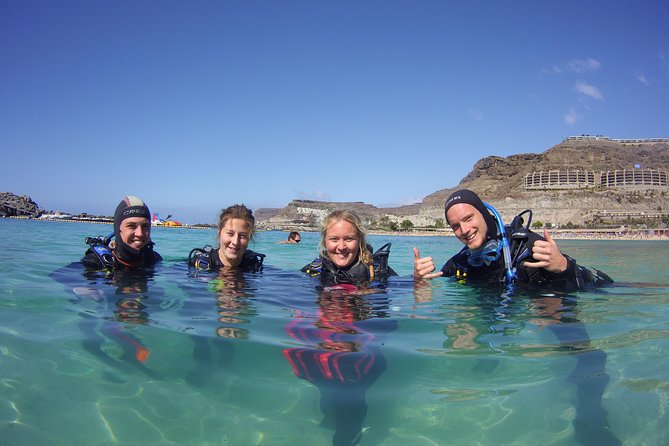
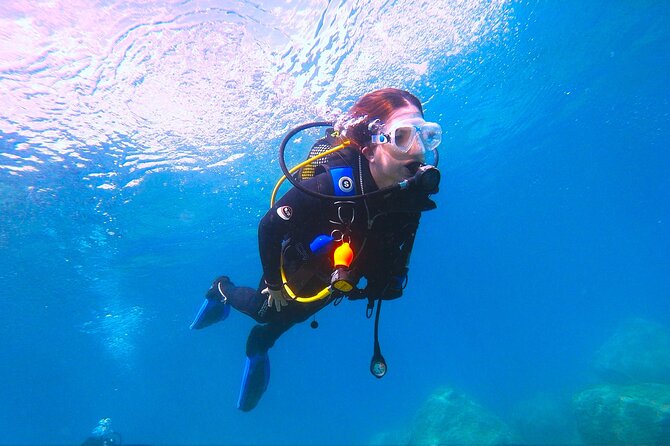
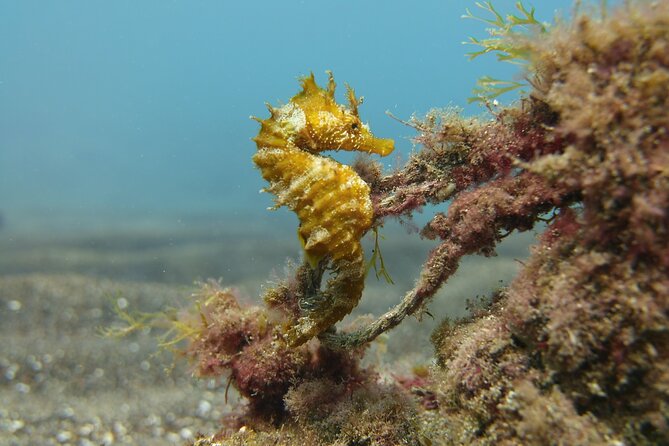
Gran Canaria’s underwater world is the real attraction here. In one half-day session, you can learn to breathe underwater, practice simple skills, and swim past parrotfish, trumpetfish, stingrays, barracuda, and perhaps even a seahorse or ray. The sea conditions decide the exact site, so the team chooses the best available spot each day.
I like the maximum group size of four, which gives your instructor time to watch your breathing, hand signals, and comfort level. I also like the free pickup in southern Gran Canaria, especially if you are staying between Playa del Ingles and Puerto de Mogan and do not want to arrange a taxi.
The main consideration is that this is a first-time tryout, not a full certification course. You may spend around 40 to 45 minutes underwater, but the full outing takes about three hours and depends on your air supply, the weather, and how quickly you feel ready.
Key points to know before booking
- Groups are limited to four people, giving beginners much closer supervision than a large boat excursion.
- PADI-certified instructors teach the basics and stay with you during the underwater session.
- Pickup and return are included from coastal towns in southern Gran Canaria, from Playa del Ingles to Puerto de Mogan.
- The site changes with sea conditions, so the crew can choose a safer, clearer location on the day.
- All equipment and insurance are included, along with instruction and guided underwater time.
- Medical screening matters: asthma, heart or lung conditions, diabetes, blood pressure concerns, recent surgery, sinus or ear problems, and some prescription medicines may require a doctor’s clearance.
From Puerto Rico to your first underwater breath
The activity begins at Puerto Rico Diving Gran Canaria, based at Centro Commercial Europa on Calle Isla de Lobos in Puerto Rico. If you are staying in one of the southern coastal towns, the operator can collect you from your accommodation and return you afterward.
Morning pickup times usually fall between 8:10 and 9:00. Afternoon pickups are generally between 11:15 and 11:45. Your exact time depends on where you are staying, and you receive it by email before the session. Be ready at the stated time, since the vehicle may be collecting other people. If you are more than five minutes late, the team may not be able to wait.
If your accommodation is outside the pickup area, you can make your own way to Puerto Rico. The operator can suggest a suitable bus route, and there is a taxi rank near the Europe Center. This is useful, but I would confirm transport before paying if a hotel pickup is essential to your plans.
Once everyone is together, the team drives to the chosen coastal location. You are not promised one fixed reef or beach, and that is sensible. Sea conditions can change quickly. Selecting the best site for the day is more useful than sending beginners to the same place regardless of wind, waves, or visibility.
More Scuba Diving in Gran Canaria
- Gran Canaria: Try Scuba Diving for Beginners
★ 4.9 · 403 reviews - Beginners Scuba Diving Experience in Gran Canaria
★ 5.0 · 254 reviews - Gran Canaria: Discover Scuba Diving – Free Transfers
★ 4.9 · 115 reviews
A calm lesson before you enter the water
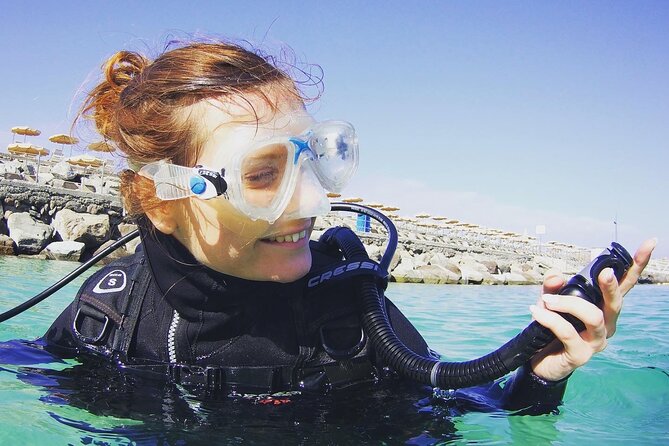
Your instructor begins with a briefing on the equipment, basic scuba skills, underwater communication, and safety. The instruction is designed for someone with no previous experience, so you do not need a certification or technical background.
Guides may include Mike, Veronica, Miguel, Jessica, Adriana, Michele, Andrea, or other members of the team. The strongest pattern across the experience is patient, plain-language teaching. Jessica has helped French-speaking participants, while other instructors have worked comfortably with people who were nervous, completely new, or trying scuba for the first time after an earlier uncomfortable attempt.
That calm approach matters more than fancy equipment or a dramatic setting. New participants often need time to get used to the regulator, mask, pressure changes, and the strange sensation of breathing beneath the surface. You are not simply handed equipment and sent off. The team explains each step and watches how you respond.
The shallow-water practice is an important part of the session. You learn to manage a few basic skills before heading farther out, giving you a chance to check your mask, breathing, and body position. If something does not feel right, you can signal your instructor and pause.
One participant struggled to clear water from a mask and signaled to return to the surface. The instructor handled the situation calmly. Another had ear discomfort from pressure and was brought up so the descent could be repeated more slowly. These details show why a small group is valuable: your instructor can notice small problems before they become frightening.
What the underwater session is like
Once you are comfortable with the basic exercises, you begin a guided underwater tour. The exact depth and route depend on your ability and the conditions, so do not expect a fixed script.
The time underwater can reach roughly 40 to 45 minutes, but your air supply is the practical limit. The overall activity lasts about three hours because it includes transport, preparation, instruction, equipment fitting, shallow-water practice, and the return trip.
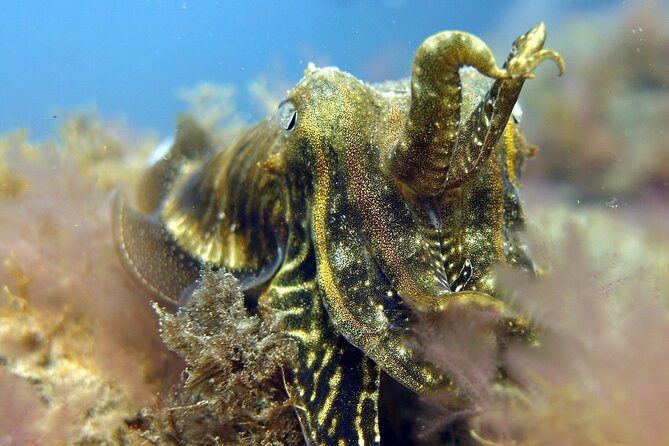
The sea life may include colorful parrotfish, trumpetfish, stingrays, barracuda, and other fish. Sightings are never guaranteed, and the amount of marine life can vary with the site and conditions. One session included a calamari, another spotted a ray, and another encountered a seahorse. You might see plenty, or you might have a quieter outing with fewer fish.
That uncertainty is part of the nature of the activity, but it is worth setting expectations correctly. You are paying for instruction and a safe introduction to scuba, not a guaranteed wildlife show. If fish sightings are your only reason for booking, you may be disappointed on a quiet day. If you want to learn a new skill in clear Atlantic water, the wildlife becomes a welcome bonus.
You will also need to move slowly and stay aware of your surroundings. The best moments come when you relax, breathe steadily, and let the guide set the pace. Trying to rush, swim ahead, or focus only on taking photographs makes the experience harder.
Why four people is the right group size
A maximum of four participants is one of the best features of this session. Beginners do not all progress at the same speed. One person may be eager to descend, while another needs several attempts to feel comfortable with the regulator or mask.
With four or fewer people, the instructor can check each participant’s signals and reactions. This is especially useful if someone feels panic, has trouble equalizing ear pressure, or needs to repeat an exercise. In a large group, those small delays can make a nervous beginner feel rushed.
The experience also suits pairs and families with older children. The minimum age is 10, but every participant must complete the health questionnaire and meet the medical requirements. Parents should consider the child’s confidence in the water, not only the minimum age.
The small group does not mean the session will feel private from start to finish. Pickup times may involve other participants, and the operator may need to coordinate several people. Still, the underwater instruction itself is designed around close supervision.
More beginner dives in Spain:
- Mallorca: Discover Scuba Diving for Beginners
★ 4.7 · 805 reviews - Tenerife: Beginner’s Dive at a Spot with Turtle Sightings
★ 4.7 · 627 reviews - Tenerife First Time Scuba Dive – Turtle Habitat, Small Groups
★ 4.5 · 456 reviews - Lanzarote: Intro to Diving Experience for Beginners
★ 5.0 · 244 reviews
Equipment, insurance, and the real value of $107.63
At $107.63 per person, this is not the cheapest way to spend a morning in Gran Canaria. It is also more than a simple snorkeling outing. The fee includes the equipment, PADI instruction, insurance, small-group supervision, and transport from many southern coastal accommodations.
That package makes the price reasonable for a first attempt. Buying or renting equipment separately, arranging transport, and finding a qualified instructor would be more trouble and may not cost less. The insurance is another practical inclusion, especially for an activity where you need clear safety procedures.
Equipment can look used, but it is described as well maintained. That is normal for working scuba gear, though you should expect practical equipment rather than a luxury setup. The important points are that it fits properly, functions correctly, and is checked before use.
You should also remember that the price covers one introductory session, not certification. If you want to continue, the experience can help you decide if a full PADI course is worth your time and money. Several participants felt ready to consider further training after this first session.
Medical rules you should take seriously
Every participant must complete a health questionnaire before entering the water. A digital check-in form is sent within 24 hours of booking, and you should read it carefully rather than treating it as routine paperwork.
Asthma and other lung conditions can prevent participation. People with diabetes, high blood pressure, heart or lung disease, recent surgery, sinus or ear problems, or certain prescription medicines may need a doctor to sign and stamp a medical form.
Do not wait until the morning of the activity to raise a medical concern. If you are unsure, contact the operator before booking. This protects your safety and avoids losing the booking fee if you arrive unable to participate.
You also need at least 12 hours between this one-session scuba activity and flying. Plan the experience early enough in your holiday, rather than booking it on the last day before your flight home.
Handling nerves and small setbacks
It is perfectly possible to panic when you first enter the water. The breathing equipment feels unfamiliar, and even a confident swimmer may dislike the first few moments. The instructors are used to this and can slow down, repeat an exercise, or bring you back to shallow water.
The activity is not about forcing everyone to continue. One participant decided the experience was not right for her while her husband continued and enjoyed the session. That is a healthy approach. You should be able to stop if you are frightened or uncomfortable.
At the same time, nerves often ease once you are properly supported. Several participants needed time to relax before they could appreciate the underwater world. The instructors’ calm manner, clear demonstrations, and willingness to repeat steps are central to the experience.
I would tell you to be honest from the start. Say if your mask leaks, your ears hurt, you feel breathless, or you need to stop. Clear communication helps the instructor keep the session safe and enjoyable.
Timing, pickup, and cancellation details
The activity lasts about three hours, but allow extra flexibility around pickup and return. The exact site depends on weather and sea conditions, and transport may include other hotel stops.
Pickup and return are available from southern coastal towns between Playa del Ingles and Puerto de Mogan. If you need this service, request it when booking and confirm that your accommodation is covered. If you are outside the area, ask about meeting at the Puerto Rico bus station.
You can cancel for a full refund up to 24 hours before the local start time. Changes or cancellations made within 24 hours are not refunded. Poor weather is handled differently: if the operator cancels, you can choose another date or receive a full refund.
That policy is worth noting if you are planning around a short holiday. Book early enough to leave room for a weather change, especially since the activity is often reserved about 17 days ahead.
Who will enjoy this most
This is a good choice if you want a first scuba experience without committing to a course. It suits couples, families with children aged 10 or older, and adults who are curious but nervous about trying it.
You will get the most from it if you are willing to listen closely, move slowly, and accept that the sea controls some of the day. It is also a good match if you are staying in the south and value included transport.
I would be more cautious if you dislike close-fitting equipment, feel uncomfortable in open water, have a medical condition that may require clearance, or have very little flexibility before a flight. Snorkeling may be a better choice if you want a simpler water activity with less preparation.
Should you book this Gran Canaria scuba experience?
I would book it if you want a carefully supervised introduction rather than a large, impersonal group session. The strongest reasons are the four-person limit, patient PADI instruction, included equipment and insurance, and convenient pickup from much of southern Gran Canaria.
Book with realistic expectations. Wildlife sightings vary, the underwater time depends on your air supply, and the exact location changes with the weather. If you understand that you are paying for guidance and a safe first step, with fish and rays as possible rewards, the $107.63 price offers solid value.
FAQ
Where does the activity begin?
The listed meeting point is Puerto Rico Diving Gran Canaria at Centro Commercial Europa, Calle Isla de Lobos, Local 6, in Puerto Rico, Gran Canaria. The activity ends back at the meeting point.
Is hotel pickup included?
Free pickup and return are offered from accommodation in southern coastal towns between Playa del Ingles and Puerto de Mogan. You must request pickup so the operator can confirm the arrangement and exact time.
How many people are in each group?
The maximum group size is four participants. This allows the instructor to give beginners close attention during the briefing, shallow-water practice, and underwater session.
What is the minimum age?
The minimum age is 10 years. All participants must also complete the required health questionnaire and meet the medical conditions for scuba participation.
Do I need previous scuba experience?
No. The session is intended for beginners and includes instruction in basic scuba skills, safety procedures, underwater communication, and shallow-water practice before the guided underwater tour.
How long should I wait before flying?
You need at least 12 hours between this one-session scuba activity and flying. Check your flight time before booking the session.
Just added around Spain
- Puerto del Carmen: Try Scuba Diving for Beginners★ 4.9 · 83 reviews
- Puerto del Carmen: Snorkeling Trip with Dive Instructor★ 4.9 · 93 reviews
- Museo Atlantico: Diving Class for Non-Certified Divers★ 4.8 · 21 reviews
- Puerto del Carmen: Guided Scuba Dive (certified only)★ 4.8 · 6 reviews
- Puerto del Carmen: 2 Guided Scuba Dives (certified only)★ 5.0 · 3 reviews
- Puerto del Carmen: Try Scuba Diving from the beach★ 5.0 · 3 reviews
- Private Try Dive for 2 with our experienced Instructor★ 5.0 · 12 reviews
- Tossa de Mar: PADI Scuba Diver Certification Course★ 5.0 · 2 reviews
Scuba Diving for Beginners, compared.
First-Time Scuba Diving in Honolulu + Free Videos
Read our review →
Beginner Scuba Diving with Turtles and Videos, San Juan
Read our review →
Intro Diving 2 Stops For Beginners with Pick-up and Lunch – Hurghada
Read our review →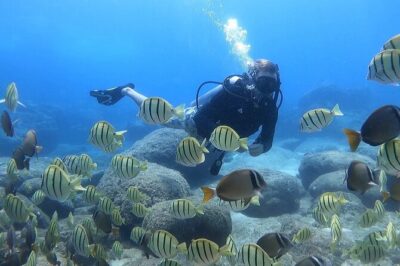
Beginner Scuba Diving Experience with Video Package in Honolulu
Read our review →
Tenerife: Beginner’s Dive at a Spot with Turtle Sightings
Read our review →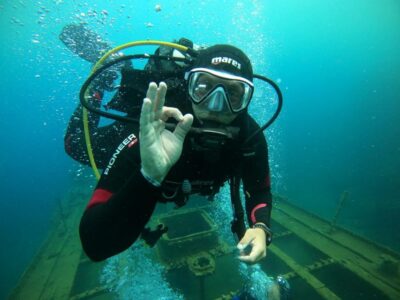
Santorini: Scuba Diving Experience in Caldera for Beginners
Read our review →Lists this dive appears in