
REVIEW · MALTA
First scuba diving experience with instructor – Malta
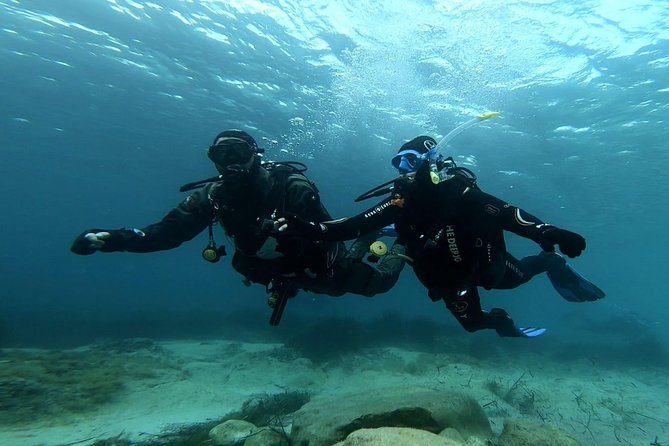
Malta’s best surprise may be below the surface. This three-hour first-time scuba session takes you from a short classroom briefing to controlled underwater practice, then into open water where you may spot local fish and, if conditions are kind, an octopus. You learn at a measured pace rather than being sent straight into the sea.
I like two things here: personal instruction and a small maximum group of eight. Instructors such as Antonio, Georgia, and Davide are repeatedly praised for clear explanations, patience, and calm support. The other plus is the simple all-in package: equipment, insurance, and a PADI Discover Scuba certificate are included.
The main caution is that this is not suitable for everyone. You need reasonable swimming ability and good health, and active asthma, certain heart or blood conditions, recent surgery, or other medical concerns may require a doctor’s statement. Also, the listed price of $0.00 should be checked carefully before booking, since it may reflect a display issue rather than the final charge.
Key points before you book
- Start at DiveBase Malta: Meet at 25 Islet Promenade in St. Paul’s Bay and return there after the session.
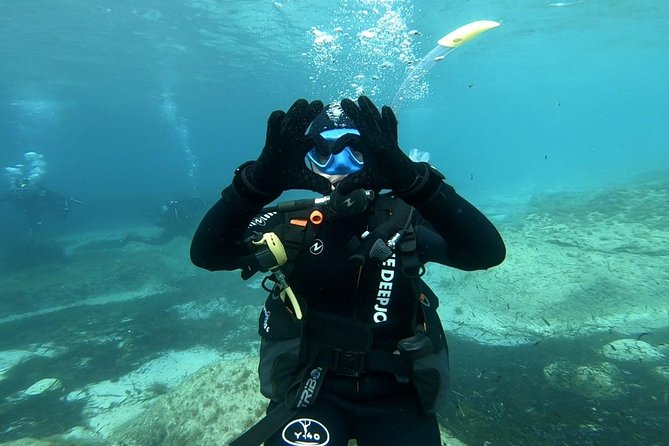
- Learn the essentials first: You practice equipment use, ear pressure equalization, fin swimming, underwater comfort, and hand signals.
- Expect about three hours: That total includes briefing, equipment preparation, shallow-water work, and the open-water session.
- Look for marine life: Fish are commonly part of the experience, and one session included a close octopus sighting.
- Leave with a certificate: The PADI Discover Scuba Certificate of Achievement is recognized worldwide and can support further scuba training.
- Plan around flying: Wait at least 12 hours after the underwater session before taking a flight.
From St. Paul’s Bay to your first underwater breath
You begin at DiveBase Malta, at 25 Islet Promenade in St. Paul’s Bay. The activity ends at the same place, so you do not need to arrange a separate return transfer. The meeting point is near public transportation, which helps if you are staying in or around the bay and do not have a car.
The experience lasts about three hours. That may sound long for a first lesson, but the clock includes several stages: filling out medical forms, learning the gear, getting dressed, receiving safety instruction, practicing in shallow water, and moving into open water when you are ready.
Arrive on time with the medical paperwork completed. The operator has emphasized that late arrivals and incomplete forms can affect the schedule for everyone. This matters more than it might seem. A first-time scuba session needs calm preparation, and rushing through the opening briefing is no favor to you or the instructor.
The exact instructor may vary. Antonio is praised for thorough explanations and encouragement, while Georgia helped one beginner reach seven meters. Davide has also been noted for keeping nervous first timers informed and supported. The strongest pattern is a clear, reassuring teaching style, though your experience can still depend on the instructor assigned that day and the group’s pace.
A few more dives around the world worth comparing
- Great Barrier Reef Snorkeling and Diving Cruise from Cairns
★ 4.5 · 3,714 reviews - First-Time Scuba Diving in Honolulu + Free Videos
★ 5.0 · 3,123 reviews - Oahu Shark Dive
★ 5.0 · 2,903 reviews
Learning the equipment without feeling overwhelmed
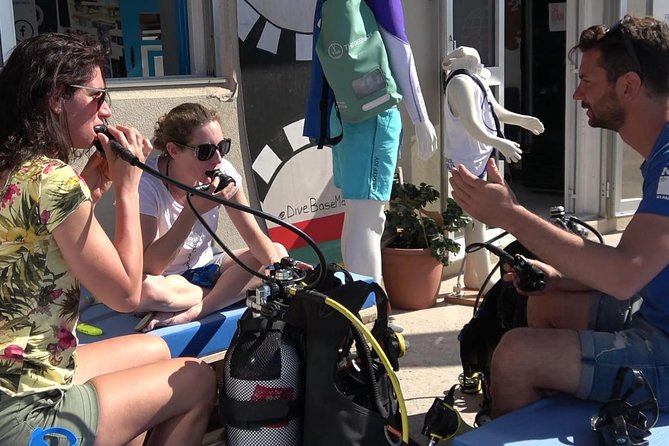
The first practical step is learning how to use the scuba equipment. You are not expected to arrive with previous experience. The instructor explains the basic parts and shows you how they work before you enter the water.
You will practice breathing through the regulator, handling the mask and fins, and becoming comfortable with the equipment’s feel. This is the point where many first timers discover that scuba requires a different rhythm from ordinary swimming. You do not need to be an elegant swimmer, but you do need enough ability to move safely in the water and follow instructions.
Equalizing pressure in your ears is another central lesson. As you descend, the water pressure changes, and you must learn to clear your ears gently and regularly. The instructor should be watching your comfort closely. If your ears do not equalize, you should stop and signal rather than force yourself lower.
The hand signals are simple but important. You learn how to communicate basic messages underwater, including whether you are comfortable or need attention. Since you cannot speak normally while breathing through the regulator, these signals are your main link with the instructor.
This is also where language matters. The experience is described as being conducted in Italian and English. One customer specifically noted that a good command of English is strongly advisable, and language difficulties created problems for another group. If you are not comfortable in either language, ask about communication before paying.
Why the shallow-water stage matters
The shallow-water session is not filler. It is where you get used to breathing, moving with fins, and staying calm before heading farther out. A first-time participant who struggled to breathe underwater was able to continue because the instructor offered patient support. That kind of gradual start can make the difference between enjoying the session and quitting early.
You may spend a substantial part of the experience here. One group reported more than an hour in the water while working through the first stage. That can feel slow if you are eager to see marine life, but it is a sensible trade. Comfort and control matter more than reaching a particular depth quickly.
The instructor may ask you to repeat a skill until it feels natural. You may practice clearing your ears, adjusting your position, or responding to a hand signal. The aim is not to turn you into a certified scuba diver in one afternoon. It is to give you a safe and realistic first taste of the activity.
Some participants find breathing underwater surprisingly difficult. That is normal for a beginner, but you should be honest about your comfort. If you panic, signal the instructor and return to a simpler exercise. The staff can help, but no responsible instructor can make you continue if you are not ready.
Moving into open water around Malta
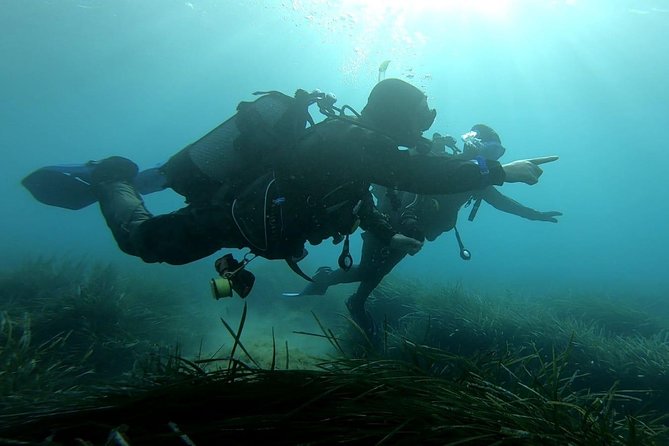
Once you and the instructor are comfortable with the basics, you continue into open water. The exact route and conditions can vary with weather and sea conditions, so do not book this expecting a fixed reef, wreck, or guaranteed animal sighting. The supplied information promises a look at Malta’s marine flora and fauna, not a particular underwater site.
The attraction is the change in feeling. In shallow water, you are focused on breathing and technique. In open water, you begin to notice the setting around you. Fish become more than a picture in a briefing, and the underwater world starts to feel like a place rather than a lesson.
One participant spent about an hour underwater and saw interesting marine life. Another had a close encounter with an octopus. Those sightings are possible highlights, not guarantees, but Malta’s clear-water setting gives the session a worthwhile visual goal beyond the equipment practice.
You may reach a depth of around seven meters, depending on your ability, instruction, and conditions. That is enough to give you a genuine sense of scuba without making the session an advanced undertaking. The instructor remains responsible for deciding how far you should go.
Do not judge the experience only by depth. For a first session, the more useful question is whether you can breathe calmly, equalize, follow hand signals, and enjoy being underwater. If you manage those skills, you have a strong foundation for a later certification course.
Same water, a completely different day underwater:
- Silfra: Diving Between Tectonic Plates – Meet on Location
★ 5.0 · 2,139 reviews - Ocean Freedom Great Barrier Reef Luxury Snorkel and Dive Cruise
★ 5.0 · 1,895 reviews - Beginner Scuba Diving with Turtles and Videos, San Juan
★ 5.0 · 1,743 reviews - Tenerife: Your First Scuba Diving Experience in Turtle Area
★ 4.7 · 1,679 reviews
The instructors make the biggest difference
The most praised part of this experience is the teaching. Antonio is repeatedly singled out for being friendly, clear, patient, and reassuring. Georgia receives similar praise for making instructions easy to understand, while Davide is noted for informative guidance during a first attempt.
That consistency matters because beginners often arrive with two worries: Will I be able to breathe, and will I embarrass myself if I cannot manage the equipment? A calm instructor lowers both barriers. Clear demonstrations also matter more than flashy talk. You need someone who can explain a skill, watch you try it, and correct you without making you feel rushed.
The experience is described as private, though the maximum group size is eight. In practice, the instructor-to-participant ratio may vary. One small group had four people in total, while other sessions involved more participants and different instructors. If individual attention is your main reason for booking, confirm the expected group size and instructor arrangement in advance.
There is one important balance to keep in mind. Most accounts describe patient, professional instruction, but one family felt the shore-based instructor was impatient when they struggled to breathe and communicate. The operator responded that the group arrived late, had incomplete medical forms, faced a language barrier, and needed repeated instruction. The practical lesson is simple: arrive prepared, understand the language requirement, and tell the staff immediately if you are anxious or uncomfortable.
What the certificate does and does not mean
At the end, you receive a PADI Discover Scuba Certificate of Achievement if you complete the experience requirements. It is recognized worldwide and can support your next step toward becoming a certified scuba diver.
Treat it as a record of an introductory session, not as a full scuba certification. You will learn basic skills and gain experience, but further education is needed before you can independently plan and undertake certified scuba activities. If you finish the session excited rather than exhausted, ask DiveBase Malta how to continue your training.
The certificate gives the activity more value than a one-off swim. You are not simply renting equipment for a short look beneath the surface. You are learning a set of skills that can be developed later, provided you meet the health and training requirements.
Equipment, insurance, and what to bring
Scuba equipment is included, as is diving insurance and a PADI instructor. You need to bring your own bathing suit, bikini, or shorts, along with a towel. The information does not list photo service as an included feature, so do not assume that an underwater photographer or camera package is part of the booking.
You may be asked to rinse the wetsuit, fins, and mask after use. That is a normal practical part of handling shared equipment and keeping it clean. If that chore surprises you, ask about it before the session rather than treating it as an unexpected extra.
Wear something easy to change out of and bring dry clothes for afterward. The activity information only confirms the need for swimwear and a towel, so avoid assuming that extra personal items or photography are supplied.
Health rules and the 12-hour flight gap
You need to be in good health and have sufficient swimming skills. The experience is not suitable for people with respiratory problems, including active asthma, or with blood and heart conditions. Recent surgery within the past year is also listed as a concern.
A doctor’s statement may be requested in particular cases. Read the medical form before booking and answer it honestly. If you have a chronic condition, do not wait until arrival to ask whether you are cleared. A medical certificate may be required before participation, and the operator has indicated that medical clearance can sometimes be obtained locally.
After the session, wait at least 12 hours before flying. This is an essential planning detail for anyone taking a short Malta trip. Do not schedule the activity immediately before your flight home. Weather can also affect the session. If poor conditions cause cancellation, you should be offered another date or a full refund.
The standard cancellation policy allows a full refund when you cancel at least 24 hours before the start time. Cancellations or changes inside that window are not refunded or accepted.
Is the $0 price really the value?
The supplied price is shown as $0.00, which cannot be treated as a normal final rate without checking. Confirm the actual price, taxes, and any booking conditions before you reserve. If the price is genuinely zero at checkout, the equipment, insurance, instructor, and certificate would make it an extraordinary value. More likely, the displayed figure needs clarification.
At a normal paid rate, the value rests in the instruction rather than the time alone. You receive a structured introduction, equipment, insurance, and a certificate, with the chance to spend meaningful time underwater. For someone curious about future scuba training, that is more useful than a quick novelty activity.
The value drops if you expect a guaranteed octopus, a specific reef, professional photographs, or a fully private instructor. None of those is assured. The experience is best judged as a first lesson in Malta, not as a wildlife expedition.
Who should book this first-time scuba session?
This is a good match for you if you can swim, are curious about scuba, and want a gentle introduction without committing to a full certification course. Couples may enjoy it as an unusual shared activity, and families with older children may consider it if every participant meets the health and swimming requirements.
It is especially suitable for a nervous beginner who benefits from patient instruction. The strongest practical reports center on instructors who explain each step clearly and stay calm when someone needs extra time.
Think twice if you dislike close supervision, cannot communicate comfortably in English or Italian, have relevant medical concerns, or need a guaranteed schedule immediately before a flight. You should also reconsider if you want a large amount of free time to explore independently. This is a taught session, not an unguided underwater outing.
FAQ
Where does the scuba experience begin and end?
It begins at DiveBase Malta, 25 Islet Promenade, St. Paul’s Bay, Malta, SPB 2506. The activity ends back at the same meeting point.
How long does the experience last?
The full experience lasts approximately three hours. This includes the briefing, equipment preparation, shallow-water practice, and open-water time.
Do I need previous scuba experience?
No. Previous scuba experience is not required. You need sufficient swimming skills and good health.
What skills will I learn?
You will learn to use the scuba equipment, equalize pressure in your ears, feel comfortable underwater, swim with fins, and communicate with underwater hand signals.
Is equipment included?
Yes. Scuba equipment, diving insurance, and a PADI instructor are included. You need to bring your own swimwear and towel.
Will I receive a certificate?
If you complete the requirements, you will receive a PADI Discover Scuba Certificate of Achievement. It is recognized worldwide and may help you continue toward scuba certification.
Can I fly after the session?
You should wait at least 12 hours after the underwater session before taking a flight.
Can everyone participate?
No. The session is not suitable for people with respiratory problems including active asthma, certain blood or heart conditions, or surgery within the past year. A doctor’s statement may be required in some cases.
Should you book it?
Book this experience if you want a carefully supervised first look at Malta beneath the water and you value instruction more than guaranteed wildlife or photographs. The clear lessons, small maximum group, included equipment, and chance to continue with PADI training give it genuine practical value.
Before paying, confirm the actual price, expected group size, language support, medical requirements, and whether your instructor can provide extra time if you are nervous. Arrive with the forms completed, bring a towel, and leave at least 12 hours between the activity and your flight. With those details settled, this is a sensible and memorable introduction to scuba in Malta.
Just added around the world
- Punta Cana: Reef Diving Adventure Explore Underwater Wonders★ 5.0 · 5 reviews
- Phuket: Try SCUBA DIVING Full Day Experience 2 Dives★ 5.0 · 9 reviews
- Punta Cana: Scubadoo Ocean Exploration Diving Adventure★ 4.1 · 70 reviews
- Punta Cana: Scuba Doo Underwater Scooter Adventure★ 5.0 · 2 reviews
- Punta Cana: Guided Power Dive Adventure★ 4.8 · 3 reviews
- Punta Cana: Discover Scuba Diving Experience for Beginners★ 4.4 · 2 reviews
- Puerto Morelos: Scuba Diving for Beginners – 2 Dives★ 5.0 · 5 reviews
- Punta Cana: Dive the Coral Paradise of Catalina Island★ 4.2 · 5 reviews
Scuba Diving in Malta, compared.
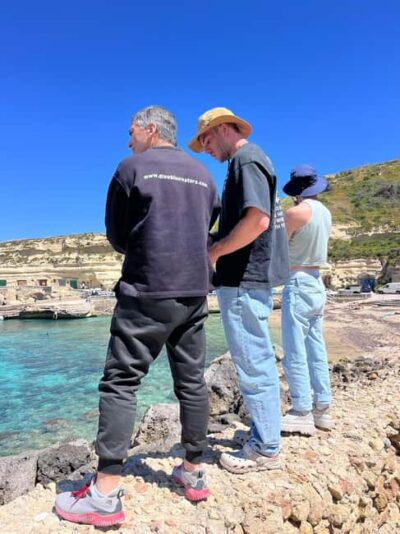
Gozo: Discover Scuba Diving Experience for Beginners
Read our review →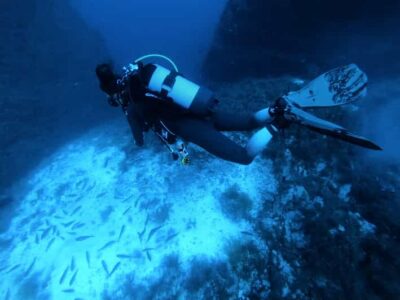
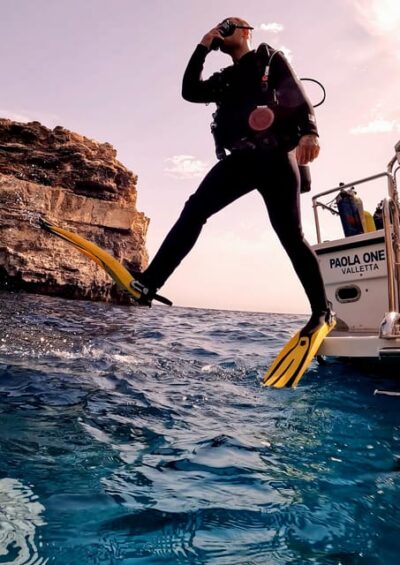
Malta: Discover Scuba Diving in crystal clear waters
Read our review →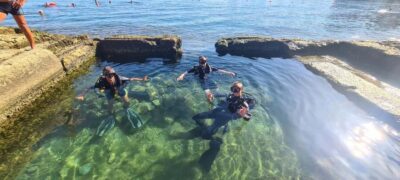
Malta St Pauls Bay: PADI Discover Scuba Diving Experience
Read our review →Lists this dive appears in