
REVIEW · SRI LANKA
PADI Rescue Diver
The serious work here is learning to prevent and manage emergencies before they become dangerous. At Divinguru Unawatuna, you complete five theory sections, ten practical exercises, and two rescue scenarios over about four days. The aim is not just to earn another card, but to become the buddy who notices trouble early and knows what to do next.
I like the course’s hands-on structure and its small maximum of eight people. I also like that the instructors focus on steady problem solving, not simple box-ticking. Kartik is specifically noted for helping students understand the responsibility of a Rescue Diver, while Ellie, Norbert, and Fraser are part of the wider teaching team.
The main catch is cost clarity. The advertised price is $378.02 per person, but the €70 PADI manual and certification fee is extra. If you still need Emergency First Response training, add a half to full day and another €165 in course, manual, certification, and card fees.
Key points to know before booking
- Five theory sections and a final exam: You work through knowledge reviews before taking the final test.
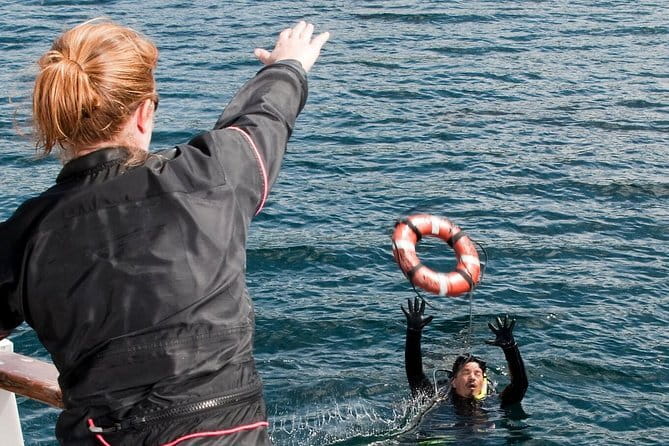
- Ten exercises and two rescue scenarios: The practical work moves beyond classroom ideas into repeated problem solving.
- Advanced Open Water certification is required: This is not a beginner course.
- Emergency First Response is also required: You need proof of Primary and Secondary Care training from the past 24 months.
- The schedule can take three to five days: Classroom and in-water sessions are adjusted to ability and fitness.
- The real meeting point is Unawatuna: The experience is described as being in Negombo, but the stated start and finish point is Divinguru Unawatuna on Matara Road.
What the Rescue Diver course actually teaches
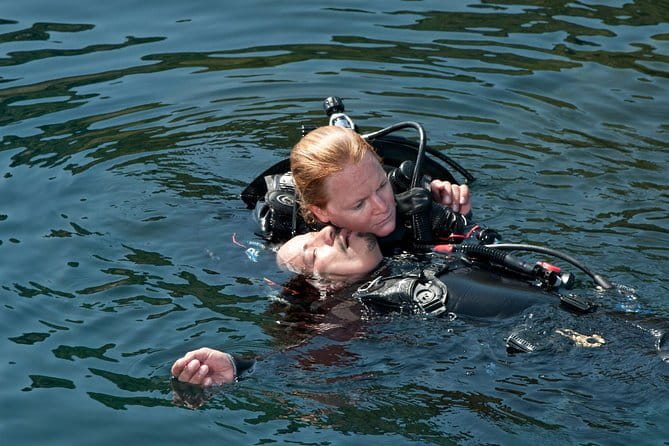
The PADI Rescue Diver course is designed for people who already know how to operate as scuba divers and now want to handle problems involving themselves or a buddy. You learn to look for warning signs, assess an emergency, and choose a sensible response.
That distinction matters. Rescue training is not just a collection of dramatic underwater tricks. Much of the value comes from noticing when a situation is starting to go wrong, staying calm, and working through a plan. The course builds those habits through repeated exercises and scenario work.
You should expect a mix of classroom study and practical training in the water. The theory explains the principles behind rescue work. The exercises then give you a chance to use those ideas until the responses become more natural.
The course remains serious, but the teaching style allows for humor between focused sessions. That balance can help you learn without turning every mistake into a tense event. Still, this is a physically and mentally active course, so you should arrive ready to concentrate and participate.
More dive courses in Sri Lanka:
- PADI Scuba Diver Course
★ 5.0 · 30 reviews - PADI Scuba Diver Course
★ 5.0 · 11 reviews - PADI Advanced Open Water Diver Course
★ 5.0 · 7 reviews
Five theory sections before the water work
The academic part includes five theory sections, knowledge reviews, and a final exam. You should not treat this as paperwork to rush through. The written material gives you the reasoning behind the practical tasks, including what to look for and how to respond.
The knowledge reviews help you check your understanding as you go. If you are unsure about a point, this is the time to ask your instructor rather than carry confusion into the practical sessions.
The final exam is part of the required work. You should allow enough time for reading and study, especially if you are taking the course during a busy holiday. The flexible format may let the center mix classroom and water sessions around your ability and fitness, but it does not remove the need for preparation.
You can also complete the theory online through PADI Rescue Diver eLearning. If you choose that route, you must purchase the eLearning through PADI and register with Divinguru Unawatuna, listed as a PADI 5 Star Dive Resort with the code S-36133. This may suit you if you prefer to study at your own pace before arriving, though the practical sessions still need to be completed at the center.
Ten exercises that turn theory into action
The practical section contains ten exercises. The supplied information does not give a separate name or exact order for each one, so you should ask the center for the current daily schedule when you book.
What is clear is the purpose: you practice rescue techniques and problem solving rather than simply hearing an explanation. Repetition matters here. In an emergency, you do not want to be searching your memory for the first step.
The exercises also help you become a better buddy. You learn to pay closer attention to the person sharing the water with you, recognize when something is not right, and respond in a controlled way. Those skills are useful even when nothing goes wrong because good buddy habits are built before an emergency happens.
Your fitness level matters. The course requires a moderate level of physical fitness, and you need to take an active role in the exercises. If you have concerns about stamina or water confidence, raise them before the course begins. The schedule is flexible, but the required skills still need to be completed.
Two rescue scenarios with less room for rehearsal
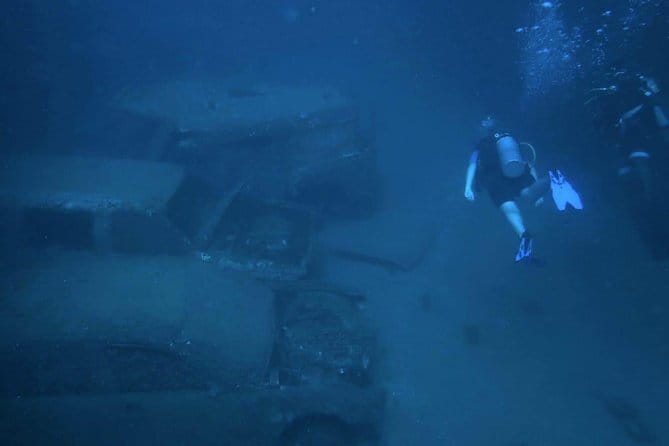
After the individual exercises, the course includes two rescue scenarios. These are where the separate skills are brought together. Instead of practicing one response at a time, you use your knowledge and techniques in a more complete situation.
Scenarios are valuable because they test judgment as well as mechanics. You need to work out what is happening, decide what action makes sense, and keep control of the situation. The goal is not theatrical drama. It is to help you respond more effectively when several details need attention at once.
The center describes the course as a place to practice until problem solving becomes second nature. That is a useful way to think about the scenarios. You are not trying to prove that you never make an error. You are building a calm, repeatable approach that can improve with practice.
The exact scenario setup is not provided, so do not expect a published day-by-day script. Instead, expect the instructors to adjust the practical work to the ability and fitness of the group. With a maximum of eight participants, there should be a reasonable chance to receive direct guidance, though the amount of one-to-one time can vary with group dynamics.
A few more dives around Sri Lanka worth comparing
- Fun Dives For Certified Divers
★ 5.0 · 44 reviews - Fun Dives For Certified Divers
★ 5.0 · 30 reviews - Discover SCUBA Diving in Beautiful Unawatuna Bay
★ 5.0 · 30 reviews - Fun Dives For Certified Divers
★ 5.0 · 22 reviews
The instructors and the learning atmosphere
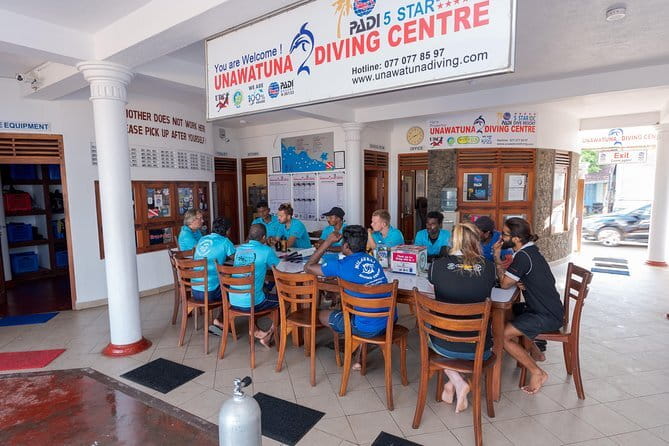
Kartik is singled out for helping one student understand the importance of the Rescue Diver role. That detail suggests a teaching approach that looks beyond the certification card and treats rescue work as a responsibility to your buddy and the wider group.
Ellie, Norbert, and Fraser are also named as members of the Divinguru team. You cannot assume that a particular instructor will teach your course, so confirm this directly if working with a specific person matters to you.
The course is intended to be demanding without being grim. You will spend time concentrating on serious subjects, but there is also room for laughter between exercises. I consider that a practical advantage. A relaxed student is often more willing to ask questions, admit uncertainty, and try a technique again.
The strongest reason to choose this course is the teaching focus on confidence and problem solving. You should not book it simply because the title sounds impressive. Book it if you want structured practice in helping yourself and others in the water.
What is included, and what is not
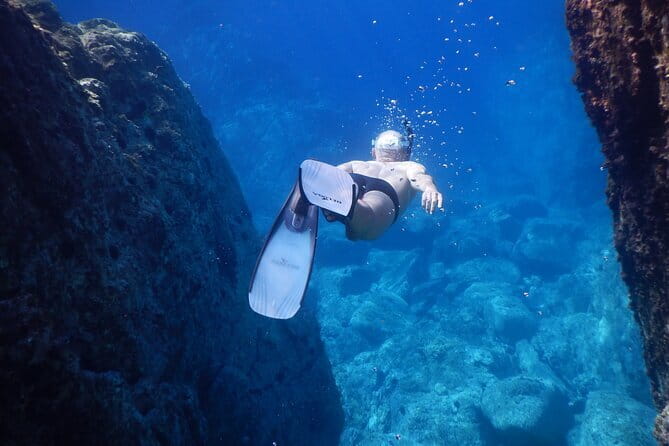
The $378.02 price includes the use of scuba equipment, bottled water, coffee or tea, and snacks. Equipment included in the course price makes a meaningful difference because you do not need to arrange a separate rental package for the training sessions.
Lunch is not included. Plan for that daily expense, and ask the center how much time is normally available for a meal between sessions. The schedule is flexible, but the supplied details do not promise a specific lunch break or a meal at the facility.
The largest extra charge is the PADI fee. The manual and PADI certification costs total €70, and this is not part of the course price. The information also refers to a PADI card and manual fee of €70 when eLearning is not used, so confirm exactly how the fee applies to your booking before paying.
If you do not have current Emergency First Response Primary and Secondary Care certification, you can complete the EFR course at the center alongside Rescue Diver training. That course takes about half a day to one day and costs €95, with another €70 for the EFR manual, certification, and card.
In that case, the extra cost is €165, not counting the main Rescue Diver fee. This makes the course much more expensive than the headline price, but the added training may be useful if your first-aid qualification has expired or you never completed it.
Is $378.02 good value?
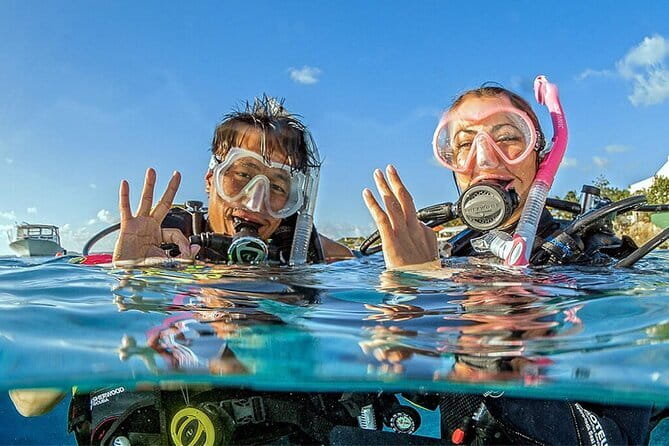
The price is reasonable only if you already meet the prerequisites and understand the extras. You receive several days of instruction, equipment use, theory, ten exercises, two scenarios, and an exam. For a serious skills course, the value comes from supervised practice rather than the number of hours listed on a timetable.
The price becomes less attractive if you need EFR training and course materials. In that situation, the total rises quickly, and lunch remains your responsibility. I would compare the full price with other PADI centers, not just the advertised course rate.
The maximum group size of eight is another part of the value calculation. A smaller group can make it easier to receive corrections during practical work. It does not guarantee private instruction, but it is preferable to an open-ended class size for a course built around exercises and scenarios.
You should also consider the cost of your time. The course usually takes three to five days, so it is not a quick add-on to a packed Sri Lankan itinerary. The flexible schedule helps, but you still need enough free days to complete every section.
Location, pickup, and the important Negombo question
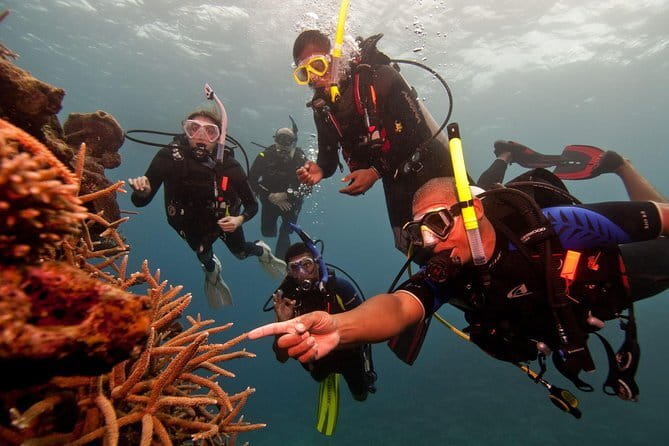
The experience information names Negombo as the location, but the stated meeting point is Divinguru Unawatuna, PADI 5 Star IDC Dive Resort, 294 Matara Road, Unawatuna 80600. The course ends back at that meeting point.
That difference deserves attention before booking. If you are staying in Negombo, do not assume the course begins there or that transport between Negombo and Unawatuna is included. Pickup is offered, but the details do not state the pickup area, price, or transfer time. Ask the operator to confirm the exact arrangement.
The center is near public transportation, which gives you another way to reach the meeting point. Still, you should verify the address and pickup instructions in advance, particularly if your hotel is not in Unawatuna.
Confirmation is normally received at booking. If you book within one day of the start date, confirmation comes as soon as possible and depends on availability. This is another reason to arrange the course early rather than trying to squeeze it into the final days of a holiday.
Who should take this course?
This course suits an Advanced Open Water Diver who wants stronger emergency skills and more confidence as a buddy. It is also a sensible step for someone considering future professional training, since one student progressed through the Rescue Diver course and later toward the first professional level, PADI Divemaster.
You must be at least 12 years old. You also need proof of Emergency First Response Primary and Secondary Care training completed within the previous 24 months, unless you take the EFR course at the center.
You should have moderate physical fitness and be ready for repeated practical work. This is not the right choice if you want a relaxed sightseeing activity or a short introduction to scuba. The course demands study, physical participation, and attention to safety.
It may suit you particularly well if you feel capable in the water but still hesitate when a buddy has a problem. The training is meant to reduce that hesitation through practice. You will not leave with a guarantee that every emergency will feel easy, but you should have a clearer process to follow.
Booking, weather, and cancellation details
The activity requires good weather. If poor weather causes a cancellation, you are offered another date or a full refund. The experience also requires a minimum number of participants, and if that number is not reached, you are offered another date or experience, or a full refund.
You can cancel for a full refund up to 24 hours before the start time. Cancellations made less than 24 hours before the start time are not refunded, and changes within that period are not accepted. Cut-off times use local Sri Lankan time.
These terms are fairly flexible, but the course itself needs enough time and suitable conditions. I would avoid scheduling it immediately before an international flight, especially since the course may take anywhere from three to five days.
Should you book the Divinguru Rescue Diver course?
Book this course if you already hold Advanced Open Water certification, meet the EFR requirement, and want serious practice in rescue skills rather than another casual underwater outing. The ten exercises, two scenarios, small maximum group, and instructors’ focus on confidence make it a useful next step.
Before paying, confirm three things: the Unawatuna meeting point despite the Negombo location label, the €70 PADI fee, and whether your EFR certificate is still valid. Also ask about pickup and the exact schedule.
I would recommend it to prepared scuba divers who value patient instruction and practical repetition. I would not recommend it to beginners, people short on time, or anyone comparing prices without adding the certification and possible EFR costs. For the right student, it offers something more useful than a souvenir card: a better chance of staying calm and helping when a buddy needs you.
FAQ
Where does the PADI Rescue Diver course start?
The stated meeting point is Divinguru Unawatuna, PADI 5 Star IDC Dive Resort, 294 Matara Road, Unawatuna 80600, Sri Lanka.
Does the course take place in Negombo?
The experience is listed with Negombo as its location, but the stated start and end point is in Unawatuna. Confirm the exact location and transport arrangements before booking.
How long does the Rescue Diver course take?
The course takes around three to five days. The schedule is flexible and combines classroom and in-water practice according to student ability and fitness.
What certification do I need before booking?
You must be an Advanced Open Water Diver and meet the course prerequisites. You also need proof of Emergency First Response Primary and Secondary Care training completed within the previous 24 months.
Can I take the EFR course at the same center?
Yes. If you do not have current EFR certification, you can take the EFR course at the center alongside the Rescue Diver course. It takes about half a day to one day.
How much does the EFR course cost?
The EFR course costs €95. The EFR manual, certification, and card cost an additional €70.
Is the PADI fee included in the $378.02 price?
No. The PADI manual and certification costs total €70 and are not included in the course fee.
Is scuba equipment provided?
Yes. Use of scuba equipment is included in the course.
Is lunch included?
No. Lunch is not included, but bottled water, coffee or tea, and snacks are provided.
What is the cancellation policy?
You can cancel at least 24 hours before the start time for a full refund. Cancellations or changes made less than 24 hours before the start time are not accepted for a refund.
Just added around Sri Lanka
- Scuba Diving For Beginners★ 5.0 · 18 reviews
- 3 Hour Guided Scuba Diving in Trincomalee★ 5.0 · 2 reviews
- PADI Advanced Open Water Diver Course★ 5.0 · 7 reviews
- PADI Scuba Diver Course★ 5.0 · 11 reviews
- Scuba Diving For Beginners★ 5.0 · 10 reviews
- Scuba Diving in Kalpitiya★ 5.0 · 2 reviews
- Fun Dives For Certified Divers★ 5.0 · 22 reviews
- Scuba Diving at Unawatuna★ 5.0 · 21 reviews
Scuba Diving Courses, compared.
Open Water Course – Become certified diver in 3 days
Read our review →
Heraklion: Beginner Scuba Diving Lesson with PADI Instructor
Read our review →
Discover Scuba Diving with No Certification in St Thomas
Read our review →
Try Dive – PADI Discover Scuba Diving in Tenerife
Read our review →
Lists this dive appears in