REVIEW · SCUBA DIVING
Dive the Divide: Silfra Fissure Scuba Tour | Reykjavik Pickup
Silfra gives you a rare underwater view of the split between the North American and Eurasian tectonic plates. From Reykjavik, you ride to Thingvellir National Park, suit up in water near 3°C, and follow a narrow route through black volcanic rock and startlingly clear glacial water.
I like the maximum three-person group, which gives the guide room to watch your buoyancy and gear. I also like that transport, park admission, all scuba equipment, hot chocolate, and cookies are included. The catch is simple: this is not a beginner activity. You need dry suit experience, good fitness, and the strength to carry heavy equipment over a 400-meter route.
Key points
- The route passes through four named sections: Silfra Deep Crack, Silfra Hall, Silfra Cathedral, and Silfra Lagoon.
- The water is about 3°C: a dry suit, thermal undersuit, hood, and gloves are supplied.
- You must already know dry suit technique: bring a certification card or a logbook showing at least 10 dry suit outings.
- The group is capped at three people: that can mean close guide attention, though one participant’s problem may affect the whole group.
- The return walk matters: you may carry wet gear and weights for about 300 meters after leaving the water.
- The $344.67 price covers the essentials: Reykjavik transport, park admission, equipment, guide, hot chocolate, and cookies.
Why Silfra feels different from ordinary scuba
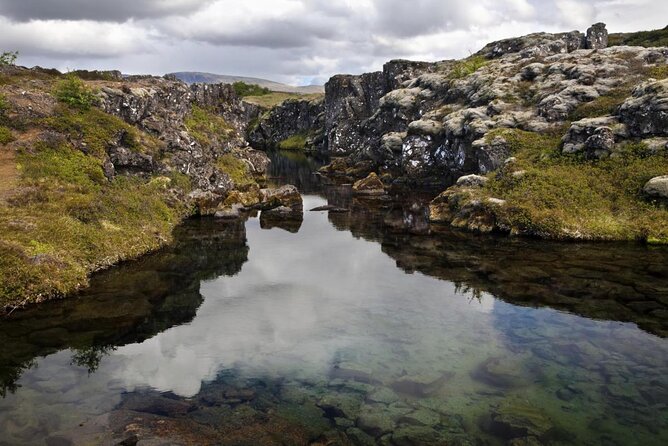
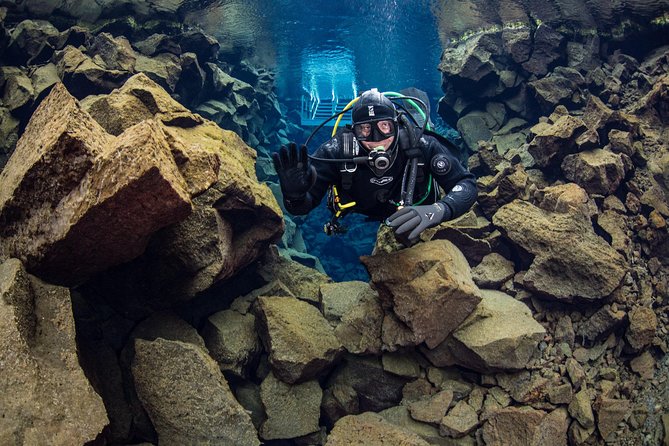
Silfra is not a warm-water trip built around fish, coral, or wrecks. Its appeal is geological. You move through a flooded crack in the earth, with sheer volcanic walls close by and water so clear that visibility may extend roughly 100 meters or more.
The famous point is the tectonic setting. You are in Thingvellir, where the North American and Eurasian plates pull apart. The water comes through porous underground lava for years before reaching the fissure, which helps explain its exceptional clarity.
There is very little marine life to distract you. The reward is the shape of the rock, the cold blue-green water, and the strange feeling of moving through a place that looks more like a flooded canyon than a conventional scuba site.
The route begins in Silfra Deep Crack, a tight, winding passage near the entrance. It opens into Silfra Hall, then reaches Silfra Cathedral, the deepest part of the advertised route at 22 meters, or 72 feet. You finish in Silfra Lagoon before walking back to the car park.
A few more dives around the world worth comparing
- Great Barrier Reef Snorkeling and Diving Cruise from Cairns
★ 4.5 · 3,714 reviews - First-Time Scuba Diving in Honolulu + Free Videos
★ 5.0 · 3,123 reviews - Oahu Shark Dive
★ 5.0 · 2,903 reviews
The Reykjavik pickup and ride to Thingvellir
The day begins with pickup from a specified Reykjavik hotel or accommodation. Pickup can take up to 30 minutes, so I would not plan a tight breakfast reservation or another morning activity around the stated departure time.
The drive takes you to Thingvellir National Park, a UNESCO World Heritage Site with lava fields, Þingvallavatn lake, and the historic Alþingi site. The park is important for both geology and Icelandic history. The national assembly was established here in 930 AD, long before the water-filled fissure became an adventure destination.
The full outing lasts about six hours. The published timing gives roughly four hours at Thingvellir and about 90 minutes for the Silfra portion itself, with the rest used for transport, changing, preparation, and walking.
That timing matters because the underwater portion is only one part of the day. You will spend real time getting into a dry suit, checking equipment, waiting for the guide’s instructions, and walking to and from the water. At busy times, preparation can take longer than expected.
Getting into a dry suit in 3°C water
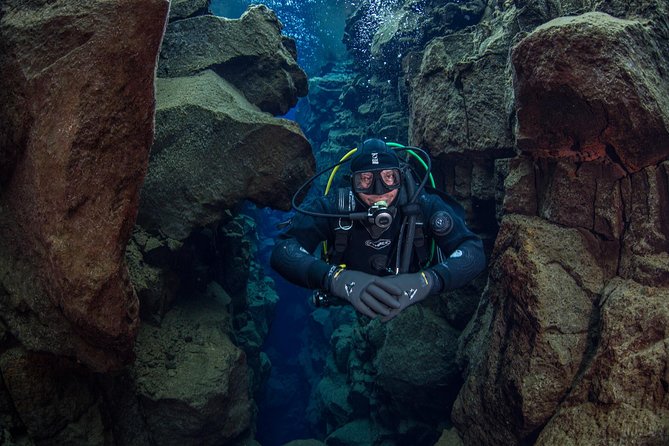
A thermal undersuit, dry suit, BCD, regulator, weights, tanks, hood, gloves, mask, and fins are provided. You need to submit your suit size when booking, since a poor fit can make a cold-water outing much harder.
Dry suit technique is different from ordinary wetsuit scuba. The suit traps air, which changes your buoyancy as you move up and down. You may need more weight than you expect, and you must be comfortable managing air in the suit while controlling your position.
The water temperature is around 3°C. The equipment is designed for it, and the supplied thermal layer can keep you warmer than expected, but you should still treat this as a serious cold-water activity. The conditions are not suited to someone hoping to learn dry suit skills on the spot.
You must be at least 18 years old and show a dry suit certification card or a logbook documenting at least 10 dry suit outings. Bring the correct documentation. One past departure became delayed because a diver’s certification record had a spelling problem and the required proof was not accepted at first.
You also need to review the medical questionnaire and diving handbook. If your medical situation requires it, bring a signed doctor’s note. The operator asks for a strong level of physical fitness, and that requirement is practical rather than decorative.
The 400-meter walk is part of the challenge
You need to carry heavy equipment for up to 400 meters, or about 1,300 feet. The route to the entry point can feel tiring in full gear, especially before you have entered the water and settled into your equipment.
The exit includes a shorter walk of about 300 meters, or 984 feet, back to the car park. You leave the water, remove your fins with help from the guide, and then walk out. If the equipment or weights are too much, the guide can help remove some of the load, and there is an option to rest at the visitor entrance along the way.
This is one of the most important details when deciding if the trip suits you. The underwater route itself may not feel like a hard athletic event, but carrying tanks and gear on land can be the more uncomfortable part.
Wear clothing that works under a dry suit and bring what you need to stay comfortable before and after the water. Food and drinks are not included, though hot chocolate and cookies are supplied after the activity.
Same water, a completely different day underwater:
- Silfra: Diving Between Tectonic Plates – Meet on Location
★ 5.0 · 2,139 reviews - Ocean Freedom Great Barrier Reef Luxury Snorkel and Dive Cruise
★ 5.0 · 1,895 reviews - Beginner Scuba Diving with Turtles and Videos, San Juan
★ 5.0 · 1,743 reviews - Tenerife: Your First Scuba Diving Experience in Turtle Area
★ 4.7 · 1,679 reviews
Following the four sections of Silfra
Silfra Deep Crack
The first section is narrow and winding. It sits near the entrance and gives you an immediate sense of the site’s unusual shape.
This is not a place to rush. The rock is close, the suit changes your movement, and other people may be entering or exiting nearby. Your guide needs to keep the group together and help you settle your buoyancy before the route opens up.
Silfra Hall
The fissure becomes a little wider in the Hall. Here, the walls and clear water provide the visual appeal that draws photographers and experienced scuba participants from around the world.
The water does not offer much animal life, so look at the stone. The contrast between dark lava formations and clear water creates the main visual story. If you want a photo of yourself touching both sides of the fissure, tell the guide early and confirm that the route and conditions allow it.
Silfra Cathedral
Cathedral is the deepest section, reaching 22 meters according to the advertised route. Depth changes, dry suit buoyancy, and extra weights make good control important, even though the current is gentle.
The route can feel calm once your equipment is working well. That calm should not be confused with a beginner-friendly setting. You need to know how to respond if a weight shifts, a valve becomes hard to reach, or you have trouble staying level.
Silfra Lagoon
The route ends in the Lagoon, where the fissure opens into its final section. After leaving the water, the guide helps with your fins and equipment before the walk back.
You then have time to dry off, discuss the outing, and warm up with hot chocolate and cookies. The ride back to Reykjavik gives you a quiet end to a physically demanding morning or afternoon.
What the small group means for you
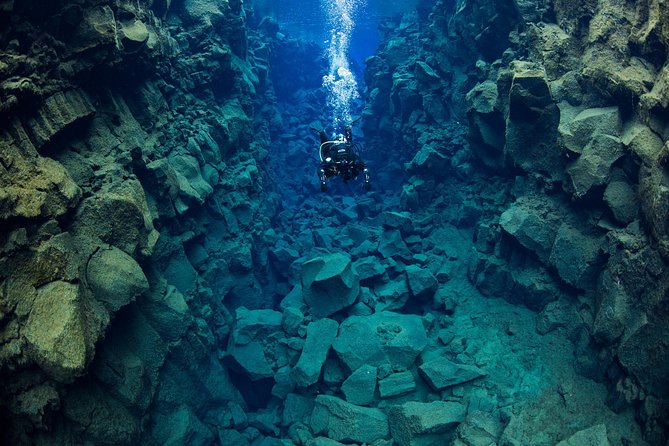
A maximum of three people is a major selling point. In a large group, a dry suit issue or buoyancy problem can be easy to miss. Here, the guide has a better chance to notice how you are handling the equipment and how comfortable you seem.
The format also has a limit. The group moves as one unit, so one participant’s problem can affect everyone’s progress. A guide must focus on safety first, and you may not receive every photo stop or pause you hoped for if conditions or timing do not allow it.
Guide quality can shape the day. Past departures have included guides named Maciek, Julian, Arturo, and Katja. Julian was specifically noted for making the ride interesting and easing a first dry suit experience, while Arturo was praised for handling the underwater route well. The practical lesson is to speak up clearly if your weight, BCD, mask, or buoyancy does not feel right.
Do not stay silent to avoid slowing the group. A faulty strap, loose weight, or poorly placed valve can turn a beautiful outing into a frustrating one. Ask for a gear check before entering the water and confirm that you can reach the controls you need.
The real value of $344.67
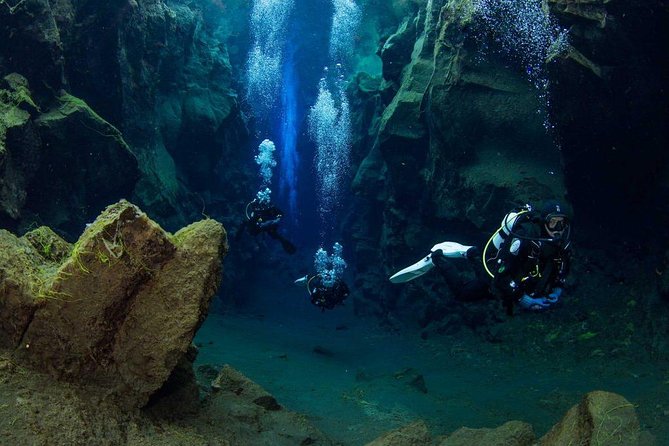
At $344.67 per person, this is an expensive half-day activity. The price makes more sense when you count what is included: round-trip transport from select Reykjavik locations, Thingvellir admission, a PADI-certified dive master, tanks, weights, dry suit, thermal layer, BCD, regulator, hood, gloves, mask, fins, and post-activity refreshments.
You are also paying for a specialized site and equipment that would be difficult to arrange independently. The small group improves the value, especially if you want close attention with dry suit handling.
The price is harder to justify if you already have transport, equipment, and a local guide available. It is also poor value if you are unsure about the certification rules or physical demands and risk being turned away after arranging a trip to Iceland.
Book only after checking your dry suit paperwork, medical requirements, and ability to carry the equipment. The free cancellation policy allows a full refund if you cancel at least 24 hours before the start time. Changes or cancellations inside that window are not accepted, and poor weather can lead to a new date or a full refund.
Practical issues that can affect the day
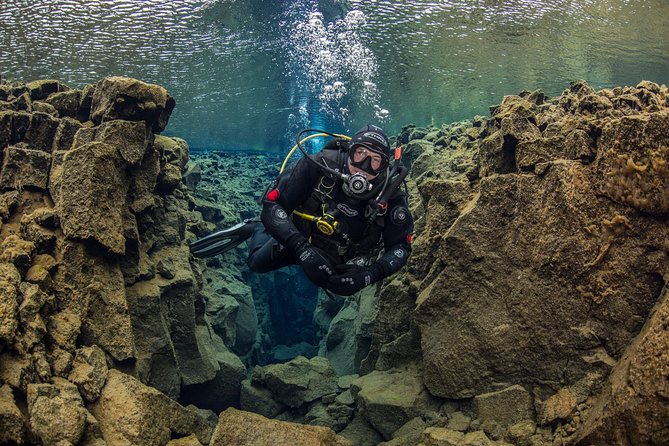
You cannot wear glasses under the mask because they interfere with the seal. Use contact lenses or bring prescription goggles if you need vision correction.
Plan around flight restrictions. You are strongly advised to wait 24 hours after scuba before flying, so do not schedule this close to your departure from Iceland.
The tour is offered in English and uses mobile tickets. Pickup is available only from the locations on the operator’s pickup list. Check that list before booking rather than assuming any Reykjavik address will work.
The advertised route reaches 22 meters, though the exact profile can vary. One experienced participant described a route with much of the time between 1.5 and 15 meters and a short period at 18 meters. That difference is another reason to listen closely to the guide’s briefing rather than treating the stated maximum as a promise for every outing.
Who should book this Silfra trip?
I would choose it if you already have dry suit experience, enjoy unusual geological sites, and want a small group rather than a basic sightseeing stop. It suits a confident scuba participant who can manage cold water, heavy equipment, and a controlled route with limited room for error.
I would not choose it as a first scuba activity, a first dry suit lesson, or a casual add-on between flights. It is also a poor fit if you dislike strict equipment checks, cold conditions, walking in gear, or the possibility that another person’s problem could slow the group.
The best preparation is simple: bring your certification proof, verify your medical paperwork, submit accurate suit measurements, ask for a careful gear check, and tell the guide immediately if something feels wrong. That preparation gives you the best chance to focus on the fissure instead of your equipment.
FAQ
How much does the Silfra scuba tour cost?
The listed price is $344.67 per person.
How long does the tour take?
The full experience lasts about six hours, including Reykjavik pickup, transport, preparation, the Silfra route, changing, and the return journey.
Is Reykjavik pickup included?
Yes. Round-trip transport is included from select Reykjavik hotels and accommodations. Pickup locations are limited to the operator’s specified list.
What certification do I need?
You need previous dry suit experience. Bring a dry suit certification card or a logbook showing at least 10 completed dry suit outings.
How cold is the water?
The water is about 3°C. The operator supplies a thermal undersuit, dry suit, hood, and gloves.
How deep is the Silfra route?
The advertised deepest section, Silfra Cathedral, reaches 22 meters, or 72 feet. The exact depth profile can vary by route and conditions.
What equipment is included?
The package includes a thermal undersuit, dry suit, BCD, regulator, weights, tanks, hood, gloves, mask, and fins.
Can I wear glasses under the mask?
No. Glasses cannot be worn under the mask because they interfere with its seal. Use contact lenses or prescription goggles if needed.
Can I cancel for a refund?
You can cancel at least 24 hours before the start time for a full refund. Cancellations or changes made less than 24 hours before the activity are not accepted. If poor weather causes the operator to cancel, you are offered another date or a full refund.
Should you book it?
Book this tour if Silfra is a major reason for your Iceland trip and you already have solid dry suit experience. The clear water, tectonic setting, four-part route, and three-person group make it a special use of half a day, and the included transport and equipment help justify the price.
Skip it if you are still learning basic scuba skills, cannot carry heavy equipment, need a relaxed sightseeing outing, or have not confirmed your certification documents. Silfra can be extraordinary, but it rewards preparation and honest self-assessment more than bravado.
Just added around the world
- Zakynthos: Scuba Diving Experience with Underwater Photos★ 4.5 · 31 reviews
- Zanzibar 1 Day Scuba Diving Course for Beginners with Lunch★ 5.0 · 9 reviews
- Zanzibar : 3-Day PADI Open Water Scuba Diving Adventure★ 4.9 · 6 reviews
- West Palm Beach: Beginner Scuba Diving Adventure with Videos★ 4.8 · 99 reviews
- Oahu: Waikiki Discovery Scuba Diving for Beginners★ 4.8 · 99 reviews
- Zanzibar: 1 Day Blue Trip with 2 Stunning Scuba Dives★ 4.9 · 4 reviews
- Villasimius: Capo Carbonara First Time Dive with Instructor★ 4.9 · 50 reviews
- Visit Cham Islands & Snorkelling & Scuba Diving★ 3.8 · 17 reviews
Tours, compared.
Polignano a Mare boat tour emotions, caves, diving and appetizers
Read our review →
Snorkel & Dive the Reef: Sustainable, Scientific & Cultural Tour
Read our review →
Half-Day Scuba Diving Tour – Discover Scuba Diving!
Read our review →
Dive with Sharks in Hawaii: Shark Tour from Haleiwa
Read our review →
Incredibly Fun Coral Reef Giant Sea Turtles 4hour Boat Scuba Tour
Read our review →
Manatee Snorkel Tour from American Pro Diving Center
Read our review →
Zadar: 3 Islands Speedboat Tour with Drinks and Diving
Read our review →