
REVIEW · SCUBA DIVING
Discover Scuba Diving
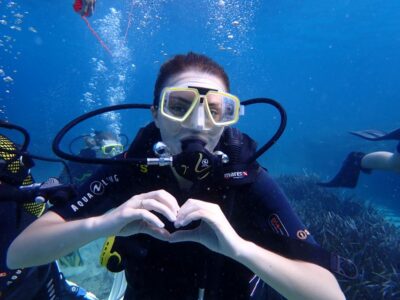
The big draw here is simple: you can try scuba without certification and reach the fish-filled waters of Costa Rica’s Catalina Archipelago in one morning. The payoff may include puffer fish, rays, turtles, eels, dolphins, and white-tip reef sharks.
I like the small group limit of 10 and the caring approach reported from instructors such as Mario. I also like that hotel pickup, equipment, snacks, and two supervised underwater sessions are included. The tradeoff is the long ride out, with a small boat transfer followed by a larger boat trip of roughly 45 minutes to an hour. Rough water and seasickness can also affect the day.
Key points to know before booking
- Two supervised 40-minute sessions: The first includes basic skills and close guidance. The second often feels easier once your breathing settles.
- No certification required: This lets you try scuba before paying for a full certification course, but it does not qualify you to scuba independently.
- Catalina Archipelago wildlife: You might see puffer fish, rays, turtles, eels, dolphins, many reef fish, and white-tip sharks.
- Early start at 6:40 am: Hotel pickup is included, then you check in at Tamarindo Diving Center.
- Boat time matters: Expect a small boat transfer and a longer ride to the underwater site, with conditions affected by wind and tide.
- Plan around flights: Do not schedule this within 18 hours of flying.
What the Tamarindo scuba experience really involves
This is a tryout, not a shortcut to certification. You learn enough to take part in supervised underwater sessions, but you do not leave with a qualification that lets you rent equipment or join regular certified excursions on your own.
That distinction matters. If you have always wondered what breathing underwater feels like, this is a useful first step. If your goal is to become a certified scuba user, treat this as an introduction before enrolling in a proper course.
The day begins early, with a 6:40 am start. Hotel pickup and drop-off are included, which saves you from arranging a taxi before sunrise. You then make your way to Tamarindo Diving Center, located about 200 meters east of Restaurante El Chiringuito on Calle Cruz.
At the center, you check in and get fitted for the supplied wetsuit, fins, mask, and other equipment. Snacks and water are provided during the outing, but lunch is not included. Bring enough food for your own needs, especially since the full outing lasts about five hours.
More first-time dives in the world:
- Discover Scuba Diving
★ 5.0 · 1,676 reviews - Barcelona: PADI Discover Scuba Diving
★ 4.7 · 1,016 reviews - Discover Diving in Curacao
★ 5.0 · 886 reviews
From Tamarindo beach to the Catalina Archipelago
The boat transfer is part of the adventure, but it is also the main source of discomfort for some people. The usual arrangement described for this experience involves a short ride in a smaller boat, followed by a larger boat heading toward the Catalina Archipelago.
The longer ride can take about 45 minutes, depending on wind and tide, and some accounts put the trip closer to an hour. That is not a quick hop from the beach. If you are prone to motion sickness, prepare before you leave. One participant still became sick after using a doctor-prescribed scopolamine patch, so seasickness is a real possibility rather than a minor footnote.
The crew provides snacks and water, but you should think about sun protection, a light layer, and any medication your doctor has approved for motion sickness. The operator cannot provide medication. January can bring windy conditions, so ask about the expected sea state when you book or check in.
Once you reach the area around the Catalina Islands, the long ride begins to make sense. The setting is remote enough to offer a better chance of seeing larger marine life than you might find close to Tamarindo. Conditions can still change, and rough water may reduce comfort or visibility.
Learning the basics before going underwater
The instruction is designed for people without prior experience. You learn how to use the regulator, how the mask covers your nose, how to breathe, and how to manage basic equipment in the water.
That mask detail catches many first-timers off guard. You cannot breathe through your nose, so your first job is to stay calm and breathe slowly through your mouth. The instructors keep watch over your air supply, buoyancy equipment, and general comfort while you get used to the feeling.
The first session usually includes basic skill work and a close assessment of how you handle the equipment. You may be escorted underwater by an instructor at first. This is helpful if the idea of breathing below the surface makes you anxious.
The operator also offers a one-day format for people who have prior experience or feel confident with scuba basics. In that case, theory and confined-water practice can take place on or around the boat on the day of the outing. If you are completely new and expect anxiety, the two-day option, with pool practice first, may be the better choice.
That extra practice is not wasted time. One person on a boat could not complete the second session because anxiety caused them to use too much air before going under. The lesson is plain: confidence matters as much as physical fitness.
Two 40-minute underwater sessions
The underwater portion is usually split into two sessions of about 40 minutes each. The first is less about wandering freely and more about proving that you can breathe, clear your head, and respond to instructions.
You might spend part of that first session practicing basic skills while the instructor checks your comfort and air use. This can feel like a lot to absorb, especially if you have never worn a mask and regulator before. The upside is close supervision. Your instructor can correct problems before they become frightening.
The second session often feels easier. Your body has had time to adjust to the breathing pattern, the mask, and the sensation of weightlessness. If the conditions are good and you are comfortable, you may have more freedom to move alongside the instructor rather than being physically guided the entire time.
The depth described in one account reached about 15 to 20 meters. Actual conditions and depth can vary, and the operator decides what is suitable for the group. Certified participants may be assigned to a deeper session, while beginners remain with instructors at an appropriate level.
This is one reason the small group limit matters. A maximum of 10 people does not guarantee a private outing, but it should make it easier for instructors to keep track of different ability levels. The day may also include people who are certified and others who are snorkeling only.
A few more dives around the world worth comparing
- Great Barrier Reef Snorkeling and Diving Cruise from Cairns
★ 4.5 · 3,714 reviews - First-Time Scuba Diving in Honolulu + Free Videos
★ 5.0 · 3,123 reviews - Oahu Shark Dive
★ 5.0 · 2,903 reviews - Silfra: Diving Between Tectonic Plates – Meet on Location
★ 5.0 · 2,139 reviews
What you might see around Catalina
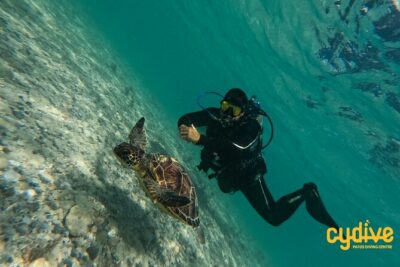
Marine life is the strongest reason to accept the long boat ride. The animals reported on this outing include puffer fish, leopard rays, stingrays, turtles, eels, large schools of fish, dolphins, and white-tip reef sharks.
You should keep expectations sensible. Wildlife is never guaranteed, and sea conditions affect what you can see. Still, the range of sightings gives this trip more appeal than a basic practice session in a sheltered bay.
The first session may focus on your skills, leaving the second for more relaxed observation. White-tip reef sharks, rays, and turtles can make a lasting impression, especially when you are still getting used to moving through the water.
You may also see dolphins from the boat rather than underwater. That distinction matters, but either way, keep your eyes open during the ride. The boat journey is not just dead time between lessons.
How instructors handle first-timers
The strongest part of the experience is the personal support underwater. Instructors are expected to monitor your breathing, air supply, buoyancy vest, and comfort throughout the sessions.
Mario receives specific praise for explaining what beginners need to know. Other accounts describe instructors as kind, patient, upbeat, and attentive with children and adults. That tone matters because fear is common during a first scuba attempt.
Good instruction cannot remove every challenge. One account raised concerns about explanations in English, so communication may not feel equally clear to everyone. If you are unsure about a hand signal, equipment step, or safety rule, ask the instructor to repeat it before entering the water.
Do not let embarrassment rush you. You are paying for a supervised introduction, not a test of bravery. Tell the crew if you feel cold, panicked, seasick, or uncomfortable with the mask. Calm breathing is the key skill, and the instructors can help only if they know what is happening.
Price, group size, and what you receive for $195
At $195 per person, this is not a cheap casual water outing. It includes hotel pickup and drop-off, scuba equipment, instruction, snacks, boat transport, and two underwater sessions. You are paying for access to a remote marine area and for the staff required to supervise people who are not certified.
I think the price makes the most sense if you want a real first taste of scuba and would otherwise need to book equipment, boat transport, and instruction separately. It is less attractive if you mainly want a short snorkeling trip, especially since the boat ride takes a sizable part of the five-hour schedule.
The group maximum is 10 people. That is small enough to be reassuring, though the actual feel of the day depends on how many are beginners, certified participants, or snorkelers. The crew may divide people according to experience and comfort.
Hotel transfers add practical value, especially with a 6:40 am start. You should still confirm the pickup details and allow enough time to eat beforehand, since lunch is not part of the package.
Health, fitness, and flight planning
You must complete a health questionnaire before entering the water. Conditions such as asthma and heart problems may prevent participation, so consult your doctor if you have a medical concern.
A moderate level of physical fitness is required. You should be comfortable handling boat transfers, wearing scuba equipment, and spending time in open water. The trip is not presented as suitable for every physical ability level, so ask the operator about your specific needs before booking.
Do not schedule this experience within 18 hours of flying. That rule applies after scuba because changes in pressure can create serious health risks. Plan the activity early enough in your trip to leave a full buffer before your departure flight.
The same planning applies if you intend to fly into Costa Rica and go directly to Tamarindo. Check your arrival and departure times carefully. A five-hour outing plus the no-fly window can shape several days of your itinerary.
Who will enjoy this most
This suits you if you are curious about scuba but do not yet want to commit to certification. It is also a good fit for families with older children who meet the operator’s health and fitness requirements, provided they are comfortable listening carefully and staying calm in the water.
Certified participants can join too, but the experience may feel basic if you want advanced sites or longer underwater time. The operator separates participants by experience when needed, so ask how your group will be organized.
It is a weaker match if you dislike boats, get severe motion sickness, or want a quick activity close to town. The Catalina trip takes time, and rough water can affect both the ride and the quality of the underwater session.
If anxiety is your main concern, consider the two-day option with pool practice. The one-day format can work well, but it moves quickly from briefing to open water. A little extra practice may make the difference between enjoying the second session and sitting it out.
Booking, cancellation, and practical timing
You can cancel for a full refund up to 24 hours before the start time. Changes or cancellations made less than 24 hours before departure are not accepted for a refund.
The activity ends back at the meeting point, while hotel pickup and drop-off are included. Confirmation is provided when you book. This experience is commonly reserved about 15 days ahead, so booking earlier is sensible if your schedule is tight.
Before paying, check three things: your flight times, the likely sea conditions, and whether you want the one-day or two-day format. Those choices will have a bigger effect on your experience than the small details of the meeting point.
FAQ
Do I need scuba certification to join?
No. This experience is designed to let you try scuba without certification. It does not certify you for independent scuba use.
How long does the experience last?
The outing lasts about five hours, including transport, instruction, boat travel, and underwater sessions.
What time does it start?
The listed start time is 6:40 am.
Where does the activity begin?
It begins at Tamarindo Diving Center, 200 meters east of Restaurante El Chiringuito on Calle Cruz in Tamarindo.
Is hotel pickup included?
Yes. Hotel pickup and drop-off are included, and the activity ends back at the meeting point.
What equipment and food are included?
Scuba equipment, snacks, and hotel transportation are included. Lunch is not included.
How many underwater sessions will I do?
The experience includes two supervised sessions of about 40 minutes each.
Can I scuba close to my flight?
No. Scuba within 18 hours of flying is not recommended. You must also complete a health questionnaire, and some medical conditions may prevent participation.
Should you book this Tamarindo experience?
Book it if you want a serious first look at scuba, value close supervision, and are willing to spend much of the morning on boats to reach the Catalina Archipelago. The marine life can be impressive, and the combination of equipment, instruction, transfers, and two underwater sessions gives the $195 price a fair case.
Think twice if you are prone to seasickness, uneasy in open water, or hoping for a short and simple beach activity. Ask about the two-day pool option if you are anxious, and leave at least 18 hours between the activity and any flight. With those points handled, this is a useful and memorable introduction to Costa Rica’s underwater world.
Just added around the world
- Zakynthos: Scuba Diving Experience with Underwater Photos★ 4.5 · 31 reviews
- Zanzibar 1 Day Scuba Diving Course for Beginners with Lunch★ 5.0 · 9 reviews
- Zanzibar : 3-Day PADI Open Water Scuba Diving Adventure★ 4.9 · 6 reviews
- Oahu: Waikiki Discovery Scuba Diving for Beginners★ 4.8 · 99 reviews
- Zanzibar: 1 Day Blue Trip with 2 Stunning Scuba Dives★ 4.9 · 4 reviews
- West Palm Beach: Beginner Scuba Diving Adventure with Videos★ 4.8 · 99 reviews
- Villasimius: Capo Carbonara First Time Dive with Instructor★ 4.9 · 50 reviews
- Visit Cham Islands & Snorkelling & Scuba Diving★ 3.8 · 17 reviews
Discover Scuba Diving, compared.
Half-Day Scuba Diving Tour – Discover Scuba Diving!
Read our review →
2 Days Discover Scuba Diving in Nusa Lembongan – Scuba Initiation
Read our review →