
REVIEW · THE USA
Miami Beach: Guided 2-Tank Reef and Wreck Dive Trip
Miami’s best underwater contrast comes in one morning or afternoon: a historic wreck followed by a reef filled with fish, crabs, rays, and perhaps a turtle. You travel by boat from Haulover Park, with a certified guide choosing suitable sites from more than 50 local options.
I like the practical setup. The boat, weights, filtered water, snacks, and parking are included, and the small-group format should feel calmer than a crowded cattle boat. I also like the two different descents: a wreck gives you structure and stories, while a reef offers more natural sea life.
The main drawback is cost after the $107 booking price. Basic scuba gear and tanks cost extra, so a diver without personal equipment can pay considerably more. You also need certification and a scuba trip within the past 12 months.
Key points at a glance
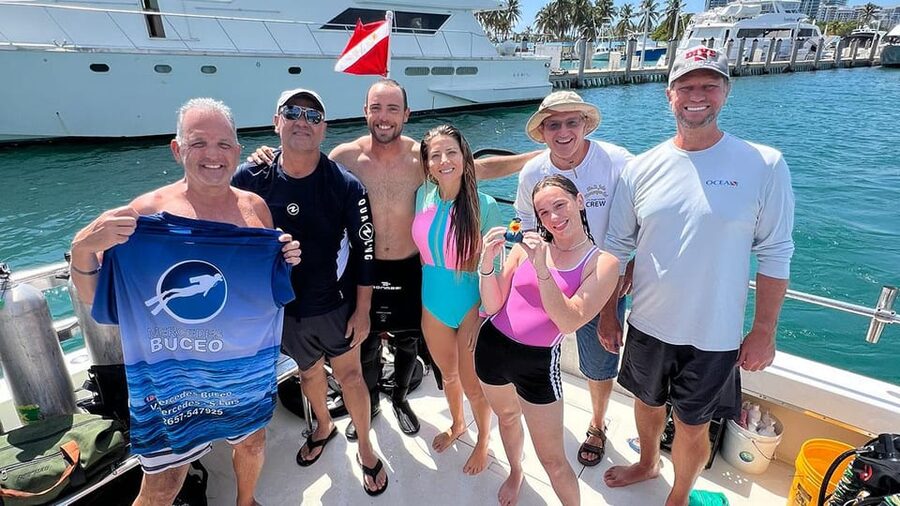
- Two contrasting underwater sites: Visit one wreck and one reef during two one-hour underwater sessions.
- Small-group boat setting: The trip is designed for a more personal pace, with a certified guide leading the way.
- Useful inclusions: Boat transport, weights, parking, water, cookies, and chips are covered.
- Gear costs extra: A full rental package can add a noticeable amount to the advertised price.
- Easy marina meeting point: Check in aboard the Sea Mi Amor at slip E15 in Bill Bird Marina.
- Good marine-life range: Look for parrotfish, groupers, moray eels, octopus, lobsters, stingrays, and turtles.
Two Miami sites, one four-hour outing
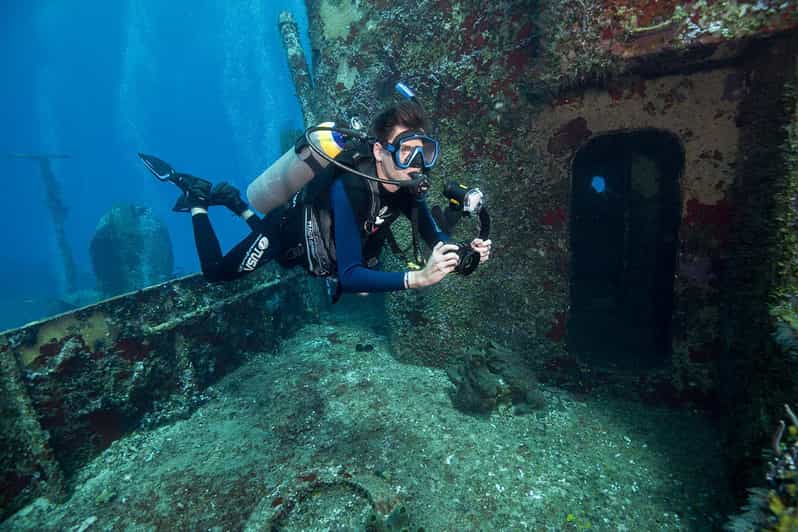
This trip works because it gives you two different views of the Atlantic in a single half-day. You do not spend the whole outing looking at one type of seafloor. One stop focuses on a sunken ship, while the other centers on a natural reef system.
The exact wreck and reef can vary. Miami has more than 50 possible sites, with locations suited to different depths, currents, and conditions. The crew can choose from deep wrecks, protected wreck zones, drift routes, and reefs that range from about 20 to 90 feet.
That flexibility matters. The ocean does not follow a fixed sightseeing schedule, and a site that looks ideal on a map may not suit the day’s conditions. A guide who knows the local sites can make a better choice than a rigid itinerary.
You should think of the outing as a guided recreational trip, not a private expedition to one guaranteed wreck. The supplied details promise one wreck and one reef, but they do not name the exact sites or guarantee particular animals.
More wreck dives near the USA:
- Wreck and Bridge Span Dive for Certified Divers
★ 5.0 · 521 reviews - Certified Diver: 2-Tank Deep Wreck and Shallow Reef Dive Off Oahu
★ 5.0 · 331 reviews - Waikiki 2 Tank World Class Wreck SCUBA Diving – Certified Only
★ 4.5 · 205 reviews
Meeting the Sea Mi Amor at Haulover Park
Your starting point is Bill Bird Marina at Haulover Park, 10800 Collins Ave, Miami Beach, Florida 33154. Check in at slip E15 and look for the Sea Mi Amor.
The address can be confusing because ride-hailing directions should use Kelley Fishing Fleet, 10800 Collins Ave, Bal Harbour, Florida. From there, walk south toward slip E15. I would allow extra time for this final walk, especially if you are carrying a bag with towels and personal items.
Parking is included, which is useful at a marina where parking fees can quietly add to the cost of an outing. The boat ride itself takes about 45 minutes at the beginning and another 45 minutes on the return. That gives you time to settle in, listen to the crew, and get ready before the first descent.
English and Spanish are available. The trip is also limited to small groups, a detail worth noting if you prefer personal attention when checking equipment or reviewing safety procedures.
What the first 45 minutes on the boat are like
Once everyone is checked in, the Sea Mi Amor heads out from the marina. The first boat segment takes roughly 45 minutes, so this is not a walk-onshore snorkeling stop. You are committing to a proper boat-based scuba outing.
The supplied plan does not specify a formal classroom session, and this is not a beginner lesson. You must already be certified and have gone scuba diving within the previous 12 months. That recent experience requirement helps explain the trip’s pace: the crew can focus on the sites instead of teaching basic underwater skills.
Use the boat ride to organize your mask, fins, exposure suit, regulator, and buoyancy gear if you are renting. Ask the crew about the first site, depth, current, and order of the two descents. Those details are especially useful if you are more comfortable on reefs than around wrecks, or vice versa.
Filtered water, refreshments, cookies, and chips are included. They are simple provisions, but they are welcome after a saltwater swim and during the surface interval. Bring swimwear and a towel. The provided information does not promise a full meal, so eat beforehand if you need substantial food.
The first one-hour session: a Miami wreck
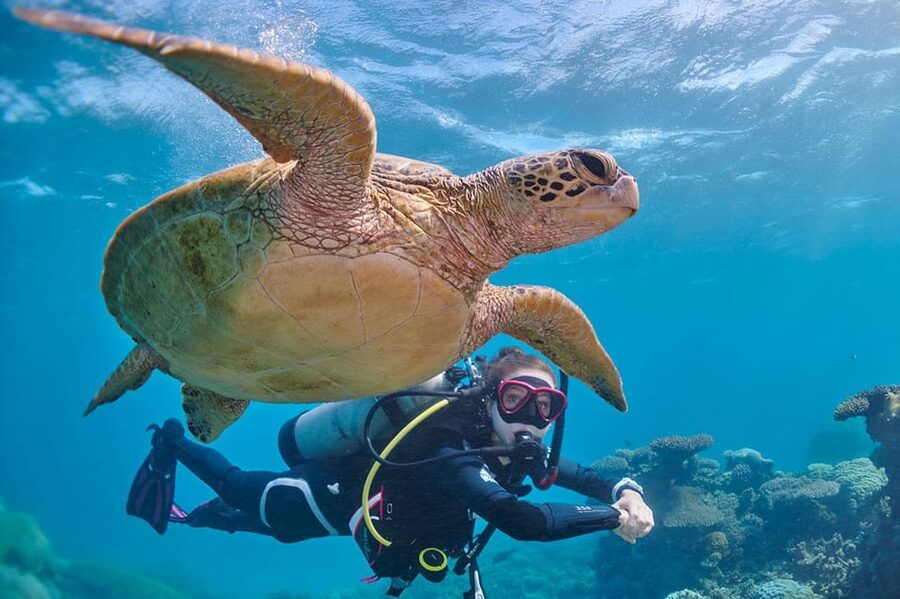
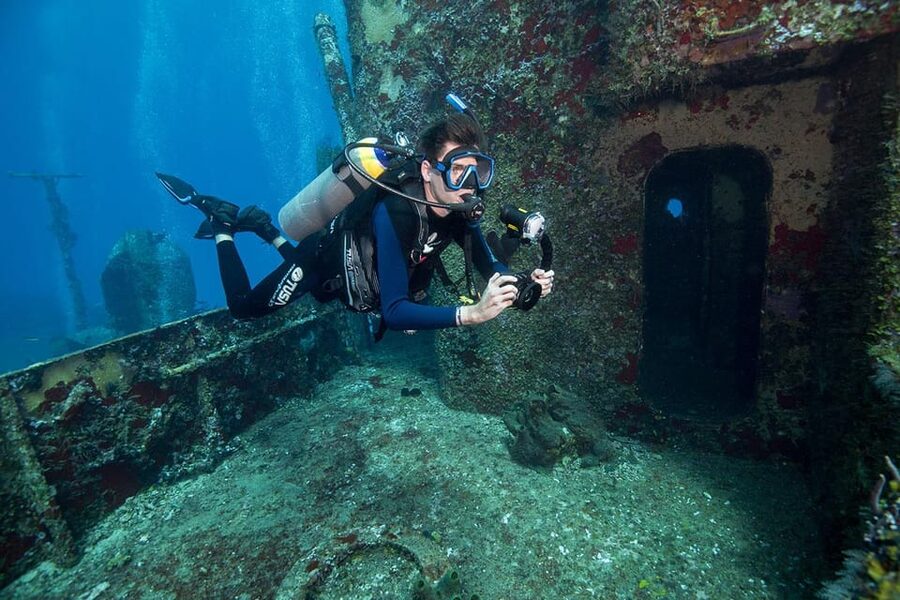
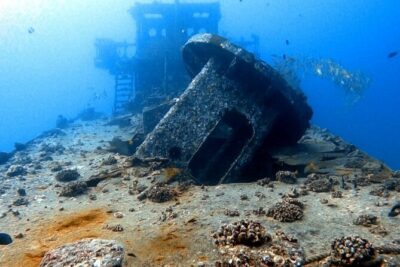
The first underwater stop is built around a shipwreck. Wrecks give you more than fish. You can trace the outline of a vessel, inspect openings and structures, and see how marine life has taken over a human-made object.
Some Miami wreck sites are protected zones. That can mean more fish around the structure and stricter rules about touching, collecting, or entering areas. Follow the guide’s instructions closely, particularly near metal edges, lines, and enclosed spaces.
The supplied details do not identify the wreck, so you should not book expecting a particular ship or a specific depth. The available sites range from shallow to deep, and the crew chooses from local conditions and the group’s abilities.
You may encounter grunts, snappers, groupers, moray eels, triggerfish, trumpetfish, and smaller creatures sheltering around the wreck. Arrow crabs, cleaner shrimp, lobsters, squid, and octopus are also possible. Fish can be more interesting around a wreck because the structure provides shelter, shade, and places to feed.
The underwater portion lasts about one hour. That is enough time for a substantial visit, though the actual bottom time depends on depth, air consumption, and safety requirements. If you are a newer certified diver, do not assume you will use the entire hour at maximum depth.
More two-tank boat dives from the USA:
- 2 Tank Lanai Cathedral Scuba Dive Via Boat for Certified Divers
★ 5.0 · 548 reviews - Certified Diver: 2-Tank Shallow Reef Dives off Oahu
★ 5.0 · 278 reviews - Kauai’s Ultimate South Shore 2 Tank Dive (Certified Divers Only)
★ 5.0 · 190 reviews - Kauai’s Ultimate Discover Scuba Dive – OCEAN EXPERIENCE (1 Tank Dive)
★ 5.0 · 186 reviews
The 20-minute move to a natural reef
After the first session, the boat travels for about 20 minutes to the second site. This is a useful break between descents. You can hydrate, snack, change equipment, and let your breathing and pulse return to normal.
The second site is a reef rather than a wreck. Miami’s reef system extends toward the Florida Keys and includes locations from about 20 to 90 feet deep. Some outings may involve a gentle drift, with the current carrying you along while you watch the reef below.
A drift route can be wonderfully easy when conditions cooperate, but it also requires you to stay aware of the guide and the group. Keep track of your position, pay attention to instructions, and avoid treating the current as a substitute for good buoyancy control.
The reef stop gives you a different kind of wildlife encounter. Look for parrotfish, trunkfish, boxfish, damsels, snappers, groupers, trumpetfish, and triggerfish. Cleaner shrimp and arrow crabs may be tucked into cracks, while octopus and squid can disappear quickly if you are not watching carefully.
The reef may also bring larger sightings such as stingrays or turtles. None is guaranteed, and the best approach is to enjoy the full setting rather than chase one animal.
The second one-hour session: reef life at a slower pace
The reef session also lasts about one hour. This is where I would slow down and pay attention to small details instead of covering as much ground as possible.
Parrotfish often add color and movement to a reef, while moray eels may show only a face from a crevice. Cleaner shrimp are tiny, and an octopus can blend into the background until it moves. A guide who knows the site can help you notice animals that are easy to miss while you are managing your own equipment.
You should expect warm water and generally good visibility, according to the trip description, but underwater conditions can still change. Visibility, current, and animal activity are never fully controllable. The guide’s local knowledge is most valuable here, helping the group stay together and make the most of the conditions on the day.
For certified divers, this pairing is more satisfying than two nearly identical reef stops. The wreck gives you a clear point of interest. The reef gives you more open natural habitat and a better chance to watch ordinary sea life behaving on its own terms.
The return boat ride and the real time commitment
The final boat ride back takes about 45 minutes, bringing the total scheduled outing close to four hours. Add time before departure for check-in and equipment setup. You should not plan a tight appointment immediately afterward.
The time includes substantial boat travel, not four hours underwater. You get two sessions of about one hour each, with roughly 90 minutes spent traveling to and from the sites and another 20 minutes moving between them. That breakdown is normal for boat-based scuba, but it is important when comparing this with a shore-based option.
The boat setting is part of the appeal. You can reach sites that are not practical from the beach, and you avoid spending the day walking between shore entry points. The tradeoff is exposure to motion on the water. If you are prone to seasickness, ask the operator what preparation they recommend before departure. The provided information does not state whether medication or special seating is available.
What $107 really covers
The advertised price is $107 per person. That includes the boat, weights, guide, filtered water, refreshments, cookies, chips, and parking. For a certified diver who already owns most equipment, that is a reasonably clear package.
The catch is the separate gear bill. Listed prices per person, per trip, before tax are:
- Mask: $10
- Fins: $10
- Regulator: $30
- Buoyancy compensator device: $25
- Wetsuit: $20
- Air tanks: $26
- Nitrox tanks: $36
Rent every listed item with air and the added cost is $121 before tax, bringing the total to $228 before tax. With Nitrox instead, the listed additions total $131, making the pre-tax total $238. You may not need every item, of course. Many certified divers bring a mask, fins, or computer of their own.
Weights are already included, so you do not pay a separate weight rental charge. Parking is also covered, which makes the final cost easier to estimate than a trip that advertises only a low boat fee.
I would compare the full equipment total, not just the $107 headline price. The trip offers better value if you have your own gear or need only a few rental pieces. It is less of a bargain for a diver renting a complete kit, though the two guided sites and boat access still provide a useful half-day outing.
Who will enjoy this trip most
This outing suits a certified recreational diver who wants a straightforward Miami boat trip with a wreck and reef in the same package. It is particularly appealing if you value a small group, a guide, and an easy marina departure.
It also works for a diver visiting Miami without a car, provided you can arrange transport to the marina. The location is specific and the final walk to slip E15 matters, so do not rely on vague navigation instructions.
The trip is not suitable for children under 10, pregnant women, or people with heart problems. You also need certification and a scuba trip within the previous 12 months. If you have been out of the water longer, this is not the place to treat yourself as current without checking with the operator.
The experience can suit mixed interests within a certified group. One person may prefer wreck structure, while another cares more about turtles, rays, and reef fish. Both get a dedicated one-hour session.
What the strong feedback tells you
The most consistent praise centers on the crew and the way the outing is run. A diver from the United States described the trip as well run and fun, while another called the staff and trip amazing. A German diver specifically praised the relaxed sessions and attractive sites.
That matters because a scuba trip depends on more than scenery. Clear instructions, calm preparation, and a crew that keeps the pace sensible can make the day much easier. Patricia is specifically named in one account praising the quality of service she provided to a father and son, although the available details do not identify her exact role.
The overall score is 4.8 from 13 reviews. Several ratings are brief, including one simply calling the trip perfect, so the score is encouraging but not a substitute for checking the practical details. The more useful pattern is consistent: professional operation, friendly staff, relaxed underwater time, and enjoyable sites.
Booking details worth knowing
You can cancel up to 24 hours before departure for a full refund. A reserve-now, pay-later option is available, which helps if your Miami schedule is still shifting.
Starting times depend on availability. Since the outing takes four hours, check the departure time against flights, restaurant reservations, and other water activities. After two one-hour underwater sessions, I would leave extra time before anything that requires you to be fully dry, rested, and on a strict schedule.
Bring swimwear and a towel. The trip supplies water and light snacks, but no full meal is listed. Plan your equipment rental in advance if you need a mask, fins, regulator, buoyancy compensator, wetsuit, or tanks.
Should you book the Miami two-tank trip?
Book it if you are currently certified, want both a wreck and a reef, and appreciate a guided small-group outing from a marina with parking included. The crew praise is strong, and the two-site format gives you more variety than a single-location session.
Think twice if you need beginner instruction, have not been scuba diving in the past year, or expect the $107 price to include a complete equipment package. Renters should calculate the added gear and tank charges before booking.
For an active Miami morning or afternoon, this is a practical choice. You get local boat access, two distinct underwater settings, and enough structure to keep the day simple without making it feel mass-produced.
FAQ
Where does the scuba trip meet?
Meet at Bill Bird Marina at Haulover Park, 10800 Collins Ave, Miami Beach, Florida 33154. Check in with the Sea Mi Amor at slip E15.
What address should I use for Uber or Lyft?
Use Kelley Fishing Fleet, 10800 Collins Ave, Bal Harbour, Florida. From there, walk south toward slip E15.
How long does the activity last?
The scheduled duration is four hours. It includes about 45 minutes of boat travel to the first site, one hour underwater, 20 minutes to the second site, another one-hour session, and 45 minutes back to the marina.
Is scuba equipment included?
No. The boat, weights, guide, water, refreshments, cookies, chips, and parking are included, but scuba equipment and tanks cost extra.
How much do the tanks cost?
Air tanks cost $26 per person per trip before tax. Nitrox tanks cost $36 per person per trip before tax.
Do I need to be certified?
Yes. You must be scuba certified and have gone scuba diving within the last 12 months.
Which languages are available, and what is the cancellation policy?
The activity is offered in English and Spanish. You can cancel up to 24 hours in advance for a full refund.
More Reef Dives in the USA
- Incredibly Fun Coral Reef Giant Sea Turtles 4hour Boat Scuba Tour
★ 4.5 · 300 reviews - Oahu: Wreck & Reef Scuba Dive for Certified Divers
★ 4.8 · 17 reviews - Oahu: Shallow Reef Scuba Dive for Certified Divers
★ 5.0 · 11 reviews - Florida Keys: Scuba Diving & Snorkeling Reef Trip
★ 5.0 · 4 reviews
Just added around the USA
- Panama City Beach: Beginners Scuba Diving Tour★ 4.6 · 23 reviews
- Oahu: Wreck & Reef Scuba Dive for Certified Divers★ 4.8 · 17 reviews
- Oahu: Shark Cage Diving Experience★ 4.6 · 46 reviews
- Oahu: Shallow Reef Scuba Dive for Certified Divers★ 5.0 · 11 reviews
- Oahu Night Dive: Adventure for Certified Divers★ 3.6 · 6 reviews
- Oahu: Cageless Shark Dive Adventure★ 4.9 · 60 reviews
- Oahu: Beginner SCUBA Dive at Electric Beach★ 4.8 · 10 reviews
- Kauai: Morning 2 Tank Boat Dive for Experienced Divers★ 5.0 · 5 reviews
Wreck Diving, compared.
Wreck and Bridge Span Dive for Certified Divers
Read our review →
Certified Diver: 2-Tank Deep Wreck and Shallow Reef Dive Off Oahu
Read our review →
Waikiki 2 Tank World Class Wreck SCUBA Diving – Certified Only
Read our review →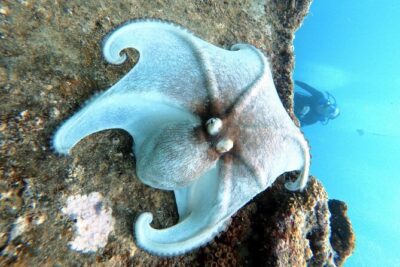
Private First-Time Dive on Aruba’s Reef and Wreck Site
Read our review →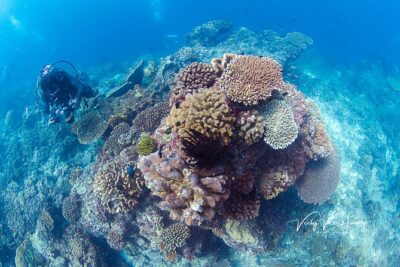
Bali Diving Day Trip-Manta Point/Tulamben Shipwreck-Fun Dive
Read our review →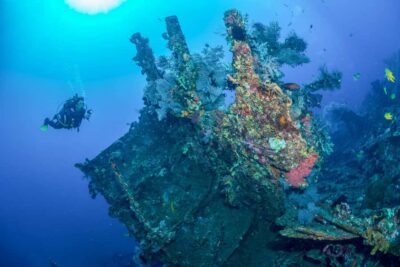
Bali: Tulamben Bay and the USAT Liberty Wreck Dive
Read our review →
Funchal: Advanced Scuba Diving Afonso Cerqueira Wreck
Read our review →Lists this dive appears in