
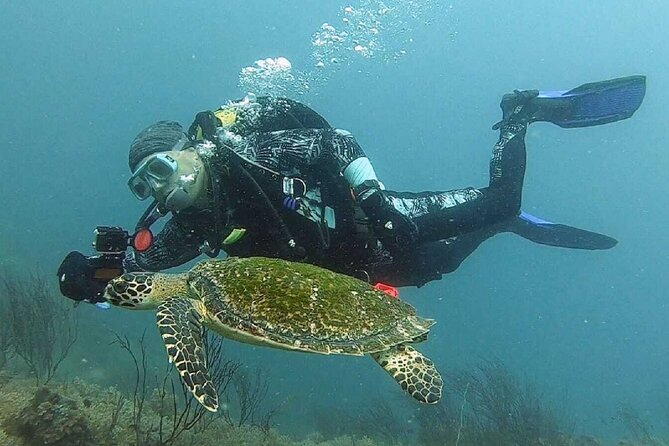
REVIEW · KOH TAO
Become certified diver in 3 days – PADI Open Water Diver course on Koh Tao
Koh Tao’s three-day PADI course takes you from first-time beginner to certified scuba diver, with classroom work, shallow-water training, and four open-water sessions around Nang Yuan Island. You study at Scuba Birds, then put each skill to work at sea under instructor supervision.
I like the clear progression: you learn equipment assembly and buddy procedures before heading into deeper water, and the course ends with a PADI certificate and personal logbook. I also like the small maximum group of 10 and the easy walk from Mae Haad Pier.
The main consideration is the pace. Three days is efficient, but the schedule is full, with study, quizzes, an exam, and several hours on the water each day. You need to be ready for an active course, not a casual island outing.
Key points to know before booking
- Three full days of training: Study, practical instruction, a final written exam, and certification are built into the schedule.
- Four sea sessions included: The first two reach a maximum of 12 meters, while the final two reach 18 meters.
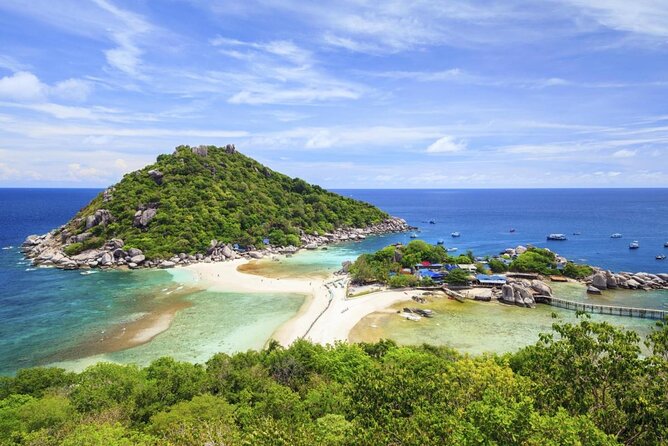
- Training takes place near Nang Yuan Island: The setting gives you a real underwater introduction rather than a pool-only lesson.
- Equipment is provided: You use supplied scuba gear for the practical sessions.
- A certificate and logbook are included: You leave with a way to record future underwater trips.
- Small-group format: The maximum group size is 10 people, which matters when you are learning unfamiliar skills.
Why Koh Tao works for a first scuba certificate
Koh Tao is a practical place to begin scuba training because the course combines instruction on land with time in the Gulf of Thailand. You are not simply shown how to use a mask and tank, then sent out for a quick taste. The three-day plan gives you several stages of practice.
The first stage is academic. You work through five chapters of the PADI Open Water Diver manual, with five related video sections available to support the reading. You then complete five knowledge reviews, quizzes, and other study tasks before the final exam.
That may sound like a lot for an island holiday, and it is. But the theory matters. You need to understand how the equipment works, how to communicate with a buddy, and how to respond to common underwater situations. The course is more useful if you treat the study time as part of the experience instead of an interruption to it.
The training center is Scuba Birds PADI Dive Center at 24 Mae Haad, a short walk from the pier. That location is a real convenience if you arrive by boat or are staying around Mae Haad. You do not need to arrange a separate transfer just to begin the course.
More Scuba Diving in Koh Tao
- Open Water Course – Become certified diver in 3 days
★ 5.0 · 1,137 reviews - Ko Tao: Try Scuba Diving 1-Day Experience
★ 4.8 · 452 reviews - Basic Diver ( One Day Experience)
★ 5.0 · 205 reviews
Day one: five chapters, equipment practice, and shallow water
The first day begins with theory at Scuba Birds. You work through the first five manual chapters, watch the matching training videos if needed, and complete the five knowledge reviews. The scheduled classroom portion is about two hours, but you should expect the learning process to continue as you prepare for the practical work.
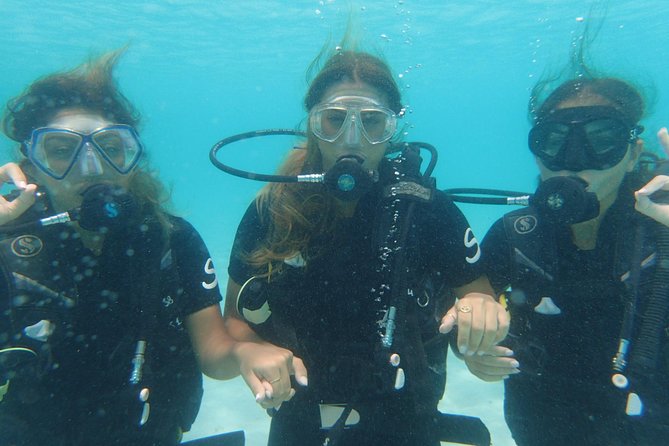
The most important part of day one comes at Nang Yuan Island. The first session takes place in shallow water, where you learn the basic mechanics of scuba. This includes assembling your equipment, following buddy procedures, and practicing core skills in a controlled setting.
That shallow-water start is especially useful if you have never used scuba equipment before. A tank, regulator, mask, fins, and buoyancy equipment can feel awkward at first. You want time to get used to breathing through the regulator and moving with the gear before the course asks you to go farther from shore or into deeper water.
The day includes about five hours at Nang Yuan Island. That is a long practical session, so plan on being tired by the end. The schedule is not designed around a quick scenic stop and a swim. Its purpose is to give you enough time to repeat skills until they feel manageable.
The exact instructor can vary, but Dominik Maier is identified as one instructor for this course. His teaching style is described as humorous but firm when needed. That combination can help when you are nervous, since a calm mood is useful, but safety instructions still need to be taken seriously.
Day two: two open-water sessions to 12 meters
Day two begins with another classroom period of about two hours. You continue with theory, knowledge reviews, and quizzes, then head out for two open-water sessions between 10 a.m. and 3 p.m.
The maximum depth on this day is 12 meters. That limit gives you a sensible bridge between shallow-water practice and the deeper final sessions. You repeat the skills from day one in open water, where conditions feel more real and where you must manage your equipment, position, and communication with your buddy at the same time.
This is also the day when the course begins to feel less like a lesson in a training area and more like actual underwater travel. You may see coral and marine life in the Gulf of Thailand, but the main goal remains skill practice. The schedule should not be judged only by how much sightseeing you get.
The two sessions are valuable because repetition builds comfort. You do not have to master every task during the first attempt. You get another chance to practice the same skills in a new setting, with the instructor watching your progress.
Still, day two can be demanding. You have study time and several hours on the water, with two sessions separated by the needs of the group and the boat schedule. Bring patience. The course works best when you focus on steady improvement rather than trying to rush through each task.
Day three: final exam, deeper water, and certification
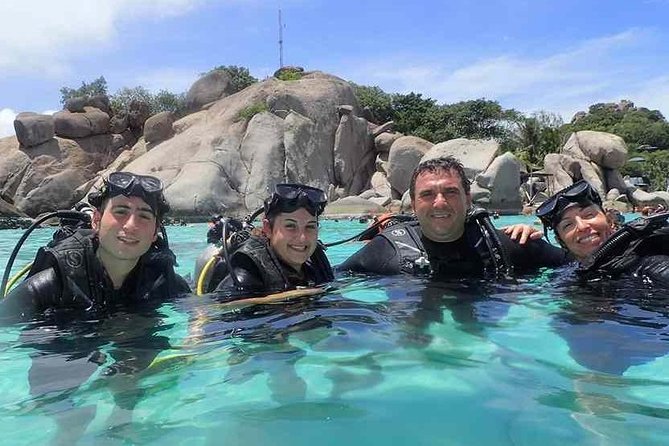
The final day starts early. Theory begins at 8 a.m., followed by the written exam. You then head to Nang Yuan Island for two more open-water sessions from about 9 a.m. to 2 p.m.
The maximum depth rises to 18 meters on these final sessions. That is the standard depth limit stated for the completed open-water training, and it gives you a clear sense of how the course develops: shallow water first, then 12 meters, then 18 meters.
You continue practicing the required skills while working toward a more complete understanding of your equipment and procedures. The instructor checks your progress as you move through the practical requirements. Once those are complete, the course finishes with the certification process.
The day is not merely a test of memory. You must bring together the theory, equipment handling, buddy work, and underwater skills from the first two days. If you are anxious about the exam, pay attention during the classroom periods and complete the assigned study before the final morning.
Certification procedures are completed at the end of the day. You receive the included PADI diver certificate, which is designed to be used for scuba trips around the world. You also take home a diving logbook, giving you a place to record later sessions and build a personal record of your experience.
More dives for certified divers in Thailand:
- 3 Fun Dives for Certified Diver Phi Phi islands &Shark Point
★ 4.9 · 40 reviews - Scuba Diving Kata Beach Night Dive for Certified Divers
★ 4.5 · 14 reviews - From Phi Phi: Half-Day Trip for Certified Divers (2 Dives)
★ 5.0 · 4 reviews - 3 Fun Dives for Certified diver at Racha Yai/Noi
★ 5.0 · 4 reviews
What the four sea sessions actually offer
The four open-water sessions are the heart of the course. They give you more than a brief introduction, but you should keep your expectations in check. This is a certification program first, and a sightseeing trip second.
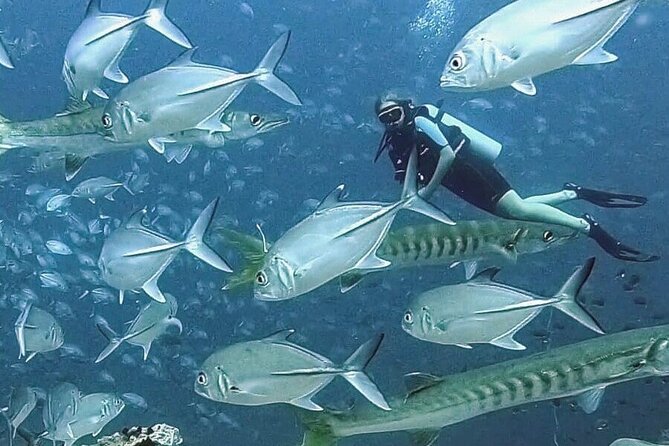
The setting around Nang Yuan Island adds a strong sense of place. The Gulf of Thailand provides the water environment, and the course description points to coral and marine life as part of the experience. Conditions can affect what you see, so the most reliable benefit is the training itself.
The depth progression is easy to understand:
- Day one uses shallow water for basic skills.
- Day two includes two sessions to a maximum of 12 meters.
- Day three includes two sessions to a maximum of 18 meters.
You should also note that the first day includes a confined-water session, while the later days move into open water. That structure helps reduce the shock of going straight from a classroom to a full sea session.
Provided scuba equipment is included for the practical work. This saves you from arranging a separate rental package, and it means the class can teach you how to assemble and use the equipment as part of the training. You should still ask the center about personal items or clothing requirements before arrival if you are unsure, since those details are not specified here.
The value of the $375.70 price
At $375.70 per person, the price should be judged as a three-day training package, not as a single boat trip. It includes the instruction, classroom work, practical training, provided scuba equipment, four open-water sessions, the PADI certificate, and the logbook.
That is a stronger value proposition for someone who genuinely wants certification. You are paying for a recognized qualification and a structured introduction to scuba, not just an afternoon under the water. The certificate can be used to pursue future scuba trips around the world, which gives the course value beyond your time on Koh Tao.
The price is less compelling if you only want a relaxed marine-life outing. You spend time reading, completing knowledge reviews, taking quizzes, and sitting a written exam. Someone looking for a short recreational activity may prefer a simpler experience, though that option is not the product described here.
The maximum group size of 10 also helps explain the value. It is not a private course, but it is limited enough to give the instructor a workable group for teaching basic procedures and checking skills. Your experience can still depend on the group’s pace, comfort level, and ability to stay on schedule.
Practical planning for three demanding days
The meeting point is Scuba Birds PADI Dive Center in Mae Haad, and the activity ends back there. The center is within easy walking distance of the pier, which simplifies arrival and departure. The stated start time is 9 a.m., although the third day has an 8 a.m. theory session, so plan around the earlier start during the course.
The total schedule varies by day. Day one combines about two hours at the center with around five hours at Nang Yuan Island. Day two has about two hours of study and five hours for two sea sessions. Day three includes one hour of theory, four hours at Nang Yuan Island, and the certification process.
You should protect these three days from other major plans. A packed island itinerary could make the course harder than it needs to be, especially after the long practical sessions. Give yourself time to study and arrive ready for the next morning.
The course is listed as suitable for most people, with a maximum of 10 participants. It is also near public transportation. Confirmation is provided at booking, and the mobile ticket makes access straightforward.
Weather matters. The activity requires good conditions, and poor weather can lead to a new date or a full refund. You can cancel for a full refund up to 24 hours before the scheduled start time, but changes or cancellations inside that window are not accepted.
Who will get the most from this course
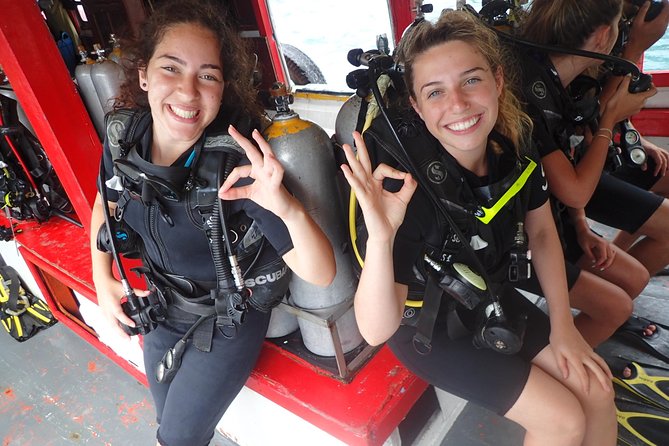
This course suits you if you want a recognized beginner qualification and can set aside three focused days. It is especially useful if you expect to scuba again, since the certificate and logbook give you something practical to carry into future trips.
It also suits a first-timer who wants a clear learning path. The shallow-water session, two 12-meter sessions, and two 18-meter sessions create a logical build-up. If you are nervous, an instructor such as Dominik Maier, described as both reassuring and firm, may help you stay calm while still respecting the rules.
You may want to reconsider if you have only a small window on Koh Tao or mainly want sightseeing. The course has a real academic component, and the daily schedule leaves less room for an unplanned beach day.
Should you book the Koh Tao PADI course?
Book it if your goal is certification, not just a one-time underwater activity. The price includes the key pieces you need: instruction, equipment, four open-water sessions, a PADI certificate, and a logbook. The location near Mae Haad Pier and the maximum group of 10 make the logistics easier.
I would choose this course for a beginner who can commit to three busy days and is willing to study. I would skip it only if your schedule is too tight, your interest stops at a single short swim, or you want a mostly relaxed island excursion. For a proper first step into scuba, this is a focused and useful Koh Tao option.
FAQ
How long does the PADI course take?
The course lasts approximately three days. It combines classroom study, shallow-water instruction, four open-water sessions, a written exam, and certification procedures.
Where does the course begin?
The course begins at Scuba Birds PADI Dive Center at 24 Mae Haad, 21, Tambon Ko Tao, Amphoe Ko Pha-ngan, Surat Thani 84280, Thailand.
Where does the activity finish?
The activity ends back at the meeting point, Scuba Birds PADI Dive Center.
What time does the course start?
The stated start time is 9 a.m. The third day includes theory at 8 a.m., so that day begins earlier than the general start time.
How many open-water sessions are included?
Four open-water sessions are included. Two take place on day two, with a maximum depth of 12 meters, and two take place on day three, with a maximum depth of 18 meters.
Is scuba equipment provided?
Yes. The course provides scuba equipment for the open-water sessions.
Do I receive a certification?
Yes. The course includes a PADI diver certificate after you complete the required theory and practical training.
Do I receive a logbook?
Yes. You take home a diving logbook to record your future sessions.
What happens if the weather is poor?
The activity requires good weather. If it is canceled because of poor conditions, you can choose a different date or receive a full refund.
More 3-Day Experiences in Thailand
- From Phuket: 3-Day SSI/PADI Open Water Diver Certification
★ 5.0 · 24 reviews - Koh Chang: 3-Day PADI Open Water Scuba Dive Course
★ 5.0 · 15 reviews - Koh Samui: 3-Day PADI Open Water Diver Course
★ 5.0 · 2 reviews - Ko Tao: 3-Day Open Water Scuba Diving Course
★ 5.0 · 2 reviews
More Dive Courses in Thailand
- Full-Day Beginner Scuba Course with Private Tuition, Racha Yai
★ 5.0 · 368 reviews - La Bombona Diving Koh Tao Open Water Course
★ 5.0 · 172 reviews - Padi open water diver course, become a diver in 3 days
★ 5.0 · 113 reviews - Ko Tao: Open Water Scuba Diving 4-Day Course
★ 4.7 · 60 reviews
Just added around Thailand
- Phuket: Try SCUBA DIVING Full Day Experience 2 Dives★ 5.0 · 9 reviews
- Phuket Scuba Diving Racha Islands 1-3 Dives For All Levels★ 4.6 · 3 reviews
- Phuket: Try SCUBA DIVING Full Day Experience 3 Dives★ 5.0 · 5 reviews
- Phuket: Racha Island Snorkeling or Scuba Diving Tour★ 4.3 · 70 reviews
- Phuket: SCUBA Diving Day Trip King Cruiser, Shark Point, KDM★ 5.0 · 2 reviews
- Phuket: Khai Islands Tour Or Scuba Diving Options★ 4.7 · 17 reviews
- Phuket: Racha Island and Coral Islands + Scuba Beach Dive★ 4.3 · 55 reviews
- Try Scuba Diving in Racha Yai/noi: 2 Dives for Non-Certified★ 4.8 · 11 reviews
Scuba Diving Courses, compared.
Open Water Course – Become certified diver in 3 days
Read our review →
Heraklion: Beginner Scuba Diving Lesson with PADI Instructor
Read our review →
Discover Scuba Diving with No Certification in St Thomas
Read our review →
Try Dive – PADI Discover Scuba Diving in Tenerife
Read our review →
Lists this dive appears in