
REVIEW · KOH TAO
Ko Tao: Open Water Scuba Diving 4-Day Course
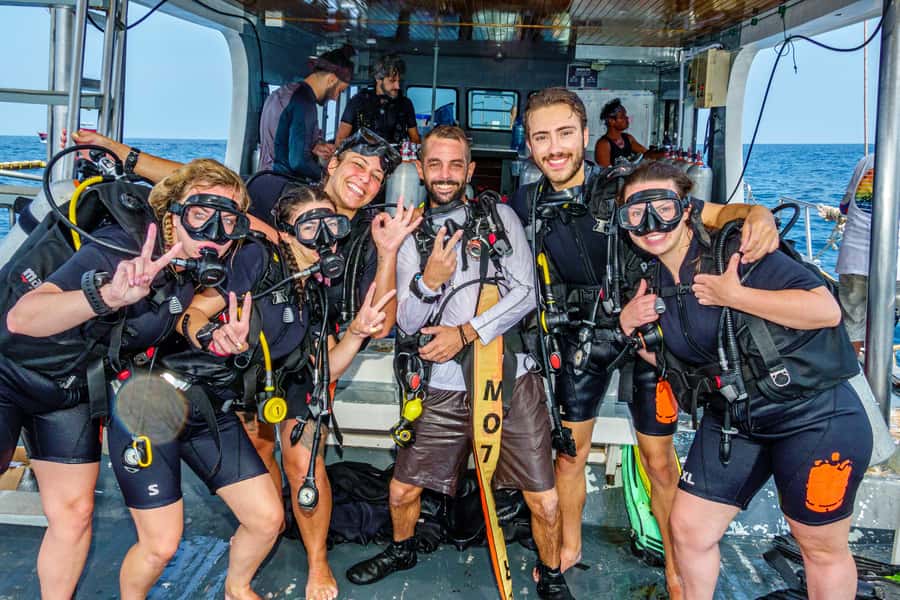
Ko Tao’s best introduction to scuba starts in a swimming pool, then moves into the Gulf of Thailand for four ocean sessions. You learn mask clearing, regulator recovery, emergency skills, navigation, and safe breathing before setting out for reef fish, moray eels, stingrays, and perhaps a whale shark.
I like the calm step-by-step format, and I like that the final qualification lets you scuba to 18 meters anywhere in the world. The instructors also get high marks for patience, especially with nervous beginners. The main drawback is the schedule: this is a serious four-day commitment, with an early 7:45 AM start on the last day.
Key points to know before booking
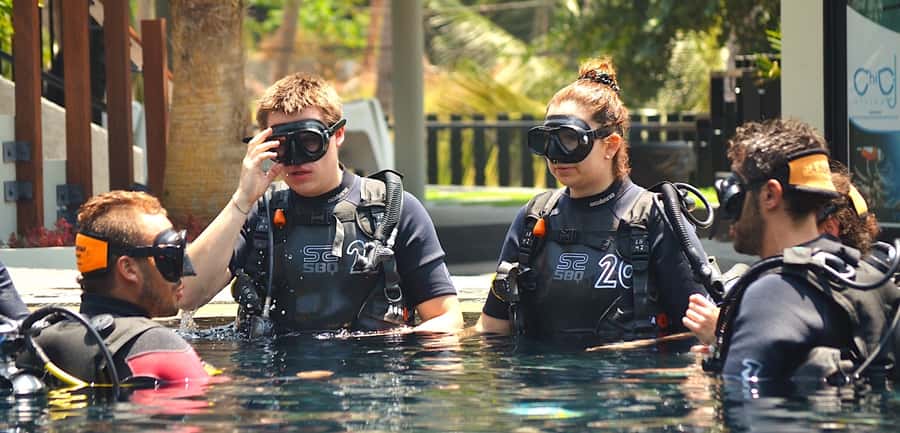
- Pool training comes first: You practice essential skills in a controlled setting before entering the sea.
- Four ocean sessions: The course includes two open-water sessions on the third day and two more advanced sessions on the fourth.
- Maximum depth of 18 meters: Your certification is designed for open-water scuba to this depth.
- Ko Tao sea life: Look for pufferfish, moray eels, stingrays, reef fish, barracuda, and queen fish. Whale sharks are possible but never promised.
- Patient instructors: Adrian, Juan, Joe, Az, Nico, Armand, and Elena are among the instructors praised for clear teaching and steady support.
- Useful inclusions: Equipment, an instructor, a celebration drink, and a T-shirt are covered in the $353 price.
Four days from nervous beginner to certified scuba diver
This course is built for someone starting from scratch, not for a person who only wants a quick look underwater. You spend roughly 84 hours connected to the program, although the actual teaching sessions are spread across four days with time between them.
That format matters. You are not asked to learn every skill beside a reef on your first attempt. Instead, the course begins with explanations, then pool work, then shallow ocean practice, and finally more advanced sites. I like that progression because it gives you time to understand what you are doing before depth and open-water conditions enter the picture.
The schedule is fairly full, but the pauses between sessions give you time to absorb the material. You should still treat the course as the main event during your stay on Ko Tao. Adding a packed day trip or late-night schedule may leave you tired when you need to focus.
More Scuba Diving in Koh Tao
- Open Water Course – Become certified diver in 3 days
★ 5.0 · 1,137 reviews - Ko Tao: Try Scuba Diving 1-Day Experience
★ 4.8 · 452 reviews - Basic Diver ( One Day Experience)
★ 5.0 · 205 reviews
Day one at 4:00 PM: orientation and getting your bearings
The course opens with an afternoon orientation at 4:00 PM. This first meeting is useful because it sets the tone before any equipment or water work begins.
You should expect an introduction to the course, the basic plan, and what is expected of you during the following days. It is also the moment to ask questions about the schedule, language, and the practical side of learning with a mask, regulator, tank, and other equipment.
The instruction is available in English, Spanish, and Catalan. That is a real benefit if you are more comfortable learning technical safety information in one of those languages.
This first afternoon is not the highlight for scenery, but it helps reduce uncertainty. For a beginner, knowing what happens next can make the pool session much less intimidating.
Day two at 10:00 AM: classroom basics before the pool
The second day begins at 10:00 AM with classroom instruction. You learn the foundations of scuba, including how the equipment works and how to respond to common problems underwater.
At noon, the course moves to the swimming pool. This is one of the strongest features of the program. A pool gives you a controlled place to practice without waves, changing depth, or the distraction of a reef.
You learn to clear your mask, retrieve your regulator, and respond to an unlikely emergency. These skills may sound simple on paper, but they are central to feeling calm underwater. If water enters your mask or you lose the regulator from your mouth, you need an automatic response rather than a burst of panic.
The pool also lets your instructor watch how you breathe, move, and handle the equipment. Instructors such as Adrian, Juan, Joe, Az, Nico, Armand, and Elena have been praised for taking time with nervous students and explaining skills clearly. That personal support matters more here than flashy talk about sea life.
The theory and exam are described as manageable, but you should still pay attention. Scuba safety is not a subject to rush. If you understand why you are clearing a mask or controlling your breathing, the later ocean sessions become much more comfortable.
Day three at 9:30 AM: theory, navigation, and the first sea sessions
The third day starts at 9:30 AM with another classroom session. The focus shifts toward how scuba affects the human body, basic navigation, and other safety skills.
This part gives you the reason behind the rules. You learn that depth changes how your body handles pressure and why controlled movement and careful breathing matter. Basic navigation also helps you understand how to stay oriented instead of simply following the person in front of you.
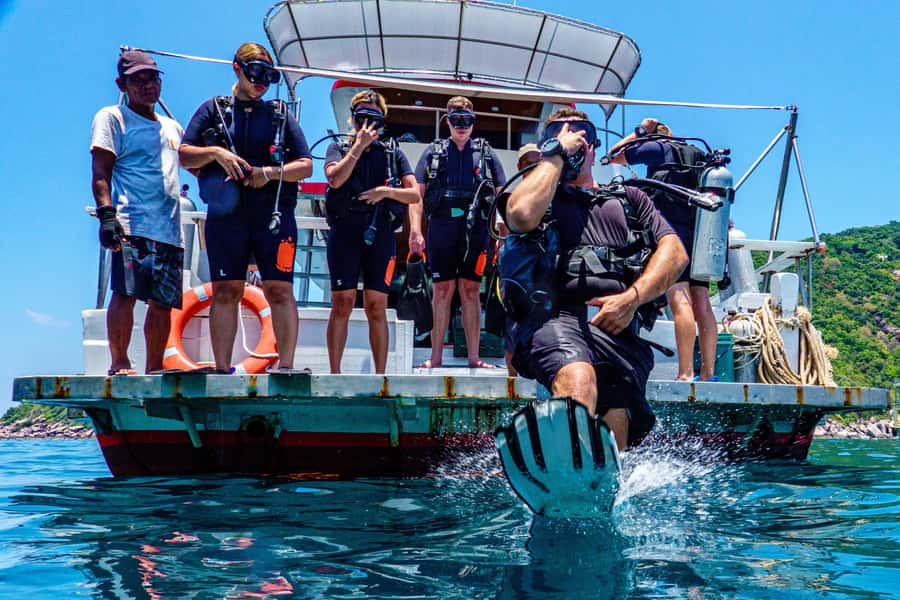
In the afternoon, you head out by boat for your first two ocean sessions. The maximum depth is 12 meters on this day, a sensible limit for moving from pool practice into open water.
Ko Tao’s underwater scenery provides the reward. You may see stingrays, pufferfish, moray eels, and many reef fish. The appeal here is not only the animals. It is the shift from practicing a skill in a pool to using that skill in a real marine setting.
The first ocean session can feel busy. You are watching your breathing, checking your equipment, listening to your instructor, and trying to notice what is around you. Do not expect to spend every second calmly scanning the reef like an expert. The course is about building control, and that takes attention.
The 12-meter limit also makes this day a useful test of how you feel in open water. If you are comfortable, the final day offers more depth. If you need extra reassurance, the instructors can focus on steady practice before asking you to do more.
More dive courses in Thailand:
- Full-Day Beginner Scuba Course with Private Tuition, Racha Yai
★ 5.0 · 368 reviews - La Bombona Diving Koh Tao Open Water Course
★ 5.0 · 172 reviews - Padi open water diver course, become a diver in 3 days
★ 5.0 · 113 reviews - Become certified diver in 3 days – PADI Open Water Diver course on Koh Tao
★ 5.0 · 104 reviews
Day four at 7:45 AM: deeper sites and the final qualification
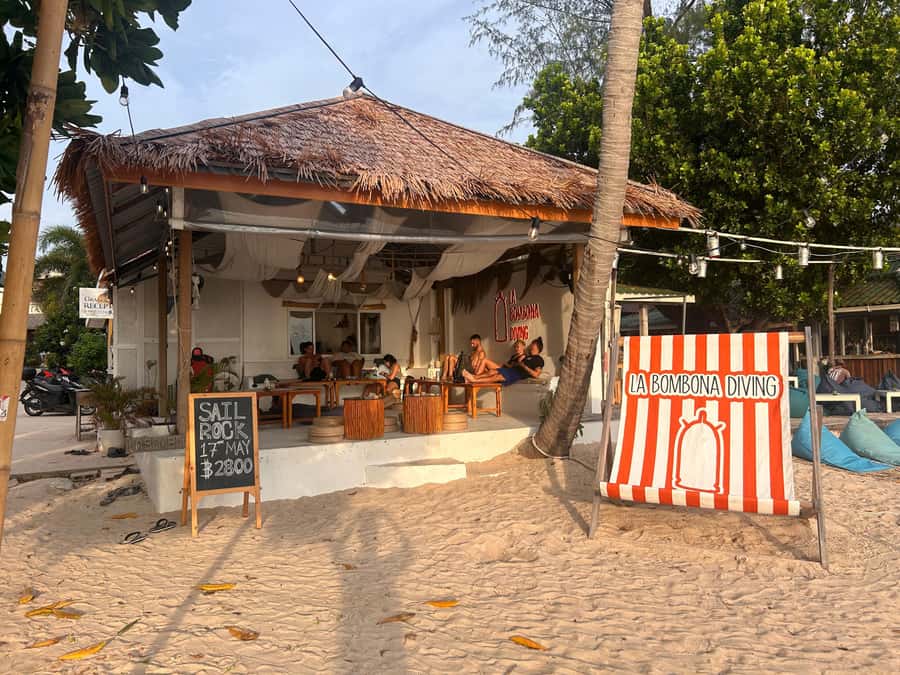
The final day begins early, at 7:45 AM. You complete two sessions at more advanced sites around Ko Tao, with certification to 18 meters after finishing the course.
The early start is the main scheduling issue. You need to be ready to concentrate soon after breakfast, and a late night before this session is a poor idea. The benefit is that you finish the practical part of the course while the trip is still fresh, rather than spreading the final requirements over many extra days.
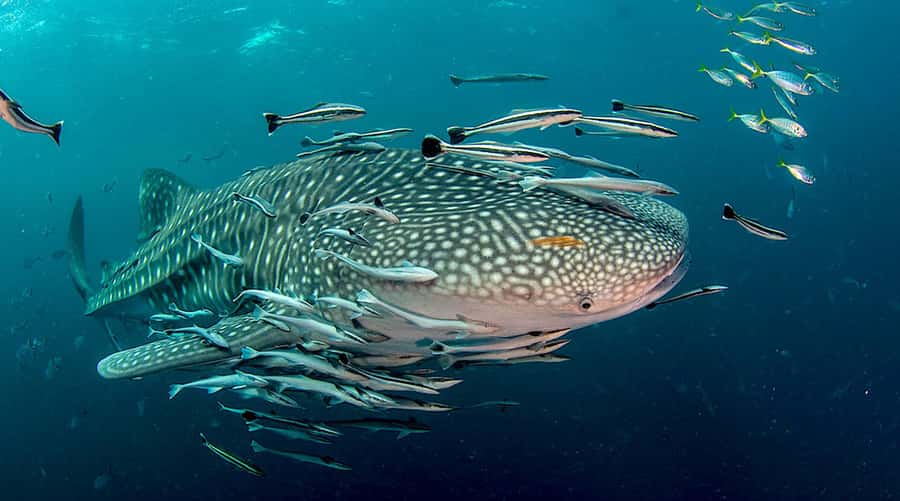
At the deeper sites, the marine life may include barracuda and queen fish. A whale shark is possible if luck is on your side, but it should be treated as a bonus, not part of the promised result. One student did report swimming with whale sharks during the course, but wildlife is never scheduled on demand.
The final qualification allows you to call yourself an open-water scuba diver and go to 18 meters anywhere in the world, subject to the rules and conditions of the place you visit. That is a meaningful step beyond a short introductory session. You leave with a foundation that can be used for future scuba trips rather than only a single afternoon underwater.
Why the pool-to-ocean progression works
The strongest educational choice here is the order of the sessions. You first handle skills in a pool, then repeat them in the sea at a limited depth, and only later move toward 18 meters.
That order helps in three ways:
- You can focus on technique without ocean conditions during the first practical session.
- You get a chance to connect classroom ideas with real underwater conditions.
- You have time to build confidence before the deeper sites.
The course is also a good fit for someone who worries about panic. Az was praised for supporting nervous students, while Adrian, Juan, Joe, Nico, Armand, and Elena were each singled out for calm teaching, clear explanations, or encouragement at different times.
Still, you should not expect the pool to remove every challenge. Open water feels different from a swimming pool. You may have less visibility, more movement in the water, and more to look at. The course prepares you for those differences, but it cannot make them disappear.
Group size, teaching style, and language
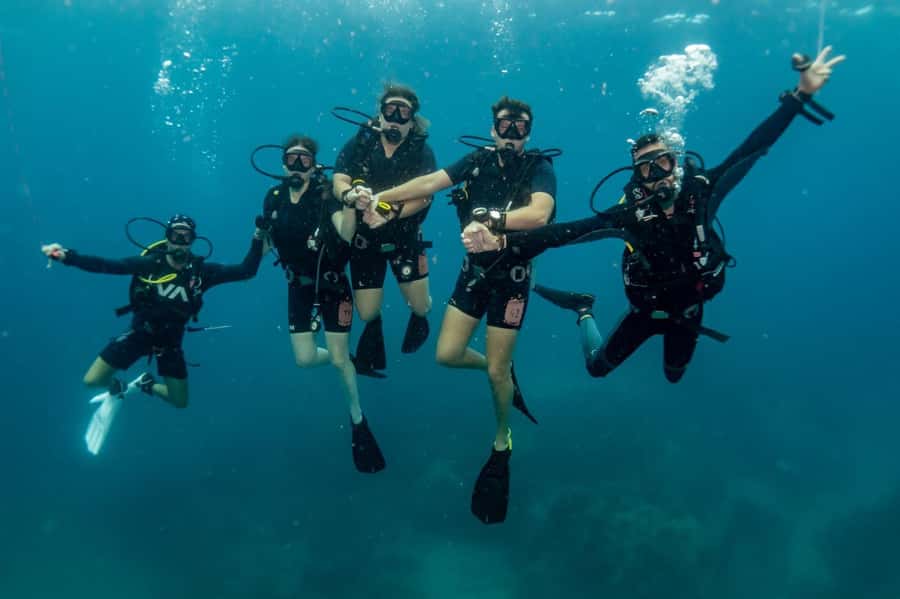
One particularly useful detail is that one group had four students. A group that size can offer a good balance: you are not alone with the instructor, but you also are not lost in a large class.
The exact group size is not stated as a fixed promise, so you should not book on the assumption that every session will have four people. Even so, the repeated emphasis on patient, attentive teaching suggests that instructor support is a major part of the program.
The teaching team includes Spanish, English, and Catalan speakers. Specific instructors praised for their approach include Adrian, Juan, Joe, Az, Nico, Armand, and Elena. You cannot select a particular instructor from the information provided, but knowing the team includes several experienced teachers may help if personal guidance is important to you.
The course is not aimed at showing off. The useful teaching style is practical: explain the skill, let you try it, correct the problem, and repeat until you are ready to move on. That is exactly what a beginner needs.
What the $353 price really covers
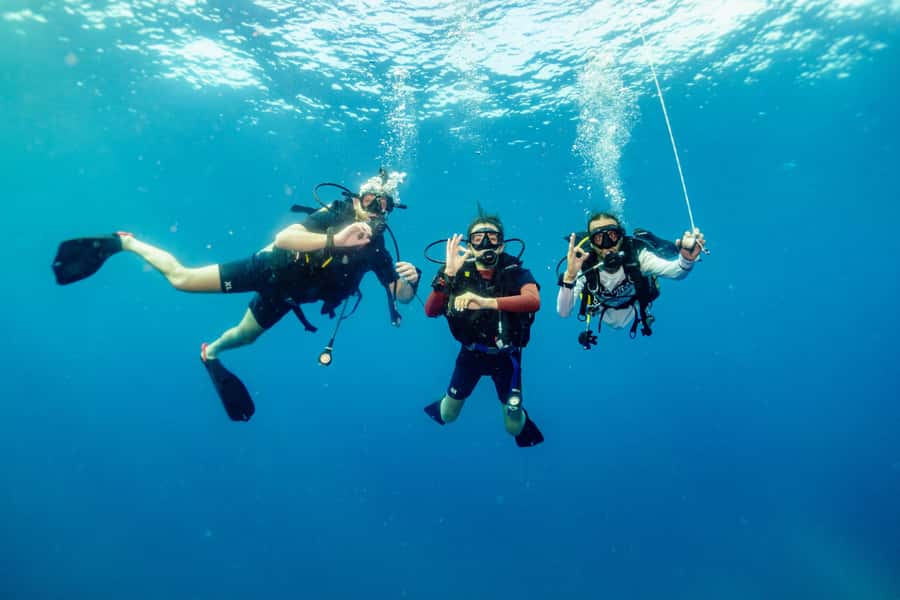
At $353 per person, this is not the cheapest way to spend four days on Ko Tao. It is also not comparable to a short introductory swim.
The price includes an experienced instructor, all equipment, a celebration drink, and a T-shirt. More importantly, it covers a full training path from classroom basics through pool practice, four ocean sessions, and certification to 18 meters.
That makes the price reasonable for someone who already wants a qualification. You are paying for instruction and supervised practice, not simply boat time. Equipment is also included, so a beginner does not need to buy a mask, tank, or other scuba gear before starting.
The value is weaker if you are unsure about scuba and only want to try breathing underwater once. In that case, a shorter introductory option may suit you better. The four-day course earns its price when you want a qualification and intend to scuba again elsewhere.
A celebration drink and T-shirt are pleasant extras, but they should not drive your decision. The real value lies in the instruction, equipment, and certification.
Who should book this Ko Tao course
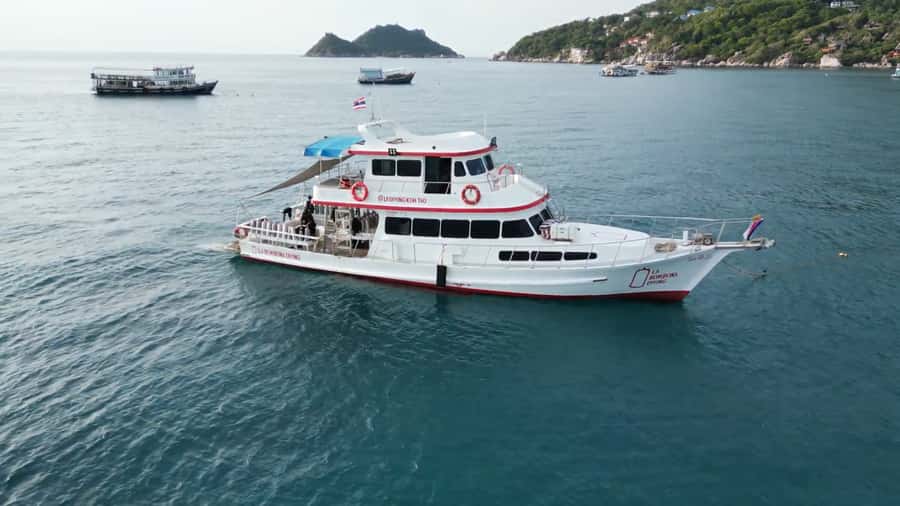
I would point this course toward:
- A first-time scuba student who wants a recognized starting qualification.
- Someone who prefers a gradual learning process instead of a single try-out session.
- A visitor with four days available and enough energy for classroom work plus early starts.
- A nervous beginner who wants patient instruction and pool practice first.
- Anyone planning to continue scuba on future holidays.
I would hesitate to recommend it to someone with only one free day, someone who wants a purely relaxed boat outing, or someone unwilling to study safety information. The program is friendly, but it is still a course.
You should also plan your Ko Tao schedule around it. The first meeting is at 4:00 PM, the second day starts at 10:00 AM, the third at 9:30 AM, and the final day at 7:45 AM. Those times are manageable, but they leave less room for other major activities.
Practical booking details for your four days
You can cancel up to 24 hours before the activity for a full refund. You can also reserve now and pay later, which helps if your island plans are still shifting.
The stated duration is 84 hours, while the taught sessions follow the four-day schedule. Check the available starting times before booking, especially if you are arriving on Ko Tao by boat or connecting with another trip.
Because the course includes several safety lessons and an exam, bring patience rather than trying to rush through it. Pay close attention to mask, regulator, navigation, and emergency procedures. Those are the skills that make later scuba trips safer and calmer.
After the last two ocean sessions, you receive the open-water qualification up to 18 meters. The course does not promise a particular animal sighting, so book it for the training and the chance to see Ko Tao’s marine life, not for a guaranteed whale shark encounter.
Should you book it?
Book this course if you want to become a certified scuba diver and can give Ko Tao four focused days. The pool start, limited 12-meter sessions, deeper final sites, included equipment, and patient instruction create a sensible path for a beginner.
Skip it if you only want a quick underwater taste or have a tight schedule. For the right person, the $353 cost buys much more than four boat sessions. It gives you the skills, supervision, and qualification to continue scuba beyond Ko Tao.
FAQ
How long does the Ko Tao scuba course last?
The stated duration is 84 hours, arranged across a four-day course schedule.
What time does the course begin?
The first orientation begins at 4:00 PM. The next day starts at 10:00 AM, the third day at 9:30 AM, and the final day at 7:45 AM.
How many ocean sessions are included?
You complete two ocean sessions on the third day and two more advanced ocean sessions on the final day.
How deep will I go during the course?
The first two ocean sessions reach a maximum of 12 meters. The qualification allows scuba to 18 meters.
Do I practice in a pool?
Yes. The second day includes pool training after the classroom session.
What skills will I learn?
You learn to clear your mask, retrieve your regulator, respond to an unlikely emergency, understand how scuba affects the body, use basic navigation, and follow other safety procedures.
What sea life might I see?
Possible sightings include stingrays, pufferfish, moray eels, reef fish, barracuda, and queen fish. Whale sharks are possible but not guaranteed.
What languages are available?
Instruction is available in English, Spanish, and Catalan.
Is equipment included?
Yes. The price includes all equipment and an experienced instructor.
What is included besides instruction and equipment?
The course includes a celebration drink and a T-shirt. It also provides certification to 18 meters after the required training is completed.
More 4-Day Experiences in Thailand
- Cairns: 4-Day PADI Open Water Course
★ 4.8 · 44 reviews - Protaras: 3-4 Day PADI Open Water Diver in Protaras
★ 5.0 · 2 reviews
Just added around Thailand
- Phuket: Try SCUBA DIVING Full Day Experience 2 Dives★ 5.0 · 9 reviews
- Phuket Scuba Diving Racha Islands 1-3 Dives For All Levels★ 4.6 · 3 reviews
- Phuket: Try SCUBA DIVING Full Day Experience 3 Dives★ 5.0 · 5 reviews
- Phuket: SCUBA Diving Day Trip King Cruiser, Shark Point, KDM★ 5.0 · 2 reviews
- Phuket: Racha Island Snorkeling or Scuba Diving Tour★ 4.3 · 70 reviews
- Phuket: Khai Islands Tour Or Scuba Diving Options★ 4.7 · 17 reviews
- Phuket: Racha Island and Coral Islands + Scuba Beach Dive★ 4.3 · 55 reviews
- Try Scuba Diving in Racha Yai/noi: 2 Dives for Non-Certified★ 4.8 · 11 reviews
Scuba Diving Courses, compared.
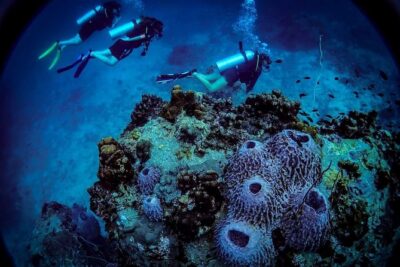
Open Water Course – Become certified diver in 3 days
Read our review →
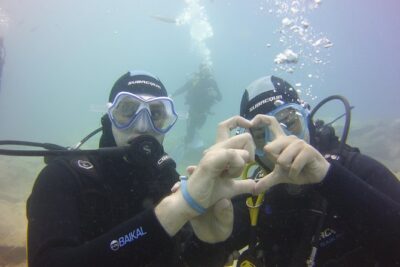
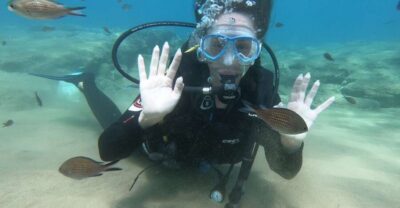
Heraklion: Beginner Scuba Diving Lesson with PADI Instructor
Read our review →
Discover Scuba Diving with No Certification in St Thomas
Read our review →
Try Dive – PADI Discover Scuba Diving in Tenerife
Read our review →
Lists this dive appears in