
REVIEW · THE PHILIPPINES
Boracay: Introduction to Scuba Diving Experience
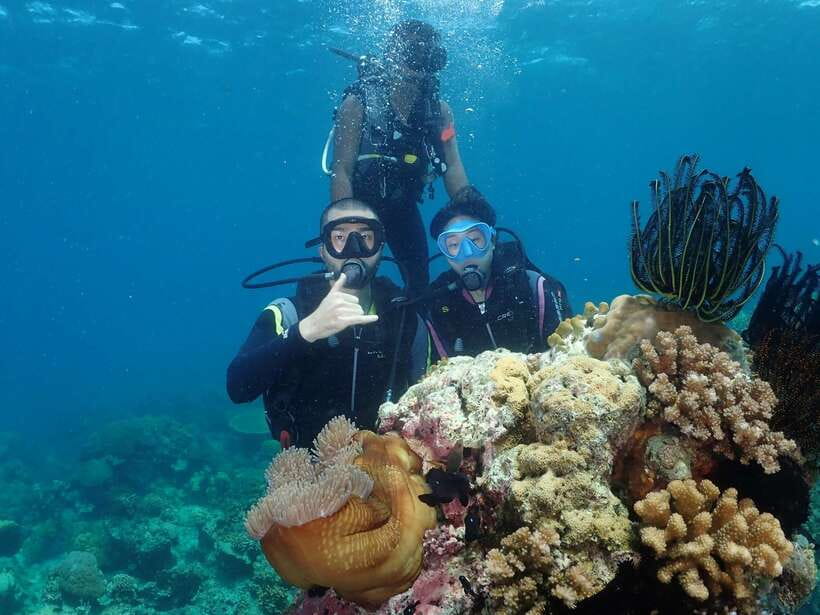
The best part of this Boracay experience is the careful move from beach to open water. You first learn how to breathe through the regulator and clear your mask in shallow water, then head by boat to a reef where an instructor guides you by hand signals and stays close. I like the small guide groups, often one instructor for two to four people, and I like that photos and videos are included. The main drawback is that 30 to 40 minutes underwater can feel brief once you have settled in, and the photo quality may vary.
I also like the patient teaching. Guides such as Butch, Roy, Romeo, Joliou, and Bong have helped nervous beginners get comfortable, while multilingual staff can assist in English, Chinese, or Korean. Plan your timing carefully: you should not fly for 12 to 24 hours after scuba, so this belongs earlier in your trip, not on the morning before your flight.
Key points at a glance
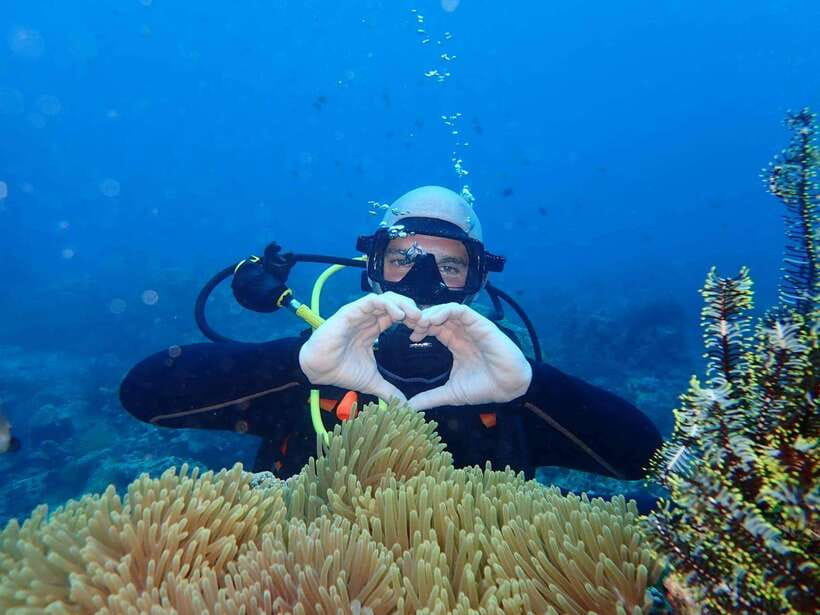
- Shallow-water practice comes first: You rehearse breathing, mask clearing, and regulator recovery before leaving the beach.
- Your guide stays close: The usual ratio is one instructor or Divemaster for two to four participants, with one-on-one help possible.
- The boat ride adds real reef time: You leave the shoreline for a beginner-friendly site and spend about 30 to 40 minutes underwater.
- Expect a modest depth: The normal beginner limit is about 6 meters, though the package lists a maximum of 12 meters.
- Photos and videos are included: They give you a keepsake, though image quality is not always consistent.
- It is a first taste, not a certification course: You receive a participation certificate, not a full PADI license.
What this Boracay underwater experience is really like
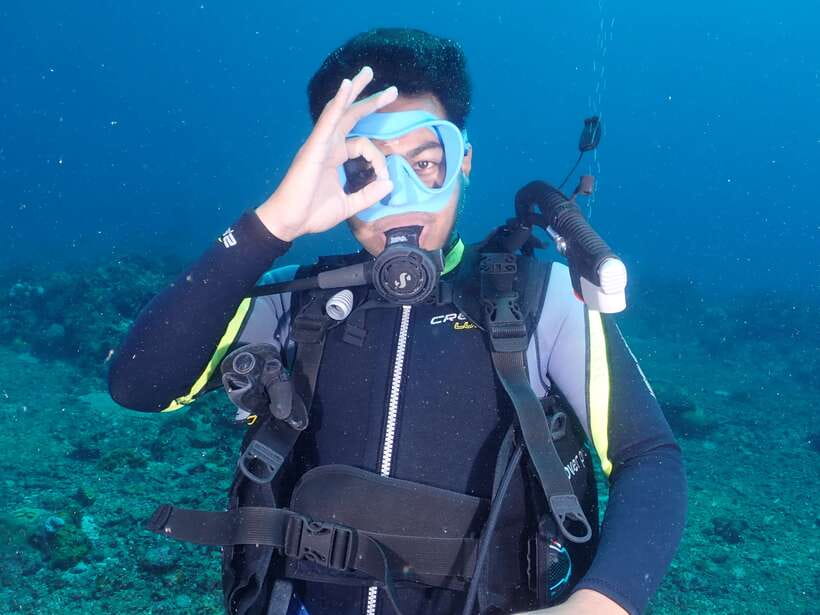
At $50 per person, this is priced as an easy first step into scuba rather than a full training course. You get the equipment, instruction, shallow-water practice, boat transport, one open-water session, underwater media, and a digital certificate. That is a solid bundle for someone who wants to try scuba without committing to several days of lessons.
The experience lasts about three hours, with start times at 9:00 AM and 1:00 PM. The exact pace depends on the group, equipment fitting, sea conditions, and how quickly everyone becomes comfortable breathing underwater. Do not book it as a tightly timed stop between other activities.
The setting is Boracay, with the meeting point at Astoria Station 1 Beach Front, in front of Tiger Sugar Cafe. Look for the Boracay Adventures guide holding GetYourGuide signage. One supplied summary identifies the location as Catanduanes Province, which conflicts with the Boracay meeting point and the rest of the details. I would confirm the exact meeting location when booking, but the activity information clearly describes a Boracay shore and boat trip.
More first-time dives in the Philippines:
- WaterColors – Discover Scuba Diving in Boracay
★ 5.0 · 127 reviews - El Nido: Discover Scuba Diving with Manta Rays in Sibaltan
★ 4.7 · 24 reviews - Discover Scuba Diving in Boracay
★ 4.9 · 22 reviews
Meeting the guide at Station 1
You begin on the beach, not at your hotel. Hotel pickup and drop-off are not included, so allow time to reach Station 1 and find the guide. The meeting spot in front of Tiger Sugar Cafe is specific, which helps, but beach areas can be busy, so arriving early is sensible.
The staff speaks English, Chinese, and Korean. The guide team includes PADI Instructors and Divemasters, and group size is one of the strongest features here. The stated ratio is one guide for every two to four participants. Some sessions may be even smaller. One person received a private instructor and an additional person taking pictures when another participant did not show up.
That kind of close attention matters more than fancy equipment for a first attempt. You need someone watching your breathing, hand signals, buoyancy, and comfort level. The strongest praise goes to guides who stayed patient with nervous beginners. Butch, Roy, Romeo, Joliou, Bong, and others were singled out for calm instruction and reassurance.
The classroom lesson before you get wet
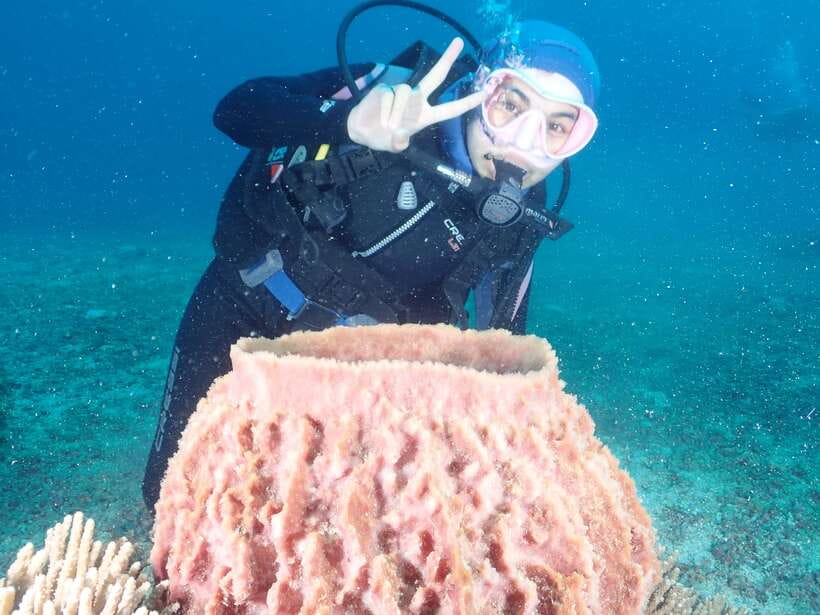
The first lesson covers the basic rules of scuba. You learn how to breathe through the regulator, how to equalize pressure as you descend, and how to communicate underwater with hand signals. The instructor also explains the mask, fins, wetsuit, regulator, tank, weights, and Buoyancy Control Device, or BCD.
This is not filler. Breathing through a regulator feels strange at first, and equalizing can take practice. One participant found equalizing difficult but was able to continue with coaching. If your ears do not equalize comfortably, tell the instructor at once and stop descending. Do not force it.
You also learn what to do if water enters the mask or the regulator comes out. These are simple actions, but learning them before open water makes the first descent much less alarming. The staff places strong emphasis on following the guide and checking in underwater.
The theory session is described as clear and engaging, but the total activity is short. You are learning enough to take part safely under direct supervision, not enough to operate independently. That distinction is important. The certificate marks completion of the introduction, but it does not qualify you to scuba without a certified instructor.
Equipment fitting and shallow-water practice
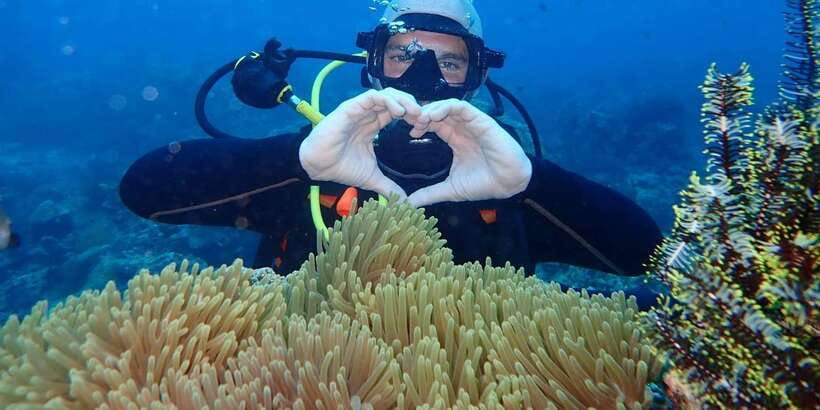
After the briefing, the staff fits you with a mask, fins, wetsuit, regulator, BCD, tank, and weights. The BCD holds the tank and helps control your position in the water. The team helps you put everything on and checks the fit before you move farther from shore.
The shallow-water session is where many beginners find their rhythm. You practice breathing normally through the regulator, clearing water from your mask, and recovering the regulator if it leaves your mouth. These exercises can feel awkward on land, but the calm, confined setting gives you room to pause and try again.
I would treat this stage as the real test of comfort. If you still feel panicked, tell the instructor before boarding the boat. The guides are there to work at your pace, and several participants who began nervous felt safe after this practice. You do not get extra value by pretending to be ready.
There is one practical point to keep in mind. One account described a jump into the water from the boat, while another noted that steps were available but not offered to every participant. If you have back trouble, limited mobility, or are uneasy with a backward entry, ask the crew about the boarding and water-entry method before you commit.
A few more dives around the Philippines worth comparing
- Cebu: Beach Scuba Diving Experience
★ 4.9 · 130 reviews - Easy Fun Scuba Dive in El Nido
★ 5.0 · 72 reviews - From Cebu City: Scuba Diving with Whale Sharks Trip in Oslob
★ 4.2 · 14 reviews - El Nido: Manta Ray Diving Experience in Sibaltan
★ 4.4 · 13 reviews
The short boat trip to the reef
Once the group is ready, you board a local boat and travel to one of Boracay’s beginner-friendly sites. The ride gives you a different view of the island, with the white coastline stretching behind you. It also moves you away from the immediate beach area and toward coral and fish that you may not see while snorkeling close to shore.
The boat transfer is included in the price, which improves the value. You are not paying separately for transport to the site or trying to arrange your own boat. Still, this is a local excursion, not a luxury cruise. One participant found the boat slightly worn, so keep expectations practical.
The open-water site is chosen for beginners, but conditions can change. Visibility, current, and sea movement are not guaranteed in the supplied details. Your guide decides how the session proceeds, and safety should take priority over reaching a particular depth or chasing a particular animal.
What you see below the surface
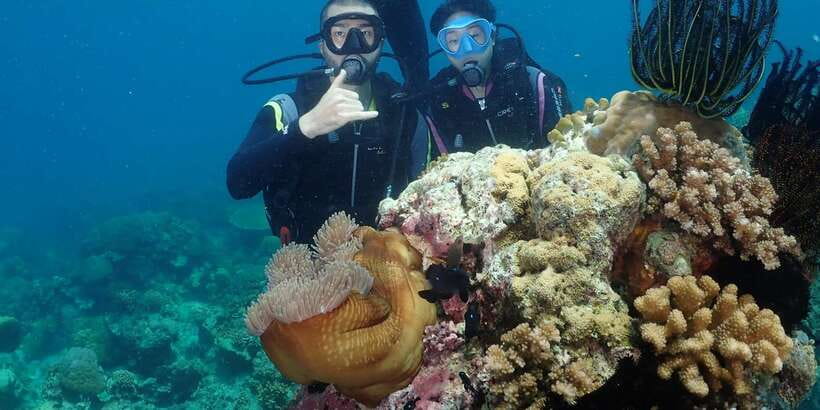
The guided underwater session lasts about 30 to 40 minutes. The usual beginner depth is around 6 meters, or 20 feet. The package also states a maximum of 12 meters, or 40 feet, so do not confuse the overall limit with what you should expect on your first attempt.
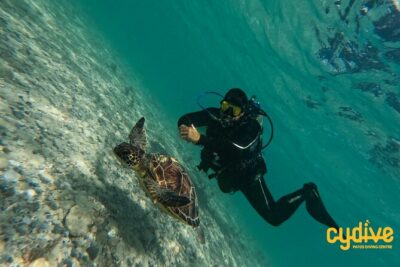
At that depth, you can hover over coral gardens and watch fish at close range. The listed marine life includes parrotfish, clownfish, and possibly a turtle. Some participants saw a large turtle, while others described colorful coral and fish they had not encountered while snorkeling.
The main thrill is not the depth. It is the change in perspective. You are no longer looking down from the surface. You are moving slowly over the ocean floor, breathing steadily, and using hand signals instead of conversation. For many first-timers, that quiet sense of weightlessness is the lasting memory.
Your instructor or Divemaster remains beside you, pointing out marine life and checking your comfort. You are not expected to find your own route. If you lose confidence, signal the guide and pause. The best experience comes from moving slowly enough to notice the reef rather than trying to cover distance.
Photos, videos, and the certificate
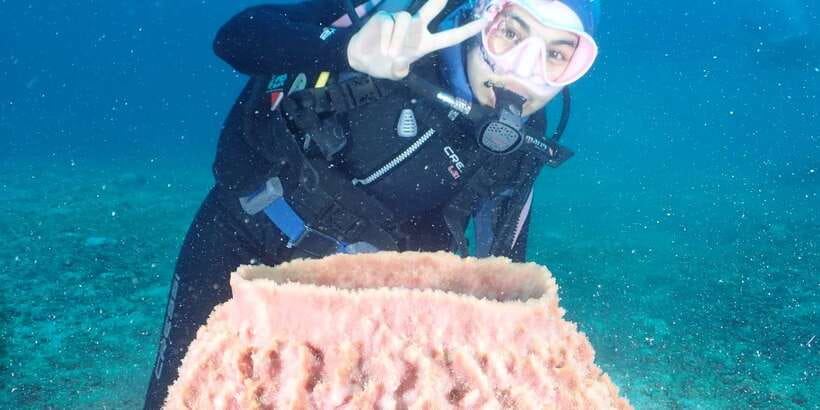
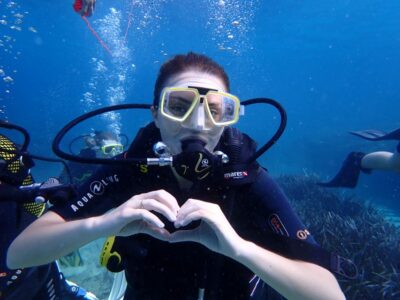
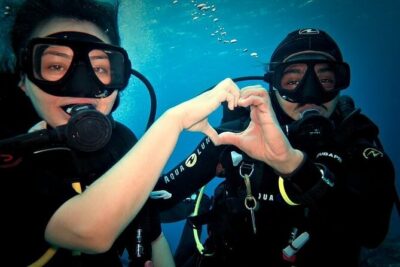
Underwater photos and videos are included, which is a useful extra at this price. A second guide may handle the camera, particularly for a solo participant or a very small group. That lets the main instructor focus on safety and instruction.
The media quality is not guaranteed to be perfect. Some people received excellent pictures and videos, while others felt the images were weak or the clips too short. Underwater photography depends on visibility, lighting, movement, and how comfortable you are posing in equipment. Treat the media as a bonus, not the main reason to book.
After returning to shore, you receive a digital Discover Scuba Diving participation certificate. It is a pleasant record of your first underwater experience, but it is not a scuba license. If you want independent certification, you will need a separate course.
Is $50 good value?
For $50, the package includes nearly everything a beginner needs for one supervised session. You get the briefing, instruction, rental gear, shallow-water training, boat transport, open-water time, photos or videos, and the certificate. Meals and hotel transfers are not included.
The value is strongest if you want a low-commitment introduction. You can find out how your ears, breathing, and nerves respond without paying for a full certification program. The small guide ratio adds value because personal attention is especially important during a first attempt.
The value is less clear if you expect a long underwater session, polished photography, or premium boat service. Thirty to 40 minutes passes quickly, and the experience may feel rushed if the group takes time to get ready. The two start times also mean you should protect a half-day rather than squeeze this into a narrow gap.
Free cancellation up to 24 hours before the start gives you some flexibility, and reserve-now, pay-later booking is available. Those policies help if your island plans are still shifting, but the flight rule is more important: allow 12 to 24 hours between your last scuba session and flying.
Who should book this experience?
This is best for adults and children aged 10 or older who want a supervised first taste of scuba. It suits people who are curious but not ready to take a multi-day certification course. It also works well for couples or friends, since the guide ratio can keep the experience personal.
You do not need prior certification. You do need to follow instructions and be willing to practice in shallow water. If you are afraid of deep water, that does not automatically rule you out, since the guide controls the descent and stays close. Still, tell the instructor about your concern before entering the sea.
The activity is not suitable for pregnant women, people with back problems, people with altitude sickness, people with pre-existing medical conditions, or people with hearing impairment. The supplied information does not describe a medical screening process, so ask the operator about your own condition before booking if you are unsure.
Timing, safety, and small practical details
Choose 9:00 AM or 1:00 PM when you book. The session takes about two to three hours, but I would keep the surrounding schedule open. Gear fitting, instruction, water practice, the boat trip, and return time all need room.
Wear something suitable for changing into scuba gear, and remember that meals are not included. Bring only what you need to the meeting point. The specific information provided does not state what changing or storage facilities are available, so ask the operator if that matters to you.
Most important, do not fly soon after scuba. The stated rule is no flight within 12 to 24 hours of the last session. Since the exact safe interval can depend on your dive profile and flight plan, book this early in your Boracay stay rather than leaving it for departure day.
Should you book it?
Book this if you want a well-supervised first scuba experience with a short lesson, shallow-water rehearsal, boat access, and a modest price. The patient instructors and small groups are the main reasons to choose it, especially if you feel nervous or are unsure about equalizing.
Skip it if you want a full certification, a long underwater itinerary, luxury boat service, or guaranteed professional-quality photos. Also skip it if your schedule requires flying within 12 to 24 hours, or if one of the listed medical restrictions applies.
For most healthy beginners with half a day to spare, this is a sensible way to meet Boracay below the surface. Keep your expectations realistic, listen closely to the instructor, and regard the certificate and photos as pleasant extras. The real value is finding out whether scuba suits you, with an experienced guide close enough to help when the ocean feels unfamiliar.
FAQ
Do I need prior scuba certification?
No. This activity is designed for beginners with no prior certification.
How deep will I go?
The normal beginner depth is about 6 meters, or 20 feet. The included activity details list a maximum of 12 meters, or 40 feet, but you should expect the shallower depth on a first session.
How long do I spend underwater?
The guided open-water session lasts approximately 30 to 40 minutes. The entire activity takes about two to three hours.
What equipment is included?
Rental equipment includes a BCD, regulator, tank, weights, mask, snorkel, fins, and wetsuit. The staff helps you fit and put on the equipment.
Are photos and videos included?
Yes. Complimentary underwater photos and or videos are included, though the quality and length may vary.
Where do I meet the guide?
Meet at Astoria Station 1 Beach Front, in front of Tiger Sugar Cafe. Look for the Boracay Adventures guide holding GetYourGuide signage.
Can I fly after the activity?
You should not fly within 12 to 24 hours after scuba. Plan the activity early enough in your trip to follow this safety rule.
Who should not take part?
The activity is not suitable for children under 10, pregnant women, people with back problems, people with altitude sickness, people with pre-existing medical conditions, or people with hearing impairment.
Just added around the Philippines
- Panglao Bohol: Try Scuba Diving at Napaling and Sardines★ 5.0 · 4 reviews
- Cebu: Oslob Whaleshark Scuba Diving & Sumilon Sanctuary★ 4.5 · 8 reviews
- Moalboal: Scuba Diving and Pescador Island Hopping★ 3.8 · 3 reviews
- Cebu: Moalboal Scuba Diving, Sardines Run & Pescador Snorkel★ 3.5 · 8 reviews
- Malapascua: Advance Divers Shark Dive & Optional Transfer★ 4.3 · 6 reviews
- From Cebu City: Scuba Diving with Whale Sharks Trip in Oslob★ 4.2 · 14 reviews
- Fisheye Divers: Discover Scuba Diving★ 5.0 · 4 reviews
- El Nido: Manta Ray Diving Experience in Sibaltan★ 4.4 · 13 reviews
Discover Scuba Diving, compared.
Half-Day Scuba Diving Tour – Discover Scuba Diving!
Read our review →
2 Days Discover Scuba Diving in Nusa Lembongan – Scuba Initiation
Read our review →Lists this dive appears in