
REVIEW · THE PHILIPPINES
WaterColors – Open Water Diver Certification in Boracay
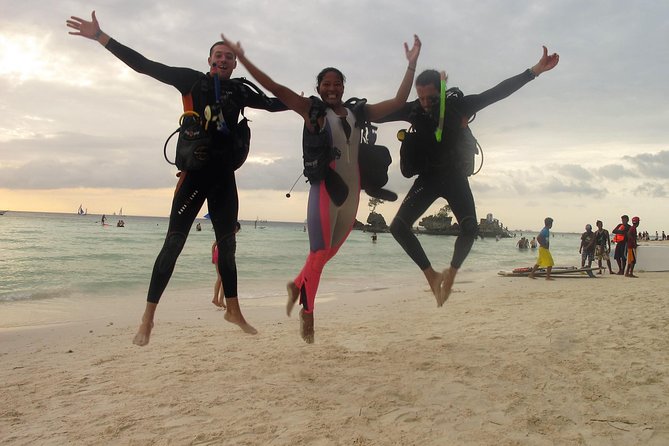
Boracay’s appeal here is simple: you do not just watch a lesson and try one underwater session. You progress from PADI theory to confined-water skills, then board a boat for open-water training around one of the Philippines’ best-known scuba destinations. By the end, you are working toward a recognized certification, not just a holiday introduction.
I like the steady structure, which gives you time to practice instead of rushing straight into the sea. I also like the personal teaching style reported from instructors Jimmy and Darwin, both praised for patience, clear instructions, and keeping students calm. The main consideration is the schedule: four days can feel full, and you should not plan to fly within 24 hours after your final underwater session.
Key points to know before booking
- Four days of step-by-step training: Expect classroom work, confined-water practice, open-water sessions, logging, and a final exam.
- Five open-water sessions are planned: The daily schedule lists the first four in detail, with the fourth day reserved for unfinished skills, sessions, theory, and paperwork.
- Instructors Jimmy and Darwin receive special praise: Their teaching is described as patient, reassuring, clear, and good-humored.
- The $545 price covers the core course costs: Equipment, PADI materials, certification processing, instructor support, and boat transport are included.
- You meet at WaterColors near Station 1: The shop is beachfront near Willy’s Rock and next to Balabag Plaza.
- Medical preparation matters: You must complete the PADI medical form and provide your height and weight before the course.
What you are really buying for $545
At $545 per person, this is not the cheapest way to spend time in Boracay. It is also more than a casual introductory scuba session. You are paying for a formal PADI course, instructor time across four days, course materials, equipment, boat transport, and certification processing.
That makes the price easier to judge. If you want a qualification you can use for future recreational scuba trips, the package offers a practical route from first lesson to open-water certification. If you only want to see fish once, a shorter introductory session may suit you better.
The price does not include meals, drinks, hotel transfers, towels, or souvenir photographs. Those extras are easy to overlook, especially with long morning and afternoon sessions. I would budget for food during the breaks and arrange your own route to the WaterColors meeting point.
Group discounts are available, and the maximum group size is 15 people. That is a reasonable limit for a course, though your personal experience will still depend on how many students are assigned to each instructor and how quickly everyone manages the skills.
More dive courses in the Philippines:
- Scuba Diving in Boracay: SSI Basic Diver for Beginners
★ 5.0 · 20 reviews - Scuba Diver Course (PADI)
★ 5.0 · 18 reviews - DiveGurus – Open Water Diver Course SSI/PADI
★ 5.0 · 13 reviews
Meeting at WaterColors near Station 1
You begin and finish at WaterColors Boracay Dive Resort on Boracay Highway Central White Beach, Station 1, near Willy’s Rock and beside Balabag Plaza. The shop is open from 8 a.m. to 8 p.m., Monday through Sunday, which helps if you need to confirm details before the course starts.
Hotel transfers are not included. You should allow enough time to reach the shop each morning, particularly because the first scheduled activity begins at 10 a.m. on Day 1 and later days begin at 8 a.m.
The location puts you close to the beach, which is useful for the early skills work. The initial confined-water session takes place in shallow water, then moves to a section where you cannot stand. That progression is important. You get a chance to become familiar with the equipment and basic procedures before relying on your buoyancy in open water.
Day 1: registration, theory, and your first boat session
The first morning starts with registration and documentation at 10 a.m. This is when the practical paperwork matters. You need to have completed the required PADI Diver Medical Form and health questionnaire, and you must provide your height and weight when booking.
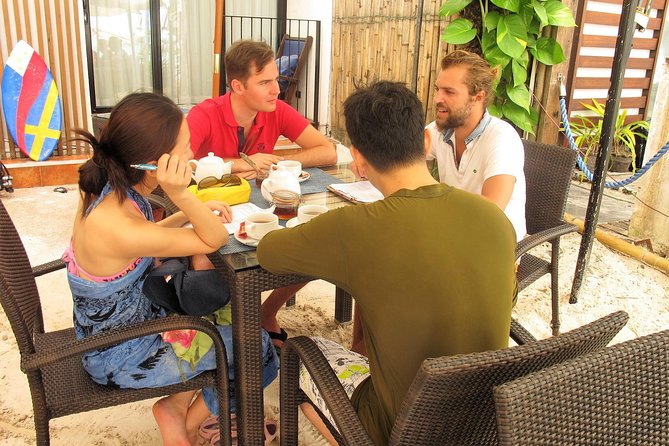
At 11 a.m., the course moves into theory. You watch a video, read course material, complete knowledge reviews and quizzes, and learn how to record and discuss your sessions. The work may sound dry compared with getting into the water, but it gives you the safety framework for the rest of the course.
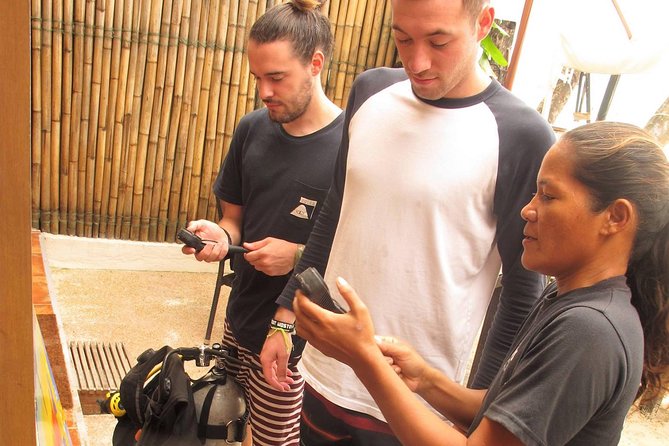
A noon lunch break divides the day. At 1 p.m., you begin confined-water practice with your instructor. The session starts near the beach in shallow water and gradually moves deeper. This is where you practice the skills required by the course under close supervision.
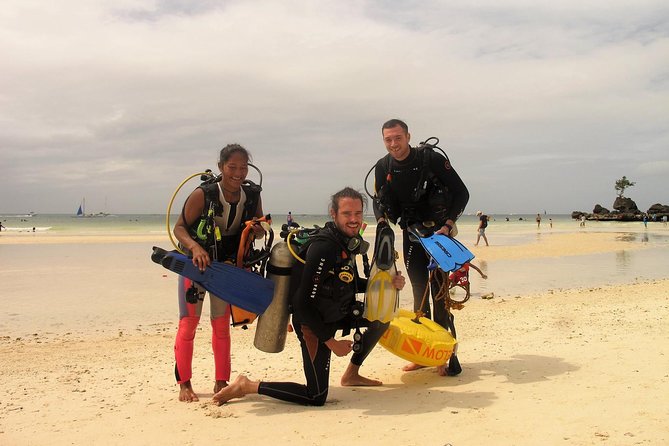
At 3 p.m., you make your first open-water session by boat. The instructor chooses a suitable depth for the course, rather than sending beginners straight into demanding conditions. That first trip is an important test of how comfortably you can apply the morning’s lessons outside the protected practice area.
The day ends with logging and more theory at about 4:30 p.m. You should expect a full day, not a leisurely beach outing. The useful part is the rhythm: learn a skill, practice it, then discuss what happened while it is still fresh.
Day 2: two more open-water sessions
Day 2 begins at 8 a.m. with confined-water training. This early practice lets you revisit skills before heading out again. For beginners, that review can make a real difference, especially if the equipment or underwater breathing felt unfamiliar on Day 1.
The second open-water session is scheduled for 9 a.m. Afterward, you return to theory at 11 a.m., followed by lunch at noon. The pattern keeps alternating between physical work and classroom study, which prevents the course from becoming only a test of stamina.
At 1:30 p.m., you return to confined water. The third open-water session follows at 3 p.m. That is a lot of structured activity in one day, but it also gives you repeated chances to build comfort.
The instructors’ teaching style matters most here. Jimmy is described as friendly, patient, responsible, and careful about checking that students were comfortable underwater. Darwin is praised for clear explanations, calm guidance, and helping a student return to scuba after an eight-year break.
Those details are useful if you feel nervous. You should still expect to work hard and follow instructions closely, but the teaching approach appears geared toward steady progress rather than pressure.
A few more dives around the Philippines worth comparing
- Cebu: Beach Scuba Diving Experience
★ 4.9 · 130 reviews - WaterColors – Discover Scuba Diving in Boracay
★ 5.0 · 127 reviews - Boracay: Introduction to Scuba Diving Experience
★ 4.8 · 104 reviews - Easy Fun Scuba Dive in El Nido
★ 5.0 · 72 reviews
Day 3: the fourth session and unfinished skills
Day 3 starts with theory at 8 a.m. The course then returns to confined-water practice at 10 a.m., followed by lunch at noon. At 1 p.m., you complete the fourth scheduled open-water session.
Afterward, the afternoon is flexible. You may log sessions, finish theory, or complete another requirement that was not yet done. That flexibility is valuable because not every beginner learns at the same pace.
The published course plan says you will complete five open-water sessions overall, but the first three days list four specific sessions. Day 4 is therefore important. It acts as a catch-up day for skills, theory, or additional underwater work before the final exam and paperwork.
I like that the schedule allows room for unfinished requirements. A fixed timetable can look tidy on paper but create pressure when a student needs more practice. Here, the fourth day gives the instructor a chance to make sure you are ready rather than simply moving on because the clock says so.
Day 4: catch-up work, final exam, and certification paperwork
The final day runs from 8 a.m. to 5 p.m. and is reserved for anything still incomplete. That can include skills, open-water sessions, or theory. You then take the final exam and complete the paperwork for certification.
The course ends with a celebration, but the serious work comes first. You should treat this as a qualification course, not a sightseeing add-on. Passing requires attention during the classroom sections as well as practical control in the water.
The flexible fourth day also means you should avoid booking important plans around an exact early finish. Your course could be complete sooner, but the schedule allows the full day for catch-up. Keep your plans loose until certification is finished.
What is included, and what still costs extra
The package includes:
- A PADI scuba instructor
- PADI course materials
- Certification processing
- Scuba equipment
- Boat transport to and from the training site
That is a solid list of core inclusions. You do not need to arrange your own tank, regulator, or other standard equipment for the course.
You still pay for food and drinks unless specifically stated otherwise. Hotel transfers, towels, and souvenir photographs are also excluded. If you want pictures, they are available for purchase, but they are not part of the certification price.
The equipment is supplied, but you should still bring practical personal items allowed by the provider, such as anything needed for comfort between sessions. The supplied information specifically notes that towels are not included, so pack one rather than assuming the resort will provide it.
The instructors are a major part of the experience
A certification course can be technically sound and still feel unpleasant if the instructor rushes you. The strongest theme here is the human side of the teaching.
Jimmy is singled out for being patient, funny, responsible, and careful underwater. He also teaches in a way that helped students feel comfortable enough to continue into an Advanced Open Water course. Darwin receives similar praise for calm explanations and attentive support, including helping a former scuba participant regain confidence after a long break.
That does not mean every course will have Jimmy or Darwin. The provider may assign another PADI-qualified instructor, and multilingual instruction may be available depending on the course. I would ask about instructor availability if a particular language or teacher matters to you.
The maximum group size is 15, so ask how the group will be organized when you book. A smaller working group can mean more direct practice time, while a larger group may require more patience during equipment preparation and transitions.
Medical forms, age limits, and flight planning
The minimum age is 10. Most people can participate, but you must complete the PADI health questionnaire before the course. Some answers may require medical clearance from a doctor.
The provider asks you to review the PADI Diver Medical Form and, if needed, use the physician guidance from the Undersea and Hyperbaric Medical Society. Print the completed form and bring it to WaterColors. Do not leave this until the morning of Day 1, since a medical question could affect your eligibility.
You must also provide the height and weight of every participant at booking. This helps the center prepare equipment and is a simple requirement, but missing it can slow down registration.
Do not schedule a flight within 24 hours after scuba activity. This rule is especially important if you are using Boracay as one stop in a wider Philippine itinerary. Leave enough time after the last session before flying, even if you expect to finish the course early.
Weather, cancellation, and the best season for your plans
The course requires suitable weather. If poor conditions cause cancellation, you are offered another date or a full refund.
You can cancel for a full refund up to 24 hours before the experience start time. Inside that 24-hour window, the amount paid is not refunded, and changes are not accepted. The cut-off follows local time.
This policy makes it wise to avoid booking the course at the very end of a short Boracay stay. Give yourself room for bad weather, a delayed start, or a need to use Day 4 for unfinished work.
Who will get the most from this course
I would choose this course if you want a recognized qualification and can give Boracay four mostly committed days. It suits beginners who prefer patient instruction, repeated practice, and a clear progression from theory to real sea conditions.
It may also suit you if you have been away from scuba for years. Darwin’s reported support for a participant returning after eight years suggests that the instruction can accommodate someone rebuilding confidence, though the course is still designed for certification rather than a casual refresher.
I would think twice if your holiday schedule is tight. Four days of morning and afternoon sessions leave limited time for other activities, and the final day may be needed in full. I would also compare the price with shorter introductory options if you do not plan to use a certification again.
Should you book WaterColors’ Boracay certification?
You should book this experience if you want to finish your PADI Open Water qualification in Boracay and value close instruction over a quick underwater sample. The package includes the costly essentials, and the teaching record attached to instructors such as Jimmy and Darwin gives the course a reassuring personal touch.
Before paying, confirm the course dates, instructor availability, group arrangements, medical requirements, and the timing of your departure flight. Bring money for meals, arrange your own hotel transfer, and keep the fourth day open.
For a serious beginner, $545 is a reasonable package price when you count the equipment, boat transport, course materials, instructor time, and certification processing. For a short holiday with no interest in future scuba, it is probably too much time and money. Know which kind of trip you are planning, then the choice becomes clear.
FAQ
How long does the PADI certification course take?
The course lasts approximately four days. The schedule includes theory, confined-water practice, open-water sessions, logging, a final exam, and certification paperwork.
How many open-water sessions are included?
The course plan states that you will complete five open-water sessions. Four are scheduled across the first three days, while Day 4 is available for unfinished sessions, skills, and theory.
What is included in the $545 price?
The price includes a PADI scuba instructor, PADI course materials, certification processing, scuba equipment, and boat transport to and from the training site.
What is not included?
Food and drinks, hotel transfers, towels, and souvenir photographs are not included. Photos may be purchased separately.
Where does the course begin and end?
You meet at WaterColors Boracay Dive Resort on White Beach at Station 1, near Willy’s Rock and beside Balabag Plaza. The activity ends back at the same meeting point.
What is the minimum age?
The minimum age is 10 years. All participants must also complete the required health questionnaire and PADI medical form.
Can I fly immediately after the course?
No. Scuba activity within 24 hours of flying is not recommended. Plan your departure so you have the required gap after your final session.
Just added around the Philippines
- WaterColors – PADI Scuba Diver Certification in Boracay★ 5.0 · 12 reviews
- DiveGurus – Open Water Diver Course SSI/PADI★ 5.0 · 13 reviews
- DiveGurus -Scuba Diving in Boracay★ 5.0 · 25 reviews
- Discover Scuba Diving in Boracay with U/W Photo and Video★ 5.0 · 14 reviews
- WaterColors – Kids’ Discover Scuba Diving in Boracay for 10 years old and up★ 4.0 · 3 reviews
- Scuba Diving in Boracay: SSI Basic Diver for Beginners★ 5.0 · 20 reviews
- Boracay PADI Discover Scuba Diving★ 5.0 · 9 reviews
- DiveGurus -Scuba Diving for Kids(Ages 6-11yrs)★ 5.0 · 5 reviews
Scuba Diving Courses, compared.
Open Water Course – Become certified diver in 3 days
Read our review →
Heraklion: Beginner Scuba Diving Lesson with PADI Instructor
Read our review →
Discover Scuba Diving with No Certification in St Thomas
Read our review →
Try Dive – PADI Discover Scuba Diving in Tenerife
Read our review →
Lists this dive appears in