
REVIEW · THE US VIRGIN ISLANDS
Discover Scuba Diving
The best part of this St. Thomas experience is that you can try scuba without first earning a certification. You begin with basic instruction, test the equipment in shallow water, then head out with an instructor close by. I like the patient, hands-on teaching, especially for nervous beginners, and the chance to see coral, fish, sea anemones, and even a resting stingray. The main catch is that the actual underwater portion may be a shallow beach session of about 15 feet, not the dramatic open-sea adventure some people expect.
I also like that the $175 price includes your tank, weights, wetsuit, mask, fins, snorkel, regulator, BCD, booklet, and instructor. That makes it a tidy way to test a new skill on vacation. Still, check the day’s plan before booking: the experience may use a shallow bay, or it may travel by boat to two Caribbean sites. Those are different outings in feel and depth.
Key points at a glance
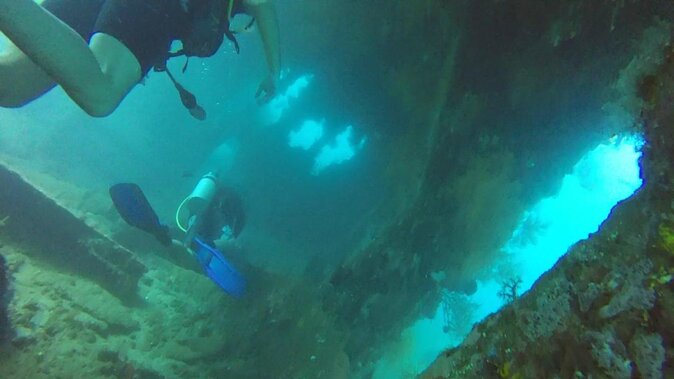
- Try scuba without certification: You learn basic procedures and use the equipment under direct supervision.
- Patient instructors matter: Staff members including Stephanie, Jack, Juan, and Danny are singled out for calm, clear coaching.
- Two possible water settings: Your session may take place in a shallow bay or from a boat at two nearby Caribbean locations.
- Marine life close to shore: Expect the possibility of coral, fish, sea anemones, and stingrays even during a shallow session.
- Everything essential is supplied: Equipment, tanks, weights, wetsuit, and a Discover Scuba booklet are included.
- Allow three and a half hours: The session includes classroom instruction, shallow-water practice, and a supervised underwater outing.
What this St. Thomas scuba lesson is really like
This is an introduction, not a certification course. That distinction matters. You are not leaving with an open-water license, but you can find out how your body and mind respond to breathing underwater before committing to a longer training program.
The experience lasts about three and a half hours. You begin with an instructor on land, using the included Discover Scuba booklet to learn the basic equipment and procedures. Then you move into shallow water to get comfortable with breathing through a regulator, controlling the gear, and following underwater signals.
Only after that practice do you make the main underwater excursion. Depending on conditions and the plan for the day, you may enter from the beach for a shallow bay session, or board a boat for two Caribbean Sea locations with reefs and wrecks. The supplied information does not promise one fixed site, so ask what is planned when you arrive if the setting matters to you.
That flexibility is useful in St. Thomas, where weather and water conditions can affect the day. It also explains why two people could have slightly different experiences while booking the same activity. One may spend most of the time close to shore, while another may visit boat-accessible sites.
More first-time dives in the world:
- Discover Scuba Diving
★ 5.0 · 1,676 reviews - Barcelona: PADI Discover Scuba Diving
★ 4.7 · 1,016 reviews - Discover Diving in Curacao
★ 5.0 · 886 reviews
The classroom start helps settle first-time nerves
The land-based lesson is not filler. For a first scuba attempt, it gives you time to understand the equipment before you are asked to use it in the water.
You will work with a qualified instructor and receive a booklet to take home. The lesson covers the basic procedures needed for the session, though the exact teaching sequence is not specified. Expect a practical introduction rather than a full certification curriculum.
This is where the instructors’ manner becomes important. Jack is described as clear and patient, while Stephanie is praised for keeping close and helping in the water. Juan and Danny are also noted for patient, careful assistance. That pattern is worth noting because comfort is often more important than speed during a first attempt.
You should not feel pressured to rush through this part. If a mask feels wrong, a regulator seems awkward, or the equipment does not fit well, speak up immediately. One participant had an equipment problem at first, and the instructor changed the troublesome item. That is exactly the kind of response you want from a beginner-focused operation.
Shallow water practice before the main session
The first water work takes place in shallow water. This gives you a controlled place to get familiar with the gear and basic procedures before moving farther out.
You will use the full scuba setup: BCD, regulator, tank, weights, wetsuit, fins, mask, and snorkel. Because everything is provided, you do not need to assemble a personal kit for this one-time trial. You should still expect to spend some time getting fitted and learning how each piece works.
The shallow practice is especially helpful if you are uneasy about breathing underwater. You can focus on the instructor’s directions and your own breathing rather than trying to manage a complicated setting at the same time.
This part also reveals the main limitation of the experience. Some sessions remain very close to shore and reach only about 15 feet. That can still provide a worthwhile introduction, with coral and sea life nearby, but it may feel modest if you expected a long descent or a far-off reef.
I would think of the shallow water as a test of the activity itself. If you enjoy the calm, measured rhythm of scuba here, certification may be a good next step. If you find the equipment or breathing method uncomfortable, you have learned that without signing up for a multiday course.
Bay session or boat trip to Caribbean sites
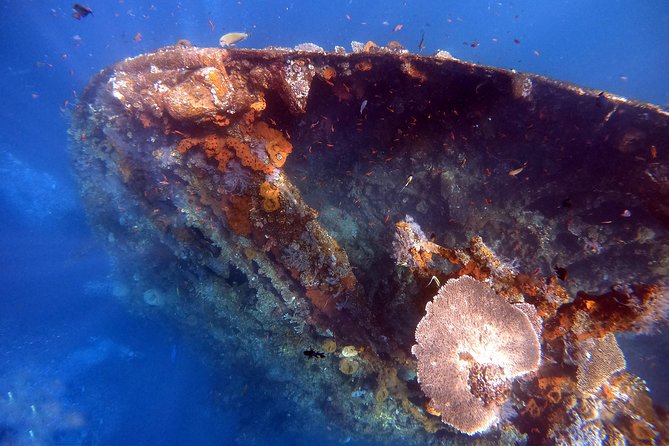
After the practice work, the final underwater portion may take one of two forms. A bay session keeps things simple and close to shore. A boat trip offers access to two Caribbean locations, including reefs and wrecks off St. Thomas.
The bay option has real advantages. It reduces the amount of moving around and keeps the focus on learning. You may still see coral, fish, sea anemones, and other marine life. One participant reported seeing a very large stingray resting on the bottom, which gives you an idea of the kind of surprise that can appear even in a shallow setting.
The drawback is depth and scale. If you are looking for a more substantial underwater expedition, a beach entry at roughly 15 feet may seem too limited. You might reasonably feel that snorkeling could show you some of the same near-shore sights.
The boat option is more appealing if you want a stronger sense of exploring St. Thomas underwater. Reefs and wrecks offer a different setting from a sandy or shallow bay, and visiting two sites gives the session more variety. Still, the exact sites, depth, and time at each location are not specified, so you should not book this expecting a guaranteed wreck visit or a particular reef.
Ask about the planned water location before the session begins. That simple question will help you match your expectations to the day’s program.
A few more dives around the world worth comparing
- Great Barrier Reef Snorkeling and Diving Cruise from Cairns
★ 4.5 · 3,714 reviews - First-Time Scuba Diving in Honolulu + Free Videos
★ 5.0 · 3,123 reviews - Oahu Shark Dive
★ 5.0 · 2,903 reviews - Silfra: Diving Between Tectonic Plates – Meet on Location
★ 5.0 · 2,139 reviews
Marine life you might see close to shore
The underwater setting is one of the best reasons to try this activity. Even the shallow option can put you close to coral and small sea life without requiring certification.
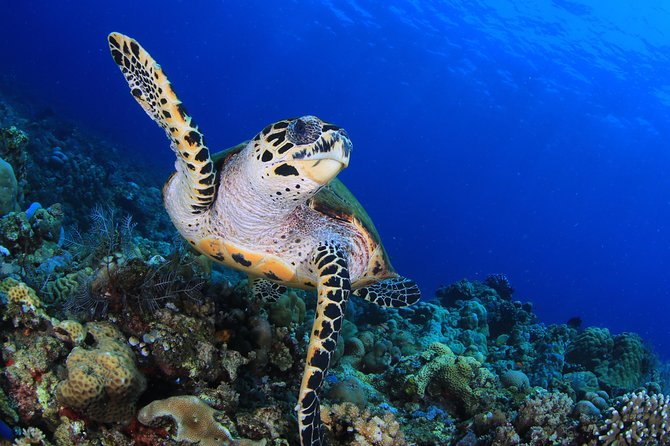
You might see fish moving through the coral, sea anemones, and stingrays resting on the bottom. The experience does not promise specific animals, so treat these sightings as possibilities rather than guarantees. Water conditions, visibility, and the site selected for the day will all affect what you see.
The benefit of scuba over ordinary swimming is not just depth. The equipment lets you remain below the surface and observe at a slower pace. That can make it easier to notice small creatures and coral formations that you would pass quickly while snorkeling.
At the same time, you should keep the scale of the session in mind. This is a guided first lesson, not a marine biology expedition. The instructor’s first job is to keep you safe and comfortable, so the pace may be deliberately gentle.
Why the $175 price can make sense
At $175 per person, this is not the cheapest water activity in St. Thomas. It can still be good value if you want to test scuba without buying equipment or committing to certification.
The price covers the booklet, tanks, weights, BCD, regulator, wetsuit, fins, mask, snorkel, and qualified instructor. That is a substantial package for a first-time session. You are paying for instruction and supervision as much as for the underwater time.
The value is strongest for someone who has always wondered what scuba feels like. You get a structured introduction, practice, and a supervised underwater outing in one half-day. If you later choose certification, you will already have a clearer idea of whether you enjoy the equipment and the breathing technique.
The value is weaker if your only goal is to see shallow coral and fish. A snorkeling outing may provide similar near-shore views, especially if your session stays around 15 feet. You are paying here for the instruction, equipment, and chance to try scuba, not simply for access to the water.
A gratuity of 15 to 20 percent is recommended and is not included. Factor that into the final cost when comparing activities.
The instructors are the heart of the experience
For a first scuba session, technical equipment matters, but the instructor’s patience may matter even more. You need someone who stays nearby, explains each step plainly, and reacts calmly if you have trouble.
Stephanie is praised for her work in the water and for helping participants feel comfortable. Jack is described as clear and patient. Juan and Danny are also noted for staying attentive through the process. These details suggest an instructional style that gives beginners time to find their rhythm.
That is particularly valuable if you arrive nervous. One participant described feeling uneasy at first but becoming comfortable during the session. Another had a gear problem that was fixed by switching out the item. You should see those moments as part of the practical value of a supervised introduction, not as signs that scuba is only for experts.
The group size is capped at 12 people. That is small enough to avoid a huge boat-class atmosphere, though it is not a private lesson. Your direct attention will depend on the group and on how much help each person needs.
Who should book this activity
I would recommend this experience to you if you:
- Have never used scuba equipment
- Want to try the activity before pursuing certification
- Prefer an instructor nearby throughout the session
- Are comfortable with a moderate level of physical activity
- Want equipment supplied rather than rented separately
- Have about half a day available in St. Thomas
It is also a good choice for families or small groups who want to try something new together, provided every participant meets the health and fitness requirements.
I would be more cautious if you want a guaranteed deep reef excursion, a specific wreck, or a long boat outing. The program can use a shallow bay, and one version reaches only about 15 feet. If the exact underwater setting is central to your plans, confirm it before paying.
You also need to take the health rules seriously. Everyone completes a health questionnaire before entering the water. Certain medical conditions, including asthma or heart problems, may prevent you from participating, so consult a doctor in advance if you have concerns.
Do not schedule this activity within 24 hours of flying. That rule is especially important if St. Thomas is the final stop of your vacation and you have an early departure the next day.
Booking timing, weather, and cancellation
The experience is commonly reserved about 46 days ahead, so booking early is sensible if your vacation dates are fixed. Confirmation is provided when you book, and the activity begins and ends at the St. Thomas meeting point. It is near public transportation, which may help if you are not using a car.
The operator can cancel for poor weather or if the minimum number of participants is not reached. In those cases, you are offered another date or experience, or a full refund.
You can cancel for a full refund up to 24 hours before the local start time. Cancellations or changes made inside that 24-hour window are not refunded or accepted. Since water conditions matter, I would avoid placing this on the last possible day of your vacation.
Should you book the St. Thomas Discover Scuba experience?
Book it if you want a friendly, supervised introduction and you are more interested in trying scuba than in reaching a particular depth. The full equipment package, three-and-a-half-hour format, and close instructor support make the $175 price reasonable for a first attempt.
Go in with the right expectations. Your session may be a shallow bay outing rather than a dramatic boat trip to a wreck. That is not a flaw if your goal is to learn the basics and see how scuba feels.
The strong recommendation rate and 5-star rating from 43 reviews fit the experience’s main strength: patient instruction for beginners. I would choose it for the chance to learn a new skill in St. Thomas, especially if Stephanie, Jack, Juan, or Danny is leading the session. I would skip it only if snorkeling is enough for you or if you need a guaranteed deep-water site.
FAQ
Do I need scuba certification to join?
No. This is a beginner introduction that lets you try scuba under instructor supervision without first earning certification.
How long does the experience last?
The activity lasts approximately 3 hours and 30 minutes.
Where does the experience start and end?
It starts in St. Thomas, U.S. Virgin Islands, and ends back at the meeting point.
What equipment is included?
The price includes tanks, weights, a BCD, regulator, wetsuit, fins, mask, snorkel, and other scuba-related equipment needed for the session.
Is an instructor with me during the activity?
Yes. A qualified instructor is included and remains with you during the supervised experience.
Will the session take place from the beach or a boat?
It may be either. The program offers shallow bay sessions or boat trips to two Caribbean Sea locations, depending on the plan for the day.
How deep will I go?
Depth can vary. One reported version of the session reached about 15 feet from the beach, while the boat option visits reefs and wrecks off St. Thomas.
Can I fly within 24 hours after the activity?
Flying within 24 hours of scuba is not recommended.
What happens if bad weather cancels the activity?
You will be offered a different date or experience, or you can receive a full refund. A full refund is also available if you cancel at least 24 hours before the local start time.
Just added around the world
- Zakynthos: Scuba Diving Experience with Underwater Photos★ 4.5 · 31 reviews
- Zanzibar 1 Day Scuba Diving Course for Beginners with Lunch★ 5.0 · 9 reviews
- Zanzibar : 3-Day PADI Open Water Scuba Diving Adventure★ 4.9 · 6 reviews
- West Palm Beach: Beginner Scuba Diving Adventure with Videos★ 4.8 · 99 reviews
- Oahu: Waikiki Discovery Scuba Diving for Beginners★ 4.8 · 99 reviews
- Zanzibar: 1 Day Blue Trip with 2 Stunning Scuba Dives★ 4.9 · 4 reviews
- Villasimius: Capo Carbonara First Time Dive with Instructor★ 4.9 · 50 reviews
- Visit Cham Islands & Snorkelling & Scuba Diving★ 3.8 · 17 reviews
Discover Scuba Diving, compared.
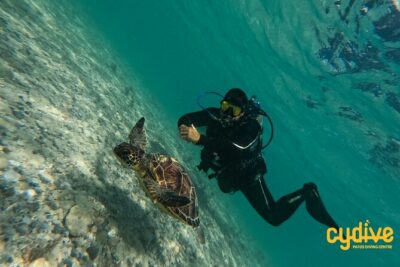
Half-Day Scuba Diving Tour – Discover Scuba Diving!
Read our review →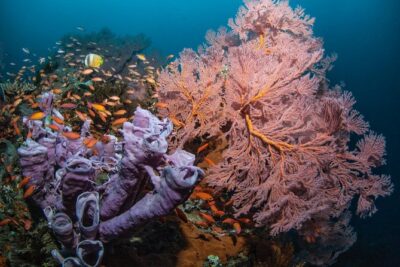
2 Days Discover Scuba Diving in Nusa Lembongan – Scuba Initiation
Read our review →Lists this dive appears in