
REVIEW · SPAIN
Dive Christening
Menorca’s beginner scuba experience keeps the hard part simple: you cross the street from the center, board a boat, and reach the water without hauling a full tank and wetsuit down a long shore path. After a calm briefing, you learn to breathe through the regulator, clear your ears, and communicate underwater before making a gentle descent.
I like the boat departure, which makes the outing more comfortable, and the fact that the marine reserve fee, equipment, insurance, and taxes are already covered. The main consideration is that this is a first-time introduction, not a certification course, and the activity depends on suitable weather.
I also like the gradual start. You first put your face in the water in about 1 meter of depth, then move down to roughly 1 to 1.5 meters before beginning the underwater tour. The main drawback is that the exact underwater route can change with conditions, and the photo report costs extra.
Key points to know before booking
- Boat access below the lighthouse: You avoid carrying heavy scuba equipment a long way and reach the marine reserve by boat.
- A gentle first descent: You begin by breathing at the surface, then progress to about 1 to 1.5 meters before going deeper.
- About 40 minutes underwater: The guided route reaches a maximum depth of 10 meters, subject to conditions and your comfort.
- A useful all-in price: Scuba equipment, diving insurance, the marine reserve charge, boat departure, and taxes are included.
- Private group setting: Only your group takes part in the activity, which can make instructions and pacing more personal.
- Bring only the basics: You need a swimsuit, towel, and sun cream. A medical certificate is not required, but you must complete a health questionnaire.
Starting in Fornells with a short safety lesson
You meet at Passeig Marítim Poeta Gumersind Riera, 68A, in Fornells. The activity takes about two to two and a half hours, with one stated example running from 3 p.m. to around 5 p.m. Allow the full advertised time rather than planning a tight connection afterward.
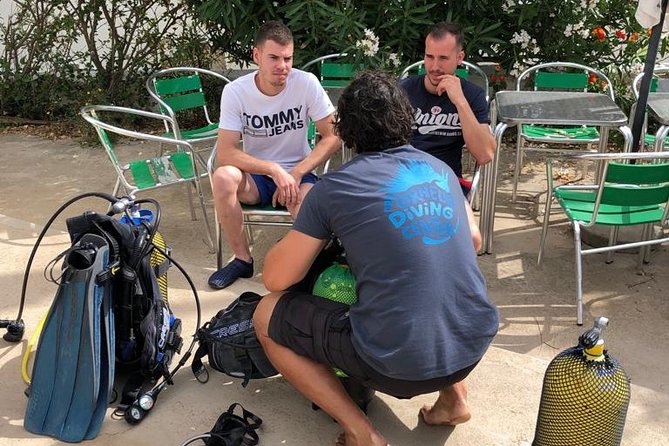
The first stage is on land. The instructor explains how the scuba equipment works, how to breathe underwater, how to communicate with hand signals, and how to balance pressure in your ears. For a first session, this preparation matters more than it may sound. New equipment can feel strange, and knowing the basic signals lets you focus on staying calm rather than trying to guess what the guide means.
You also complete a medical questionnaire at the center. You do not need to bring a medical certificate, which removes one common bit of pre-trip paperwork. The supplied information says most people can participate, but you should answer the health questions carefully and raise any concern with the staff before entering the water.
The instruction is offered in English. The experience provider is Dune Baleares Fornells, and the available feedback gives repeated praise to the instructors for being patient, attentive, professional, and clear. No instructor names are supplied, so I would not expect to book a particular guide by name.
A few more dives around Spain worth comparing
- Tenerife: Your First Scuba Diving Experience in Turtle Area
★ 4.7 · 1,679 reviews - Barcelona: PADI Discover Scuba Diving
★ 4.7 · 1,016 reviews - Mallorca: Discover Scuba Diving for Beginners
★ 4.7 · 805 reviews
Boarding the boat instead of walking with tanks
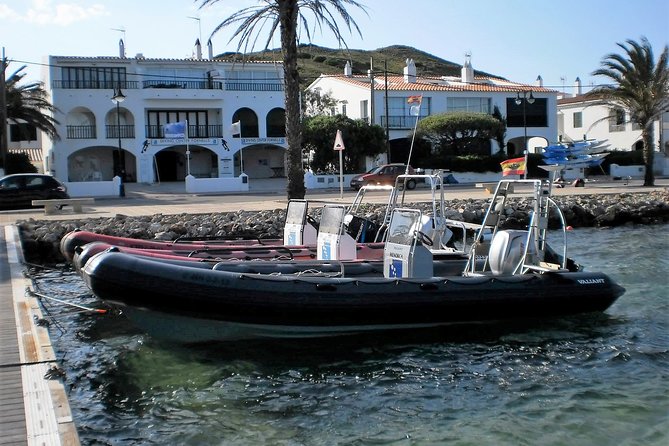
One practical advantage comes before the underwater part. The boat leaves from close to the meeting point, so you only cross the street rather than carrying heavy scuba gear over a long distance. That may sound minor, but a tank, buoyancy equipment, mask, and other gear become tiring quickly, especially in warm weather.
The boat takes you out of the bay toward the area below the lighthouse, within the marine reserve. This gives the trip a pleasant sense of movement without adding a long transfer or complicated transport plan. The activity begins and ends at the same Fornells meeting point, and the location is near public transportation.
The boat setup also helps the staff place you in the water at a suitable spot. You do not simply walk into the sea and try to manage the equipment alone. Instead, the crew helps you get ready in the water, where the first practice takes place in a shallow area.
A boat is not automatically better for every person. If you dislike being on the water or prefer to enter from a beach, this arrangement may feel less familiar. But for a beginner who wants to avoid a long gear carry, it is a sensible design.
Getting comfortable at the natural pool below the lighthouse
The usual site is near the exit of the bay, below the lighthouse, in the marine reserve. The boat anchors in a place described as looking like a natural pool, with a bottom at roughly 1 meter. That shallow start is the key comfort feature of the whole outing.
You first practice breathing through the regulator with your head in the water. This is not a rushed plunge. You can get used to the mouthpiece, the sound of your own breathing, and the feel of the mask before moving lower.
Next, you descend to around 1 to 1.5 meters. At this point, the lesson about ear pressure becomes useful. Even a modest change in depth can make your ears feel blocked, so the guide shows you how to balance them. You also rehearse underwater communication, giving you a way to signal if you need help, want to stop, or have a problem with your equipment.
This gradual approach is especially useful if you are nervous. The staff can watch how you respond at each stage instead of taking you immediately into deeper water. The experience is still real scuba, but the first minutes are built around control and confidence.
The 40-minute underwater tour to 10 meters
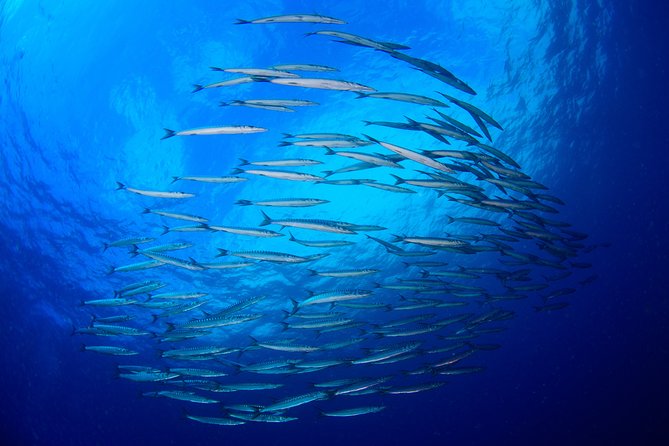
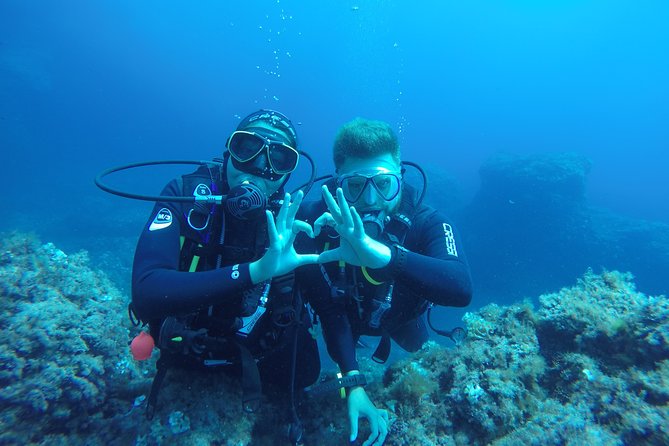
Once you are comfortable, the group begins a guided route lasting about 40 minutes. The maximum depth is 10 meters, which is enough to give you a genuine sense of moving underwater without turning the activity into an advanced session.
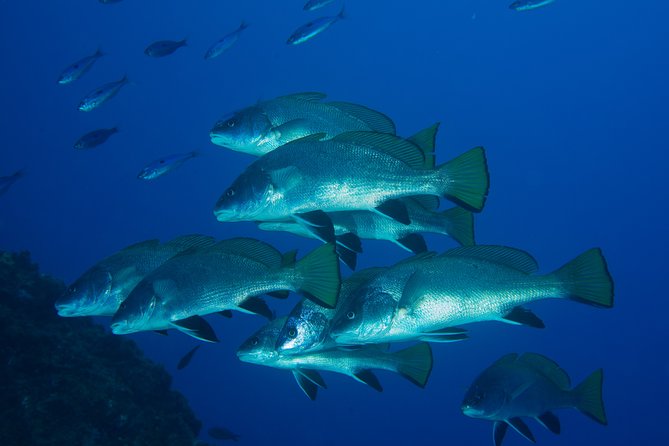
The focus is on enjoying the marine reserve and learning how the equipment works in a real setting. You should expect an introductory pace, with the guide close by and attention on comfort, breathing, and safe movement. The supplied information does not promise a particular fish, reef, or underwater landmark, so I would not book this expecting a specific wildlife sighting.
That uncertainty is normal for a sea-based activity. Water conditions, visibility, and marine life vary. The more reliable part of the experience is the structure: shallow practice, a controlled descent, and a guided route within the reserve.
You may find the underwater world especially striking because the experience stays near the bay and lighthouse rather than requiring a full-day boat trip. At the same time, the 10-meter limit means this is an introduction, not a chance to reach dramatic deep-water sites.
The activity is private, with only your group participating. That can be a real advantage for a first attempt. You are not being compared with a large class, and the guide can adjust the pace to the people in your group. Private does not mean unlimited flexibility, however. The boat schedule, weather, and safe operating conditions still shape the outing.
Same water, a completely different day underwater:
- Lanzarote Introductory Scuba Diving Experience
★ 5.0 · 766 reviews - Tenerife: Beginner’s Dive at a Spot with Turtle Sightings
★ 4.7 · 627 reviews - Scuba Diving Experience for Beginners in Gran Canaria
★ 5.0 · 561 reviews - Tenerife First Time Scuba Dive – Turtle Habitat, Small Groups
★ 4.5 · 456 reviews
What the price of $126.15 includes
At $126.15 per person, this is not a cheap casual swim. It is priced as a complete beginner scuba session with a boat ride and professional equipment, not as a simple beach activity.
The package includes:
- Scuba equipment
- Diving insurance
- Marine reserve fee
- Boat departure
- All fees and taxes
That list makes the price easier to judge. You do not need to rent a tank separately, pay an additional marine reserve charge, or arrange separate insurance for the session. The boat departure is also built in, which matters because the transport to the site is part of the experience rather than an optional add-on.
The photo report is not included. If you want a record of your first underwater session, ask about the cost before you begin. If you are happy to keep the memory without photos, the advertised price covers the essentials.
I would compare this cost with the value of a guided, private introduction rather than with a short snorkeling trip. You are paying for instruction, safety equipment, boat access, insurance, and time in the water. For someone testing scuba for the first time, that bundled approach can be worthwhile. For someone who already holds certification and wants a longer or more technical outing, it may feel limited for the price.
What to bring and what not to worry about
Keep your packing light. Bring a swimsuit, towel, and sun cream. The scuba equipment is supplied, so you do not need to carry your own gear to the center.
Sun cream is worth applying before boarding, but take care around the equipment and the water. A towel is useful after the boat ride and the time in the sea. Since the activity ends back at the meeting point, you have a clear place to return to after the session.
You do not need a medical certificate. You do need to complete the medical questionnaire, and the staff will use that information to determine whether participation is suitable. The activity data says most people can participate, but that should not be read as a substitute for honest answers about your health.
The confirmation arrives when you book, and the activity is offered in English. Since the experience is normally booked about 12 days ahead, I would reserve early if your Menorca schedule is fixed, particularly if you want a certain day.
The strongest points, and the limits
The most praised part of this experience is the instruction. The available comments repeatedly describe the guides as professional, attentive, friendly, and good at explaining the process. One first-time participant described the session as a very successful introduction, with the instructor and guide staying helpful throughout.
That matches the structure of the outing. You are not expected to know how to breathe through a regulator or manage your ears before arriving. Those skills are explained, practiced, and then used in the sea.
The underwater setting also receives strong approval. The natural-pool area below the lighthouse gives beginners a calmer place to start, while the marine reserve adds interest to the boat trip and the underwater route.
Still, keep the limits in view:
- The session lasts only about 40 minutes underwater.
- The deepest point is 10 meters.
- The route and conditions may vary.
- Photos cost extra.
- Poor weather can cancel the activity.
- This does not replace scuba certification.
The weather policy is fair but important. If poor conditions force a cancellation, you are offered another date or a full refund. If you cancel, you need to do so at least 24 hours before the start time for a full refund. Changes or cancellations inside that 24-hour window are not accepted for a refund.
Who will enjoy this Fornells experience most
I would recommend this to a first-time scuba participant who wants a carefully managed introduction rather than a full training course. The shallow practice area, close instructor support, private group format, and short underwater route all help reduce the pressure of trying something unfamiliar.
It also suits a couple, family group, or small party that wants to share a new activity. Only your group participates, so you can experience the lesson together without being mixed into a large public class.
This is less suitable if you want a long day on the water, advanced scuba skills, a specific wildlife encounter, or a certification. It may also disappoint someone who only wants to snorkel, since the cost reflects full scuba equipment, instruction, insurance, and boat service.
Think about your comfort with the sea before booking. You do not need prior scuba experience, but you do need to be willing to place your face in the water, use a regulator, and descend gradually. The staff can guide you, but they cannot remove the basic sensation of being underwater.
Should you book the beginner scuba session?
Book it if you want a well-organized first taste of scuba in Menorca and value close instruction, boat access, and an all-in price. The gradual training, shallow starting point, marine reserve setting, and private group format make the experience approachable.
Skip it if you are looking for a full certification course, a long underwater expedition, or guaranteed photographs and specific marine life. At $126.15, the value comes from the complete package and the support, not from a long duration.
For most beginners who are curious but cautious, I think the design makes sense. You learn the basics on land, practice in shallow water, and then spend about 40 minutes on a guided route no deeper than 10 meters. Bring your swimsuit, towel, and sun cream, leave room in your schedule for the full two to two and a half hours, and keep the date flexible enough to account for the weather.
FAQ
Where does the scuba experience start and finish?
It starts at Passeig Marítim Poeta Gumersind Riera, 68A, 07748 Fornells, Menorca. The activity ends back at the same meeting point.
How long does the experience last?
The advertised duration is approximately two hours and 30 minutes. The activity description also gives an example running from 3 p.m. to around 5 p.m., so allow roughly two to two and a half hours.
How deep will I go?
The guided underwater route reaches a maximum depth of 10 meters. You first practice at the surface, then descend to about 1 to 1.5 meters before continuing.
Do I need previous scuba experience?
No previous scuba experience is stated as a requirement. The session is designed for beginners and includes explanations about equipment, breathing, underwater communication, and ear pressure.
Is scuba equipment included?
Yes. The package includes the use of scuba equipment, diving insurance, the marine reserve fee, the boat departure, and all fees and taxes.
Do I need a medical certificate?
No medical certificate is required. You must complete a medical questionnaire at the center.
What happens if the weather is poor?
If the activity is canceled because of poor weather, you are offered a different date or a full refund. You can also cancel for a full refund if you do so at least 24 hours before the scheduled start time.
Just added around Spain
- Your first introductory dive in Lanzarote with FREE photos.★ 4.7 · 16 reviews
- Tenerife: 2 Diving Sessions for Certified Divers★ 4.2 · 7 reviews
- TRY SCUBA – Experience for beginners★ 5.0 · 2 reviews
- Lanzarote: Beginner Scuba Diving from the Beach★ 5.0 · 2 reviews
- Beginner Scuba Dive with Scubapoint Tenerife in Turtle Area★ 4.7 · 8 reviews
- Scuba Experience in Tenerife with Guide★ 5.0 · 30 reviews
- Try Scuba Diving in a turtle area (boat)★ 5.0 · 93 reviews
- Try Dive in Abades Bay with a private instructor★ 4.0 · 4 reviews
Scuba Diving in Spain, compared.
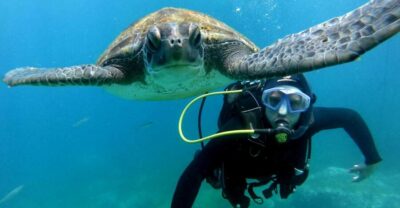
Tenerife: Your First Scuba Diving Experience in Turtle Area
Read our review →
Tenerife: Beginner’s Dive at a Spot with Turtle Sightings
Read our review →
Scuba Diving Experience for Beginners in Gran Canaria
Read our review →
Tenerife First Time Scuba Dive – Turtle Habitat, Small Groups
Read our review →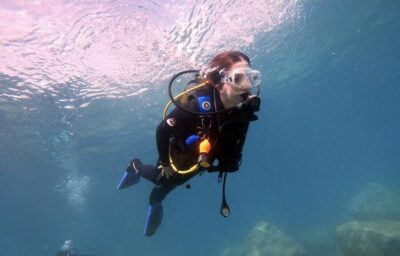
Lists this dive appears in