
REVIEW · SCUBA DIVING
Dive into Spirituality: 6 Days Trek to Gosaikunda Lake
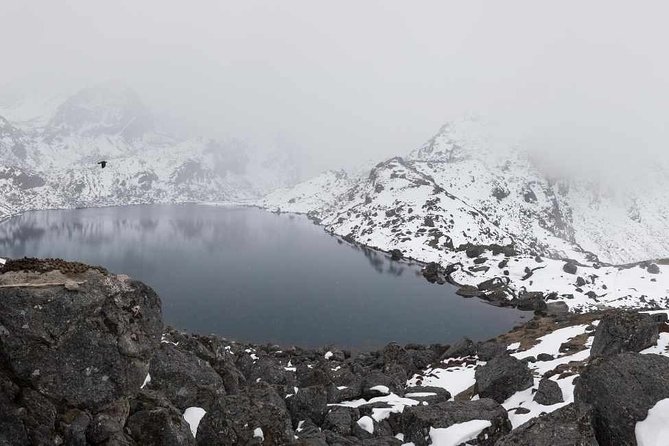
Gosaikunda is not simply a mountain lake at the end of a trail. It is a holy place for Hindus and Buddhists, reached by a demanding route through Langtang National Park. You walk past smaller sacred lakes, high ridges, ethnic villages, and wide views toward Langtang Himal and Ganesh Himal.
I like the short six-day format, which gives you a real Himalayan trek without requiring the longer schedule of Everest Base Camp. I also like that the price includes local meals, teahouse lodging, conservation permits, a guide, and porter support. The main drawback is the pace: the uphill walk to Chandanbari takes about six to seven hours, and the following day reaches Gosaikunda at high altitude.
- Sacred lakes: Visit Gosaikunda, Surya Kunda, Saraswoti Kunda, and Bhairab Kunda.
- Kathmandu access: Reach the trailhead at Dhunche by public transport rather than a costly private transfer.
- Mountain views: Look for Langtang Himal and Ganesh Himal during the trek.
- Local support: An English-speaking guide and one Sherpa porter for every two trekkers are included.
- Simple mountain nights: Sleep in twin-sharing teahouse rooms with breakfast, lunch, and dinner included.
- Flexible booking: Cancel at least 24 hours before departure for a full refund.
Why Gosaikunda Makes a Strong Short Trek
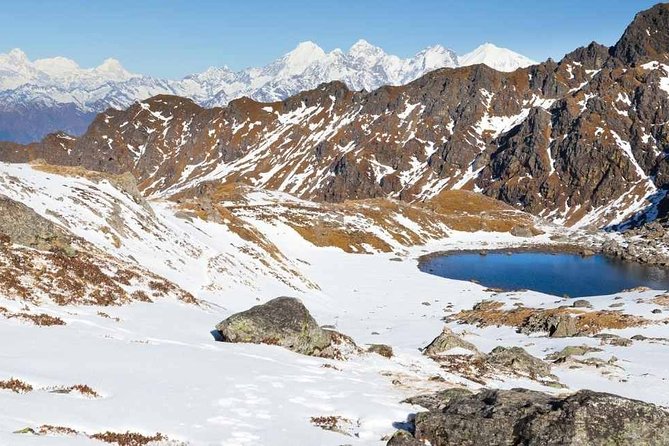
I see Gosaikunda as a good choice for you if six days is all the time you have for the mountains. It gives you a taste of Nepal’s village life, forest trails, spiritual sites, and snowy Himalayan views without committing to a two-week route.
The main prize is the lake itself. Gosaikunda is sacred in Hindu and Buddhist practice, so the destination has meaning beyond its scenery. You can visit the nearby Surya Kunda, Saraswoti Kunda, and Bhairab Kunda before spending the night near the holy lake.
That spiritual focus changes the feel of the walk. This is not just a route measured by distance and elevation. The lakes and mountain setting give the trek a clear purpose, and the chance to worship at Gosaikunda adds a cultural dimension that a standard mountain hike may lack.
You also pass through communities with different ethnic traditions. The details of each village are not laid out in the trip plan, so you should not expect a formal cultural program. Still, the route gives you direct contact with mountain settlements and the everyday setting of the people who live along the trail.
Day One: Kathmandu to Dhunche by Public Transport
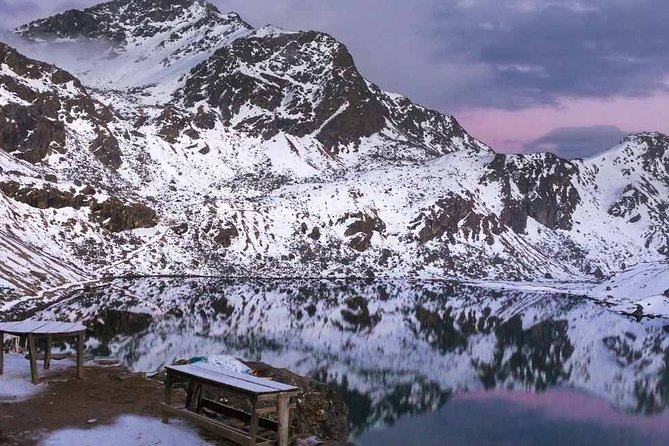
The trip begins early, with a stated meeting time of 5:45 am. You leave Kathmandu by public transport and travel through Trisuli Bazar toward Dhunche, the starting point for the walking portion.
This first day is mostly about getting into the mountains. Public transport keeps the package price under control, but it also means you should expect a more basic and less private transfer than you would get in a dedicated vehicle. That tradeoff makes sense for a budget-conscious trek, though you will want to arrive at the meeting point on time and ready for an early start.
Dhunche is your overnight base before the trail begins. There is no sightseeing program listed for the day, so think of it as a travel and preparation day. Use the time to check your pack, organize water and clothing, and get ready for a long uphill walk the next morning.
A few more dives around the world worth comparing
- Semporna: Bohey 3 Islands Hike, Snorkel/Dive Tour with Lunch
★ 4.3 · 50 reviews - Serra D’Arga Hike, Dive & Dine Like A Local in a Secret Spot
★ 5.0 · 19 reviews - Semporna Hike Bohey 3 Island Snorkel Dive Tour and Lunch
★ 3.5 · 3 reviews
Day Two: The Long Uphill Walk to Chandanbari
The second day brings the first serious test. You walk uphill to Chandanbari for about six to seven hours. The schedule describes this as a demanding ascent, so you should have a moderate level of physical fitness before booking.
This is where the six-day schedule becomes efficient but not leisurely. You are not spending several extra days easing into the route. The climb asks you to settle into a steady rhythm, take sensible breaks, and keep enough energy for the next day.
The reward is the change in scenery. The route moves through forest and rugged mountain terrain, with the feeling of the city falling far behind. Langtang National Park is known for wildlife such as red pandas and snow leopards, although spotting either animal is not promised. You should treat the park’s wildlife as a possibility, not a scheduled feature.
Chandanbari provides a teahouse night. Twin-sharing accommodation is included, as are dinner and the other local meals covered by the package. Teahouse lodging is practical rather than luxurious. You get a place to sleep along the route, but hot showers, drinks, internet, and other extras cost more or are not included.
Day Three: Reaching the Sacred Lakes
The third day starts early and takes you toward Gosaikunda. This is the emotional center of the trek, and the walking day combines the physical challenge of higher terrain with the spiritual importance of the destination.
At Gosaikunda, you can worship at the holy lake and visit Surya Kunda, Saraswoti Kunda, and Bhairab Kunda. The route also opens to views of Langtang Himal and Ganesh Himal. The description uses heavenly language for good reason: the combination of clear mountain air, snow-covered peaks, and sacred water gives this day a strong sense of place.
You spend the night at the lake area. The plan does not provide an exact elevation or a detailed distance, so I would not pretend to judge the altitude challenge by numbers alone. What matters is that you are walking uphill for several days and sleeping in a high mountain setting. Take the guide’s advice seriously, keep your pace controlled, and tell the guide if you feel unwell.
The early start also matters. It gives you more time on the trail and allows you to spend meaningful time around the lakes before the overnight stay. The exact amount of free time will depend on trail conditions and your walking speed.
Day Four: Returning to Chandanbari
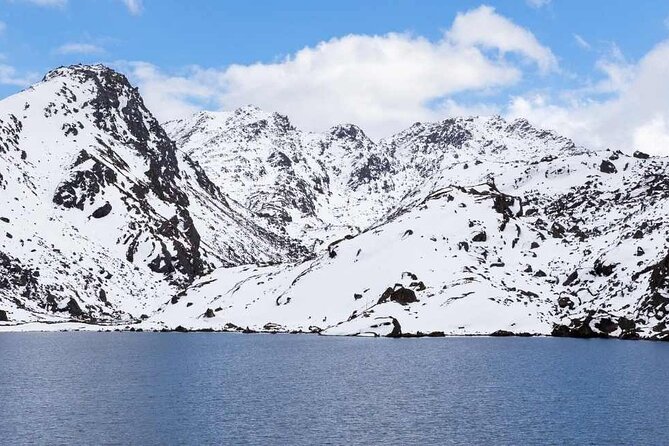
Day four retraces the route to Chandanbari. The return may feel easier because you know the terrain, but downhill walking can still be tiring on your knees and feet.
This is a useful day for looking back at the details you may have missed on the ascent. Forest trails can appear entirely different when you are moving in the opposite direction, and you can enjoy the views without the same pressure of reaching Gosaikunda.
You again sleep at Chandanbari. The repeated overnight stop keeps the route simple and avoids adding another long transfer. It also gives you a familiar place to rest before the final walking day.
Same water, a completely different day underwater:
- Great Barrier Reef Snorkeling and Diving Cruise from Cairns
★ 4.5 · 3,714 reviews - First-Time Scuba Diving in Honolulu + Free Videos
★ 5.0 · 3,123 reviews - Oahu Shark Dive
★ 5.0 · 2,903 reviews - Silfra: Diving Between Tectonic Plates – Meet on Location
★ 5.0 · 2,139 reviews
Day Five: Downhill to Dhunche
The fifth day takes you downhill from Chandanbari to Dhunche. The route description identifies this as a downhill walk, so your legs may appreciate the change after the earlier ascent, though steep descents can be hard on tired joints.
Dhunche is where the walking portion ends. You spend the night there before returning to Kathmandu, which is a sensible plan. It avoids combining the final mountain descent with the full public transport journey back to the capital on the same day.
The schedule leaves room for a calm final evening in the trail town. Since food, drinks, and accommodation in Kathmandu are not included, Dhunche is also your last night covered by the trekking package.
Day Six: Returning to Kathmandu
The final day is a drive back to Kathmandu. The trip ends with time to reflect on the week’s walking, the sacred lakes, and the contrast between the city and the mountain villages.
The return journey is not presented as a sightseeing day, so keep your expectations practical. Road travel in the region can take time, and the experience is about completing the route rather than adding another attraction.
What the $735 Price Really Covers
At $735 per person, the package is not just a guiding fee. It includes transport from Kathmandu to Dhunche and back by public transport, all local breakfast, lunch, and dinner during the trek, twin-sharing teahouse accommodation, the Langtang Conservation Area Permit, and a TIMS card.
You also receive an English-speaking trekking guide and one Sherpa porter for every two trekkers. That porter arrangement can make a real difference on the uphill days. You still need to carry a daypack with personal essentials, but you do not have to haul your full load alone.
Government taxes and service charges are included too. That makes the advertised price easier to assess because several standard trekking costs are already bundled into it.
The exclusions are important. You pay for tips, drinks, hot showers, internet, and meals and accommodation in Kathmandu. Tea, coffee, water, soft drinks, and alcohol are not included. Travel insurance is compulsory, so include that in your true trip budget.
I consider the price reasonable for someone who values support and wants a compact package. It would be less attractive if you already have your own guide, porter, permits, and accommodation plans. The value comes from reducing the work involved in arranging a short Himalayan trek.
How the Private Format Works
This is described as a private activity, meaning only your own group participates. That can give you more control over walking pace and rest stops than a large mixed group.
At the same time, you travel by public transport to and from Dhunche. Private does not mean a private car or luxury service from start to finish. It refers to the trekking group arrangement, while the road transfer remains a local public transport experience.
An English-speaking guide is included, but no individual guide name is provided in the tour details. Manish is mentioned in connection with arranging a trek in the Langtang region, but you should confirm who your assigned guide will be before departure if that matters to you.
Practical Preparation for the Six Days
You need moderate physical fitness for this route. The six to seven hour uphill day is the clearest measure of what the trip demands, and the route also includes a high-altitude approach to Gosaikunda.
Pack for changing conditions, but avoid carrying more than you need. Your porter support covers one porter for every two trekkers, so a manageable daypack remains important. Keep water, warm layers, rain protection, personal medication, and basic trail items with you.
Because drinks are excluded, plan to pay separately for water and other beverages along the route. Hot showers and internet are also not included, so approach the trek as a chance to step away from normal conveniences for several days.
The 5:45 am start is not a minor detail. Set an alarm, confirm the meeting point, and allow time to reach it. The booking confirmation is provided when you reserve, and the activity is near public transportation.
You can cancel for a full refund if you do so at least 24 hours before the start time. Changes or cancellations inside that window are not accepted for a refund. The trip depends on suitable weather and a minimum number of participants. If the operator cancels for either reason, you are offered another date or experience, or a full refund.
Who Will Like This Trek Most
I would recommend this route to you if you want a meaningful Himalayan trip but have only six days. It suits people who enjoy walking, can manage long uphill days, and want a mix of sacred places, village life, forest trails, and mountain views.
It is also a strong option if Everest Base Camp is not practical because of your schedule. One of the people who arranged this trek had originally hoped to do Everest Base Camp but chose the Langtang area because the available time was limited. That is a useful comparison: Gosaikunda is not a replacement for the Everest route, but it offers a shorter way into Nepal’s mountain country.
I would be cautious if you dislike early starts, public transport, basic teahouses, or long climbs. The package does not promise private vehicles, luxury rooms, included drinks, or extensive free time. You should also avoid treating the wildlife mention as a guarantee of animal sightings.
Should You Book the Gosaikunda Trek?
Book it if you want a compact, guided route to a sacred Himalayan lake and value having permits, meals, lodging, transport, and porter support arranged together. The combination of Gosaikunda’s religious importance, views of Langtang Himal and Ganesh Himal, and a manageable six-day schedule gives the trip a clear purpose.
Think twice if your fitness is below moderate or if you need comfortable accommodation and full services at every stop. The uphill walk to Chandanbari and the high mountain night near Gosaikunda require preparation.
For the right person, this is a focused Nepal trek with a strong payoff. You get a real mountain journey, not just a scenic drive, while keeping the time commitment and planning burden under control.
FAQ
How long is the Gosaikunda trek?
The activity lasts approximately six days, including travel from Kathmandu to Dhunche and the return drive to Kathmandu.
Where does the trek begin?
The walking portion begins at Dhunche, reached from Kathmandu by public transport through Trisuli Bazar.
What time does the tour start?
The stated start time is 5:45 am.
Is accommodation included?
Yes. Teahouse accommodation on a twin-sharing basis is included during the trek. Accommodation in Kathmandu is not included.
Are meals included?
Breakfast, lunch, and dinner during the trek are included. Drinks such as tea, coffee, water, soft drinks, and alcohol are not included.
Are permits included?
Yes. The Langtang Conservation Area Permit and TIMS card are included.
Is a guide provided?
Yes. The package includes one English-speaking trekking guide.
Is porter support included?
Yes. One Sherpa porter is provided for every two trekkers.
Can I cancel for a full refund?
Yes, if you cancel at least 24 hours before the experience start time. Cancellations or changes made less than 24 hours before departure are not accepted for a refund.
More 6-Day Experiences in the world
- 6 days unlimited diving
★ 5.0 · 89 reviews
Just added around the world
- Zakynthos: Scuba Diving Experience with Underwater Photos★ 4.5 · 31 reviews
- Zanzibar 1 Day Scuba Diving Course for Beginners with Lunch★ 5.0 · 9 reviews
- Zanzibar : 3-Day PADI Open Water Scuba Diving Adventure★ 4.9 · 6 reviews
- West Palm Beach: Beginner Scuba Diving Adventure with Videos★ 4.8 · 99 reviews
- Oahu: Waikiki Discovery Scuba Diving for Beginners★ 4.8 · 99 reviews
- Zanzibar: 1 Day Blue Trip with 2 Stunning Scuba Dives★ 4.9 · 4 reviews
- Villasimius: Capo Carbonara First Time Dive with Instructor★ 4.9 · 50 reviews
- Visit Cham Islands & Snorkelling & Scuba Diving★ 3.8 · 17 reviews