
REVIEW · SCUBA DIVING
Guided Shore Dive Tour for Certified Divers
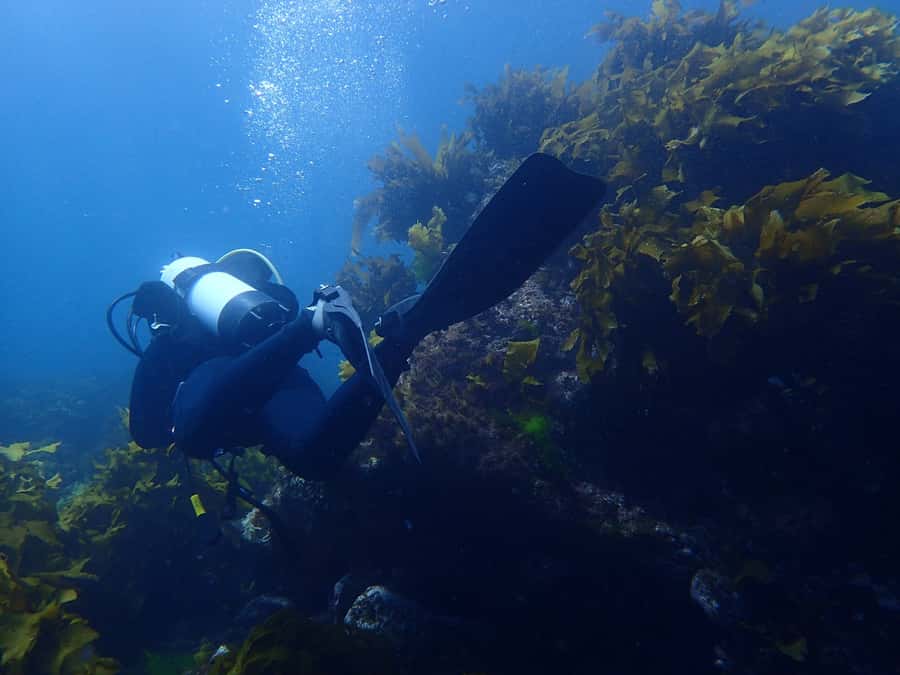
Goat Island Marine Reserve gives you a close look at one of New Zealand’s best protected underwater areas, with kelp forests, rocky reefs, caves, and large schools of fish all reached from shore. The four-hour outing stays small, with no more than six participants and a trained local instructor leading the way.
I like the full equipment package, which saves you from hauling your own BCD, regulator, tank, fins, hood, and wetsuit around New Zealand. I also like the range of possible sites, from stingray-filled ABC Bay to the sponge-covered crevices of Yellow Sponge Garden. The main consideration is that this is for certified scuba divers only, and the weather can cancel the outing.
Key points
- Goat Island Marine Reserve: Explore New Zealand’s first marine reserve, where fishing restrictions have allowed fish and invertebrate life to flourish.
- Shore-based access: You collect your gear at the centre, then drive your own vehicle 3 km to the water.
- Small group size: A maximum of six participants makes it easier to stay near the instructor and ask questions.
- Full scuba kit included: Wetsuits, hoods, masks, fins, booties, BCDs, regulators, and tanks are provided.
- Several underwater zones: Depending on conditions, you may visit reefs, kelp beds, caves, sandy ray flats, or rocky channels.
- Strict certification rules: You need recognized certification, proof of your qualification, and a logged scuba outing within the last 18 months.
Why Goat Island is a special place for scuba
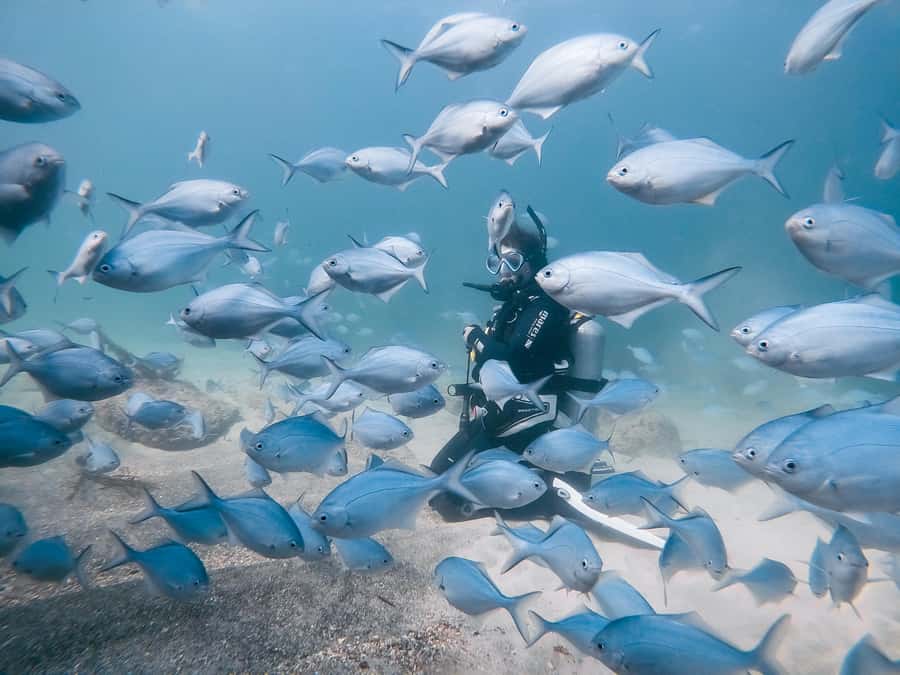
Goat Island Marine Reserve sits on the North Island’s Leigh Coast and was New Zealand’s first marine reserve. That designation matters underwater. With marine life protected from fishing, the reserve offers a strong chance to see fish behaving naturally rather than scattering at the first sign of a diver.
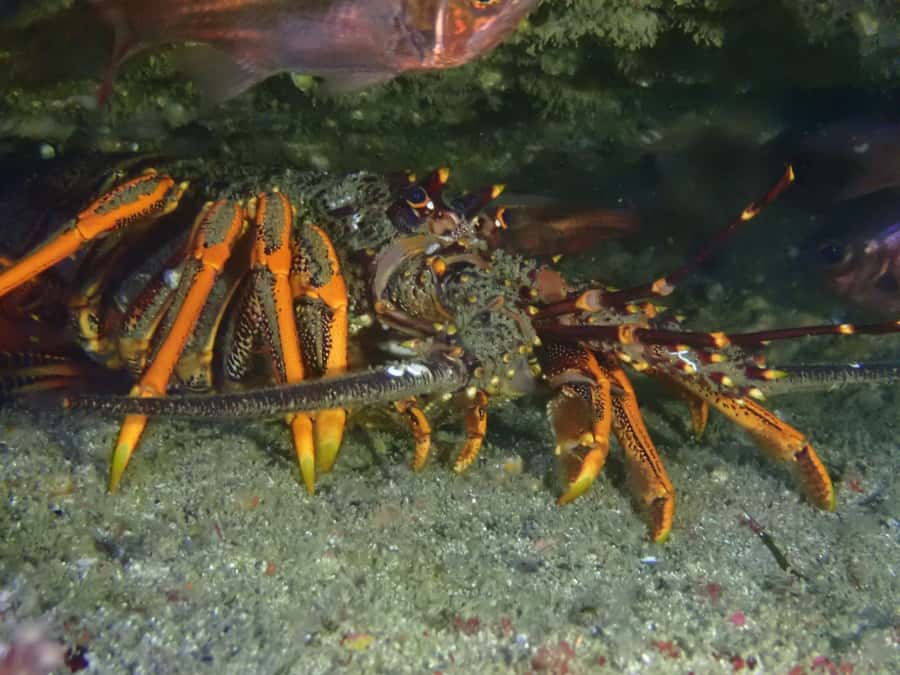
You are not simply swimming around a marked-off patch of sea. The tour takes you through a series of underwater habitats, each with its own character. Kelp forests shelter fish and crayfish. Rocky walls create ledges and crevices. Sandy areas give stingrays and eagle rays room to rest. Caves and shaded cracks hold smaller creatures that reward slow, careful observation.
I like that the tour places the reserve itself at the centre of the experience. The instructor explains its history and points out the marine species you are likely to encounter before you enter the water. That short briefing gives context to what you see later, helping you understand why the area supports such a range of life.
The four-hour schedule also allows time for more than a rushed splash from shore. The exact route depends on sea conditions and the group, but the listed sites suggest a broad tour of the bay rather than a single repeated circuit.
More shore dives in the world:
- South Maui Shore Dive
★ 5.0 · 147 reviews - Guided Shore Dive for Certified Divers with Scubaçao (2 tank)
★ 5.0 · 128 reviews - Introduction Shore Dive with Scubaçao (1 dive)
★ 5.0 · 108 reviews
From equipment fitting to the shoreline
Your day begins at Goat Island Dive and Snorkel Centre, where you meet at the scheduled start time and get fitted with your equipment. The centre provides either a 7.5-millimetre or 3-millimetre wetsuit, along with a vest and hood, mask, snorkel, fins with booties, BCD, regulator, and tank.
The choice of wetsuit thickness is useful in New Zealand waters, where comfort can make a real difference to your time underwater. You should bring swimwear to wear beneath the suit, plus your own towel and water. Food and drinks are not included, so plan those separately.
After fitting, you drive your own vehicle about 3 km to Goat Island Marine Reserve. This is an important practical detail: transport from the centre to the shore is not listed as part of the tour. You need to be comfortable handling that short transfer yourself and arriving ready for the safety briefing.
At the reserve, your instructor introduces the area and discusses the fish and other marine life you might see. The safety briefing is described as full and thorough, which is reassuring for certified divers who want a clear plan before entering the water. It also gives the instructor a chance to check that everyone is comfortable with the equipment and conditions.
The small group limit helps here. With no more than six people, the instructor can keep the group together without the feel of a large commercial outing. It should also be easier for you to ask about local species, underwater routes, and any concern you have before setting off.
What you may see among the kelp and rocks
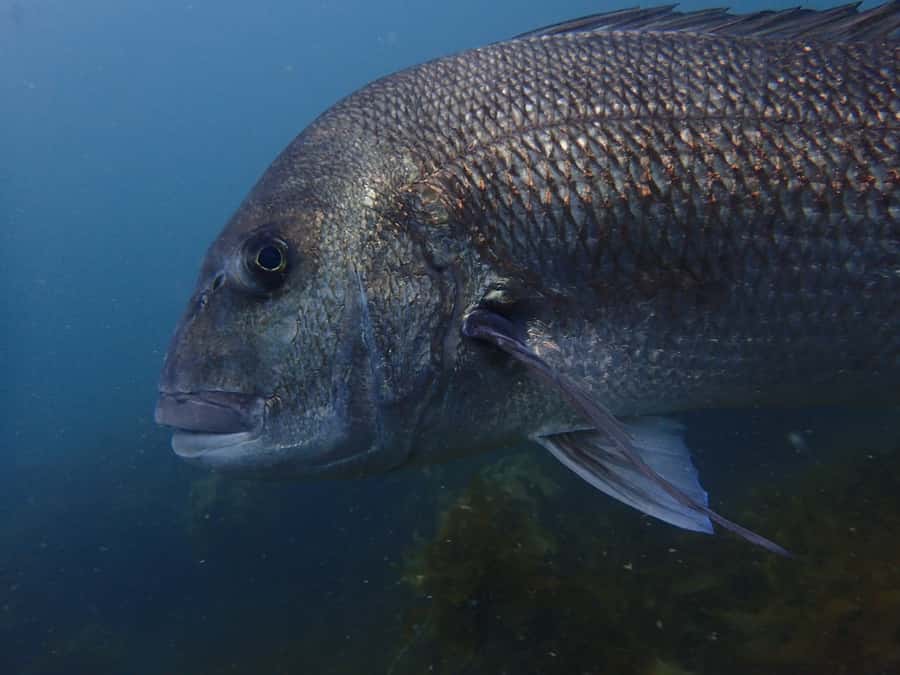
The reserve’s main appeal is variety. You might see huge snapper, red moki, goatfish, triplefins, parore, kahawai, sweep, silver drummers, and trevally. Crayfish, octopuses, stingrays, and schools of smaller fish add interest at different depths and along different parts of the route.
The fish are not the only attraction. Kelp forests give the water a distinctly New Zealand character, while rocky cliffs, reef shelves, and crevices create places for animals to feed and shelter. On rare occasions, the list of possible sightings expands to dolphins, seals, and orcas, but these are lucky additions rather than something you should expect.
Your instructor’s local knowledge is especially useful with smaller species. Without guidance, it is easy to swim past a well-camouflaged triplefin, a hidden crayfish, or a nudibranch tucked into a rocky fold. You will get more from the outing if you move slowly, scan the rocks, and resist the urge to focus only on large fish.
The reserve also offers a good balance between open water and enclosed spaces. Some sites put you over kelp or sand, while others lead you along cliffs or into caves. That variety keeps the tour from feeling like one long view of the same seabed.
ABC Bay and Shag Rock
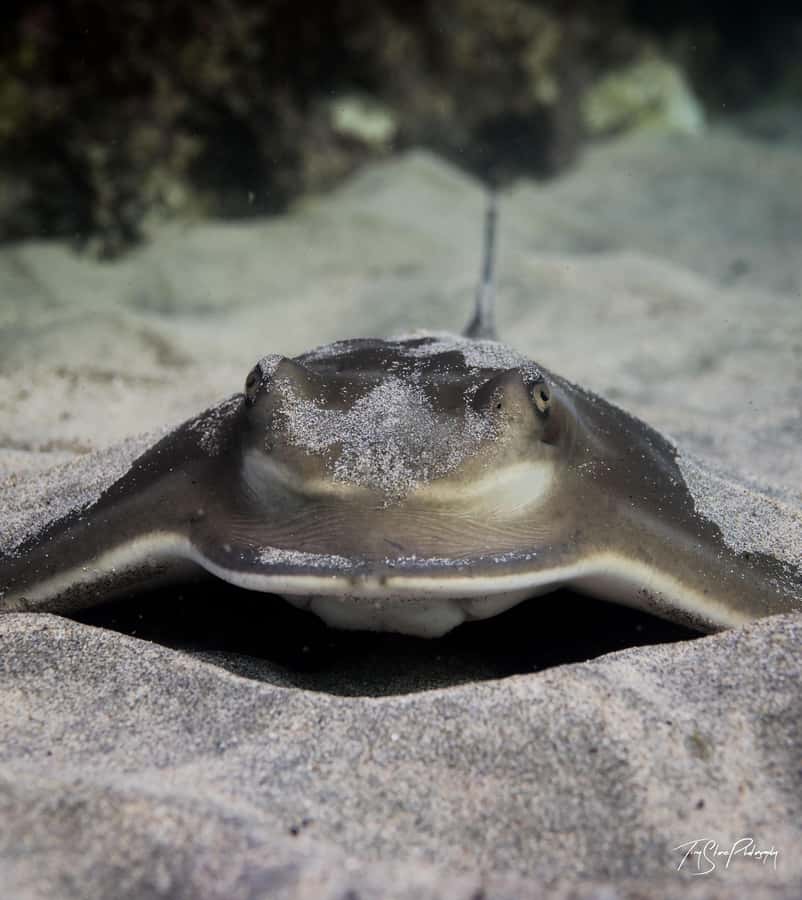
ABC Bay is one of the more appealing areas for a first look at Goat Island’s marine life. The site is known for stingrays and blue maomao, with kelp forests below and cliff sides nearby. The combination gives you several things to watch at once: rays resting over the bottom, fish moving around the kelp, and rock faces that may hold smaller creatures.
Blue maomao are a particular highlight because they often move in groups, giving the water a sense of motion even when you are hovering in one place. Stingrays offer the opposite kind of encounter. They may sit quietly on the sand, so careful observation matters more than covering distance.
Shag Rock is a large solitary rock surrounded by kelp. It attracts fish, making it a natural place for the group to pause and look around. I like the idea of this site because it has a clear underwater landmark. You are not simply following an indistinct reef. The rock provides structure, and the kelp around it creates cover for fish.
The limitation is that the exact route is not guaranteed. Marine conditions change regularly, and the instructor may alter the plan for safety. You should view these names as possible highlights rather than a promise that every site will be visited.
More dives for certified divers in the world:
- Open Water Course – Become certified diver in 3 days
★ 5.0 · 1,137 reviews - Two-Tank Morning Dive Trip for Certified Divers
★ 5.0 · 602 reviews - 2 Tank Lanai Cathedral Scuba Dive Via Boat for Certified Divers
★ 5.0 · 548 reviews - Wreck and Bridge Span Dive for Certified Divers
★ 5.0 · 521 reviews
Waterfall Reef and the southern channel
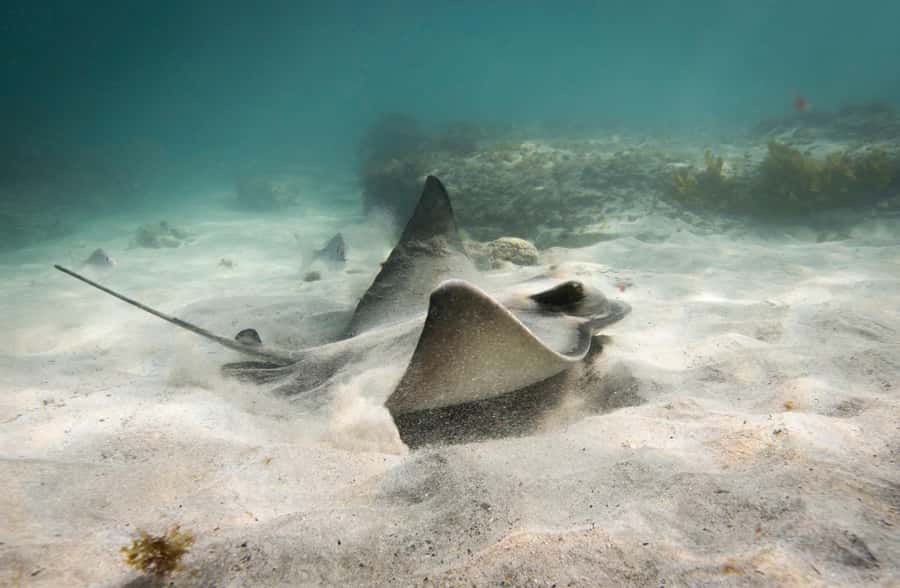
Waterfall Reef lies toward the southern side of the channel, where schools of fish and crayfish are among the main attractions. Schooling fish can make a site feel full of life, but they also reward patience. Instead of chasing them, you will usually get a better view by settling near the reef and letting the movement happen around you.
Crayfish are another reason to pay attention to rocky gaps and shaded edges. The instructor can point out likely places to look, but you should not touch or handle marine life. That rule protects the animals and keeps the encounter respectful.
This part of the route may appeal most to divers who enjoy a mixture of larger groups of fish and smaller reef details. It is less about one headline animal and more about seeing how different species share the same protected habitat.
Caves and Yellow Sponge Garden
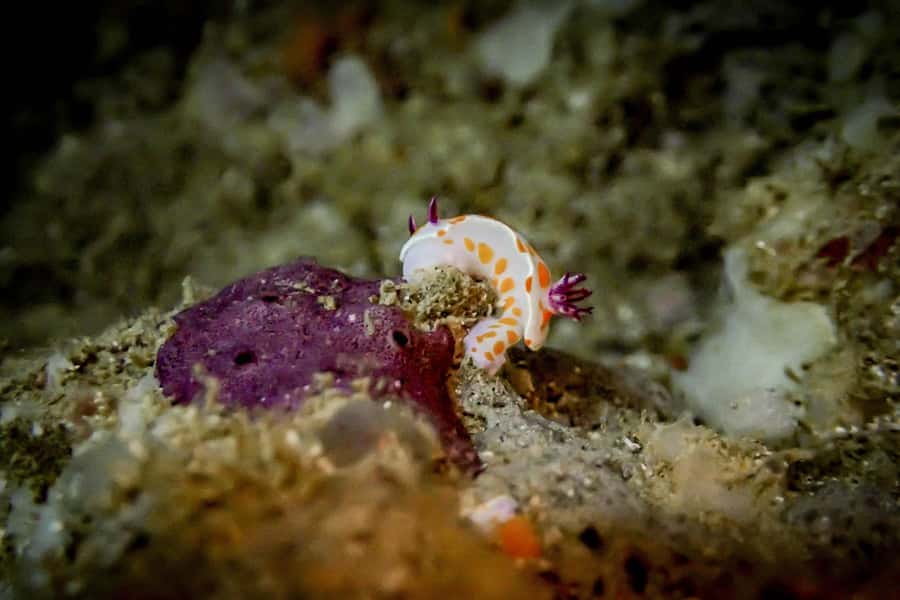
The caves are aimed at people who enjoy close observation. Anemones, nudibranchs, and sponges are the featured life here, making this a good section for macro photography interests and divers who prefer unusual small creatures to large schools of fish.
Cave areas require extra care. You need to follow the instructor’s route, keep your buoyancy controlled, and avoid contact with the walls or animals. The provided information does not specify the size or depth of the caves, so you should not assume this means a technical cave excursion. Think of it as a chance to look into sheltered underwater spaces with a professional guide nearby.
Yellow Sponge Garden offers another close-up setting. Large crevices are covered in kelp, with hidden crayfish, bigeye, and tiny triplefins. This is the sort of site where a slow pace pays off. If you rush through, you might notice only the kelp. If you pause and search the cracks, the smaller life becomes the main event.
The site also shows why a local instructor adds value. A guide who knows the Leigh Coast can direct your attention to animals that blend into the reef. You receive more than equipment and a route. You get help reading the underwater surroundings.
Eagle Ray Flats and the reserve’s larger animals
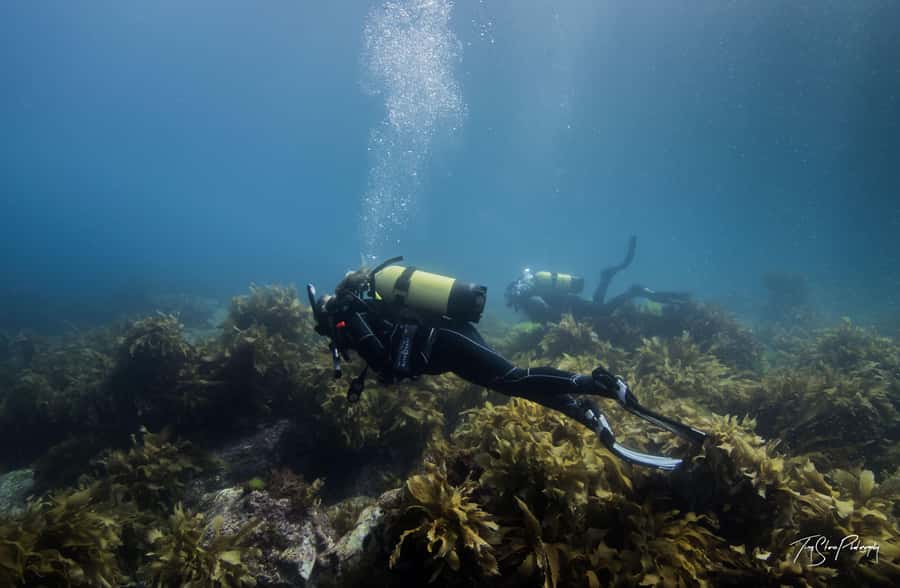
Eagle Ray Flats offers a change from caves and reef walls. Eagle rays may rest on the sand, while schools of fish gather and feed in the currents. Snapper are also known for cruising through the area, sometimes approaching with the curiosity that makes protected marine reserves so rewarding.
This is likely to be one of the most memorable sections for anyone who enjoys seeing larger animals in open space. Sandy bottom gives rays room to move, and the current can bring fish together. At the same time, the open setting may feel less dramatic than a kelp-covered rock or cave if you prefer tight, textured underwater scenery.
The possible animal list is broad: snapper, red moki, goatfish, parore, kahawai, sweep, silver drummers, trevally, crayfish, octopuses, and stingrays. Dolphins, seals, and orcas are possible on lucky occasions, but no responsible scuba outing can promise them.
That uncertainty is part of the appeal, but it also keeps expectations realistic. Book this for the protected marine setting and the ordinary fish life you are likely to see. Treat a dolphin, seal, or orca sighting as a bonus, not the reason to pay the price.
What the $134 price includes
At $134 per person, the tour offers fair value if you need a complete scuba setup. You receive the guide, tank, wetsuit, hood, mask, snorkel, fins, booties, BCD, and regulator. Buying or transporting that much equipment for a single outing would be inconvenient, especially during a wider New Zealand trip.
The fee also covers professional guidance in a protected marine area. You are not simply renting gear and entering the water alone. The instructor provides a safety briefing, local marine information, and supervision for the underwater route.
Value depends on your situation. If you already carry a full personal setup and prefer to plan your own shore entry, the cost may feel less attractive. If you are flying around New Zealand, renting a vehicle, or combining this with a wider North Island itinerary, the included gear and small group can justify the price.
The outing lasts four hours, but that includes fitting equipment, the short drive to the reserve, briefing time, and the shore-based start. Do not interpret the full duration as four hours underwater. The exact underwater time is not stated and will depend on conditions, certification, air supply, and the group.
A perfect rating from two recorded bookings is encouraging, and the only written reaction describes the scuba outing as nice. Still, that is a very small sample. I would place more weight on the clear safety rules, full equipment provision, and small group format than on the limited rating alone.
Who should book this outing
This tour suits certified recreational divers who want a guided introduction to Goat Island Marine Reserve without bringing a complete equipment kit. It is also a good fit if you value marine life identification and local context as much as the physical act of scuba swimming.
You need certification from a recognized training agency such as SSI, PADI, NAUI, BSAC, SDI, or CMAS. The minimum qualification is Scuba Diver or Open Water, and you must bring proof of certification. You also need to have completed a scuba outing within the last 18 months.
The age minimum is 16. The experience is not suitable for people without scuba experience, people without certification, or anyone with a pre-existing medical condition that makes scuba unsafe. The supplied information does not give medical clearance procedures, so you should address any health concern before booking.
You should also be comfortable with changing plans. Conditions in the region can shift regularly, and the outing depends on suitable weather. If the operator cancels for weather, you receive a full refund, but you may lose the chance to fit this activity into a tightly packed schedule.
You are expected to follow the no-touch rule for marine life. That is not just a formality. Many of the animals you may see live in fragile spaces, and the reserve’s value depends on visitors leaving it undisturbed.
Practical advice for a smoother morning or afternoon
Bring proof of certification and your dive log, not just a verbal description of your experience. Pack swimwear, a towel, and water, and remember that food and drinks are not included.
Arrive at the Goat Island Dive and Snorkel Centre at the scheduled start time. You will need to allow time for equipment fitting before driving your own vehicle to the reserve. Because the tour requires at least two people to operate, solo bookings may depend on another participant joining.
Keep your plans flexible around the weather. The cancellation policy allows a full refund if you cancel at least 24 hours ahead, and you can reserve now and pay later. That flexibility is useful when planning a North Island road trip, but it does not remove the need to check the forecast and allow backup time.
Expect English-language instruction. The tour is limited to six participants, which should make communication easier than on a large boat-based outing. There is no named instructor provided in the tour details, but the guide will be a certified professional familiar with the Leigh Coast and local marine reserves.
Should you book the Goat Island scuba tour?
Book it if you are a recently active certified diver and want a guided shore-based outing with full equipment at one of New Zealand’s most important marine reserves. The best reasons are the small group, local instruction, broad choice of underwater habitats, and the chance to see everything from eagle rays and snapper to nudibranchs and tiny triplefins.
Skip it if you are not certified, have not been scuba swimming within the last 18 months, or need a guaranteed route and guaranteed animal sightings. Weather can change the plan, and rare animals such as dolphins, seals, and orcas are possibilities rather than promises.
For the right diver, $134 is a sensible price for a four-hour guided outing with a complete kit and access to a protected marine setting. I would book it as a focused North Island activity, leave room for weather changes, and arrive ready to look closely rather than simply cover distance.
FAQ
Where does the Goat Island scuba tour begin?
You meet at the Goat Island Dive and Snorkel Centre for equipment fitting. You then drive your own vehicle about 3 km to Goat Island Marine Reserve for the briefing and shore entry.
Is scuba equipment included?
Yes. The tour provides a wetsuit, vest and hood, mask, snorkel, fins with booties, BCD, regulator, and the tank required for the outing.
Do I need scuba certification?
Yes. You need certification from a recognized agency such as SSI, PADI, NAUI, BSAC, SDI, or CMAS. The minimum qualification is Scuba Diver or Open Water, and you must bring proof.
How recently must I have scuba swum?
You must have completed a scuba outing within the last 18 months and bring your dive log.
What marine life might I see?
Possible sightings include snapper, red moki, goatfish, triplefins, parore, kahawai, sweep, silver drummers, trevally, crayfish, octopuses, stingrays, eagle rays, nudibranchs, anemones, and sponges. Dolphins, seals, and orcas may appear on lucky occasions.
What happens if bad weather cancels the tour?
The activity depends on weather and changing regional conditions. If the operator cancels because of weather, you receive a full refund.
Just added around the world
- Phuket: Try SCUBA DIVING Full Day Experience 2 Dives★ 5.0 · 9 reviews
- Punta Cana: Scubadoo Ocean Exploration Diving Adventure★ 4.1 · 70 reviews
- Punta Cana: Reef Diving Adventure Explore Underwater Wonders★ 5.0 · 5 reviews
- Punta Cana: Guided Power Dive Adventure★ 4.8 · 3 reviews
- Punta Cana: Scuba Doo Underwater Scooter Adventure★ 5.0 · 2 reviews
- Punta Cana: Discover Scuba Diving Experience for Beginners★ 4.4 · 2 reviews
- Puerto Morelos: Scuba Diving for Beginners – 2 Dives★ 5.0 · 5 reviews
- Punta Cana: Dive the Coral Paradise of Catalina Island★ 4.2 · 5 reviews
Shore Dives, compared.
Guided Shore Dive for Certified Divers with Scubaçao (2 tank)
Read our review →
Introduction Shore Dive with Scubaçao (1 dive)
Read our review →
Small Group Guided Shore Dives in St. Andrews State Park, Florida
Read our review →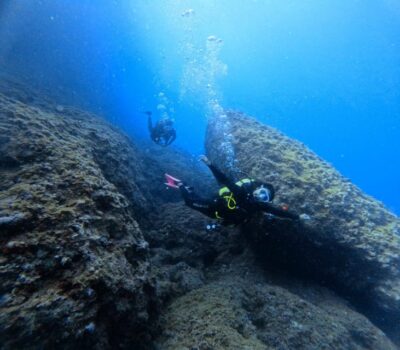
Chania Scuba Diving: Shore Dives for Certified Divers
Read our review →Lists this dive appears in