
REVIEW · ARUBA
Half-Day Aruba Intro Diving Course for Beginners
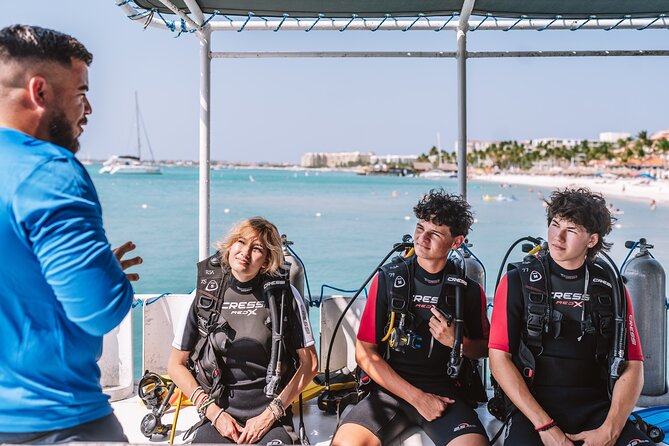
Aruba’s clear, warm Caribbean water makes this four-hour beginner scuba course an easy first step into the sport. You’ll learn the basics on land, practice in a pool, then head by boat to a shallow reef or wreck at about 20 to 30 feet. No previous experience is needed.
I like the careful pool practice and the small maximum group size of four. I also like the chance to see far more than a standard beach snorkel, including shipwrecks, turtles, rays, octopus, lobster, shrimp, and schools of tropical fish. The main drawback is that check-in and boat timing can run late, and a single open-water session may feel brief for the price.
Key points to know before booking
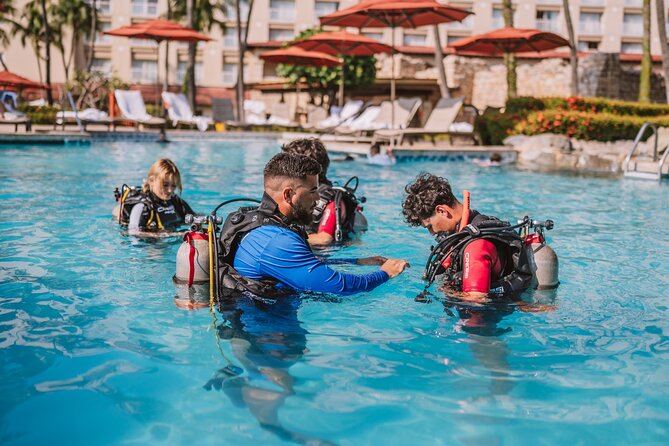
- A real first scuba lesson: Classroom instruction, equipment practice, pool skills, and one supervised open-water session are included.
- Shallow sites suit beginners: Expect roughly 20 to 30 feet, with a reef or wreck selected for the conditions.
- Small groups help: The maximum group size is four, though pool instruction may be shared with a larger group.
- Strong instructor support: Carl, Manny, Ernie, Carlos, Freddy, Karl, and other instructors have helped beginners manage nerves and learn at a steady pace.
- Plan around your flight: You must not scuba or snorkel on the same day you fly.
- Allow extra time: The advertised length is about four hours, but delays have affected some starts and boat departures.
Why Aruba is a good place to try scuba
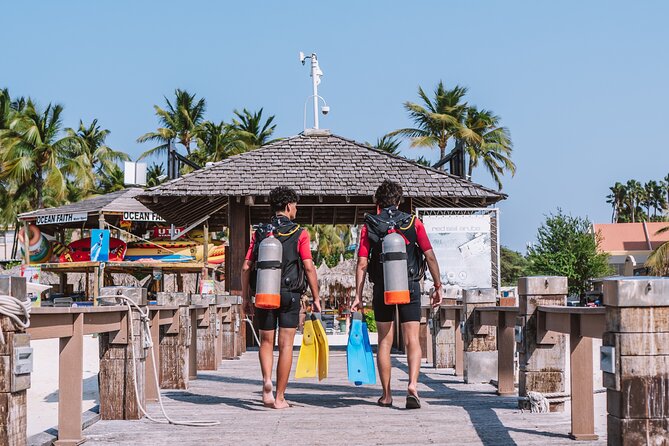
The first underwater experience can be a strange one. You must breathe through a regulator, manage pressure in your ears, clear a mask, communicate without speaking, and stay calm while floating above the sea floor.
Aruba’s shallow sites reduce some of that pressure. The planned depth is about 20 to 30 feet, or roughly 6 to 9 meters. That is enough to give you a true sense of weightless movement and underwater life without sending a new student into a deep site.
The water can be exceptionally clear. At the right site and in good conditions, you might see turtles, rays, octopus, moray eels, lobster, shrimp, and many kinds of tropical fish. Some sessions visit a shipwreck, including the Pedernales, while others use a shallow reef.
That choice matters. A wreck gives the outing a clear focus and makes the short underwater time feel special. A reef offers a more natural setting, with fish and coral spread across the sea floor. The exact site depends on weather, sea conditions, and the instructor’s judgment.
More beginner dives in Aruba:
- Small-Group Aruba Scuba Diving for Non-Certified Divers
★ 5.0 · 194 reviews - Private First-Time Dive on Aruba’s Reef and Wreck Site
★ 5.0 · 192 reviews - Aruba PADI Scuba Diving Program Non Certified Divers
★ 5.0 · 99 reviews
The meeting point at Piet’s Pier
The listed meeting point is Piet’s Pier Bar at J.E. Irausquin Boulevard 85 in Noord. The activity returns to the same place, so you do not need to arrange a separate ride back.
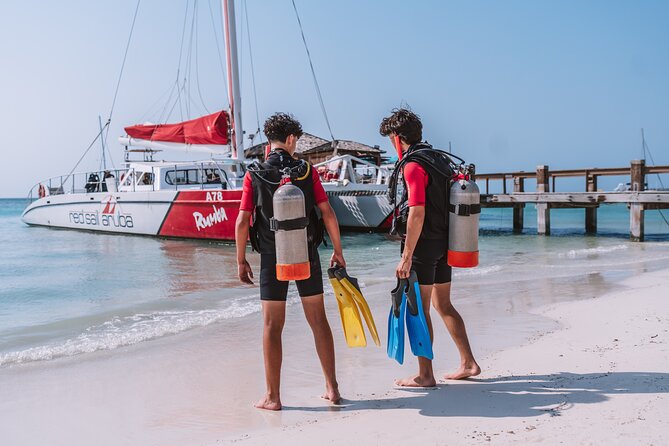
The boat is designed with a low, easy-access platform and two drop-down ladders. That is useful when you are wearing equipment and still getting used to the movement of the boat. There is also a two-level photo table for cameras and video equipment, a restroom, and fresh-water showers for rinsing off.
You should arrive ready to complete paperwork and any required medical questionnaire. A mobile ticket is accepted, and confirmation is provided at booking.
One practical warning: allow patience at check-in. Some people have waited well past the scheduled start before staff arrived or paperwork was handled. Other sessions have run on time, but the possibility of a delay is real. If you have a tight dinner reservation or another activity afterward, leave plenty of room.
Two hours of instruction before the sea
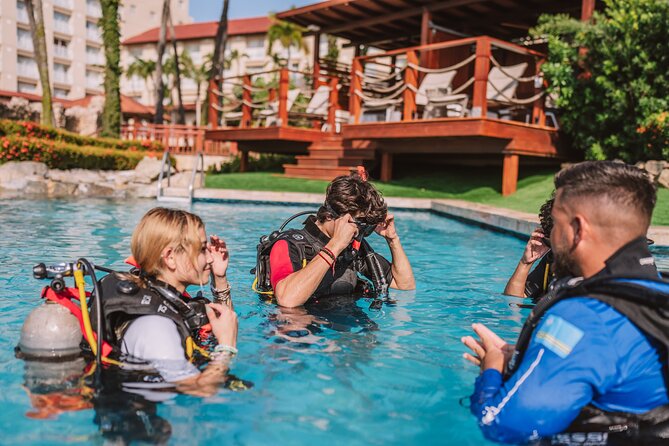
The first major section takes place in the classroom and pool. The theory covers basic scuba rules, pressure, breathing from the equipment, and how to use the gear.
This is not busywork. Pressure changes are one of the first things you must understand before descending. You also need to know how to breathe normally from the regulator, how to communicate underwater, and what to do if water enters your mask.
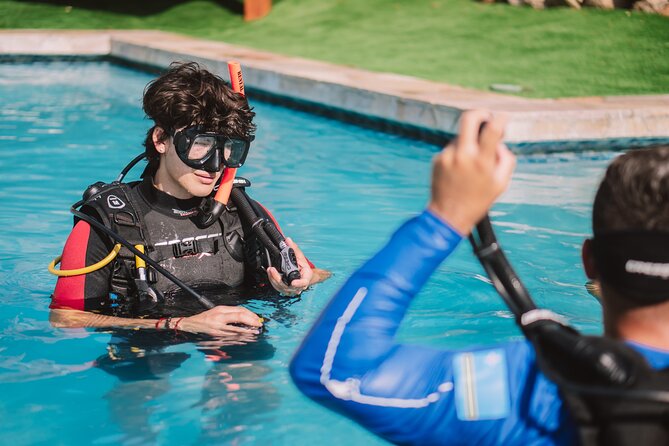
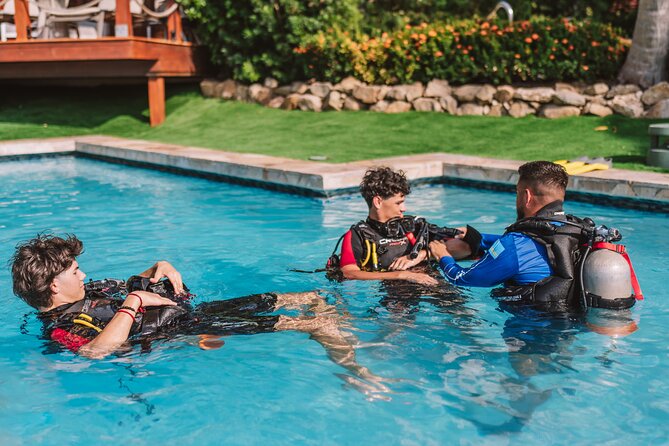
The pool session gives you a controlled place to learn. You can get used to the mask, regulator, fins, buoyancy equipment, and tank before dealing with waves or a moving boat. Instructors have helped nervous beginners take this stage slowly, repeating skills until they feel ready.
Carl, Manny, Ernie, Carlos, Freddy, Karl, and other instructors are named in the feedback for this course. The strongest pattern is calm, patient teaching. Ernie is praised for helping a nervous first-timer stay comfortable, while Carl is described as attentive with both adults and children. Manny has guided several students through a short lesson and then to the Pedernales wreck.
Still, group size deserves a closer look. The overall maximum is four people, but one account describes pool instruction at a ratio of one instructor to eight students, with four people during the open-water session. If you want constant one-to-one attention, ask about a private instructor before paying.
The boat ride and the open-water session
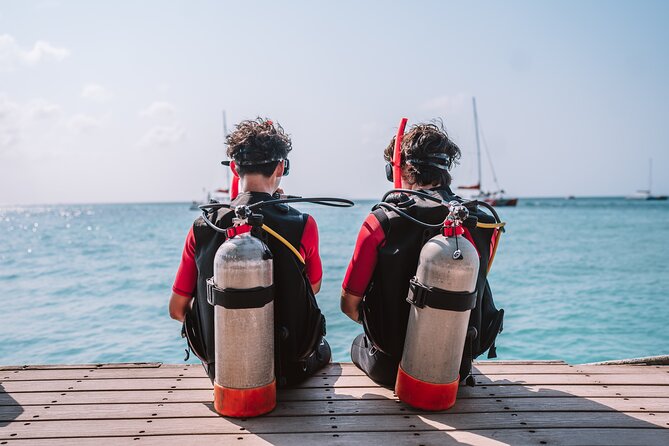
After the pool work, you take about a 1.5-hour boat trip. Part of that time is spent moving between the pier, the selected site, and the return point, so do not expect the full boat period to be underwater.
The actual underwater session lasts about 30 to 40 minutes and uses one tank. That is enough time to practice the basics in the sea and look around, but it is not a full certified-diver outing with several stops.
At the site, your instructor remains with you underwater. You’ll practice buoyancy and communication while moving above the reef or around a wreck. For a first attempt, that supervision is more important than covering a large area.
A wreck can make the outing memorable even when the underwater portion is short. The Pedernales is described as an easy site at roughly 20 to 25 feet, with clear, warm water and plenty of fish. Some sessions have also included turtles and a moray eel.
Sea conditions can vary. One account describes strong wind, larger waves, and a current that made the area less comfortable for snorkeling. That does not mean every outing will face those conditions, but you should understand that the ocean is not a swimming pool. The operator may change the location or cancel if weather makes the trip unsafe.
More dive courses in Aruba:
- Guided Padi Discover Scuba Diving for Non-Certified Divers
★ 5.0 · 33 reviews - Open Water Course – Become certified diver in 3 days
★ 5.0 · 1,137 reviews - Barcelona: PADI Discover Scuba Diving
★ 4.7 · 1,016 reviews - PADI Open Water Diver Course
★ 5.0 · 626 reviews
What you might see below the surface
Aruba’s marine life is the main reason to book this rather than stop at pool practice. The list of possible sightings includes sea turtles, rays, octopus, tropical fish, lobster, shrimp, and moray eels.
You may also find yourself close to schools of small fish moving around the wreck or reef. The shallow depth lets you spend your limited time looking rather than worrying about a long descent.
There are no guarantees with wildlife. The sea decides what appears, and visibility changes with weather and current. Still, the combination of warm water, shallow sites, and reef or wreck structure gives you a good chance of seeing active marine life.
If you already enjoy snorkeling, this can be a useful next step. The equipment lets you stay underwater longer and move below the surface rather than watching from above. If mask problems or breathing through a regulator make you uneasy in the pool, though, the open-water portion may feel demanding.
The real value of the $104 price
At $104 per person, the price is reasonable for a first scuba lesson if you want the complete introduction. You receive instruction, equipment, pool practice, water, boat transport, and one open-water session.
A certified course costs much more time and money, while a snorkel outing gives you only a surface view. This course sits between those options. You get a genuine taste of scuba without committing to full certification.
The value depends on your expectations. If you want a relaxed first look at the sport, the price covers a lot: classroom basics, equipment handling, supervised practice, and a wreck or reef visit. If you are already comfortable with scuba, 30 to 40 minutes underwater may feel too limited.
One person who took the course with a 12-year-old reported paying about $100 directly through Red Sail Sports, slightly less than the listed price. Direct booking may offer savings, but compare the current price and cancellation terms before choosing that route.
The small maximum group size also adds value, especially for beginners who need help with mask fit, buoyancy, or breathing. Just remember that the pool portion may not always match the small open-water ratio.
Health rules and who should skip it
Scuba requires more than ordinary swimming fitness. You should be in moderately good physical condition, with healthy respiratory and circulatory systems and normal, healthy air spaces in your body.
You should not participate if you have a cold or congestion, certain heart problems, epilepsy, asthma, or if you are under the influence of alcohol or drugs. If you are pregnant or think you may be, speak with your doctor first. The same applies if you take medication.
The operator can refuse service when a participant does not meet the basic safety requirements. That can be disappointing, but a coughing student should not be sent below the surface. One child was stopped after coughing during the pool session because continuing would not have been safe or comfortable.
Plan around air travel. You must not snorkel or scuba on the same day you fly. This rule is important, so schedule the course early enough in your Aruba stay to leave a proper gap before departure.
The activity is not recommended for children aged 10 and under. Older children still need the required physical condition and confidence to follow instructions.
Timing, weather, and equipment tips
The stated duration is about four hours, but you should treat that as an estimate. Delays have occurred before the lesson and while waiting for the boat to return from another trip.
The operator provides the necessary scuba equipment, but the fit still matters. Tell the instructor at once if the mask leaks, the regulator feels awkward, or the equipment rubs your skin. One person reported rubber marks on a swimsuit, so an older swimsuit may be the sensible choice.
Bring only what you need on the boat. The vessel has fresh-water showers, a restroom, and a camera table, but the focus is still a practical beginner lesson rather than a full leisure cruise.
Weather affects the plan. If conditions are poor, the operator may offer another date or a full refund. The free cancellation rule also allows a full refund if you cancel at least 24 hours before the start time. A cancellation made later than that is not refundable, and late changes are not accepted.
Who will get the most from this experience
This course suits you if you have always wondered what scuba feels like but do not want to commit to certification yet. It is also a good match for a parent and older child, a couple, or a solo beginner who wants an instructor nearby.
You should book it if the following sound appealing:
- You want pool practice before entering the sea.
- You like the idea of visiting a shallow wreck or reef.
- You are comfortable with a 30 to 40 minute underwater session.
- You can keep your schedule flexible in case of delays.
- You meet the medical and fitness requirements.
You may want another option if you prefer snorkeling only, need a private instructor, dislike boat rides, or have a tight timetable. A beginner with mask or breathing concerns should raise those issues before the open-water portion, not after arriving at the site.
Should you book the Aruba beginner course?
I would book this for a first scuba experience, especially if the idea of a shallow wreck, warm water, and close instructor support appeals to you. The best part is the progression: learn on land, get comfortable in the pool, then try the sea with an instructor beside you.
The main caution is timing. Expect the underwater session to be short, and leave extra space around the four-hour estimate. Confirm the medical requirements, plan it well before your flight, and ask about the instructor-to-student ratio if you are anxious.
For $104, you receive a solid introduction rather than a full certification course. If you want to test the sport in Aruba and perhaps continue toward certification later, this is a sensible choice.
FAQ
Is previous scuba experience required?
No. The course is designed for beginners and includes classroom instruction, pool practice, equipment training, and one supervised open-water session.
How long does the activity last?
The experience lasts about four hours. It includes about two hours of instruction in the classroom and pool, followed by a boat trip and one open-water session lasting about 30 to 40 minutes.
How deep will the underwater session be?
The planned depth is approximately 20 to 30 feet, or about 6 to 9 meters.
Will I visit a reef or a shipwreck?
The boat goes to either a shallow reef or a wreck. The location depends on conditions and the instructor’s choice.
What is included in the price?
The $104 price includes instruction, scuba equipment, the open-water session, and water.
Where does the activity start and finish?
It starts at Piet’s Pier Bar, J.E. Irausquin Boulevard 85 in Noord, Aruba, and ends back at the same meeting point.
How many people can join?
The maximum group size is four people. Pool instruction may sometimes involve a larger shared group, while the open-water portion may use a smaller ratio.
Can I scuba on the day I fly?
No. You must not scuba or snorkel on the same day as your flight.
What happens if the weather is poor?
The operator may cancel for poor weather and will offer another date or a full refund. You can also receive a full refund if you cancel at least 24 hours before the scheduled start time.
More Half-Day in Aruba
- Half-Day Scuba Diving Tour – Discover Scuba Diving!
★ 5.0 · 669 reviews - Half-Day White Shark Cage Diving from Gansbaai
★ 4.5 · 310 reviews - From Dubai: Fujairah Half-Day Scuba Dive and Snorkeling
★ 4.7 · 186 reviews - Paphos: Discover Scuba Diving Half-Day Tour
★ 4.9 · 137 reviews
Just added around Aruba
- Private Dive at Shipwreck + Beautiful Reef Spot(Certified divers)★ 3.0 · 2 reviews
- Private Dive + videographer/Photographer (Certified divers only)★ 5.0 · 11 reviews
- Night Shore Diving Mangel Halto Aruba for Certified Divers★ 5.0 · 6 reviews
- Guided Padi Discover Scuba Diving for Non-Certified Divers★ 5.0 · 33 reviews
- Shore Dive Aruba for Certified Divers★ 4.5 · 33 reviews
- Boat Dive Shipwreck/ Airplanes/ Reef /2 tanks★ 4.0 · 13 reviews
- Aruba Flyboarding & Jetovator Experience: Fly Like a Bird & Dive Like a Dolphin★ 4.5 · 64 reviews
- Aruba PADI Scuba Diving Program Non Certified Divers★ 5.0 · 99 reviews
Scuba Diving Courses, compared.
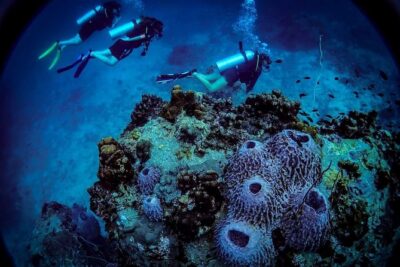
Open Water Course – Become certified diver in 3 days
Read our review →
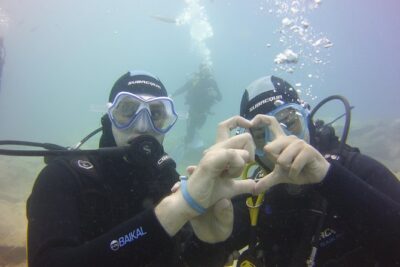
Heraklion: Beginner Scuba Diving Lesson with PADI Instructor
Read our review →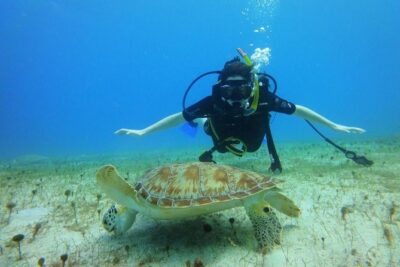
Discover Scuba Diving with No Certification in St Thomas
Read our review →
Try Dive – PADI Discover Scuba Diving in Tenerife
Read our review →
Lists this dive appears in