
REVIEW · ARUBA
Small-Group Aruba Scuba Diving for Non-Certified Divers
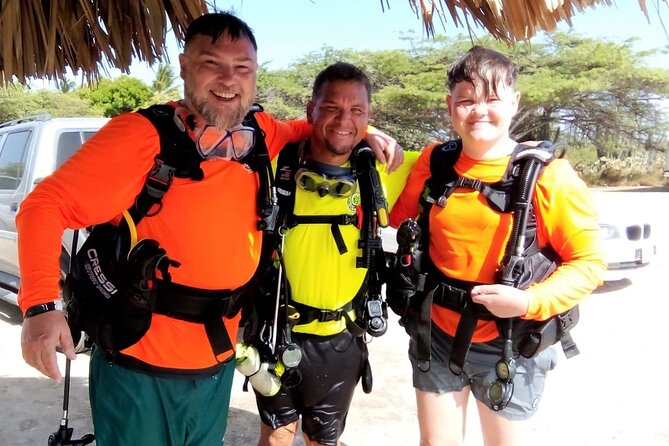
Aruba’s Discovery Dive makes scuba possible without a certification, and the best part is the careful start. You spend about 30 minutes on theory and safety, then practice in shallow water before heading farther out. I like the maximum group size of four, with no more than two beginners per instructor. I also like that you enter from shore, which keeps the first underwater session simple and less intimidating.
The main drawback is that this is an introduction, not a full certification course. Depth and time underwater depend on your comfort, breathing, air use, and conditions. Some people may also find the shore location less dramatic than a boat trip to a remote reef.
Key points to know before booking
- Maximum four people: Each instructor handles no more than two non-certified participants, giving you close supervision.
- A gentle shore entry: You practice in shallow water before moving to the reef area.
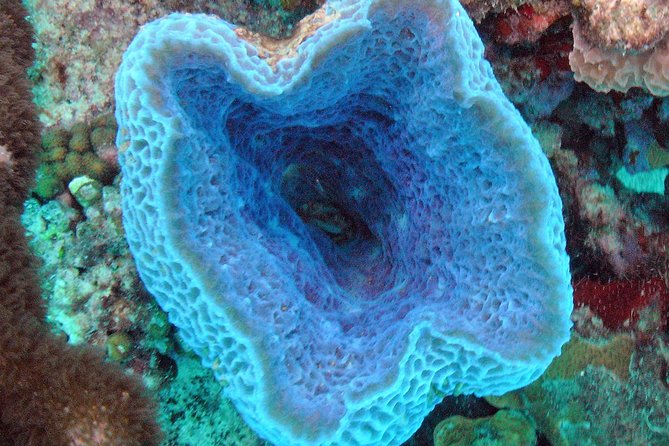
- Rich marine life: You might see turtles, eels, octopuses, pufferfish, angel fish, schools of silver fish, and coral.
- Two possible sites: The session takes place at Tres Trapi or Mangel Halto, with Tres Trapi listed as the meeting point.
- Plan around flights: You must wait at least 18 hours after scuba before flying.
- Check the medical form first: A yes answer may require written permission from your doctor.
Why this Aruba scuba session works for beginners
Many first-time participants are not worried about the fish. They are worried about breathing through a regulator, clearing a mask, equalizing their ears, or staying calm when the water gets deeper. This program deals with those concerns in the right order.
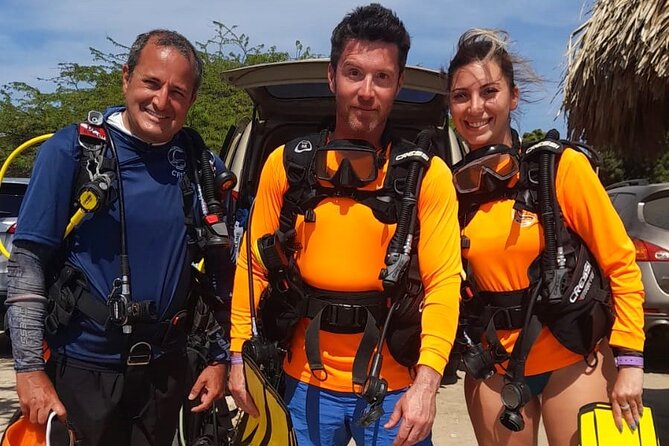
You begin with a clear explanation of the equipment and basic theory. That includes the BCD, regulator, tank, mask, fins, and weights. You then put the equipment on and enter shallow water to practice the skills. Only after you feel ready does the instructor guide you toward the deeper section.
That sequence matters. You are not dropped straight into open water and expected to figure things out while carrying a full tank. The shallow practice gives you time to learn how the regulator feels and how to manage simple problems. If your mask needs clearing or your ears need more time, you can work on it close to shore.
I particularly like the instructor ratio. Four participants is the maximum group size, but non-certified participants are handled at a ratio of one instructor to two people. That is a useful safety measure, not just a marketing detail. An instructor can watch your breathing, hand signals, comfort level, and position in the water without managing a large crowd.
More beginner dives in the world:
- First-Time Scuba Diving in Honolulu + Free Videos
★ 5.0 · 3,123 reviews - Beginner Scuba Diving with Turtles and Videos, San Juan
★ 5.0 · 1,743 reviews - Intro Diving 2 Stops For Beginners with Pick-up and Lunch – Hurghada
★ 5.0 · 1,146 reviews
The 2 pm start at Tres Trapi
The scheduled start is 2 pm, and the activity lasts about two hours. The meeting point is Tres Trapi Beach on L. G. Smith Boulevard 105 in Noord. The session ends back at the meeting point.
Pickup is offered from Palm and Eagle resorts, Harbor House, Renaissance resorts, and the cruise terminal. At the cruise terminal, the stated pickup point is opposite the exit at the Citgo petrol station. If you are staying elsewhere, confirm the meeting arrangement before setting out.
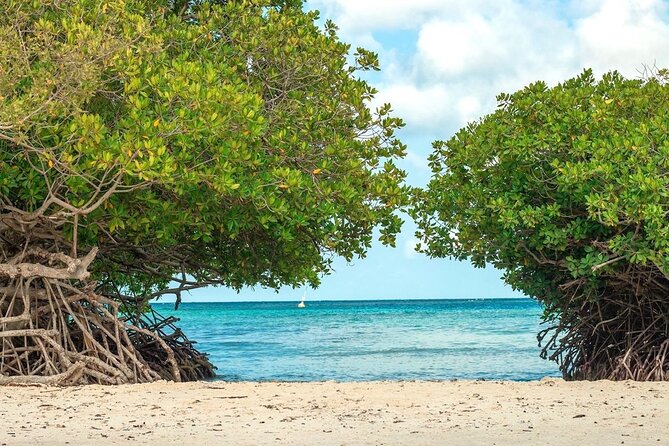
Tres Trapi is a sensible place for a first attempt because the session begins from shore and uses shallow water for practice. You avoid the added pressure of boarding a boat, handling equipment on a moving deck, and making a first entry from open water. For someone already nervous about scuba, fewer moving parts can make a real difference.
The tradeoff is that a shore session may not feel as adventurous as a boat excursion. You will not be promised a remote wreck or a dramatic offshore wall. The goal here is to learn the basics and get a safe look at Aruba’s underwater life.
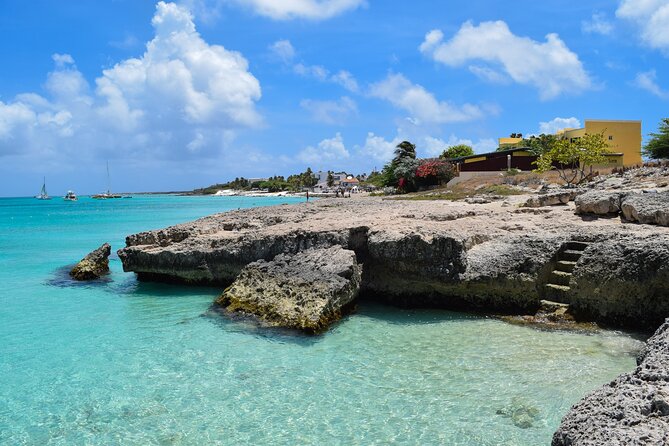
The description also names Mangel Halto as a possible location. Since the stated meeting point is Tres Trapi, ask which site will be used on your date. Location can affect the feel of the session, the entry, and what you see below the surface.
From land briefing to shallow-water practice
The opening theory and briefing take roughly 30 minutes. Expect the instructor to explain how to breathe, how to use the equipment, and what to do with basic skills before you go farther from shore.
You receive a BCD, regulator, weights, tank, mask, and fins. You can bring your own mask and fins if you prefer. That option is useful if you already have equipment that fits well, especially a mask you know seals comfortably.
Once suited up, you enter shallow water for practice. This is where the activity earns its value. The real challenge for a beginner is often not seeing fish. It is becoming comfortable enough with the equipment to enjoy seeing them.
Past participants have worked on mask clearing, continuous breathing, and ear clearing. Those are small skills, but they require concentration at first. The instructors’ job is to keep the session calm while correcting problems early.
If you do not feel ready to go farther, you should say so. One useful feature of this setup is that the instructor can keep the session at a shallower level. A participant who did not feel comfortable going all the way down was able to remain higher in the water and snorkel, while the companion continued with the underwater portion.
That flexibility is important for couples and families. You do not have to pretend to be comfortable just to keep up with someone else. The underwater experience can still be worthwhile at a modest depth, and the instructors emphasize comfort and safety before distance.
What you may see below Aruba’s surface
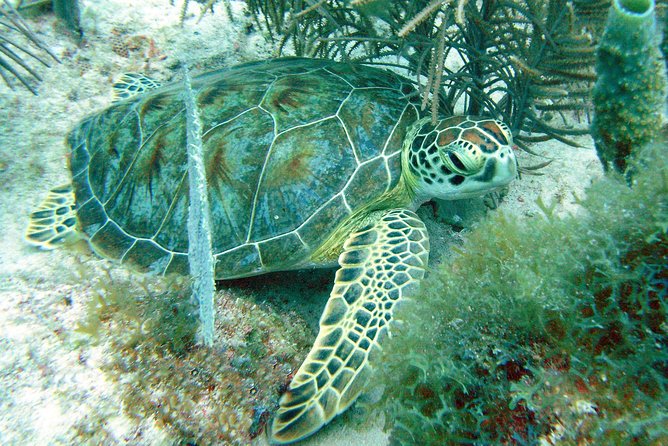
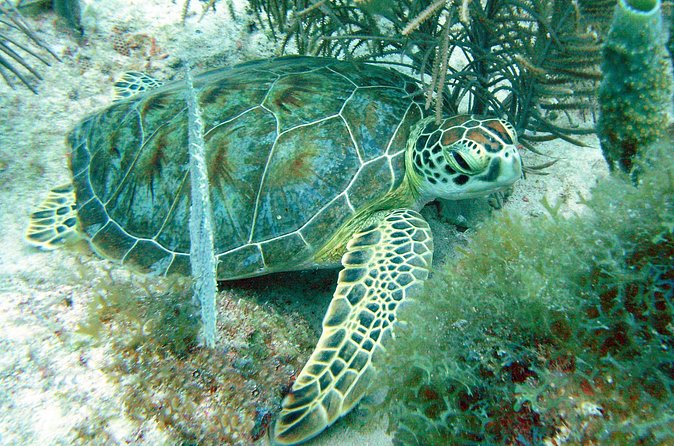
The marine life is a major reason to choose this over a simple snorkeling session. You might see tropical fish, schools of silver fish, pufferfish, angel fish, eels, octopuses, flying fish, and turtles. One participant described following a turtle, while others saw hawksbill turtles feeding near the bottom.
The exact sightings cannot be guaranteed. Marine life moves, visibility changes, and the weather affects the water. Still, Tres Trapi has been praised for clear, calm conditions and a good mix of fish and coral. A coral wall has also been noted as one of the more memorable sights.
I would set your expectations correctly. This is not a guaranteed turtle encounter or a promise of a particular animal. It is a beginner-friendly chance to see Aruba from below the surface, with an instructor who can point out what is around you and help you stay relaxed enough to notice it.
Water clarity can vary. One participant had a murkier session because of the weather, while others described the water as crystal clear. That is normal for a sea-based activity. The operator can control the instruction and equipment, but not every change in visibility.
The length of the underwater portion also varies. The overall activity lasts about two hours, but the actual time below the surface depends on your air consumption. Beginners often use air faster while learning to breathe slowly and stay relaxed. A typical underwater session has been around 45 minutes, though it may be shorter or longer.
More dives for certified divers in the world:
- Open Water Course – Become certified diver in 3 days
★ 5.0 · 1,137 reviews - Two-Tank Morning Dive Trip for Certified Divers
★ 5.0 · 602 reviews - 2 Tank Lanai Cathedral Scuba Dive Via Boat for Certified Divers
★ 5.0 · 548 reviews - Wreck and Bridge Span Dive for Certified Divers
★ 5.0 · 521 reviews
Patient instruction is the real selling point
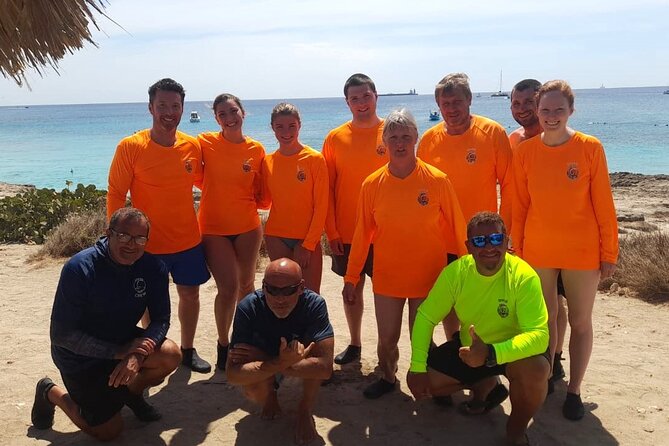
The strongest reason I would recommend this experience is the attention given to anxious beginners. Instructors named in past sessions include Alonso, Alvaro, Jay, Michel, and Steve. The important point is not any single name, but the teaching style the activity requires: patience, repeated explanation, and close checks underwater.
Alonso has been especially associated with helping nervous participants understand the process and remain calm. Jay and Michel have been praised for clear teaching, while Steve has helped people returning to scuba after many years away. You should not assume a particular instructor will be assigned, but the small-group structure gives the teaching team room to work at your pace.
The one-to-two ratio is especially helpful if you have a nervous companion. One person may be ready to continue while another needs more time in shallow water. The instructor can respond to both without turning the session into a crowded group exercise.
That does not remove all discomfort. You still need to breathe through a regulator, manage the equipment, and listen to instructions underwater. Scuba can be physically demanding, and you should not book it casually if you have serious health concerns or are out of condition.
Price, transport, and what the $114 includes
The price is $114 per person. For that amount, you receive the instruction, equipment, shore-based session, and a small group with close supervision. Pickup is included from the listed Palm and Eagle resorts, Harbor House, Renaissance resorts, and the cruise terminal.
I consider the price fair if your goal is a proper first introduction rather than a quick trial in a busy group. The instructor ratio is the key value. You are paying for time, equipment, instruction, and personal attention, not just access to the water.
There is an additional BBO fee of $7 per person. Add that to your planning budget. Since the activity is only about two hours, it also fits neatly into an afternoon without taking over your entire day.
Free cancellation is available if you cancel at least 24 hours before the start time. Changes or cancellations made within 24 hours are not refunded. Poor weather can also lead to cancellation, in which case you are offered another date or a full refund.
Health rules you should take seriously
Before booking, search for the PADI Discover Scuba Diving or SDI Discovery Dive medical questionnaire. This is one of the most important practical steps in the entire booking process.
A yes answer does not automatically mean you cannot participate. It may mean you need to consult your doctor and bring written permission. Do this before arriving, not at the beach. One person was unable to take part after the medical questionnaire raised an issue, and checking in advance would have prevented that disappointment.
You should be in reasonable physical condition. The activity requires your respiratory and circulatory systems to be healthy, and all body air spaces must be normal and healthy. You cannot participate if you have a heart problem or are under the influence of alcohol or drugs. If you take medication, consult your doctor first.
The minimum age is 10. Most people can participate, but the medical questionnaire still matters for children and adults alike. Parents should explain that the experience involves equipment, breathing underwater, and following instructions closely.
There is also a strict flight rule. You cannot fly for at least 18 hours after the session. If you are leaving Aruba the same evening or early the next morning, choose another activity. This is one of those details that can disrupt an otherwise perfect holiday plan if you overlook it.
Who should book this experience
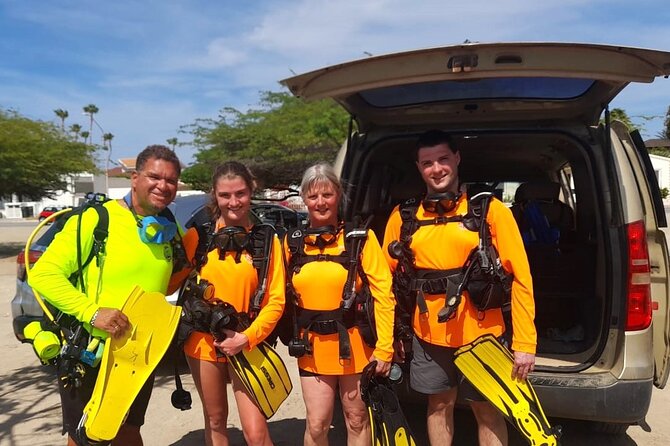
I would choose this for a first-time participant who wants more than snorkeling but does not want to commit to a certification course. It also suits a couple where one person is enthusiastic and the other is uncertain, since the instructor can adjust the session to different comfort levels.
Families with children 10 and older may find it appealing, provided everyone meets the health requirements. The maximum group size keeps the session personal, and the shore entry avoids the added stress of a boat.
It can also work for someone returning to scuba after many years. The briefing and shallow-water skills give you a fresh start instead of assuming you remember everything.
I would not choose it if your main goal is a deep offshore site, a wreck, or a full day on a boat. It is an introduction from shore, and some participants have wished for more depth or more time farther out. That is a limitation of the format, not a flaw in the teaching.
Should you book the Aruba Discovery Dive?
Book it if you want a careful first taste of scuba, close instructor attention, and a good chance of seeing turtles, coral, eels, and tropical fish without certification. The calm progression from briefing to shallow water is its greatest strength.
Before paying, check the medical questionnaire, confirm the pickup or Tres Trapi meeting details, add the $7 BBO fee, and leave at least 18 hours before your flight. If you accept that this is a shore-based introduction rather than a full reef expedition, the $114 price offers solid value.
FAQ
Do I need a scuba certification to join?
No. This is a Discovery Dive designed for non-certified participants. You receive theory, equipment instruction, shallow-water practice, and an underwater session with an instructor.
What is the minimum age?
The minimum age is 10 years.
Where does the activity take place?
The session takes place at Tres Trapi or Mangel Halto. Tres Trapi Beach is listed as the meeting point at L. G. Smith Boulevard 105 in Noord.
What time does the experience start?
The scheduled start time is 2 pm. The activity lasts approximately two hours.
How many people are in the group?
The maximum group size is four participants. For non-certified participants, the stated ratio is no more than two people per instructor.
Is equipment included?
Yes. Equipment includes a BCD, regulator, weights, tank, mask, and fins. You may use your own mask and fins if you prefer.
Can I fly after the activity?
No. You must wait at least 18 hours after scuba before flying.
What happens if the weather is poor?
If the activity is canceled because of poor weather, you are offered a different date or a full refund. You can also cancel for a full refund if you do so at least 24 hours before the scheduled start time.
Just added around the world
- Punta Cana: Reef Diving Adventure Explore Underwater Wonders★ 5.0 · 5 reviews
- Phuket: Try SCUBA DIVING Full Day Experience 2 Dives★ 5.0 · 9 reviews
- Punta Cana: Scubadoo Ocean Exploration Diving Adventure★ 4.1 · 70 reviews
- Punta Cana: Guided Power Dive Adventure★ 4.8 · 3 reviews
- Punta Cana: Scuba Doo Underwater Scooter Adventure★ 5.0 · 2 reviews
- Punta Cana: Discover Scuba Diving Experience for Beginners★ 4.4 · 2 reviews
- Puerto Morelos: Scuba Diving for Beginners – 2 Dives★ 5.0 · 5 reviews
- Punta Cana: Dive the Coral Paradise of Catalina Island★ 4.2 · 5 reviews
Dives for Certified Divers, compared.
Open Water Course – Become certified diver in 3 days
Read our review →
Two-Tank Morning Dive Trip for Certified Divers
Read our review →
2 Tank Lanai Cathedral Scuba Dive Via Boat for Certified Divers
Read our review →
Wreck and Bridge Span Dive for Certified Divers
Read our review →
Diving for Certified Divers, 2 Tanks Sosúa Bay
Read our review →
Certified Diver: 2-Tank Deep Wreck and Shallow Reef Dive Off Oahu
Read our review →
Certified Diver: 2-Tank Shallow Reef Dives off Oahu
Read our review →
2 Dives in the morning for certified divers in Bora Bora
Read our review →Lists this dive appears in