
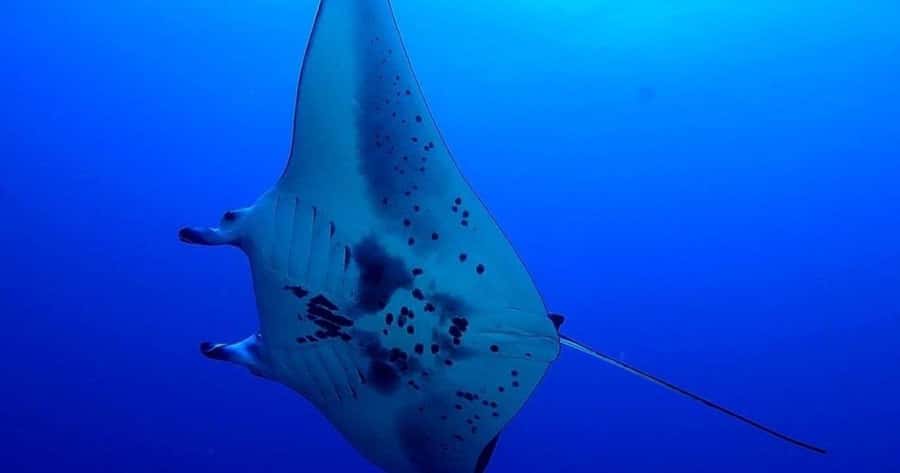
REVIEW · THE USA
Kailua-Kona: Night Manta Snorkel or Dive
Kona’s manta rays turn a quiet night at sea into a close-up wildlife show. Boats anchor over a sandy area in a sheltered bay, lights draw plankton into the water, and mantas glide through the group while making repeated flips to feed. The setting is calm and shallow, with the sandy bottom about 30 feet below the surface.
I like two things here: snorkelers get a clear view from above, while scuba participants sit on the bottom and watch the same action from below. I also like the simple two-hour format, which gives you a major Kona experience without taking up an entire day. The main concern is reliability: one booking was canceled on the same day, so I would avoid scheduling this on your final night.
Key points
- Manta rays feed under bright underwater lights: The lights gather plankton, which brings the rays close to the boat.
- A sheltered bay keeps the water calm: The site is well suited to watching rather than covering long distances.
- Snorkelers float above the scuba group: You can see the rays from the surface without needing scuba certification.
- The sandy bottom reaches about 30 feet: Scuba participants settle below while mantas pass through the lit area.
- The $129 price covers snorkel equipment: Scuba participants should add $40 for rental gear.
- Captain and crew service has earned high marks: The strongest praise centers on a capable, friendly crew, though a same-day cancellation has also occurred.
Why Kona’s night mantas are such a special sight
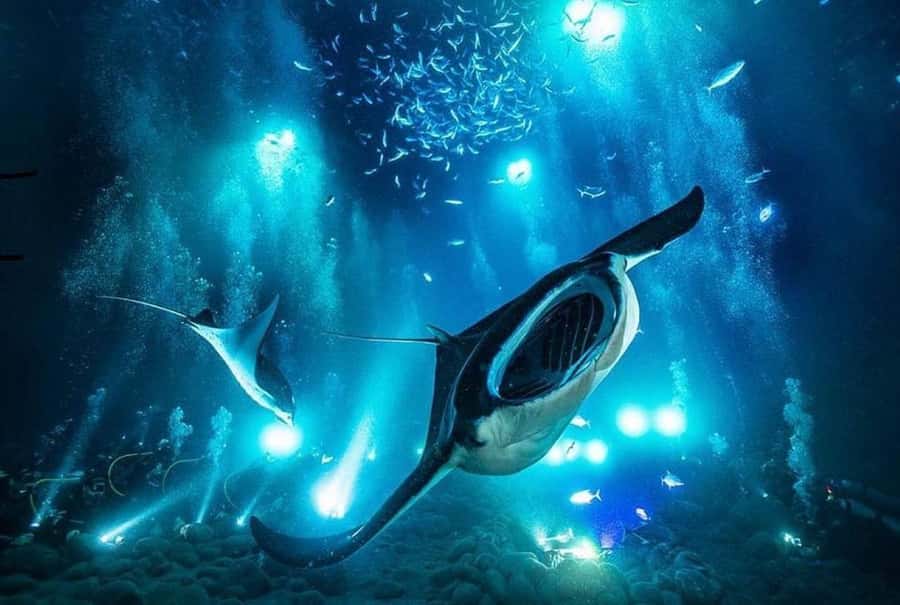
Manta rays are filter feeders. They do not chase fish or hunt people. Instead, they sweep through the water with open mouths, collecting tiny plankton as they move.
At this Kona site, underwater lights attract plankton after dark. The plankton then attracts the mantas. That simple chain creates the show: the rays loop, roll, and flip through the lit water, sometimes passing close to the people watching from above or below.
The local mantas can reach wingspans of about 15 feet and weigh more than 1,000 pounds. Those numbers sound enormous, but their movement is gentle and controlled. You are watching large wild animals feed in their own habitat, not animals trained to perform.
That distinction matters. You do not get a guaranteed number of rays or a fixed performance. The attraction is the chance to see natural behavior at close range, under the soft glow of the lights.
More manta ray dives near the USA:
- One Tank Manta Night Dive and Snorkel
★ 5.0 · 56 reviews - Scuba Diving in Nusa Penida – Manta Point
★ 5.0 · 198 reviews - Bali Diving Day Trip-Manta Point/Tulamben Shipwreck-Fun Dive
★ 5.0 · 104 reviews
A two-hour plan built around one underwater viewing site
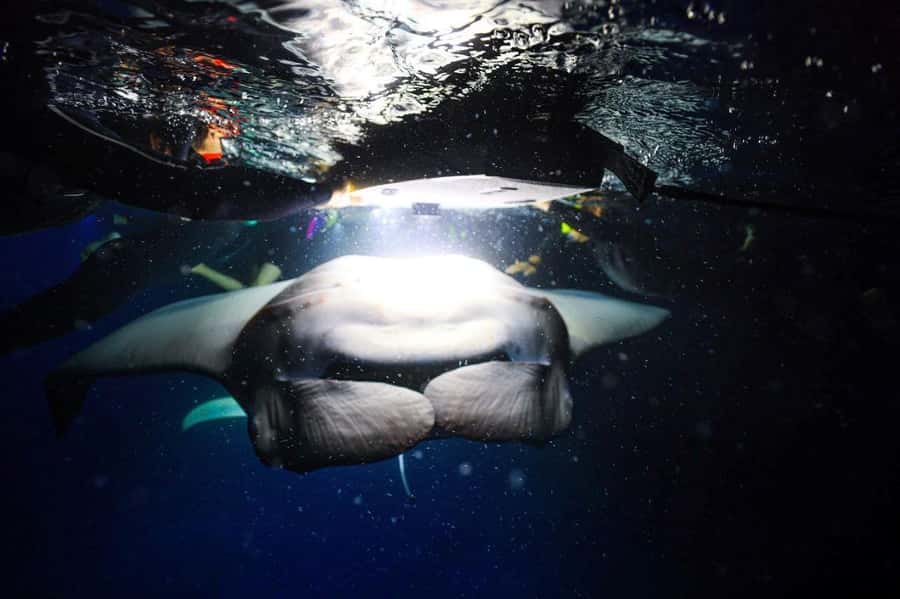
The entire outing lasts about two hours. That makes it easy to fit into a Kona schedule, especially if you want to leave room for a beach afternoon, a drive, or a relaxed dinner.
The central part of the trip takes place in a sheltered bay with calm water. Boats anchor above a sandy area that drops to roughly 30 feet. Once everyone is in position, scuba participants settle on the bottom and snorkelers float above them.
This arrangement gives the two activity choices different strengths:
- Snorkeling: You remain at the surface and look down into the illuminated water. This is the simpler choice and lets you watch the rays without scuba equipment.
- Scuba: You sit on the sandy bottom and look across the feeding area. The added closeness can make the rays feel even larger, but you need to be comfortable with scuba and pay extra for rental equipment.
The available information does not give a detailed minute-by-minute schedule, group size, or named guides. You should check the current departure time and meeting instructions before booking, since pickup is not included and starting times vary by availability.
What the underwater view is like
The visual effect comes from contrast. Above you is the dark ocean at night. Below the surface, lights illuminate the water and reveal the mantas as they pass through.
Snorkelers get the broadest view from above. You can watch the rays circle beneath you, then follow their repeated flips as they collect plankton. Since the scuba group is below, snorkelers also have a useful reference point that shows the scale of the animals.
Scuba participants get a lower angle. Sitting on the sandy bottom places you near the feeding area, with the rays moving through the illuminated water overhead and nearby. The bay’s approximate 30-foot depth keeps the viewing area manageable, but you still need to be comfortable in open water at night.
The rules are important. Do not touch the mantas, marine plants, or any other sea life. These animals need space to move and feed. Following the instructions also protects the quality of the encounter for everyone around you.
Choosing snorkeling or scuba
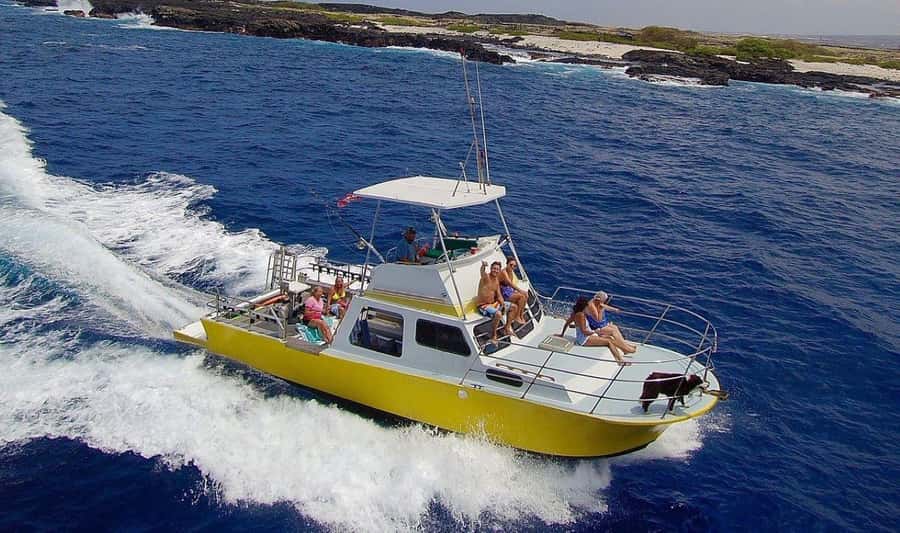
For most people, snorkeling is the easiest way to take part. Snorkel gear is included, and you can float above the scene while watching the rays below. This choice suits confident swimmers who want a close wildlife experience without adding scuba equipment or cost.
Scuba makes sense if you already enjoy underwater activities and want to sit at the bottom of the viewing area. It also gives you a different perspective than the surface group. The tradeoff is practical: scuba gear is not included and costs an additional $40 to rent on site.
At the listed price of $129 per person, a snorkeler receives the core activity, snorkel equipment, light snacks, and some non-alcoholic drinks. A scuba participant should budget $169 before any other personal costs. That is a fair comparison to make before choosing the underwater option.
This outing is not suitable for non-swimmers, people with back problems, or people prone to seasickness. Those limits are especially worth considering because the activity takes place at night, when poor swimming confidence or motion sickness can feel more difficult to manage.
More snorkelling trips in the USA:
- Manatee Snorkel Tour from American Pro Diving Center
★ 5.0 · 265 reviews - VIP Aloha Nui Snorkel Adventure w/ optional SCUBA from Lahaina
★ 5.0 · 136 reviews - Snorkel Or Dive The Amazing Rainbow River Florida
★ 5.0 · 116 reviews - Florida Keys: Scuba Diving & Snorkeling Reef Trip
★ 5.0 · 4 reviews
What the crew adds to the evening
The captain and crew are a major part of a night-on-the-water activity. You need clear instructions, steady organization, and a calm approach when people are entering the water after dark.
The strongest feedback about Torpedo Tours centers on the crew’s capability and friendliness. One recent booking specifically praised the captain and crew for keeping control of the activity while making it enjoyable. Another short note also singled out the captain and crew for being kind.
No guide names are provided, so I would not book this expecting a particular named host. Instead, focus on the operating company, Torpedo Tours, and the practical details of the departure.
There is one important caution. A booking was canceled on the same day it was scheduled, with the customer seeking a refund. That may be an isolated event, but it is enough reason to keep some flexibility in your Kona plans. If this is the one activity you care about most, do not place it on the last available night of your trip.
What to bring for a comfortable night
You need to bring your own towel. Pack swimwear, a change of clothes, water, snacks, and a waterproof camera if you want photos.
Biodegradable sunscreen is also requested. Apply it before entering the water and follow the crew’s instructions about marine protection. The rules prohibit touching marine life and plants, so your equipment and movements should stay controlled.
Light snacks and some non-alcoholic drinks are included, but the amount is not specified. I would still bring water and a small snack, especially if you are prone to getting hungry after time in the sea.
A dry change of clothes matters more at night than during a quick daytime swim. After the activity, you will appreciate having something warm and dry, particularly if the evening air feels cool.
Price, gear, and what the $129 covers
The base price is $129 per person. For a night wildlife outing in a famous manta-feeding area, that price has reasonable value if you want a focused experience rather than a full-day boat trip.
The strongest value comes with the snorkel option. Your price includes snorkel equipment, light snacks, and some non-alcoholic drinks. You still need to handle your own towel, transport, food beyond the supplied snacks, and personal items.
Scuba changes the calculation. Gear rental costs another $40, bringing the activity and equipment total to $169 per person. If you already have appropriate scuba gear, check the operator’s current arrangements before assuming the rental fee applies, since the supplied information only confirms the on-site rental price.
Pickup is not included. That means you need to plan your own way to the meeting point and allow time to arrive ready for the water. The exact meeting location and start time should be confirmed when you reserve.
A good fit for some swimmers, not for everyone
I would recommend this for a confident swimmer who wants one memorable Kona activity and is comfortable being in the ocean after dark. The sheltered bay and calm water help, but this is still a marine outing, not a pool session.
It is also a good choice for couples or families with older children who can follow strict wildlife rules and manage the water safely. The two-hour length keeps the commitment modest, and snorkelers can take part without scuba training.
I would skip it if you are a non-swimmer, have serious back trouble, or often get seasick. I would also think twice if you need a completely predictable schedule. A same-day cancellation has been reported, and marine activities can be affected by conditions or operating decisions.
The experience is not designed for people who want to cover a large area or visit several underwater sites. You spend the outing focused on one feeding area. That is a strength if you want a concentrated encounter, but a limitation if you prefer a varied boat route.
Booking advice and flexible plans
The activity allows free cancellation up to 24 hours in advance for a full refund. You can also reserve and pay later, which helps if you are still arranging the rest of your Hawaii plans.
I would use that flexibility to place the outing early or in the middle of your stay. If a cancellation occurs, you have a better chance of finding another date. Booking it at the very end gives you no room to recover.
Check the available starting times before committing. Night activities can affect dinner plans, and the two-hour duration does not include your travel to the meeting point. Since no pickup is included, transportation deserves attention when you map out your evening.
The overall score is 4.6 from seven ratings, with strong praise directed at the captain and crew. That is encouraging, but the small number of ratings means I would still treat the cancellation issue as a practical point rather than ignore it.
Should you book this manta outing?
Book it if you want a close look at wild manta rays, prefer a short evening activity, and are comfortable swimming in calm ocean water at night. The surface view is enough for most people, and the included snorkel gear keeps the base price straightforward.
Choose scuba only if you already feel at ease underwater and want the lower viewing position. Remember to add $40 for equipment rental.
I would not book it as your final must-do activity unless you have a backup plan. For everyone else, the combination of a sheltered bay, plankton-lit water, and huge mantas feeding nearby offers one of Kona’s most memorable natural encounters.
FAQ
How long does the Kailua-Kona manta activity last?
The activity lasts two hours.
How much does the experience cost?
The listed price is $129 per person.
Is snorkel equipment included?
Yes. Snorkel gear is included in the $129 price.
Is scuba equipment included?
No. Scuba gear can be rented on site for $40 if you choose the scuba option.
What else is included?
Light snacks and some non-alcoholic drinks are included.
Are towels provided?
No. You need to bring your own towel.
What should I bring?
Bring swimwear, a change of clothes, a towel, snacks, water, a waterproof camera, and biodegradable sunscreen.
Who should not take part?
The activity is not suitable for people with back problems, non-swimmers, or people prone to seasickness.
Can I cancel for a refund?
Yes. You can cancel up to 24 hours in advance for a full refund. You can also reserve now and pay later.
More Evening Experiences in the USA
- Certified Diver: 2-Tank Night Dive
★ 5.0 · 61 reviews - Oahu Night Dive: Adventure for Certified Divers
★ 3.6 · 6 reviews - *Sunset High Diver Show 3Course Dinner 2 Drinks Diff Options
★ 4.7 · 21 reviews - Scuba Diving Kata Beach Night Dive for Certified Divers
★ 4.5 · 14 reviews
Just added around the USA
- Panama City Beach: Beginners Scuba Diving Tour★ 4.6 · 23 reviews
- Oahu: Wreck & Reef Scuba Dive for Certified Divers★ 4.8 · 17 reviews
- Oahu: Shark Cage Diving Experience★ 4.6 · 46 reviews
- Oahu: Shallow Reef Scuba Dive for Certified Divers★ 5.0 · 11 reviews
- Oahu Night Dive: Adventure for Certified Divers★ 3.6 · 6 reviews
- Oahu: Cageless Shark Dive Adventure★ 4.9 · 60 reviews
- Oahu: Beginner SCUBA Dive at Electric Beach★ 4.8 · 10 reviews
- Kauai: Morning 2 Tank Boat Dive for Experienced Divers★ 5.0 · 5 reviews
Manta Ray Dives, compared.
Bali Diving Day Trip-Manta Point/Tulamben Shipwreck-Fun Dive
Read our review →
Certified Scuba Dive with Manta Rays (Open Water Diver minimum)
Read our review →
Manta Dive Gili Trawangan: Discover Scuba Diving
Read our review →
El Nido: Discover Scuba Diving with Manta Rays in Sibaltan
Read our review →
Bali/Nusa Penida: 3 Fun Dives to Manta Point, Mola & Reef
Read our review →
El Nido: Manta Ray Diving Experience in Sibaltan
Read our review →Lists this dive appears in