
REVIEW · DUBAI
PADI Open Water Diving Course in Dubai for 3 Days
Dubai’s clear Gulf waters are the setting for a full PADI Open Water course, not just a quick tryout with a tank. You’ll handle forms and equipment first, practice five confined-water skills in one session, then complete four open-water training sessions before receiving your certification.
I like the small maximum group of four, which should give you more direct instruction than a crowded class. I also like the flexibility: you can finish the e-learning and exam at home, or study between sessions in Dubai.
The main consideration is time. Three days sounds tidy, but the course requires real study, skills practice, and sea training. You’ll also need to contact the operator to confirm your session time and complete the registration paperwork before arriving.
Key points to know before booking
- Five confined-water skills come first: You practice essential scuba techniques in a controlled setting before heading into the sea.
- Four open-water training sessions complete the course: The sea portion is where you apply the skills needed for certification.
- Bashar Al Faquih, also called Boris, is the named instructor: He is praised for patient, clear, and professional teaching.
- The maximum group size is four: This is a useful advantage for beginners who need time and personal guidance.
- All scuba equipment is supplied: The package includes the suit, tanks, and other required gear, with no extra equipment charge stated.
- E-learning can be completed at home: Finishing the online study before arriving leaves more time for practical work in Dubai.
What this three-day Dubai scuba course really involves
This is a proper entry-level certification course. You are not simply renting equipment for a short underwater outing. You are working through the academic material, learning basic equipment use, practicing safety skills, and completing four open-water training sessions.
The advertised price is $430 per person. That includes the PADI e-learning and exam, scuba equipment, three practical classes, fees and taxes, a water refill station, and a one-way private transfer from Dubai to the dive center.
That package makes the price easier to assess. You are paying for instruction and certification as well as equipment, rather than adding those costs one by one. Breakfast and lunch are not included, so plan to handle meals yourself. Since each day can involve study and physical activity, bring enough water and allow time for food around the class schedule.
The course works best if you treat it as a focused qualification rather than a casual holiday add-on. You will need to pay attention, ask questions, and complete the required e-learning before your final open-water session.
More Scuba Diving in Dubai
- Discover Scuba Diving in Dubai
★ 4.6 · 494 reviews - From Dubai: Fujairah Half-Day Scuba Dive and Snorkeling
★ 4.7 · 186 reviews - 3-Day PADI Open Water Diving Course in Dubai
★ 5.0 · 173 reviews
Arriving at the Al Wasl meeting point
The stated meeting point is at 56RR+2MM, 546 Al Wasl Road, Al Wasl, Dubai. The activity begins at 10:00 a.m., although other session times are available during the week. The operator lists starts at 9:00 a.m., 11:30 a.m., 1:30 p.m., and 3:30 p.m., with the final group at 3:30 p.m.
You must contact the operator to reconfirm the date and time for your confined-water session. This matters because the course is not locked into three consecutive calendar days. You can arrange it across a weekend or weekdays, since sessions operate seven days a week.
A one-way private transfer from Dubai to the dive center is included. The listed end point is back at the meeting point, so confirm the exact transport arrangement before you go, especially if you need help getting back after the final class.
The location is near public transportation, but the transport details are not fully spelled out. I would reconfirm whether the included transfer applies to your hotel pickup or to travel from the stated meeting point. A short message before booking can prevent confusion on the first morning.
Forms, briefing, and equipment fitting
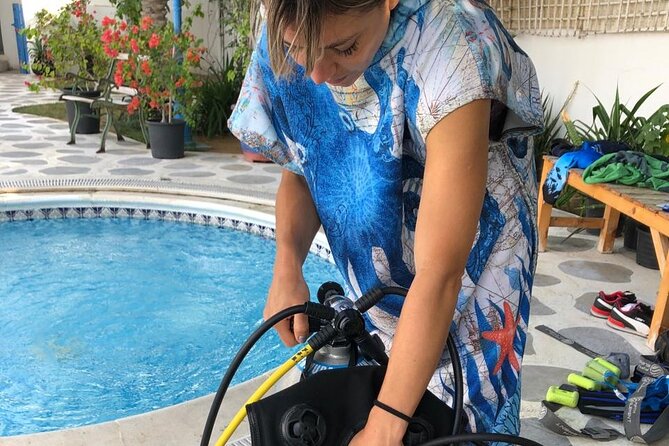
The course begins with registration forms, a briefing, and an introduction to the scuba equipment. You then receive your equipment and have it fitted before entering the water.
This opening stage is more important than it may sound. A mask that leaks, a suit that fits poorly, or equipment you do not understand can make basic skills harder than they need to be. Take your time here. Tell the instructor if anything feels uncomfortable, loose, or confusing.
The supplied equipment includes the diving suit and the rest of the required scuba gear. There is no extra equipment charge stated. That is useful for a first course, since buying or renting individual items can quickly make an entry-level qualification more expensive.
Bashar Al Faquih, also known as Boris, is the instructor most closely associated with this course. The strongest praise connected with the experience focuses on his patience, professional approach, and ability to help complete beginners. One student described being new to scuba and finding the instruction patient and encouraging, while another highlighted how the lessons stayed enjoyable as well as serious.
You should still speak up if a skill takes extra time. The point of the confined session is to build control before you move into open water, not to rush everyone through the same checklist.
The five confined-water skills
The first practical stage includes five confined-water training skills in one session. This controlled setting lets you learn the basic actions you will later use in the sea.
The available details do not list each individual skill, so I would not promise a precise sequence. In general, this part is where you become familiar with breathing through the regulator, handling the equipment, and responding to basic underwater situations under direct instruction. Your instructor will explain the required PADI exercises and check your performance.
For a complete beginner, this is likely the most useful part of the course. It gives you space to get comfortable with the gear before adding open water, changing conditions, and the pressure of completing a certification requirement.
The class has a maximum of four people. That does not guarantee private instruction, but it does limit the size of the group and should make it easier to ask for a repeat demonstration. If you need more time with a skill, say so early rather than trying to hide uncertainty.
The confined session is also a good test of whether the course suits you. You may enjoy the calm, unusual feeling of breathing underwater, or you may find the equipment and breathing pattern demanding at first. Both reactions are normal reasons to take the practice seriously.
More dive courses in Dubai:
- 4 Day Certified PADI Open Water Scuba Diver in Dubai
★ 5.0 · 37 reviews - Dubai Lost Chambers Dive Explorer (Certification Required)
★ 5.0 · 19 reviews - 3 Days PADI Open Water Diving Course in Dubai (All inclusive)
★ 5.0 · 10 reviews - Dubai: PADI Open Water 18-Meter Diving Certification
★ 4.9 · 7 reviews
Four open-water training sessions in the sea
After the confined-water work, you complete four open-water training sessions at sea. This is the central practical requirement of the course and the part most people are waiting for.
Dubai’s waters are described as clear, which should help you see your instructor, your equipment, and the underwater surroundings. Visibility can still depend on weather and local sea conditions, so do not expect every session to feel identical.
The open-water portion is not simply free time below the surface. You will repeat and apply the required skills while managing your equipment in the sea. The instructor watches your technique and guides you through the tasks needed for certification.
This stage can feel like a big change from confined water. You have more space around you, and the sea adds a different sense of movement. For a new scuba student, the first session may require concentration. The benefit of a small group and a patient instructor is especially clear here.
The course requires good weather. If poor weather forces cancellation, you are offered another date or a full refund. That protection is helpful, but it also means you should avoid scheduling your final certification session immediately before an important flight or fixed event.
The supplied schedule allows the three course days to be arranged over weekdays or a weekend. That flexibility is valuable for a short Dubai stay, but you should confirm the sequence before booking flights and hotel nights. You need enough time to complete the e-learning and exam before the final open-water session.
PADI e-learning and the exam
You can begin the PADI e-learning at home before arriving. This is my preferred approach because it keeps the Dubai sessions focused on practical work rather than trying to squeeze all the theory into a busy schedule.
You can also complete the study between sessions in Dubai. The important rule is that all e-learning and exams must be finished before your last open-water session.
The online component gives you the background needed to understand equipment, underwater planning, and safe behavior. Do not treat it as paperwork to click through quickly. If you understand the material ahead of time, you can use your instructor sessions to work on technique and ask better questions.
The PADI e-learning and exam are included in the price. That is a meaningful part of the value, since the course is designed to leave you with a recognized PADI qualification rather than only an informal introduction to scuba.
At the end, you complete a knowledge review and receive congratulations for finishing the course. The supplied information describes a certificate for completing the three-day scuba class. Confirm the exact form of certification issued when you register, especially if you need documentation for future equipment rental or further PADI training.
Instructor style and the beginner experience
The course is most strongly suited to a first-time student who wants patient guidance. The comments connected with the instructor repeatedly focus on patience, professionalism, and clear teaching. That is exactly what matters when you are learning breathing control and equipment skills for the first time.
Bashar is also described as making the lessons fun. That balance is useful. A course that is too stern can make a beginner tense, but a course that treats safety casually would be a poor choice. The best tone is calm, friendly, and firm about the essentials.
Solo participants are welcome, and the small group limit should help if you arrive alone. You will still be part of a class rather than receiving a guaranteed private lesson. Ask in advance if you have concerns about pace, prior experience, or completing the course on a particular schedule.
The course also appears to suit people who want to continue their education. Several comments connected with the instructor refer to later training such as rescue and enriched-air Nitrox. Those are not part of this $430 course, but they suggest a path for people who want to keep building scuba skills after earning the entry-level qualification.
Timing, meals, and what to plan
The course lasts approximately three days, but the days do not have to be consecutive. You can arrange sessions on weekdays or over a weekend, with availability every day at the listed times.
The 10:00 a.m. start is the main stated time, while the operator also lists 9:00 a.m., 11:30 a.m., 1:30 p.m., and 3:30 p.m. sessions. Contact the operator to confirm your actual schedule. Do not assume the time shown at checkout is your confined-water time unless it has been confirmed.
Breakfast and lunch are not included. Depending on the length of your session, you may need to eat before arrival or plan a meal afterward. The package does include a water refill station, reflecting the operator’s effort to avoid disposable plastic bottles.
The meeting point is also the stated end point. Since the package includes a one-way private transfer to the dive center, check how the return journey works for your particular booking. This is a small logistical point, but it matters after a tiring day in wet equipment.
Is $430 a fair price?
At $430 per person, this is not the cheapest way to spend a morning in the water. It is also not priced like a simple introductory activity. You are purchasing a full PADI Open Water course with theory, an exam, equipment, three practical classes, four open-water training sessions, taxes, and a one-way transfer.
The inclusion of the suit and scuba equipment is particularly useful for a first-time student. You do not need to arrive with a complete personal kit, and the operator states that there is no extra charge for the equipment.
The maximum group size of four adds value because instruction time matters more than flashy extras during a certification course. If the group is full, you will not have a private instructor, but you should still have a more manageable class than one with a large number of beginners.
Group discounts are available, though the exact discount is not stated. Ask about the rate if you are booking with friends or family. A group booking could make the per-person price more attractive while keeping the small class limit.
The main cost question is your schedule. If you already have three suitable days in Dubai and want a recognized qualification, the package is reasonably structured. If you only want a quick underwater activity, this course asks for too much time and study.
Who should book this course?
I would point this course toward:
- A complete beginner who wants PADI certification
- A solo participant who prefers a small group
- Anyone able to set aside roughly three days for training
- People who want the theory included rather than arranged separately
- Visitors who can complete e-learning before the final practical session
- Friends or family groups who may qualify for a group discount
I would be more cautious if your Dubai visit is tightly scheduled. Weather can affect the sea sessions, and the operator requires you to confirm your time and date. You also need to complete the exam before the last open-water session, so leaving all the study until the final day is a poor plan.
Good weather is required, and cancellations caused by weather offer either another date or a full refund. A minimum group requirement also applies. If that minimum is not met, you are offered another date or experience, or a full refund.
The cancellation rule is simple: cancel at least 24 hours before the start time for a full refund. Changes or cancellations inside that 24-hour window are not accepted for a refund.
Should you book the Dubai PADI course?
Book it if you want a real entry-level scuba qualification and can give the course the attention it deserves. The combination of a small group, included equipment, flexible e-learning, four sea sessions, and a patient instructor called Bashar Al Faquih makes this a practical choice for a first certification.
Do not book it as a casual add-on to a packed city break. You need study time, several practical sessions, suitable weather, and careful scheduling. Finish the e-learning at home if possible, confirm the session times, and ask about the return transfer before you pay.
For the right student, this offers more lasting value than a single underwater outing. You leave with practical training, a PADI exam completed, and a qualification that can support further scuba education.
FAQ
How long does the PADI course take?
The course lasts approximately three days. The days can be arranged over a weekend or across weekdays and do not have to be consecutive.
What time does the course start?
The stated start time is 10:00 a.m. The operator also lists sessions at 9:00 a.m., 11:30 a.m., 1:30 p.m., and 3:30 p.m. You must contact the operator to reconfirm your exact time.
How many people can join the course?
The maximum group size is four participants.
Is scuba equipment included?
Yes. The package includes scuba equipment and the diving suit, with no extra equipment charge stated.
Is the PADI e-learning included?
Yes. PADI e-learning and the exam are included in the price. You can complete the study before arriving or between practical sessions in Dubai.
When must the exam be completed?
You must complete all e-learning and exams before your last open-water training session.
Are meals included?
No. Breakfast and lunch are not included.
What happens if bad weather cancels the course?
If poor weather causes cancellation, you are offered a different date or a full refund.
More 3-Day Experiences in Dubai
- Open Water Course – Become certified diver in 3 days
★ 5.0 · 1,137 reviews - Padi open water diver course, become a diver in 3 days
★ 5.0 · 113 reviews - Become certified diver in 3 days – PADI Open Water Diver course on Koh Tao
★ 5.0 · 104 reviews - Hurghada: 3-Day PADI Open Water Diving Course
★ 4.6 · 78 reviews
Just added around Dubai
- Two Dives for certified divers in Fujairah★ 5.0 · 45 reviews
- 2 Dives for Certified Divers in Fujairah with lunch & transfer★ 5.0 · 15 reviews
- Scuba dive with sharing transfers★ 5.0 · 3 reviews
- Scuba Diving in Fujairah with Private Transfers★ 5.0 · 2 reviews
- Scuba Diving Activity in Dubai with Hotel Pickup★ 4.5 · 2 reviews
- Scuba Diving at Jumeirah Dubai with Private Transfers★ 3.5 · 3 reviews
- Try Scuba Diving & snorkeling with BBQ lunch & Transfer★ 5.0 · 19 reviews
- Pleasure Scuba Diving in Fujairah for Certified Diver★ 5.0 · 14 reviews
Scuba Diving Courses, compared.
Open Water Course – Become certified diver in 3 days
Read our review →
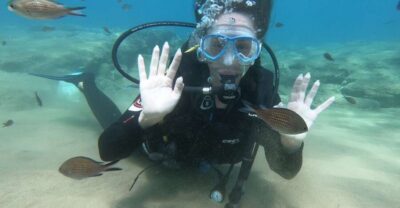
Heraklion: Beginner Scuba Diving Lesson with PADI Instructor
Read our review →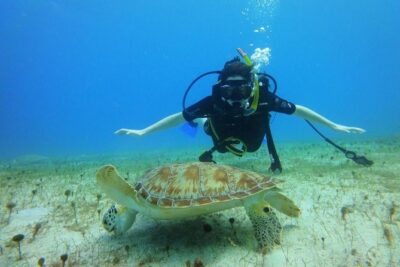
Discover Scuba Diving with No Certification in St Thomas
Read our review →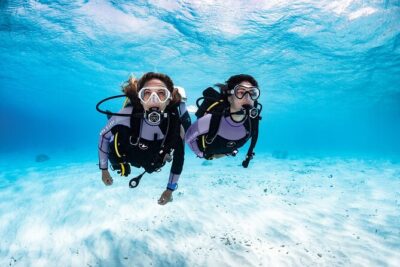
Try Dive – PADI Discover Scuba Diving in Tenerife
Read our review →
Lists this dive appears in