
REVIEW · JAPAN
EDOCCO Tea House–A Quick Dive into Japanese Traditional Culture
The best thing about EDOCCO Tea House is how much Japanese culture it fits into one hour. You prepare matcha, watch a short Japanese dance performance, put on a kimono, write a kanji character, and fold origami, all in a restored setting made to blend old Japan with modern Tokyo.
I like the small-group format, which gives you time to ask questions and receive help with the brush, paper, and tea whisk. I also like that you leave with more than photographs: calligraphy and origami give you hands-on reminders of the visit. The main drawback is the short schedule. The dance show lasts less than ten minutes, according to one detailed account, so this is a lively introduction rather than a full tea ceremony or stage performance.
Key points to know before booking
- Four traditions in one hour: Matcha, Japanese dance, kimono dressing, shodo calligraphy, and origami are all part of the session.
- English guidance: The hosts explain the tea, dance, and cultural customs in English.
- Small groups: The maximum is 20 people, and some sessions may be much smaller.
- Family-friendly pace: Children enjoyed the practical activities, especially kimono dressing, paper folding, and calligraphy.
- Central Tokyo setting: EDOCCO Studio is at 2-chome-16-2 Sotokanda in Chiyoda City, near public transportation.
- Good value for a short stop: At $72.48 per person, you are paying for several guided activities rather than one demonstration.
A quick cultural start in central Tokyo
EDOCCO Tea House is designed for visitors who want an introduction to Japan without giving up half a day. You meet at EDOCCO Studio, take part in a series of guided activities, and finish back at the same location.
That simple format matters in Tokyo. You can fit this session between sightseeing stops, use it as a gentle first-day activity, or bring children who may not have the patience for a long formal ceremony. The setting aims to capture a meeting of old and new Japan, which suits its location in modern Tokyo.
The experience is led by a friendly team, with Ori and Mr. Bambu specifically praised for their clear explanations and warm manner. English support is available, so you do not need prior knowledge of Japanese customs. The tone is practical and welcoming rather than solemn. You are encouraged to try things yourself, make mistakes, and ask questions.
The maximum group size is 20. That is not an intimate private lesson, but it is small enough for the hosts to help with basic brushwork, tea preparation, folding, and dressing. Some scheduled sessions have had only one couple or a very small number of people, though you should not book expecting a private appointment.
A few more dives around Japan worth comparing
Making matcha and understanding the tea ritual
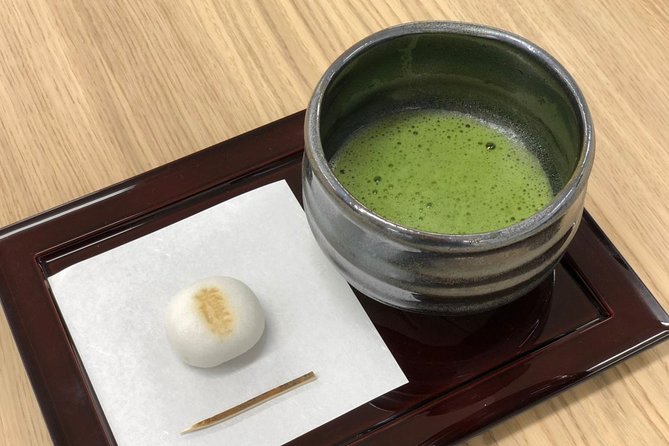
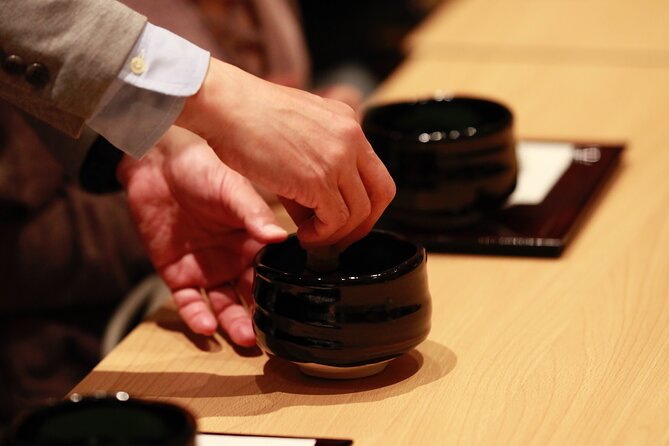
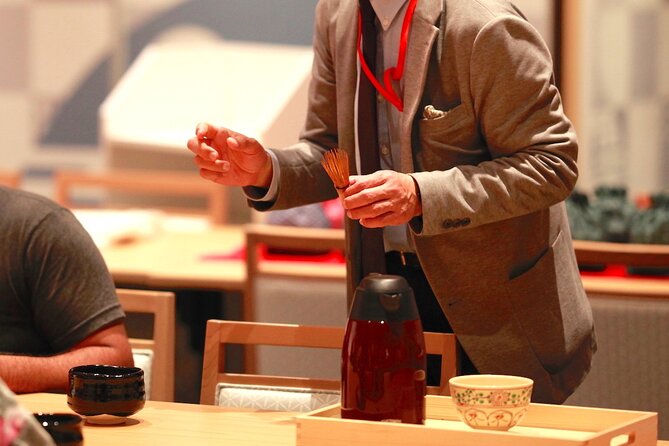
The tea portion begins with matcha and a Japanese sweet. An instructor guides you through preparing and serving the tea, including the careful use of the bamboo whisk. This is not simply a cup of green tea handed to you. The value is in learning the order, gestures, and attention behind the drink.
For a first visit to Japan, this offers useful context. Matcha is tied to manners, hospitality, and quiet concentration, and the ceremony gives you a small window into those ideas. You also get to taste the tea with a sweet, which helps balance matcha’s strong, grassy flavor.
You should expect a shortened teaching session rather than a formal ceremony lasting several hours. That is both its strength and its limit. You get a clear first lesson without the time commitment, but anyone seeking a highly formal tea ceremony may want a longer specialist experience.
A matcha set, including a tea bowl, matcha powder, bamboo whisk, and other tools, is available to purchase but is not included. If you want to repeat the activity at home, ask about the set during your visit. The included snack is the matcha and Japanese sweet set.
A short Japanese dance performance
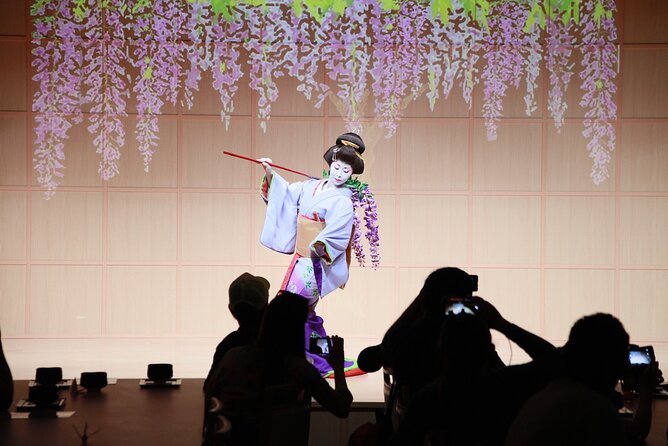
The Japanese dance show brings a different mood to the hour. The performers use traditional movements and, according to the detailed explanations provided during the session, help you understand the meaning behind the dance and gestures. Some descriptions refer to the performer as a geisha, and the show is presented as an example of Japanese dance and cultural arts.
This is one of the most memorable parts for many people because you can watch a live performance after taking part in the tea activity. The fan movements and formal gestures give you details that are easy to miss in a museum display.
Keep your expectations realistic. The performance is brief, under ten minutes according to one account. That is enough to add atmosphere and explanation, but not enough to explore the art form at length. If dance is your main reason for booking, the short running time may feel too limited. If you want a compact introduction with several different activities, it fits the schedule well.
The show is accompanied by matcha and a sweet, so you are not simply sitting through a performance. The host explains what you are seeing in English, which makes the movements more meaningful than a silent presentation.
Kimono dressing and the photo opportunity
The kimono activity lets you put on traditional Japanese clothing and take photographs. It is described as cosplay, so you should see it as a visitor-friendly dress-up experience rather than a full historical costume lesson.
That distinction is useful. You are getting a chance to feel the weight, shape, and formality of a kimono, but the focus is on enjoying the moment and taking pictures. The activity works particularly well for families, since children can take part in something visual and easy to understand even if they do not follow every cultural explanation.
The kimono also changes how you see the dance. After dressing in traditional clothing, the performer’s gestures and posture make more sense. You get a small sense of how clothing, movement, and ceremony connect.
The available information does not specify the range of sizes, the exact dressing process, or how long you wear the kimono. If this is especially important to you, contact EDOCCO Studio before booking. The experience includes Japanese dress cosplay, but it should not be confused with a full professional kimono rental session.
Same water, a completely different day underwater:
- Okinawa:Naha:Kerama Island Experience 1Dive and Snorkeling
★ 4.4 · 99 reviews - Blue Cave Introductory Dive–Private Guide, Boat Tour&Free Photos
★ 5.0 · 34 reviews - Okinawa: Scuba Diving Tour with Wagyu Lunch and English guide
★ 5.0 · 32 reviews - Naha: Full-Day Introductory diving & Snorkeling in the Kerama Islands, Okinawa
★ 4.5 · 28 reviews
Shodo calligraphy: your first brush strokes
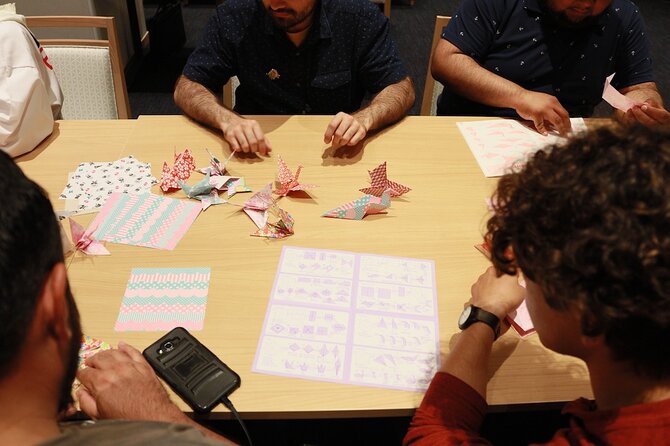
The calligraphy workshop introduces shodo, Japanese brush writing. An instructor guides you through the basic strokes, then helps you create a character of your own.
This is one of the strongest hands-on parts of the session. A brush does not behave like a pen, and even a simple character requires control. You will likely find the task more demanding than it first appears, which is part of the fun. The goal is not perfect calligraphy. It is learning how pressure, direction, and spacing affect the final form.
The hosts are described as patient and attentive during the writing activity. That matters because beginners need help holding the brush and understanding the order of the strokes. You are not left to guess your way through the exercise.
Calligraphy also gives you a personal souvenir. Instead of buying a generic item from a shop, you create something during the lesson. The supplied information does not promise a particular character, paper format, or frame, so think of it as a small take-home result rather than a finished artwork for display.
Origami for children and adults
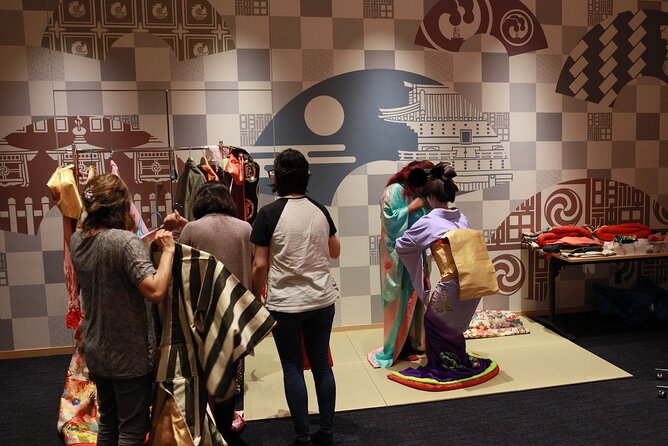
The origami lesson rounds out the arts portion. You learn how a flat sheet of paper can become a crane or another folded design through a sequence of careful steps.
This activity is especially useful for families because it gives children something to do with their hands. Adults may find it just as absorbing, particularly when a fold that looks simple turns out to require accuracy. The hosts help you through the process, so you do not need previous experience.
Origami may seem less distinctly Japanese than the tea ceremony or kimono, but it shows an important part of everyday craft culture: patience, precision, and making beauty from ordinary materials. In a one-hour program, it also provides a relaxed change of pace after the more formal tea and dance sections.
As with calligraphy, the activity gives you a small object to keep. The exact model may vary, but cranes and other designs are mentioned as examples. Do not expect an extended paper-art class. You are learning the basics and completing a simple project within a busy schedule.
Why the one-hour format works, and where it falls short
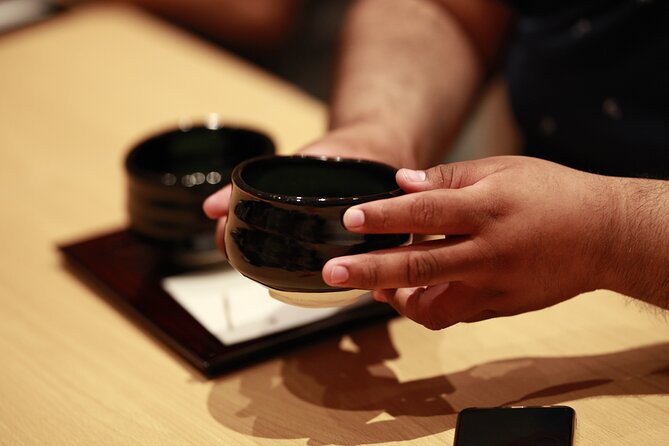
The timing is the clearest reason to choose this experience. In about an hour, you touch five parts of Japanese culture without needing to plan separate appointments. You do not spend the whole session watching a demonstration. You participate in tea making, calligraphy, origami, and dressing, with dance added as a live cultural presentation.
That makes EDOCCO a strong first activity in Tokyo. It can help you recognize customs you encounter later at temples, shops, restaurants, and cultural sites. It also gives children a way into Japanese culture that does not depend on long explanations.
The trade-off is depth. Each section is short, and the dance portion in particular may feel rushed. You will leave with a broad introduction, not specialist training in tea, shodo, origami, kimono, or dance.
I would also allow a little extra time around the scheduled hour. The official duration is approximately one hour, but arriving calmly, finding the studio, and taking photographs may make the overall stop longer. The activity begins and ends at EDOCCO Studio, so there is no second drop-off point to arrange.
Is $72.48 a fair price?
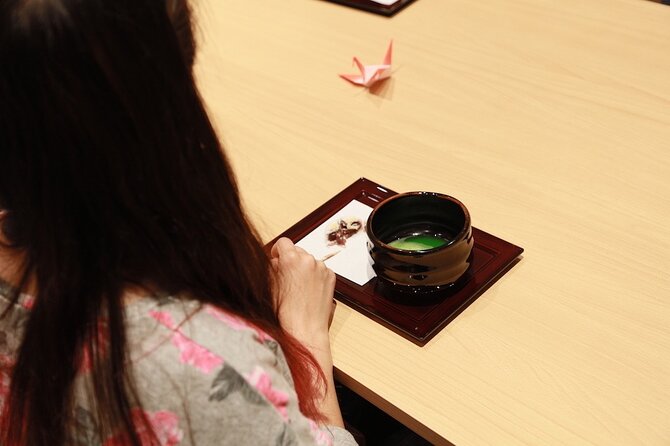
At $72.48 per person, this is not the cheapest short cultural activity in Tokyo. The price makes more sense when you count what is included: a matcha and Japanese sweet set, dance appreciation, calligraphy, origami, and kimono dressing.
You are also paying for instruction and translation, not just access to a room. The small-group setting allows the hosts to guide beginners, correct brush technique, explain the dance, and help with the paper folding. For a first visit, that convenience has real value.
Still, the price may feel high if you mainly want a tea ceremony. In that case, a dedicated tea experience could offer more time with the ritual. EDOCCO is better suited to someone who wants several snapshots of Japanese culture in one booking.
The program is also a practical choice for families. Paying for a single session with multiple activities can be easier than arranging separate cultural workshops. The one-hour length limits fatigue, and the mix of watching, dressing, tasting, writing, and folding keeps the pace moving.
Who should book EDOCCO Tea House?
I would recommend this for first-time visitors who want a clear introduction to Japanese customs. It is also a good fit for families with children, couples seeking a shared activity, and solo visitors who prefer guided cultural experiences to sightseeing alone.
You will get the most from it if you are willing to participate. The best moments come from trying the whisk, holding the brush, folding the paper, and wearing the kimono. If you only want to sit and watch, the program may feel too active.
It also suits visitors with limited time. The venue is near public transportation, and the meeting point is also the finish point. That lets you connect the activity with sightseeing elsewhere in Tokyo without arranging a complicated transfer.
You may want another experience instead if you already have a formal tea ceremony booked, have little interest in craft activities, or want a long dance performance. The show is short, and the workshops are introductory.
Booking details and cancellation terms
You receive a mobile ticket, and confirmation is normally sent at booking. If you book within one day of the experience, confirmation is provided as soon as possible and depends on availability.
Free cancellation is available up to 24 hours before the local start time for a full refund. Changes or cancellations made inside that 24-hour window are not accepted for a refund.
The experience may be canceled because of poor weather or because the minimum number of participants is not reached. In those cases, you are offered another date or experience, or a full refund.
Should you book this Tokyo cultural experience?
Book EDOCCO Tea House if you want several practical, friendly introductions rather than one long formal lesson. The combination of matcha, dance, kimono, calligraphy, and origami gives you a useful first look at Japanese culture, and the English guidance makes the activities easy to follow.
I would especially choose it early in a Tokyo visit, when you want cultural context without spending a whole day indoors. Just remember that the dance is brief and the workshops are basic. At $72.48, it is good value for a compact, hands-on sampler, but not the right choice if you want specialist-level instruction.
FAQ
Where does the EDOCCO Tea House experience take place?
It takes place at EDOCCO Studio, 2-chome-16-2 Sotokanda, Chiyoda City, Tokyo 101-0021, Japan.
How long does the activity last?
The experience lasts approximately one hour.
Does the experience start and end at the same place?
Yes. The activity ends back at the EDOCCO Studio meeting point.
What is included in the price?
The price includes a matcha and Japanese sweet set, Japanese dance show appreciation, a calligraphy experience, an origami experience, and Japanese dress cosplay.
Is the matcha equipment included?
The matcha set is not included. A set containing a tea bowl, matcha powder, bamboo whisk, and other tools is available to purchase.
Is the experience offered in English?
English explanations are available during the experience.
How large is the group?
The maximum group size is 20 people.
Is the activity near public transportation?
Yes. The meeting point is near public transportation.
How much does the experience cost?
The listed price is $72.48 per person.
Can I cancel for a full refund?
Yes. You can cancel at least 24 hours before the local start time for a full refund. Cancellations or changes made less than 24 hours before the start time are not refunded.
Just added around Japan
- Dive into Tsukiji Fish Market Walking Friendly Food Tour★ 5.0 · 3 reviews
- Shared Scuba Diving Trip in Kushimoto★ 5.0 · 2 reviews
- Tokyo Ikebukuro Morning Tour Dive into Japanese Culture★ 5.0 · 5 reviews
- Interacting with real ama divers in a traditional ama hut (AMA hut HACHIMAN)★ 5.0 · 2 reviews
- Tokyo Ikebukuro Evening Tour Dive into Japanese culture★ 5.0 · 15 reviews
- Boat entry diving at the Blue Cave in Onna Village, Okinawa!★ 5.0 · 4 reviews
- Blue Cave Introductory Dive–Private Guide, Boat Tour&Free Photos★ 5.0 · 34 reviews
- Naha: Full-Day Introductory diving & Snorkeling in the Kerama Islands, Okinawa★ 4.5 · 28 reviews
Scuba Diving in Japan, compared.

Naha, Okinawa: Kerama Islands Full-Day Intro-Diving Trip
Read our review →
Okinawa:Naha:Kerama Island Experience 1Dive and Snorkeling
Read our review →
Blue Cave Area Experience Diving!Free feeding & photo images Chinese guide available!1 group with a dedicated instructor
Read our review →
From Naha Scuba Diving Trip in Kerama(for certified divers)
Read our review →
Blue Cave Introductory Dive–Private Guide, Boat Tour&Free Photos
Read our review →
Okinawa: Scuba Diving Tour with Wagyu Lunch and English guide
Read our review →
Naha: Full-Day Introductory diving & Snorkeling in the Kerama Islands, Okinawa
Read our review →
Okinawa: Naha: 1 day Kerama Islands diving‣ license required
Read our review →Lists this dive appears in